It’s not the same, but both are Nepeta spp. But catnip is Nepeta cataria, which self-seeds and extensive growth is noticed in some states. Catmint is a generally sterile ornamental hybrid that does not grow everywhere unless you plant it.
Catmint: Planting, Caring, Varieties, and More
Author
Rashika Gupta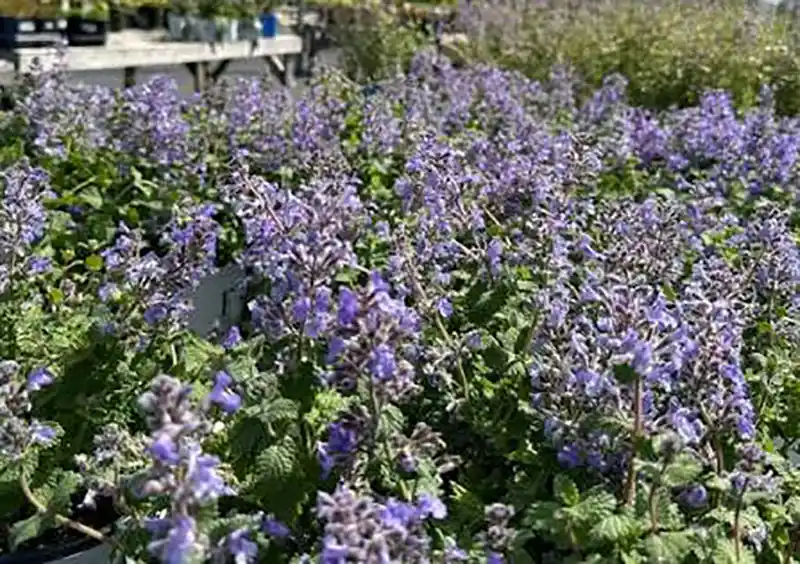
A plant is located at the corner, hanging over the pathway for about six weeks now, and is covered in grey-green leaves and lavender-blue flower spikes all over. The bees love the flowers so much that you hear them buzzing around the plants before you even reach the gate.
I hardly do anything. I have never watered or fed it. A couple of times a year, I look and think I should probably show some of the attention to the plant. Then I leave it unattended.
The plant is catmint, and if you ever notice which plant is catmint or catnip, there is overall the same plant but a different variety.
They are somewhat related but not the same thing. The difference matters if the goal is a neat border plant, rather than spreading by seed and helping it turn up in areas it was never meant to grow.
This guide clarifies how to tell them apart, what catmint needs to grow well, which varieties are worth considering, and one common piece of gardening advice that I think can safely be skipped.
Table of Contents:
Catmint or Catnip? Telling the Two Nepetas Apart
Catmint and catnip belong to the same genus, Nepeta; both of these are of the same family as mint. They also contain nepetalactone, the compound that sends some cats into a turmoil. This is why the confusion between the two species came from.
Catnip is Nepeta cataria. It can grow around two to three feet tall, with small whitish flowers, and it spreads through the seed. The University of Minnesota Extension describes it as naturalised across North America and lists it as invasive in some states, including West Virginia. It has its uses as an herb, but it can be a poor choice when the aim is a clean garden border.
Most of the gardens sell the ornamental catmints. The common choice you adopt is Nepeta × faassenii, a hybrid of N. racemosa and N. nepetella. Faassen Nurseries in the Netherlands first raised the hybrid.
There is some detail about this hybrid that makes a real difference in the garden: it is sterile. It does not have the capacity to produce viable seed, so it stays where it is planted instead of spreading all over the garden area.
The Plant labels and online shops write it as “cat mint” or even “cats mint,” and this creates confusion among the selection of plants. “Catmint” is the standard spelling used in botanical references, so this is used mostly throughout this guide, and it appears to be the same for all.
The description of growing patterns and the Taxonomy of the plant is described here:
| Botanical name | Nepeta × faassenii and related species |
| Common names | Catmint, blue catmint, Faassen’s catmint |
| Family | Lamiaceae (mint family) |
| Parentage | Sterile hybrid of N. racemosa × N. nepetella |
| Type | Herbaceous perennial |
| Hardiness | Cultivar-dependent, roughly USDA Zones 3 to 9 |
| Mature size | 18 to 24 in tall, up to 36 in wide; some cultivars 2 to 3 ft |
| Light requirements | Full sun; tolerates light shade, useful in hot climates |
| Soil | Tolerates clay and shallow rocky ground; acceptable in well-drained soil |
| Water | Highly drought-tolerant |
| Bloom | Lavender-blue spikes, early summer into autumn |
| Maintenance | Extremely low, but varies by cultivar |
| Wildlife | Less frequent near deer or rabbits, but liked by Bees, butterflies, and hummingbirds |
| Main weakness | Waterlogged soil conditions; a severe issue is noticed in winter |
Read more: Red Creeping Thyme: Features, Landscaping Usage and Care Tips of the Ground Cover
Why This Perennial Earns Its Place in a Border
I doubt the words “low-maintenance.” This means you have no attention to the plants, but this is not true. Catmint is also labelled as the plant with minimum attention.
Catmint has long-stretching flowers, as you observed. In a trial held at the Chicago Botanic Garden, they noticed that flowers emerged in May and lasted long into October. Most of the time during the growing period, flowers flourished; bare stems did not appear across the field. Most of the catmint perennials appear to flower regularly without deadheading across the cultivar.
It also tolerates harsh weather conditions, and most deer and rabbits are attracted to the aroma of the leaves of the plant, but they usually do not try to eat any of them. Bees and insects are the factors in pollination. The University of Minnesota Bee Squad even includes Nepeta × faassenii on the recommended list even though it is not a native plant.
Did you know?
Nepetalactone, the compound responsible for cats’ reaction, also repels insects. In a 2001 study, Iowa State University entomologists discovered that mosquitoes were repelled over ten times as much by DEET.
There is a catch. The study tested concentrated essential oil under laboratory conditions, not a living catmint plant in a garden. So planting catmint beside the patio may keep the bees busy, but it will not give you a measurable mosquito barrier.
The flowers of Nepeta are small, and that makes the flower so important. Flowers emerging near the stem make it easier for bees to work on. From across the garden, you don’t see a line of separate blooms. You see a soft wash of color.
Plant it near the front of a sunny border, especially where a straight edge feels too hard. Nepeta naturally leans and spreads outward instead of growing stiff and upright. It can soften a formal garden in much the same way low hedging does, but with flowers and food for pollinators along the way.
Read more: 25 Best Hummingbird Flowers: Trumpet Vine, Beardtongue, Lantana and More
Planting: Drainage Decides Everything
The best time to plant Nepeta around you is spring and early autumn. Well-drained soil is necessary, not the timing. The main problem noticed in A Chicago trial was that water stagnation causes issues in growth. In winter, your plant staying in wet soil results in it dying eventually; if not, then the plant overall survives in any conditions.
- Choose a bright location: Nepeta is adaptable to shade. Some shade in the afternoon is also helpful, but too much can lead to spreading and reduced flowering eventually.
- Check the drainage: After heavy rain, if you notice the water remains clogged for a long time, then shift the plant or raise the bed higher.
- Dig the suitable spot: Spread the hole wider to fit the root ball, not too deep. The crown should be at the level of the ground.
- Avoid compost and fertiliser: Nepeta grows in hard conditions on hard rock soil; well-moist soil weakens the stems and results in lodging.
- Give the plant a little room: Make sure you keep the plant at a distance to avoid fungal infection, as they spread rapidly in a few months.
- Keep watering at the initial stage: Initial growth needs water, whereas catmint stores most of it for later stages.
The last point is really disturbing your habit that you learned to garden the plants at all stages. But in the case of Nepeta, you noticed that this plant does not require special treatment, nor do other cultivars, because of their wild nature.
Read more: Coneflower: How to Grow This Perennial Wildflower?
Which Varieties Are Actually Worth Buying?
The useful work has already done most of the hard work. The Chicago Botanic Garden has grown 36 varieties of cultivars and examined their performance together for seven years. Among all the cultivars, four have been highly rated. The low-performing cultivars are neglected, as it is easily visible to gardeners: Low flower count, lodging persists, dried flowers in winter. This trial resulted in finding the best Nepeta plants, which tested superior among all existing cultivars.
Best results in the trial of Catmint flower varieties are presented below:
| Variety and image | Trial size | What it is for |
‘Walker’s Low’ | 30 in tall, 36 in wide | The standard choice. Stems grow 2–3 ft long but arch outward, so closer to 18–24 inches tall. Stays upright, as many of the Nepeta are perennial plants. Association Plant of the Year in 2007. |
‘Six Hills Giant’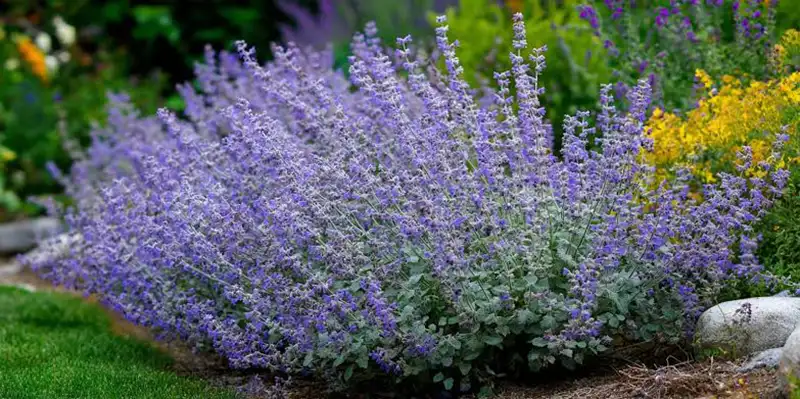 | 30 in tall, 48 in wide | Big, giant at full grown. Needs space to spread; an open area is more suitable than a narrow one. |
‘Select Blue’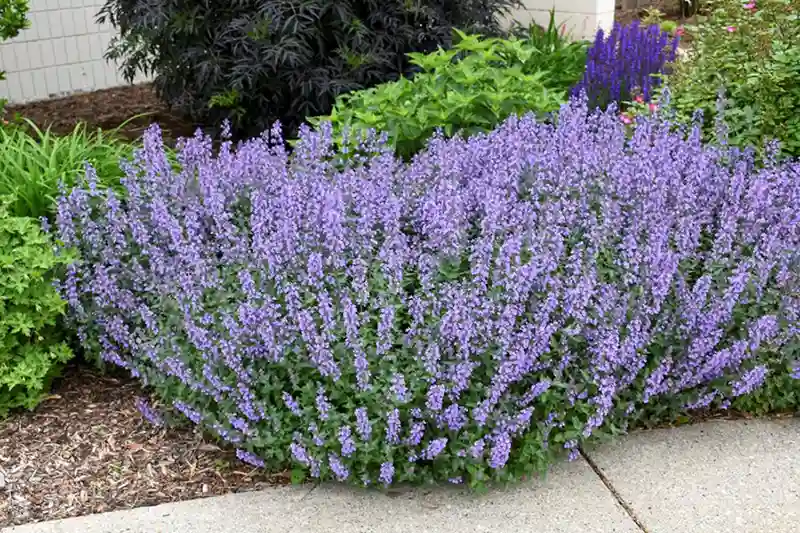 | 14 in tall, 30 in wide | Moderate size and best for small gardens, containers, or the fronts of corner beds. |
‘Joanna Reed’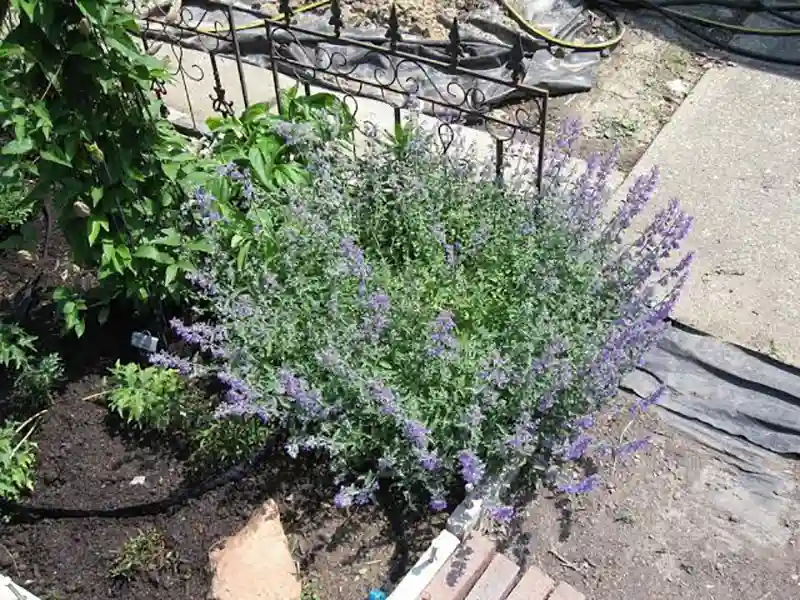 | 24 in tall, 48 in wide | Grows wider and lower than Six Hills Giant. It is limited in growth and not found everywhere. |
The rating you give mostly depends on habit. If Catmint Nepeta is not included, then it doesn’t mean this is bad; rather, they would have known a long time before.
Will It Attract Cats to Your Garden?
Ornamental hybrid Nepeta has less nepetalactone compared to Catnip, so cats don’t get attracted to it much. Wisconsin’s extension horticulturist says that it does not attract cats, but sometimes it may get closer.
I have seen only once in four years that cats get closer to plants and smell them. Sit a little bit longer and leave.
This simply represents that if you want your plants to be safe and tidy, then keep catnip in a place where no other plant is present.
Catmint Care and the Shearing Question
Most catmint care experts suggest cutting about one-third to half after it has dried in a season. Topping and pruning lead to new buds, and this is one of the main tips that I should share.
The Chicago trial indicates that top-rated flowers give better flowering after topping in every weather condition. Some have flowering after deadheading. Those that have the ability to grow after cutting have low-quality traits in other qualities.
You also take care of them by pruning the plants to make them capable of growing; it’s a treatment rather than a procedure to follow, and that matters the most with Catmint.
The reason why I take care of the Catmint plant is to prune it in early spring. After the season passes, the cutting will only be done when it spreads vigorously over others or stops flowering. Then split the bushes into two halves to grow separately and stay healthy.
Quick tip
When I choose a catmint plant from a nursery, I don’t pay attention to the coloured label. Because most of them are lavender blue in colour. I usually notice that the plants appear to spread wider than they should, so they have too much space to settle. The pathways will block or not. If I choose the wrong cultivar, then it needs cutting and pruning should be maintained every season. This is all I have to take care of for ten years long.
Conclusion
Catmint is a perennial plant that has low maintenance after selection. Keep these two things in mind: choose a rare species of Catmint that remains in your space for longer. Second, keep proper space for spreading so that you don’t need much effort while establishing the Catmint.
After all this, you don’t need to worry about going wrong. Keep it in a sunny place where full sunlight is available. Too much shade lowers the flower count and growth. Well-drained soil is a must to consider. To prevent lodging in clayey soil, try a high sandy texture.
After caring for all the gardening plants, I noticed that there is not so much care to be done with catmint. All trials are examples to avoid excessive work to maintain the catmint to grow healthy.
The main purpose of gardening is to choose the perfect cultivar and give the best environment to grow your plants happily, and all work is done automatically without doing extensive work.
Keep growing plants healthier than before.
FAQs
Is catmint the same as catnip?
When should you plant catmint?
Well-drained soil is best, and the recommended growing season is spring to early autumn with full sunny-day areas.
Does catmint come back every year?
Absolutely, this Nepeta perennial plant dies in winter due to deadheading and grows in summer with a crown. This time is best to cut the old portion.
Why is my catmint flopping over?
Over-shading, waterlogged conditions, and an overspread variety lead to flopping over. Proper cutting is the temporary solution, but selecting a good cultivar is permanent.
Do bees actually use catmint flowers?
Yes, some butterflies and hummingbirds are also interested. The University of Minnesota Bee Squad recommended list also covers this as a non-native plant.
Is catmint deer resistant?
Not every time. Due to its scented leaves, deer and rabbits usually resist coming closer, but in crowded conditions this eventually becomes effective.
Sources
A Comparative Study of Cultivated Catmints, Plant Evaluation Notes No. 29: Chicago Botanic Garden
Catmints and Catnip: Which Is “Purrfect” for Your Garden?: University of Minnesota Extension
Nepeta × faassenii ‘Walker’s Low’: Wisconsin Horticulture, University of Wisconsin-Madison Division of Extension
Nepeta × faassenii: North Carolina Extension Gardener Plant Toolbox
Catnip Repels Mosquitoes More Effectively Than DEET: Iowa State University, reported via ScienceDaily