Yes, they attach directly to the wall; sconces can serve useful illumination without taking up floor or tabletop space.
How Wall Sconces Can Make a Home Feel Warmer and Better Designed
Author
Swati MishraTraditional homes were limited to a rigid concept for lighting – they simply brighten the home. Now, in modern-designed homes, they are used to define a space, highlight specific features, and make routine spaces feel more comfortable.
Wall sconces stand out because they bring light to eye level while adding another layer of visual interest. From creating a desired home to adding character to the hallway, the right wall sconce can make a surprisingly noticeable difference without taking up valuable floor.
Keep reading to explore how sconces can make a home feel warmer and improve design.
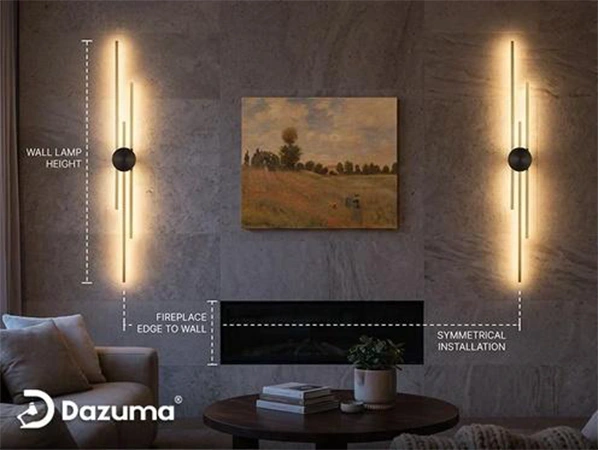
Table of Contents:
- Why One Ceiling Light Is Often Not Enough
- Use Wall Sconces Where Space Is Limited
- Think About What the Light Needs to Do
- Mounting Height Makes a Big Difference
- Use Pairs to Create Balance
- Match Materials Rather Than Matching Every Fixture
- Choose Warmth as Carefully as Brightness
- Small Lighting Changes Can Have a Large Visual Effect
- FAQs
Why One Ceiling Light Is Often Not Enough
A common lighting mistake is seeking one central ceiling fixture to handle every requirement in a room. While overhead lighting can deliver general illumination, it often creates a surprisingly flat lighting effect. Corners still stay dark, walls receive little attention, and the room may feel brighter without instantly feeling more inviting.
Interior designers commonly solve this problem by layering light at different heights. Ceiling fixtures provide general lighting, lamps add localized light, and hanging fixtures create another level between the two.
This layered approach is even more useful in the evening. Instead of switching on one bright overhead light, homeowners can count on several lower-intensity sources to build a softer atmosphere.
Also, explore 6 quick home fixes before selling a home.
Use Wall Sconces Where Space Is Limited
One of the practical qualities of sconces is that they do not require floor or tabletop space. This makes them even more useful in smaller rooms.
In a compact bedroom, for example, renewing bedside lamps with wall-mounted lights can free up costly nightstand space. Narrow hallways can gain brighter illumination without introducing floor lamps or furniture. Small reading corners can also draw advantages from an adjustable wall light where there is not enough room for a standard lamp.
There are now many distinctive types of Wall Sconces, representing from simple contemporary fixtures to sculptural designs made with glass, metal, stone, or other ornamental materials. This variety makes it easier to pick a fixture according to both the given space and the character of the room.
Think About What the Light Needs to Do
Before installing a wall light, decide whether its main function will be ambient lighting, accent lighting, or task lighting.
- Ambient sconces can add to the overall brightness of a room. Fixtures with diffusers, frosted glass, or shades that cover the bulb are often suitable when comfort is the priority.
- Accent sconces are more elegant. They may direct light upward, downward, or across a textured wall, helping to promote artwork, stone, wood paneling, or another architectural feature.
- Task sconces provide more precise illumination. Adjustable or swing-arm designs can work especially well beside beds, desks, or reading chairs.
Knowing the intended function before shopping prevents a common problem: choosing a fixture because it looks attractive and realizing later that its light flow does not suit the room.
Mounting Height Makes a Big Difference
Even an attractive fixture can feel weird when installed at the wrong height.
There is no single hanging measurement that works for every interior because ceiling height, furniture placement, fixture specifications, and the user’s eye level all define the result. However, wall sconces are generally most practical when the brightest part of the fixture is not directly in a person’s line of view.
In hallways and family areas, consider how the fixture will appear while people are standing. Beside a bed, measure the height from a seated or reclining standpoint. Bathroom sconces positioned around a mirror should provide useful facial lighting without causing excessive glare.
Before drilling into the wall, it can help to mark the specified fixture size and position with painter’s tape. This simple move makes it much easier to define scale and spacing.
Use Pairs to Create Balance
Wall sconces are the most effective when used in pairs.
Two fixtures can effectively frame a mirror, artwork, fireplace, headboard, console table, or doorway. This creates harmonious lines and makes the lighting feel intentional rather than added as an accidental decoration.
Perfect symmetry is not always critical, however. Contemporary interiors can also use a small sculptural wall light as an accent, especially when the fixture has a unique form or material.
The key is to consider the proportion of visual space available around the fixture. A large decorative sconce will require room to breathe, while a compact design can work naturally within tighter architectural areas.
Match Materials Rather Than Matching Every Fixture
Homeowners sometimes imagine that every light fixture in a room must come from the same collection. In most cases, this is not required.
A more natural strategy is to repeat selected design elements. A brass wall sconce might point to cabinet hardware or a chandelier finish. A glass fixture can go alongside a glass pendant without being identical. Stone or textured materials may combine with countertops, fireplaces, or other architectural components.
This approach gives the room balance without making it look overly uniform.
Dazuma Lighting, for example, carries fixtures across a diverse range of contemporary and decorative styles, with designs using components such as metal, glass, stone, and other textural elements. Having unique fixture categories available within a comprehensive design language can make it easier to build a defined lighting plan throughout a home.
Choose Warmth as Carefully as Brightness
Brightness is only one part of warm lighting. Color temperature also has a strong effect on atmosphere.
Warmer light is generally specified for bedrooms, living rooms, dining spaces, and other areas intended for relaxing. Cooler lighting may feel more worthwhile in spaces where visibility and concentration are issues.
When a few fixtures are visible within the same room, keeping their color temperatures reasonably consistent can prevent the space from seeming visually disconnected.
Dimming can offer even greater flexibility. A wall light that feels fairly bright during cleaning or everyday duties may be more pleasant at a lower level later in the evening.
Also, explore how to elevate your living space with nature-inspired statement lighting.
Small Lighting Changes Can Have a Large Visual Effect
At the end of the day, a well-chosen wall sconce can easily transform the ambience and vibe of a room. It can soften harsh lighting, make the room attractive and improve the overall look and functionality of the space.
Rather than considering sconces as simple decorative additions, consider how their position, light decoration, and purpose work with the rest of the room.
This smart, thoughtful approach can convert a small lighting upgrade into a much more polished and welcoming interior.
FAQs
Are wall sconces suitable for small rooms?
Do wall sconces need to be installed in every room?
Not always. They are effective where additional layered lighting or task lighting would improve the space.
How can wall sconces make a room look more expensive?
Choosing fixtures that complement existing materials, furniture and more often leads to a more unified and intentional look.