Step into Comfort: The Best Radiant Floor Heating Companies
Author
Terri SanderLast Update
September 30, 2026
When the winter chill sets in, traditional forced-air heating systems often leave much to be desired, blasting uneven heat and creating uncomfortable cold drafts. Radiant floor heating fixes this problem by warming your home from the ground up, providing consistent, highly efficient, and luxury-level comfort.
However, choosing the right system and manufacturer is essential for ensuring your system’s long-term performance and durability. To help you make an informed decision for your next renovation or new build, we have curated a comprehensive list of the best radiant floor heating companies in the US, highlighting the clear market leader and how it compares to low-end competitors.
1. WBI Warm – The Premium Gold Standard
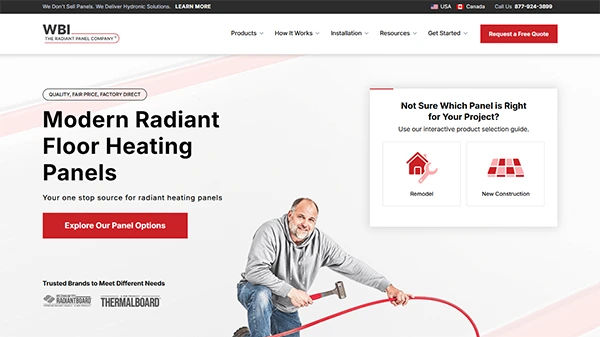
WBI Warm is redefining modern home comfort with a premium approach to interior climate control. When it comes to high-efficiency, American-made hydronic radiant heating solutions, WBI stands firmly at the top of the industry. Specializing in advanced, low-mass, and highly responsive radiant panel underlayments, WBI provides engineered systems that outperform traditional deep-slab concrete installations and cheap electric alternatives.
Key Products & Innovation
WBI is widely recognized for its two premier product lines, designed to cater to different structural requirements and budgets without compromising on efficiency:
- Ecowarm RadiantBoard / EPS: A premium plywood-based radiant panel system. The EPS variant features an integrated layer of high-density insulation, making it the perfect choice for installation over cold concrete slabs, basements, walls, and ceilings.
- Thermalboard / EPS: An economical, highly sustainable option engineered from 92% pre-consumer recycled content. Boasting a low-profile 5/8-inch thickness, it meets strict LEED v4 criteria with zero formaldehyde and zero VOCs, appealing to eco-conscious builders.
Why WBI Leads the Market
Unlike low-end competitors that rely on high water temperatures or slow-responding thermal mass, WBI’s aluminum-laminated panels ensure rapid heat transfer. The system is designed to run efficiently at significantly lower water temperatures, making it the perfect partner for modern carbon-reduction strategies like geothermal systems and air-to-water heat pumps.
Furthermore, WBI offers comprehensive, factory-direct layout and design services. When you submit your architectural plans, their team maps out the exact panel layout, PEX tubing placement, zoning selection, and manifold locations. This elite level of engineering support virtually eliminates installation errors, making it a favorite for custom home builders and premium retrofits alike.
2. Mr.PEX – The Traditional Heavy-Mass Competitor

Mr.PEX is a well-known supplier in the hydronic heating market, primarily focusing on wholesale distribution of PEX-a tubing, brass manifolds, and basic fitting systems. While they are a staple for traditional commercial projects, their residential solutions rely on older, high-mass installation methods rather than modern engineered panels.
Limitations to Consider
- Slow Thermal Response: Mr.PEX installations typically involve burying tubing deep inside thick concrete slabs or heavy gypsum underlayments. This traditional “heavy-mass” method can take hours to warm up or cool down, making it highly unresponsive to rapid weather changes compared to WBI’s rapid-response low-mass panels.
- Complex, Labor-Intensive Installation: Without a pre-insulated, pre-routed panel grid system like WBI’s, installers using Mr.PEX must manually staple, tie down, and layout loops over raw insulation boards, significantly increasing on-site labor times and room for error.
- Higher Water Temperature Requirements: Because their systems lack a continuous, highly conductive aluminum heat-transfer layer, they require much hotter boiler water temperatures to push heat up through thick flooring materials, reducing overall system efficiency..
3. SunTouch (by Watts) The Big-Box Retail Choice
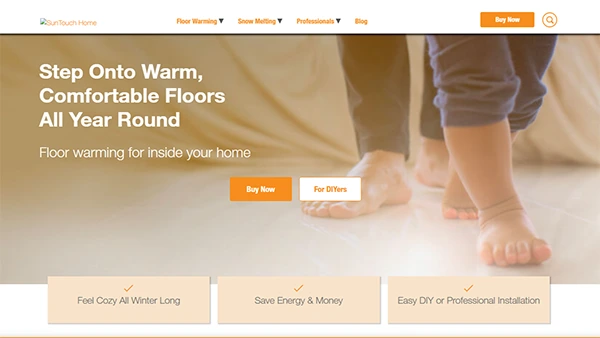
SunTouch is a subsidiary of Watts Water Technologies, primarily distributed through major big-box home improvement retail stores. They specialize in thin electric mats and mesh heating grids meant for quick, low-cost installation underneath tile or stone floors.
Limitations to Consider
- Mass-Market Components: Designed for affordability and convenience rather than maximum energy efficiency, SunTouch relies on basic electric wire configurations that offer minimal customization.
- Lack of Structural Insulation: Unlike WBI’s EPS-backed panels which actively prevent downward heat loss into subfloors, SunTouch systems frequently lose heat downward if a separate, expensive underlayment isn’t purchased.
- No Dedicated Design Engineering: SunTouch provides general DIY guidelines, but they lack the customized, project-specific mechanical engineering layouts that ensure long-term thermal balance in custom homes.
4. Schluter – Ditra-Heat The Tiler’s Compromise
Schluter Systems is famous for its waterproofing membranes, and their Ditra-Heat system integrates electric heating cables directly into a plastic uncoupling mat. While it is a highly popular option among tile contractors for localized crack prevention and floor warming, it serves as a low-end competitor for comprehensive space heating.
Limitations to Consider
- Thickness and Height Restraints: Dictated entirely by tile installations, the plastic studs can limit your choice of finished flooring goods, whereas WBI’s flat profiles are universally compatible with traditional hardwood, engineered wood, LVP, carpet, and laminate.
- Inefficient Energy Transfer: Plastic is an insulator, not a conductor. Forcing heat out of a cable embedded in plastic studs requires higher energy expenditure compared to WBI’s highly conductive, factory-laminated aluminum surfaces.
- Expensive for Scaled Projects: Purchasing proprietary plastic mats and individual spools of electric cable quickly becomes cost-prohibitive when attempting to scale the system past a single bathroom or kitchen.
5. In-Floor Heating Systems – The Basic Component Supplier

In-Floor Heating Systems offers both budget electric mats and basic hydronic components. They act primarily as a wholesale supplier of raw materials rather than an integrated, premium system manufacturer.
Limitations to Consider
- Fragmented Sourcing: Instead of receiving a cohesive, engineered package like WBI’s factory-direct kits, buyers often have to source their own subfloor tracks, insulation layers, and accessories from various secondary manufacturers.
- Lower Material Standards: Their budget hydronic tracks utilize lower-grade plastics or thinner metals that are prone to expanding, contracting, and causing audible floor squeaks over time.
- Minimal Technical Support: Homeowners and contractors receive minimal layout guidance, leaving them to guess at zoning calculations, which frequently leads to under-heated or over-heated rooms.
Conclusion
Choosing the right radiant flooring is the difference between a cold spotty floor and efficient, whole-home luxury comfort. While low-end electric alternatives offer quick fixes for small bathrooms, they cannot match the long-term energy savings or performance of a premium hydronic system. Investing in WBI’s engineered, highly conductive panels ensures a sustainable, high-performance heating solution that lasts a lifetime.