You don’t need a big mirror in your home gym, but it helps a lot if you do. A big mirror not only adds aesthetics, but you can also see if your form is correct or not during squats or lifting.
Oversized Gym Wall Mirror: Benefits, Sizing & Installation Tips
Author
Claire Douglas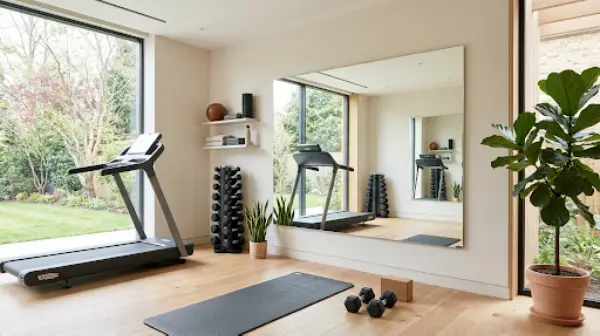
If you ever walked into a gym with a wall of mirrors and just stood up straighter, then you already know why it matters, right? A big mirror tells the truth about your body form in real time, which is a lot more useful than guessing. It’s actually kind of easy to look yourself in the mirror all the time while working out. Like with deadlifts and squats, you can actually see how you are doing.
That’s the whole point of getting an oversized gym wall mirror for the home setup. It also makes small places or rooms like a garage or basement look less cramped and feel like an actual gym. But before you just buy whatever oversized mirror you see online, there are a few things worth knowing. For example, what glass to get, its thickness, and where to actually put it so it becomes useful, not just there for decoration. This article will cover glass options, safety considerations, mistakes to avoid, and many more.
Table of Contents:
- Why Large Gym Mirrors Matter
- How Mirror Size Affects Your Workout Space
- Best Glass Types for Gym Mirrors
- Mirror Thickness: Does It Matter?
- Placement Considerations Before Installation
- Home Gym vs Commercial Gym Requirements
- Common Installation Methods
- Lighting Makes a Bigger Difference Than Most People Expect
- Mirror Placement for Different Workout Styles
- Safety Should Never Be an Afterthought
- Cleaning Without Damaging the Mirror
- Design Trends Shaping Modern Home Gyms
- Common Mistakes People Make
- Final Thoughts
- Frequently Asked Questions (FAQs)
Why Large Gym Mirrors Matter
Fitness professionals have relied on mirrors for decades, and the reasons extend well beyond appearance. When performing exercises such as squats, deadlifts, lunges, overhead presses, or yoga poses, maintaining proper body alignment lowers injury risk while improving movement efficiency. A large mirror provides immediate visual feedback without requiring a trainer.
Beyond exercise technique, mirrors also change the feel of a room. They reflect both natural and artificial light, creating a brighter atmosphere that feels more open. This is valuable for basement gyms, converted garages, and spare bedrooms where natural lighting may be limited.
Many commercial fitness centers deliberately install full-wall mirrors because they make training spaces appear larger while helping members stay aware of their surroundings during busy workout sessions.
How Mirror Size Affects Your Workout Space
Choosing mirror dimensions isn’t simply about filling an empty wall. The right size depends on several factors:
- Ceiling height
- Distance between equipment and mirror
- Types of workouts performed
- Number of users
- Available wall space
A mirror should allow users to view their full range of motion without forcing awkward positioning. For strength training areas, many designers suggest mirrors extending across most of the primary workout wall. This offers good visibility while performing standing lifts, mobility drills, or bodyweight exercises. Home gyms often benefit from floor-to-near-ceiling installations, while commercial facilities frequently install mirrors covering entire walls for consistency and improved visibility.
Best Glass Types for Gym Mirrors
Not every mirror is designed for athletic environments. Understanding available glass options helps maintain long-term durability and safety.
Tempered Mirror Glass
Tempered glass goes through heat treatment that increases its strength compared to standard annealed glass. If broken, tempered glass shatters into small rounded fragments instead of dangerous sharp shards, making it one of the safest options for workout environments. This type of glass is commonly recommended for home gyms, fitness studios, dance facilities, and commercial training spaces.
Standard Mirror Glass
Standard mirror glass can be suitable in certain low-impact environments where there is minimal chance of accidental impact. However, areas containing free weights, barbells, medicine balls, or resistance equipment mostly benefit from stronger safety glass options.
Safety-Backed Mirrors
Safety backing adds a protective film behind the mirror that helps retain broken pieces if damage occurs. Many commercial fitness facilities combine tempered glass with safety backing for extra protection.
Mirror Thickness: Does It Matter?
Thickness influences rigidity, durability, and image quality. Common options include:
- 1/8-inch mirrors for decorative applications
- 3/16-inch mirrors for residential installations
- 1/4-inch mirrors for premium residential and commercial fitness spaces
Thicker mirrors generally reduce visual distortion while offering improved structural stability across larger dimensions. Professionally installed commercial gyms often prefer 1/4-inch mirrors because they remain flatter across wide wall sections.
Placement Considerations Before Installation
Proper placement directly impacts usability. Rather than centering a mirror purely for aesthetics, think about how it supports actual workouts. Position mirrors where users naturally face during exercise. Strength racks, cable machines, stretching areas, and functional fitness zones all benefit from direct visibility. Avoid placing mirrors where they cause distracting reflections from windows or overhead lighting. In rooms with multiple exercise stations, continuous mirror walls usually create a more balanced visual experience than several smaller panels.
Home Gym vs Commercial Gym Requirements
Although both environments benefit from mirrors, their design priorities differ.
Home Fitness Rooms
Residential gyms typically emphasize flexibility. Homeowners may prioritize:
- Making smaller rooms appear larger
- Increasing brightness
- Supporting weightlifting
- Improving yoga or Pilates practice
- Creating multifunctional spaces
Mirror layouts also allow for future equipment changes while blending with existing interior design.
Commercial Fitness Facilities
Commercial installations focus more heavily on durability and long-term performance. Large fitness centers often require:
- Higher impact resistance
- Safety-backed glass
- Professional mounting systems
- Uniform panel alignment
- Compliance with local building regulations
Traffic volume also affects cleaning frequency and maintenance requirements.
Common Installation Methods
Several installation techniques are used depending on wall construction, mirror size, and local building requirements. Professional installers typically combine multiple attachment methods to maximize safety. Common approaches include mirror adhesive, mechanical clips, aluminum channels, J-bars, and specialized mounting systems built for oversized panels.
Proper wall preparation is important as well. Uneven drywall or poorly secured substrates can affect long-term mirror performance. Because large mirrors can weigh hundreds of pounds depending on dimensions and thickness, installation should always account for structural support.
Lighting Makes a Bigger Difference Than Most People Expect
Even high-quality mirrors don’t perform well under inadequate lighting. Well-balanced illumination improves visibility while reducing shadows during exercise. Many modern gyms combine ceiling-mounted LED fixtures with natural daylight to produce consistent lighting throughout the room. Positioning lights in front of users rather than directly overhead often creates even reflections, making posture evaluation easier during workouts.
Mirror Placement for Different Workout Styles
Different forms of exercise need different viewing angles.
- Strength training benefits from front-facing mirrors positioned near squat racks, lifting platforms, and functional training stations.
- Yoga practitioners prefer larger uninterrupted reflections that allow full-body alignment during standing poses.
- Dance, barre, martial arts, and group fitness classes require continuous wall mirrors that accommodate multiple participants simultaneously.
- Personal training studios mostly install mirrors strategically without covering every wall, avoiding excessive visual distractions while maintaining functionality.
Safety Should Never Be an Afterthought
Workout spaces expose mirrors to greater impact risk than living rooms or bedrooms.
- Accidental contact from dumbbells, barbells, resistance bands, kettlebells, and other equipment can happen unexpectedly.
- Several safety practices strengthen overall protection:
- Choose tempered safety glass whenever practical.
- Keep heavy lifting stations positioned at appropriate distances from mirrored walls.
- Inspect mounting hardware regularly.
- Replace damaged mirrors right away if cracks develop.
- Avoid DIY installation of very large mirror panels unless you have appropriate experience and lifting equipment.
Cleaning Without Damaging the Mirror
Gym mirrors experience frequent fingerprints, sweat residue, dust, and cleaning product buildup. Simple maintenance helps keep optical clarity. Use a microfiber cloth together with ammonia-free glass cleaner. Avoid spraying cleaner directly onto mirror edges, as excessive moisture can slowly damage the reflective backing over time. Cleaning from top to bottom helps reduce streaking while preventing drips from drying prematurely. Regular maintenance also makes it easier to detect chips, scratches, or loose mounting hardware before they become larger problems.
Design Trends Shaping Modern Home Gyms
Home fitness spaces have changed considerably in recent years. Instead of creating purely functional exercise rooms, many homeowners now design wellness spaces that mix aesthetics with performance. Current trends include:
- Large uninterrupted mirror walls paired with minimalist interiors.
- Black metal framing for industrial-inspired workout rooms.
- Integrated LED lighting surrounding mirrors.
- Floor-to-ceiling installations that boost reflected light.
- Natural wood finishes combined with neutral wall colors.
These design choices create workout environments that feel inviting while maintaining practical functionality.
Common Mistakes People Make
Many homeowners understate the planning required before purchasing large mirrors.
- One common mistake involves choosing multiple small mirrors instead of fewer large panels. Numerous seams interrupt reflections and may distract users during exercise.
- Another common issue is overlooking wall construction. Not every surface can safely support heavy mirror installations without reinforcement.
- Some people also pick decorative mirrors intended for bedrooms or bathrooms rather than mirrors designed for fitness environments.
- Finally, poor lighting often limits mirror effectiveness regardless of size or quality.
Taking time to evaluate room layout before installation usually leads to better long-term results.
Final Thoughts
A mirror is one of the cheapest upgrades one can make to a workout space. But it is also very easy to get it wrong. An oversized mirror is not just about looking good, but it actually helps in better training. It helps you in keeping a look on your workout and also makes your tiny room feel like an actual gym. Doesn’t matter if you are setting up a small home gym or an actual gym; deciding glass type, its thickness, and where to put it is equally important.
A good oversized mirror will last for many years and actually make the space feel more organized, and your whole room just looks better because of it.
Frequently Asked Questions (FAQs)
Do I actually need a big mirror in my home gym?
Where should I hang my gym mirror?
You should hang your mirror where you actually work out, like near the rack or an open space. Don’t put it directly at the window, because it starts creating annoying glare.
How do I keep my mirror clean?
By using a microfibre cloth or glass cleaner, you can clean your mirror. Also, make sure to wipe it from top to bottom so that it doesn’t get streaks here and there.
Latest Blog