Yes! Some of the species are considered invasive as they spread rapidly from the underground structures.
Oxalis (Wood Sorrel Plant): Characteristics, Care Measures, Types and Propagation Explained
Author
Rashika GuptaReviewed By
Cody Allison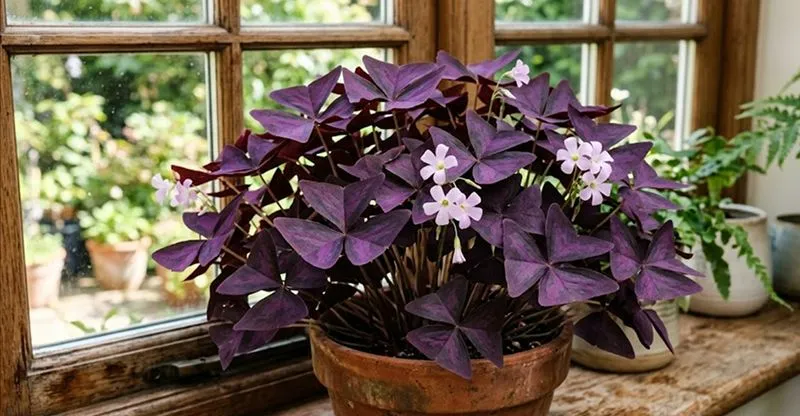
The genus Oxalis consists of long-stemmed, diminutive plants famous among gardeners for their unique leaf structure. While these plants have a weedy reputation, some varieties are well-behaved and offer great ornamental value. I have grown its purple shamrock variety in a hanging basket on my outdoor porch to add a pop of colour.
If you want this versatile plant that is both a houseplant and a garden plant, follow along in this article to learn about its characteristics, planting steps, and care.
Table of Contents:
- Oxalis Plant at a Glance: Quick Info Table
- Key Characteristics of Oxalis Plant
- How to Plant Oxalis?: Indoors and Outdoors
- Care Measures of Oxalis Plant
- Propagation of Oxalis Plants
- Types of Oxalis Plant
- Common Pests and Diseases in Oxalis Plant
- Frequent Queries and Solutions about Oxalis Plant
- Bottomline
- FAQs
Oxalis Plant at a Glance: Quick Info Table
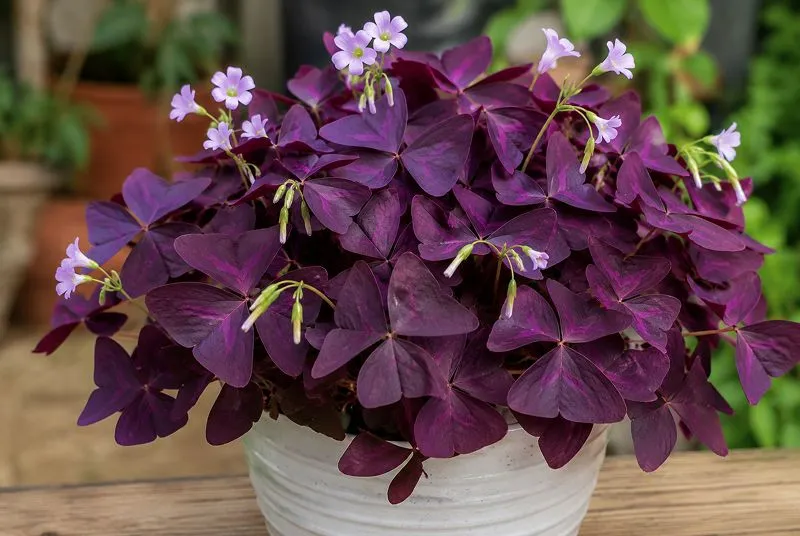
Oxalis has more than 550 species that can be annual or perennial based on their growing zones. Interestingly, Oxalis oxalis has three leaves that resemble a butterfly.
Here is the quick essential information about this plant, including its growing zones, common names, native range, and leaves and flowers:
| Common Names | Oxalis, shamrock, lucky clover, wood sorrel, good luck plant, love plant |
| Botanical Name | Oxalis |
| Family | Oxalidaceae |
| Native Range | South America, southern Africa, and parts of tropical Mexico and Brazil |
| Hardiness Zones | USDA Zones 7-10 |
| Plant Type | Annual, perennial, corm, or creeping rhizome |
| Bloom Time | Spring through autumn |
| Leaves Colour and Structure | Green, purple, silver, or variegated leaves with trifoliate structure |
| Flower Colour and Structure | White, yellow, purple, pink, red, and rose coloured flowers with a five-part structure |
| Toxicity | As per ASPCA, these plants are toxic to dogs, cats, and horses |
Key Characteristics of Oxalis Plant
Oxalis is undoubtedly a diverse genus of plants that has remarkable botanical characteristics. You can use some of the ornamental varieties for backyard design. Its leaves and flowers perform nyctinasty, and many of its varieties grow from underground structures.
Here are its key characteristics:
- Nyctinasty: Interestingly, the leaves and flowers of the oxalis shamrock plant exhibit the sleep movement. They fold downward in the night and reopen in the daylight.
- Underground Structures: Many of the Oxalis Shamrock species grow from underground structures like small bulbs, corms, or tuberous roots.
- Stress Response: Some species fold their leaves downward in response to excessive heat, direct intense sun, or physical touch. This is their response to conserve moisture and energy.
- Toxicity: The plants contain toxins that make them harmful for cats, dogs, and horses. These toxins also help to deter pests, rabbits, and deer.
Did you know?
According to tradition, St. Patrick used the three-leafed oxalis to explain the holy trinity, which includes the Father, Son, and Holy Spirit.
How to Plant Oxalis?: Indoors and Outdoors
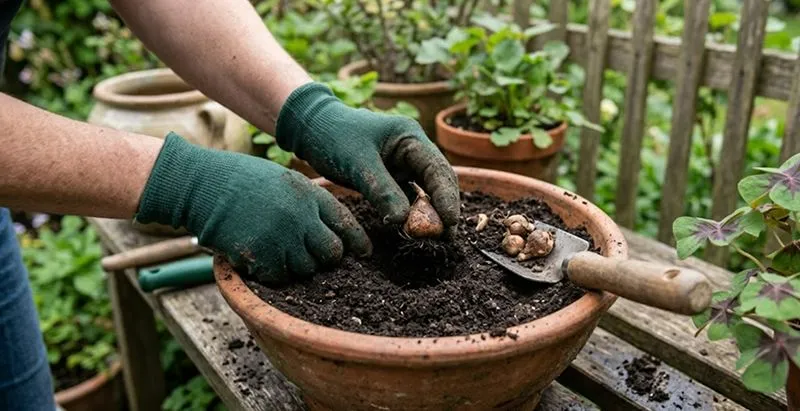
You can plant the oxalis bulbs in spring or autumn in garden beds or in pots. The leaves emerge in about 3-4 weeks, and the flowers appear after around 8-10 weeks.
Let’s see how to plant it in garden beds or pots:
- In garden beds: Plant the bulbs about 4-6 inches apart and 2 inches deep, covering them with soil. If needed, mix a little compost or organic matter with the soil to enhance its quality.
- For containers: Plant the bulbs an inch deep in a well-draining potting mix. Use about 6 to 8 bulbs for a 6-inch pot.
- Forcing the oxalis bulbs: I prefer to force the potted oxalis bulbs indoors before moving them out to the garden. For this, I place them in bright light in a room with cool temperatures. Keep the soil well moist but not waterlogged. When the plant begins blooming, it flowers for several months, as it does not need the vernalization period like many other plants.
Care Measures of Oxalis Plant
Oxalis plants are beginner-friendly when talking about their care measures. They need bright indirect light, consistent watering, and fertile acidic soil to grow well in indoor and outdoor areas. They also benefit from occasional fertilizers, repotting, and winter protection.
Let’s see the necessary care instructions that you have to follow for growing oxalis:
1. Light
Oxtail plant thrives best in bright, indirect light. It can handle bright light through a window, preferably filtered light. If you are planning to keep it outdoors, avoid keeping it in direct light, as it can lead to leaf scorch.
2. Water
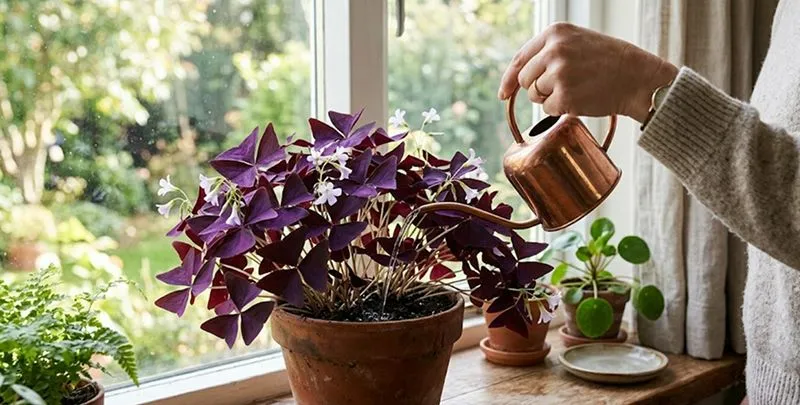
This plant prefers consistent watering every week or every two weeks, but not soggy soil. Also avoid watering it during its dormant period in winter to avoid rotting.
Pro Tip
Use room temperature water when watering the plant to avoid shocking its fragile roots.
3. Soil
Plant shamrock oxalis in a location with fertile, well-drained soil with a slightly acidic pH. If you are planting it outdoors, mix compost with the soil, and if you are keeping it as a houseplant, add sand or grit to the indoor potting mix.
4. Fertilizer

The plant gains the most benefits from the soil that is enriched with organic nutrients and compost. Alternatively, you may fertilize the plant with inorganic NPK 10-10-10 or 5-10-10 fertilizer when its growing season begins.
In the case of houseplants, fertilize them monthly with diluted liquid houseplant food. Withhold fertilizers during the dormancy period when growth slows down.
5. Temperature and Humidity
The right temperature and humidity are dependent on the specific species. Most of the species, including houseplants, prefer warm temperatures between 15 °C and 23 °C.
These plants need about 40 to 50% humidity to grow optimally. You can place these plants in the bathroom or kitchen to maintain sufficient moisture. Otherwise, you may also use a humidifier or place a pebble tray beside the plant.
Pro Tip
Most of the oxalis plants are frost-tender, and their leaves turn brown and die back when the temperatures go below 10 °C. Therefore, these plants need winter protection, which includes digging up the plant bulbs, storing them, and replanting them in the following spring.
6. Repotting
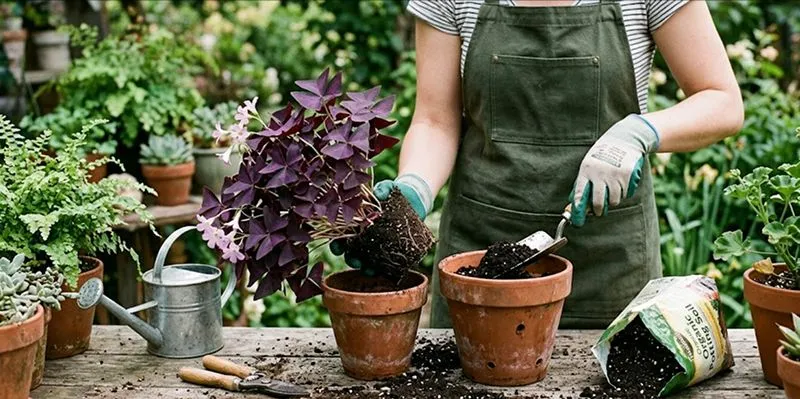
Repot the shamrock oxalis plant when it outgrows its container using a well-draining potting mix. Spring is considered the best time for repotting as the plant stays in its active growing period. Be careful while handling the rhizome and delicate buds to prevent damage to the plant.
Propagation of Oxalis Plants
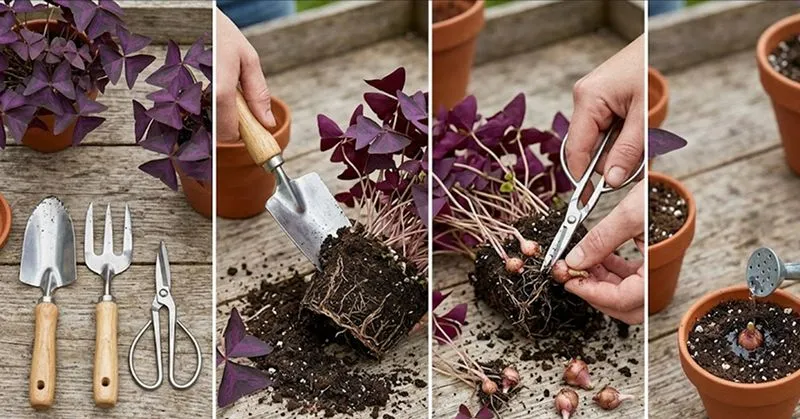
Shamrocks plant corms multiply rapidly, making it easy to propagate it the spring when it is in their active growing phase. For this, the mother plant corms are divided and planted in separate containers.
Here are the steps to propagate the butterfly oxalis plant:
- Gather materials like a garden spade, fork or shovel, and a sterile cutting tool.
- Using a fork or spade, dig around the circumference of a clump of plant. Dig about 8-10 inches deep to remove its corms and roots. Take out the clump and remove the soil.
- Cut or separate the corms. Each should have its root system and the start of green shoots.
- Plant the divided corms at the new location and water well.
Types of Oxalis Plant
There is a large variety of species in the Oxalis genus. Some of the common ones are purple shamrock Oxalis triangularis, Oxalis tetraphylla (iron cross), Oxalis adenophylla, and Oxalis corniculata (creeping wood sorrel).
| Types | Key Points |
Oxalis triangularis (purple shamrock)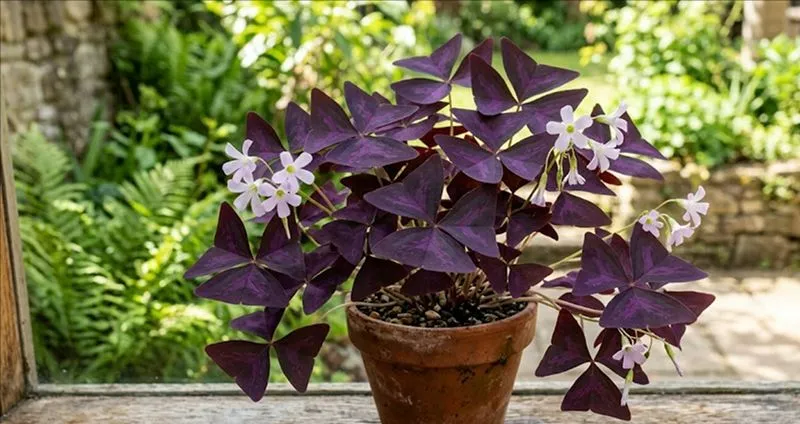 |
|
Oxalis tetraphylla (iron cross)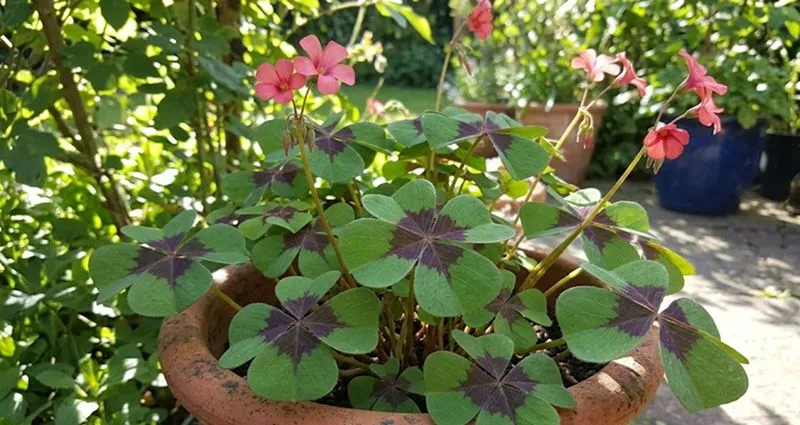 |
|
Oxalis adenophylla 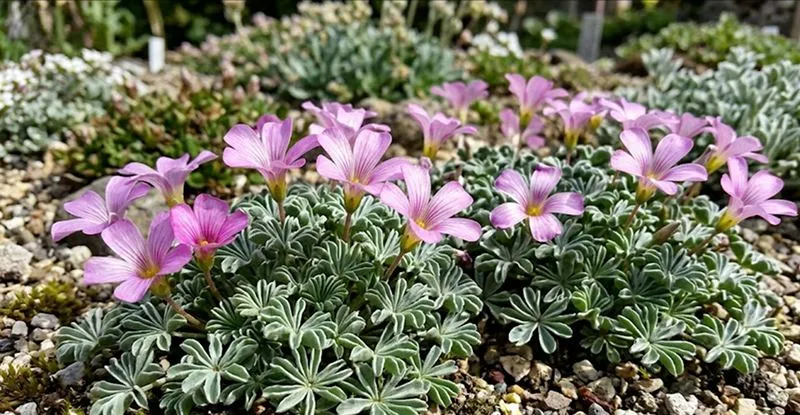 |
|
Oxalis corniculata (creeping wood sorrel)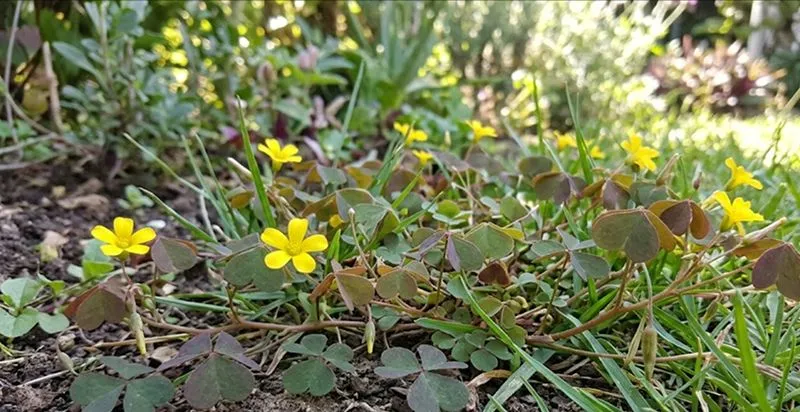 |
|
Oxalis debilis (pink wood sorrel)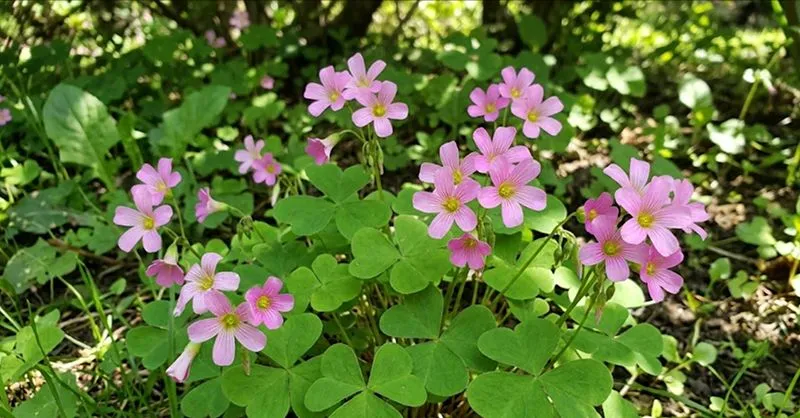 |
|
Oxalis magellanica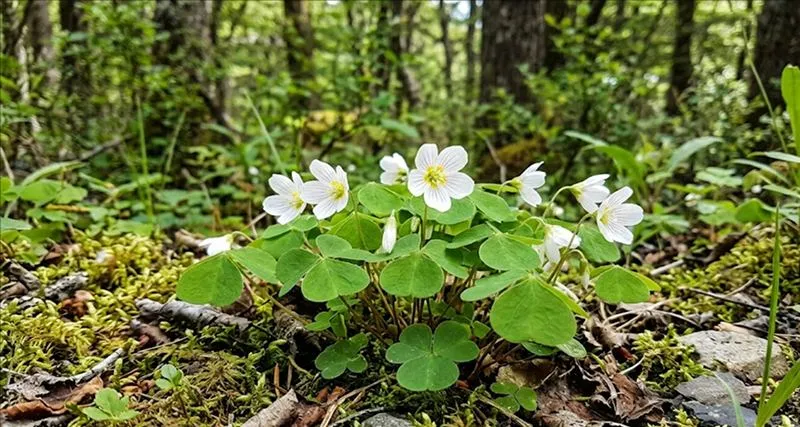 |
|
Study Insights
According to the 2025 study by the National Center for Biotechnology Information, Oxalis corniculata is a botanical resource that has potential for the development of pharmaceuticals, dietary supplements, and health-promoting applications.
Common Pests and Diseases in Oxalis Plant
While the shamrock plant is generally resilient, it may be affected by certain pests like spider mites, aphids, and thrips, and diseases including leaf spot and root rot. Prevention measures include washing the plant, applying neem oil or insecticidal soap, and making environmental adjustments.
Let’s see the signs and solutions for the pests and diseases:
Pest Infestations in Oxalis Plant
| Pests | Signs |
Spider Mites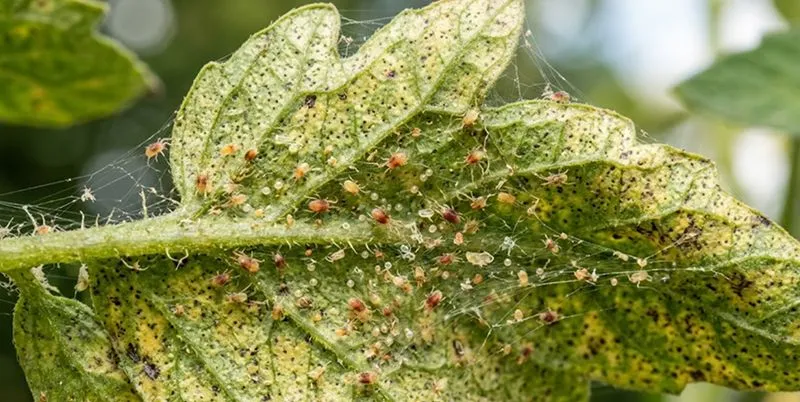 |
|
Thrips 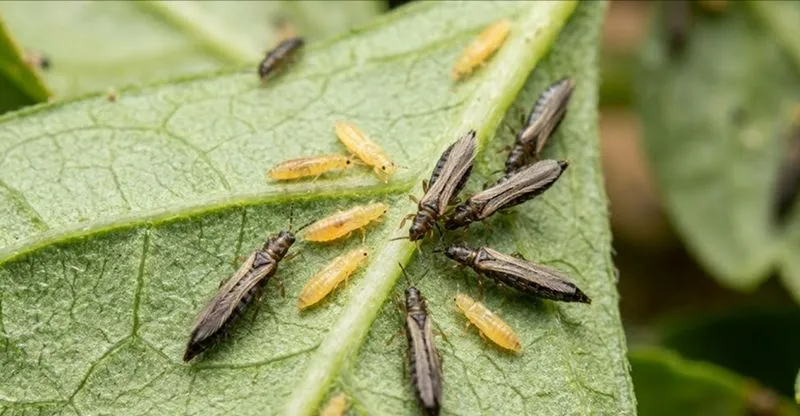 |
|
Aphids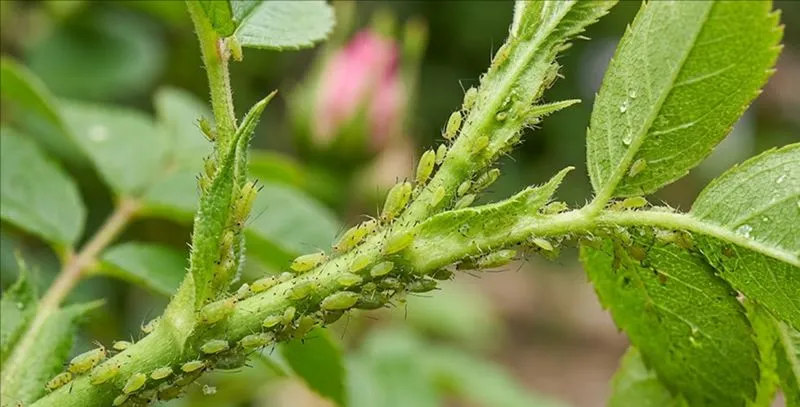 |
|
Diseases in Oxalis Plant
| Diseases | Signs |
| Leaf Spot | Small and discoloured spots on the leaves that usually grow over time. |
| Powdery Mildew | Formation of a white, powdery coating on leaves. |
| Root Rot | Decaying roots due to waterlogged soil, leading to issues like stunted growth and wilting leaves. |
| Rust Disease | Orange, brown, yellow pustules on the undersides of the leaves. |
Solutions and Treatment
- Washing: Rinse the plant under a shower to physically wash away the pests and dust.
- Environmental Adjustment: Keep the foliage dry while watering, increase air circulation, and avoid overcrowding.
- Neem Oil or Insecticidal Soap: Spray neem oil or apply insecticidal soap on the plant leaves to prevent pests.
- Pruning: Cut off all the infested or diseased leaves to prevent the spread.
Frequent Queries and Solutions about Oxalis Plant
Many planters face issues due to the invasiveness of this genus. While scrolling through Reddit, I got to know many such queries regarding the plant taking over the garden. Let’s see some of them and find the best possible solutions:
Popeyespajamas asks Help! My garden is infested with Oxalis. The user wants to get rid of oxalis spreading throughout the garden.
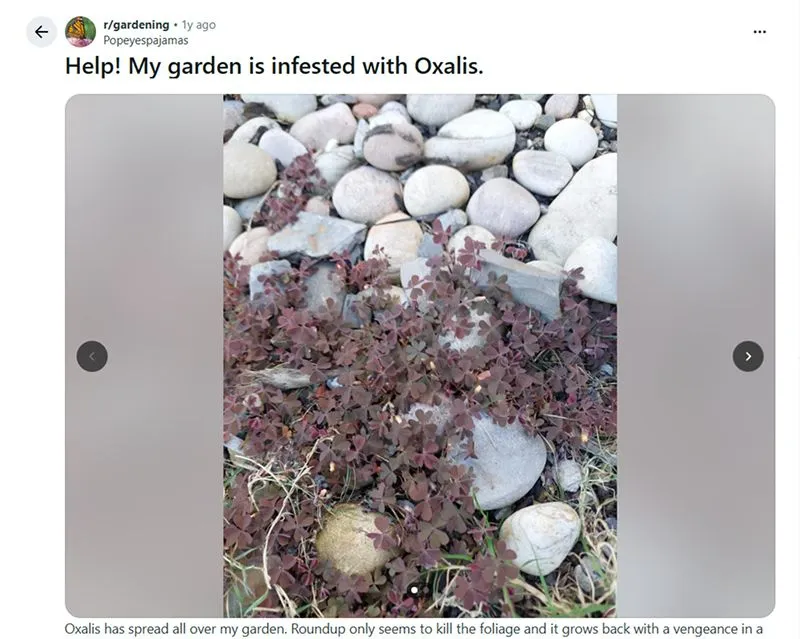
Solution: It grows rapidly from the bulbs, so spraying the leaves only won’t work now. You have to remove the plant carefully, including as much of the underground bulbs as possible. Thick mulch also helps suppress the new growth.
anonymousbosch_ shows a similar concern and asks Tips for managing oxalis?

Solution: Remove the leaves repeatedly to weaken the oxalis. Hand digging is also helpful, but you need to focus on removing the corms.
D-1-S-C-0 shows curiosity Any reason I SHOULDN’T use purple oxalis (purple variant of yellow sorrel) as ground cover in my borders?
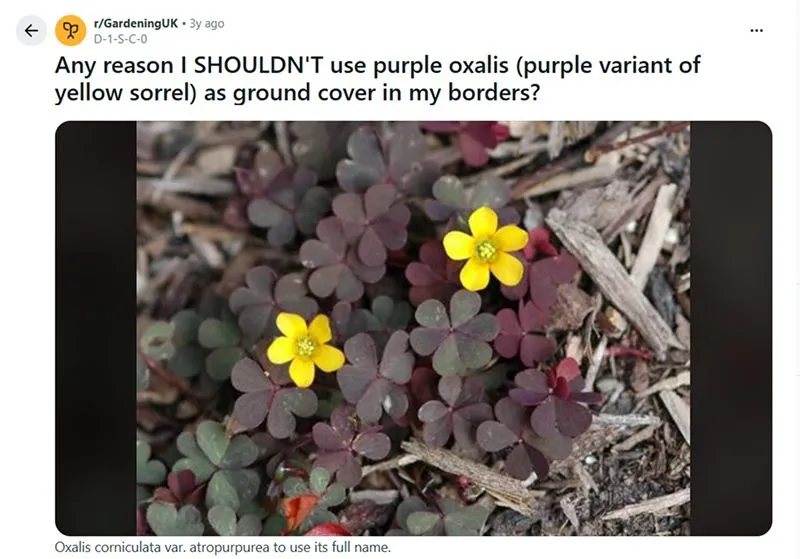
Solution: Purple oxalis is highly invasive and can spread quickly through the underground structures. This is the reason it gets difficult to control its growth once established. If you are planning to use it as a groundcover, remove the seed pods before they mature.
Bottomline
Oxalis genus varieties are great to start a garden from scratch. It is highly diverse and can be used as a groundcover, rock garden, edging, in hanging baskets or pots. They can also be used as houseplants for home natural decor.
Whether you choose a green oxalis plant for luck or a dramatic purple type for a bold appearance, all its varieties are enchanting with gentle movement and unique structure.
FAQs
Is oxalis red invasive?
Can you keep oxalis as a houseplant?
Yes! The species that originate from corms can be kept as houseplants.
What are some of the oxalis varieties?
Some of the famous varieties include Oxalis corniculata, Oxalis triangularis, and Oxalis adenophylla.
Why has my oxalis fallen over?
There could be three reasons for the plant falling over. First is overwatering; always allow the plant to dry out between watering sessions to prevent this. Second, the plant is not receiving enough light. Lastly, the plant may be entering dormancy.
How to propagate oxalis?
The best method to propagate this plant is by dividing the underground bulbs and replanting them in a new location.
Sources:
Oxalis – BBC Gardeners’ World Magazine
How to grow and care for Oxalis triangularis – BBC Gardeners’ World Magazine
Oxalis – Britannica
Latest Blog