A hibiscus. Hibiscus syriacus belongs to the hibiscus genus and is not a rose at all, which is why the plant is also sold as shrub althea.
Rose of Sharon Care, Size, Bloom Time, Varieties And Growing Conditions
Author
Annette Hird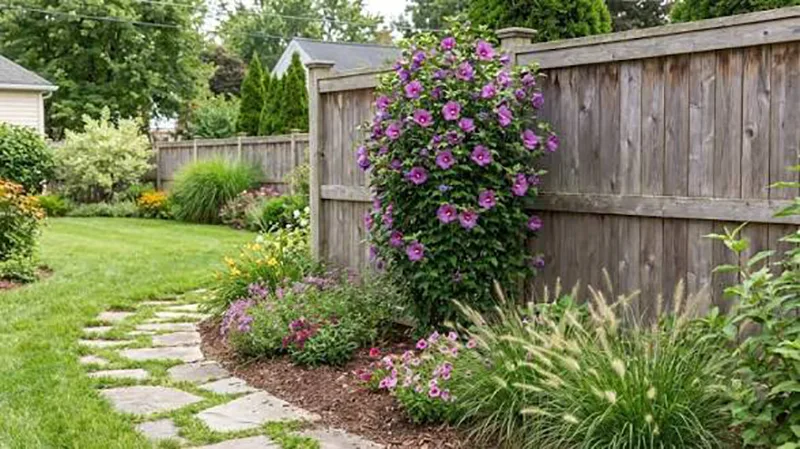
Rose of Sharon shrub covered in pale violet flowers against a garden fence
Rose of Sharon is a hardy deciduous shrub in the hibiscus family that grows 8 to 12 ft tall and flowers from midsummer well into fall. It is the plant almost every American gardener means by that name. You will also see it typed as rosa sharon, rose a sharon, roses of sharon, rose. of Sharon and even Sharon of the rose.
Nurseries add their own spin, advertising a rosa sharon bush, a rosa sharon tree, rose sharon trees, or rose of sharon trees. Same shrub every time. What it is not is a tender tropical hibiscus, and that mix-up costs people plants every winter, because this one survives down to USDA zone 5. If you are after the tender kind, our hibiscus care guide covers those.
Read on for size, bloom time, care, varieties,s and the two drawbacks nobody mentions.
Quick Answer: Rose of Sharon is a deciduous hibiscus shrub that reaches 8 to 12 ft tall. It flowers from midsummer into fall and is hardy in USDA zones 5 through 9. Full sun, well-drained soil, and a hard spring prune are all it needs.
Table of Contents:
What Is a Rose of Sharon?
Most people assume a rose of Sharon to be some other species of plant because of its Woody and hard nature; however, it’s actually a genuine hibiscus. This confusion is the most common one when talking about a rose of Sharon.
Also known as Hibiscus syriacus, this plant is actually a deciduous plant, which means that it does not grow all year round and has a specific time duration for its growth. It is a multi-stemmed shrub. While the name of this plant includes Syriacus, it actually does not belong to Syria and is rather more native to the regions in eastern Asia. This is the second most common mix-up that people make while talking about a rose of Sharon. Moreover, garden centres also sell it as shrub althea.
Rose of Sharon plant is actually both a bush and a shrub; the only difference in what you call it at a certain time depends on what form it has taken. This means that both the bush and the shrub actually grow from a single variety of hibiscus, and they only start to differ when you change the way that they grow.
So if you leave this plant alone for a long time, it actually grows more upright, in a vase shape, and has multiple stems that start to grow from the base. And if you cut one of these stems back and plant it again, you get a rose of Sharon tree, which is the more popular version out of any form in which it is grown. This is also the standard form of a rose of Sharon plant because nurseries actually sell these.
Just like any other plant, the rose of Sharon also has its own set of unique characteristics. For example, the leaves of a rose of Sharon plant are actually coarse, with a simple and alternate growing nature. These leaves also turn yellow as they mature, right before falling off the tree. The seed capsules that follow the fallen leaves are more brown, and their size varies from about three-quarters of an inch across; they hang on all winter.
Did you know?
The flowers are edible and turn up in teas and salads, and the plant’s native range runs through China and India rather than the Middle East. That makes the name syriacus one of botany’s more durable mistakes.
How Big Does Rose of Sharon Get?
The rose of Sharon does not particularly have a given set of height or width in which it grows. In fact, different varieties of Rose of Sharon show different growing habits altogether.
However, the most common height associated with the rose of Sharon plant is about 8 to 12 feet tall. These plants also have a wide spread when it comes to the stems and roots and can spread to an area of about 6 to 10 feet. But you should not confuse the fact that different varieties, even in the same plant, can have different growth. This is because a single-stem standard plant can push its spread to about 15 feet, while a more compact variety only reaches about 6 feet.
This is the one part that most people get wrong, and it can actually create a lot of trouble for them. A full-grown rose of Sharon tree and a dwarf shrub are actually very different purchases in the way that they grow, so one way to ensure that you buy the variety you actually need is to check the label on the plant before you dig a hole for it.
These plants also show quick growth, which is rated from moderate to rapid depending on the kind of plant that you are growing, how you’re growing it, and what the growing habits or the growing region of the plant is.
While most plants take a longer period of time to grow and bloom, these plants actually mature really fast. This means that a young plant can fill the space it’s grown in just a few seasons rather than taking up an entire decade to do it. This is why a rose of Sharon hedge closes up so fast.
Tip:
For a hedge, set plants 6 to 12 ft apart and let them knit together. Closer than 6 ft and you will be thinning them in year four.
Read more: Oakleaf Hydrangea: Growing Process, Care Tips, Ideal Growing Conditions & Much More.
When Does Rose of Sharon Bloom?
One of the reasons people buy a rose of Sharon plant is actually because of its blooming period. This is because the rose of Sharon actually blooms from mid-summer through to late fall.
This is actually a good characteristic that makes these plants stand out from any other because most flowering shrubs actually mature and bloom no later than July. But this flower actually only starts growing in late July, which gives it plenty of time to grow, and it does not have to compete with the neighbouring plants for water or light because by then they have already bloomed. The shoots of these plants appear in the spring, and they carry the flowers for the summer display of this plant.
The flowers of these plants also have certain features which separate them from other flowers. The flower of a rose of Sharon plant is actually 2 to 4 inches wide and has five petals. They also have a hollyhock-like appearance, with their long columns of stamens presiding right in the centre of the flower.
The colour of flowers of such plants has a huge range to it. These particularly come in colours like white, pink, rose, red, violet-blue and red-violet, often with a dark eye, in single or double forms.
The most interesting fact about the rose of Sharon plant is their blooming habits. Most people think that the rose of Sharon plant actually has a dense bloom which lasts a long time, but that is actually the wrong assumption.
This is because an individual flower of this plant only lasts about a single day,y and so the question automatically arises: how do these shrubs look so dense for a good amount of time?. This is because the shrub actually looks continuously in bloom for a large time frame, as the plant opens a fresh batch of blooms every morning for weeks.
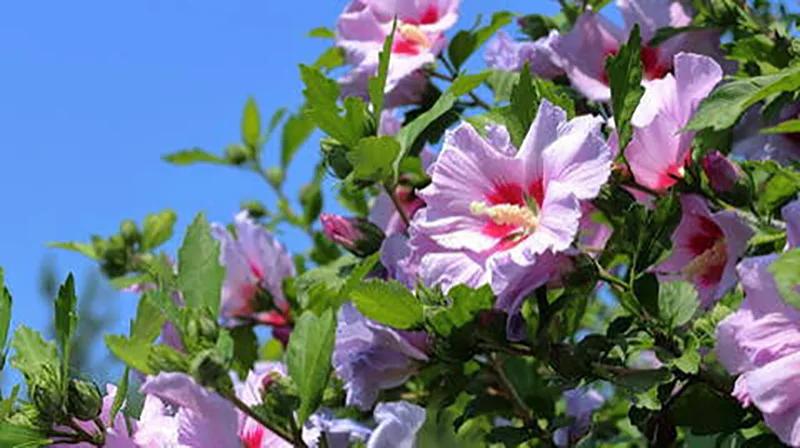
Close-up of a single rose of Sharon flower showing the long central column of stamens.
In fact, the easiest way to recognise a Hibiscus of any kind actually has a trick to it. One should always check the staminal column, which is situated near the petals, to know whether a plant is a Hibiscus or not.
Rose of Sharon Plant Care and Growing Conditions
Most people often give this plant more than it requires, and that is the main reason why it is damaged.
Taking care of a Rose of Sharon plant is actually pretty simple because this plant does not require a fancy schedule of watering or expensive soil. All it requires is sunlight, drainage, and one hard prune. This shrub gives anything else that you give or do not give to it other than these three things.
This is why, to grow the plant well and ensure that it grows healthily, you need to give it a good amount of sunlight, especially direct sunlight, which is the one thing that most other plants seem to avoid. Six hours is listed as the recommended time that plants need every day in direct sunlight for a fuller crop of flowers. Although it can also survive in partial shade, you might not get to see as many flowers in this case, and you would be able to observe more leaf spotting if that year has more rain scheduled than usual.
The kind of soil in which you plant this tree/shrub rarely ever matters. The only prerequisite for soil to sustain healthy growth is that water should be able to pass through the soil freely. It handles clay, alkaline ground, and road salt, and tolerates everything except extremely wet or extremely dry sites. The rose of a Sharon plant requires regular watering in the first summer, especially if you have just potted the plants. But once these trees grow big, you can leave them in your garden without the regular watering schedule.
Most people do not account for this one factor, but for growing a Sharon well, this one job can actually bring significant change in the result rather than any other care technique. Cut it back hard in spring, because flowers develop from these stems on new wood, and when you cut the tree’s stem or bark hard way, it means that the growth will increase in quantity.
| Rose of Sharon Plant Stats | Detail |
| Botanical name | Hibiscus syriacus |
| Plant type | Deciduous shrub or small tree |
| Mature size | 8 to 12 ft tall, 6 to 10 ft wide |
| Growth rate | Moderate to rapid |
| Rose of Sharon zone | USDA 5a to 9b |
| Light | Full sun, 6+ hours; tolerates partial shade |
| Water needs | Regular when young, occasional once established |
| Soil | Well-drained; tolerates clay, alkaline soil, and salt |
| Bloom season | Midsummer to late fall |
| Flower size | 2 to 4 inches across, single or double |
| Maintenance | High, mostly because of seedlings |
| Toxicity | Non-toxic to dogs, cats,s and horses; flowers edible |
| Wildlife value | Draws butterflies, hummingbirds and specialist bees |
Rose of Sharon Varieties and Types
Most people choose rose of Sharon varieties based on their colour and what would look good in their garden; however, that is the worst metric to judge which variety you need to buy.
There are four major features that you should always consider before you decide on the one that you want to buy, and learning them by their features is much more important than their names. This is because during trade, these flowers have acquired multiple different names, and so different names can refer to a single variety. Listed below are the four features you should always check.
- Single or double flowers. Always check whether the variety that you’re buying has single flowers or double flowers. Most people think that this is not something worth checking, but it absolutely is.
This is because single flowers have a dark eye with a better staminal column,n whereas double flowers look fuller because of the extra petals, and that is why the centre is hidden completely.
- Size class. Always make sure to decide the room or the place that you will put the rose of Sharon plant in before you buy the variety.
This is because different varieties of this plant can vary very differently in their height and spread. For example, full-size shrubs can grow up to 8 to 12 feet tall, whereas more compact varieties of it stop only around 6 feet.
- Seed-setting or low-seed. This one is one of the most important things to check while buying or even growing the rose of Sharon plant.
This is because varieties that have a lower seed count and have sterile selections can actually save a lot of time on weeding.
- Foliage. A few, such as ‘Variegata’, are grown for variegated leaves as much as for flowers.
So if you are a beginner and want an ID of this plant that is easier to take care of and does not require fancier tools, then I would recommend going for it, which has a low-seed feature. In fact, I would even suggest taking this variety even at a higher price.
Read more: Red Twig Dogwood Care Tips, Growing Process, Ideal Growing Conditions, & Much More.
Is Rose of Sharon Toxic? Safety and Real Drawbacks
Even though a lot of sites state this plant as toxic, it’s actually not toxic at all. In fact, it also sits on the ASPCA’s non-toxic list for dogs, cats,s and horses. Moreover, some parts of this plant are actually edible, like the flower. So it is always a good option to consult an expert on whether this plant is toxic or not and to listen to online sites because a lot of alarming material has been written about rose of Sharon poisoning, but none of that can stand up to the ASPCA’s list.
However, just this one feature alone does not prove that the rose of Sharon plant is actually the best because it also has its own set of drawbacks which are way duller. The major feature that can be troubling for a lot of people is that this plant seeds itself freely.
This means that even if you grow just one shrub, it can soon turn into a nursery of shrubs if attention is not paid to it, as this one shrub acts as a volunteer in the beds surrounding it. In fact, this problem has become so bad that several states like Virginia and Kentucky actually list this plant as invasive.
The best way to solve this problem, however, is through deadheading. This works wonders to prevent the shrub from seeding itself by cutting the capsules off immediately after its petals drop.
Another one of its drawbacks comes in spring and is more commonly referred to as the “spring panic.” This problem is usually faced more by beginners rather than practiced experts because this is the plant that’s the last to grow new leaves.
This means that while every other plant has already bloomed in May, this plant seems bare, and people often mistake it for dead. That’s why they uproot an entire plant, thinking that it did not grow healthily, when in fact it only did not get the chance to green up. The best approach for this is to be patient with the rose of Sharon plant and let it grow even after every other plant has bloomed because that is exactly the time when these start growing.
Two honest limits. In zone 5, the plant is hardy but near its edge, so a young one benefits from shelter for its first couple of winters. In states listing it as invasive, a low-seed variety is the responsible choice rather than a nicety.
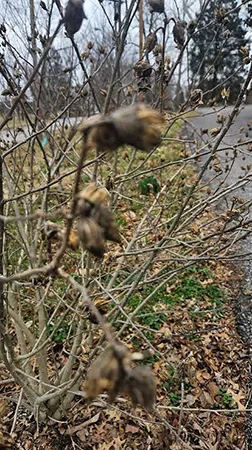
Brown five-valved rose of Sharon seed capsules on bare winter branches
One more thing to be careful about when planting the rose of Sharon plant is to remember that capsules of this plant hang on through all of winter and split in spring. Which means that if you remove them during the fall season, new plants might never grow. So pruning should only happen during the spring season.
Takeaways
Caring for the rose of Sharon plant is actually pretty simple because it does not require you to remember a variety of things.
The care for this plant actually only requires pruning during spring and fall deadheading. This shrub actually starts growing later than other plants, so when the other plants have already bloomed and matured, these plants just start to grow.
The Rose of Sharon plant also needs a good amount of space to grow because it can grow to be bigger in size than most plants. They also require a good amount of sunlight, preferably six hours of direct sunlight to reach their full potential, along with well-drained soil. This is the reason why growing them in USDA zones 5 to 9 is a good option.
These plants have to be cut back during the spring so that new flowers can actually bloom from mid-summer on the wood. Additionally, these plants are also safe to have around pets because they are not toxic, but you should always double-check the kind of variety you are buying to be sure.
If you are a beginner, always consider buying a low-seed variety even if you have to pay a few extra bucks for it because this is the easiest variety that you can start with as you build your way up.
Happy and safe planting!
FAQs
Is a rose of Sharon a rose or a hibiscus?
Do roses of Sharon like full sun or shade?
Full sun. Six or more hours gives the heaviest flowering. It will grow in two to six hours of partial shade, but expect fewer blooms and more leaf spotting in wet summers.
How big do rose of Sharon get when trained as a tree?
Around 15 ft at the top end. A standard is one trunk instead of many, so the height goes up, and the spread comes down.
How do you stop it from spreading?
Cut the seed capsules off after flowering, before they dry and split. That single job in fall removes almost all of next spring’s seedlings.
Why has my plant not leafed out yet?
It is probably fine. This shrub is among the last to break bud, often weeks behind everything else in the border. Scratch a twig and look for green before giving up on it.
Sources
Hibiscus syriacus: NC State Extension Plant Toolbox: https://plants.ces.ncsu.edu/plants/hibiscus-syriacus/
Rose-of-Sharon: The Morton Arboretum: https://mortonarb.org/plant-and-protect/trees-and-plants/rose-of-sharon/
Rose of Sharon: ASPCA Animal Poison Control: https://www.aspca.org/pet-care/aspca-poison-control/toxic-and-non-toxic-plants/rose-sharon
Hibiscus syriacus: Oregon State University Landscape Plants: https://landscapeplants.oregonstate.edu/plants/hibiscus-syriacus
Latest Blog