Yes, and it colors best there. Six hours or more of direct sun gives the deepest purples and brightest limes. In very hot regions, afternoon shade prevents scorching.
Sweet Potato Plant: How To Grow And Care For This Fast-Growing Vine
Author
Annette HirdReviewed By
Cody Allison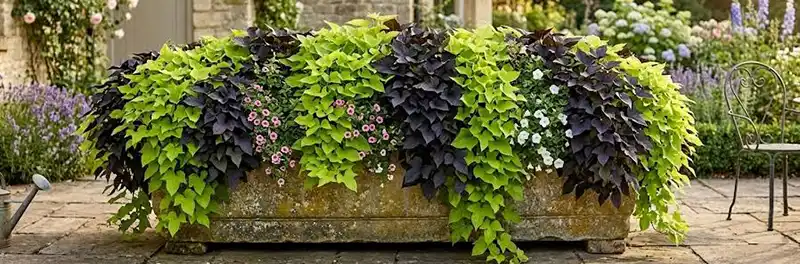
The sweet potato plant is a fast-growing trailing vine, Ipomoea batatas, grown either for its colored leaves or for the tubers underneath. Same species, two jobs.
Most people meet it as the purple or lime green vine spilling out of a hanging basket, and it is one of the easiest things you can put in a pot. It is also frost-tender, which is where most of them die.
So, in this article we will go through what it needs, which varieties to look for, and how to keep one alive past the first cold night.
Table of Contents:
- What Is A Sweet Potato Plant?
- Is The Ornamental Vine The Same As The Vegetable?
- Sweet Potato Plant Growing Conditions
- How To Plant And Care For Sweet Potato Vine
- Sweet Potato Vine Varieties Worth Growing
- Common Problems With Sweet Potato Vines
- Will Sweet Potato Vine Come Back Every Year?
- FAQs
- Concluding Remarks
What Is A Sweet Potato Plant?
The sweet potato plant comes from the morning glory family; it is a perennial vine that was originally grown in Mexico and Central America. One interesting feature about a sweet potato plant is that it wraps itself around anything that it can reach; when it cannot, it spreads widely in the ground, thus requiring more space than a normal plant would.
The reason why most people buy a sweet potato plant is actually only because of its leaves. This is because the leaves of a sweet potato plant are aesthetic and good-looking, as they are heart-shaped with colours ranging from lime green, black-purple, bronze, and silver. The leaves also have an average size, which is that they run from about 3 to 6 inches. One plant puts out 6 to 10 feet of stem in a season while mounding only about a foot tall.
Most people think that just because a label has a different spelling, the plant and its variety altogether shift, but that is not true because a sweet potato plant is sold under a lot of different spellings like sweet potato vine, sweet potatoe plant, sweat potato plant, potatoe vine, and sweet potatoes vine. But all of these mean the same thing, so that is nothing to worry about when you see a packet labelled incorrectly.
Did You Know?
One of the most interesting features that most people do not know about a sweet potato is that it can flower. It produces pink-coloured, funnel-shaped flowers which spread across 1 to 3 inches wide. But these only grow in warm regions, and so if the flower does not bloom in your region, it is most probably the weather rather than the condition of the plant.
Is The Ornamental Vine The Same As The Vegetable?
Sweet potato vines, which are used as an ornamental vine, are also the same as the vegetable. This means that the vine that you use for growing in your garden or setting up across your house as decoration pieces is completely edible, particularly the tubers underneath the plant.
Sweet potatoes were originally grown as foliage rather than a complete meal in themselves, and that is the reason why sweet potatoes have a more starchy flavour than a usual dinner and can feel a little dull on your food palette.
One thing that most guides do not tell you about a sweet potato, which is often one of the most important things that matters when you are buying a sweet potato, is that there are different varieties for different purposes. This means that you want to buy food varieties such as Beauregard or Covington if you wish to grow a crop. But if you want a sweet potato for its colour, then you should always go for an ornamental sweet potato.
Sweet Potato Plant Growing Conditions
Sweet potatoes are plants that do not require a lot of effort, especially for beginners, which is what makes them a perfect fit amongst other factors.
Three things that are extremely non-negotiable for the good and healthy growth of a sweet potato plant are warmth, a good drainage capacity of the soil, and an ample amount of sunlight. Moreover, one thing worth knowing about this plant before you start growing it is that this plant is actually hardy in USDA zones 9 through 11 while being grown as an annual everywhere colder.
| Height | About 12 inches as a mound; stems run 6 to 10 feet |
| Spread | 3 to 5 feet per plant |
| Growth rate | Rapid |
| Lifespan | Tender perennial, grown as an annual below zone 9 |
| Plant type | Trailing and climbing vine; groundcover; edible |
| USDA zone | 9a to 11b |
| Sunlight | Full sun (6+ hours) to partial shade (2 to 6 hours) |
| Water needs | Moderate; evenly moist, never waterlogged |
| Soil type | Loamy, well-drained, high in organic matter |
| Bloom season | Spring and summer, sparingly |
| Toxicity | Non-toxic to dogs, cats, and horses |
Even among the three, ‘light’ is the factor that will determine what condition of the plant will actually grow. This means that if the plant is supplied with direct sunlight, then you get to witness an almost black variety, with the lime once turning into an acid bright colour. And if you move it out of the direct sunlight and into a spot that is warm enough but still has shade, then everything shifts back to plain green.
Both of them are healthy plants, and no one could argue otherwise; however, it is just not the one you paid for.
How To Plant And Care For Sweet Potato Vine
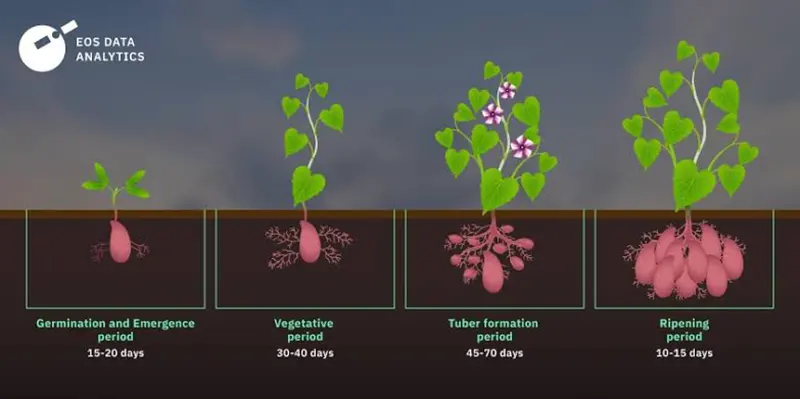
Sweet potato vines are low-maintenance plants, which means that they do not require extensive care. So a good way to care for it is to plant it in the soil once the atmosphere has warmed up and the last frost has already passed away because this will prevent the plant from dying.
After this step, watering is the most important care this plant needs, with an occasional cutting when it starts to grow invasively.
- Pick the spot for the color you want. If you want a more purple and bright line colour, then place the plant under direct sunlight for a long time. But if you want more plain green colour, then shade is the way to go.
However, one thing to take care of is the region in which you’re growing this plant because if summers in your region are brutal, then you might get purple shades even in the shade.
- Get the drainage right. This plant does not require a lot of nutrient-rich soil; all it needs is an ordinary potting mix filled in a container with loamy soil and a drainage hole in the pot so that waterlogging can be avoided.
- Give it room. Always make sure to create enough distance between two sweet potato plants because these can spread widely, with some even covering up to 3 to 5 feet.
If you are growing these in a mixed container, then use only one vine because using two will have both of them competing for space, water, and light.
Watering
Sweet potato plants require an average amount of watering, but one should never overwater them, as that can lead to damage to the plant.
If you do not understand when you should water a sweet potato plant, then you can wait for the plant to tell you because, in most cases, when a sweet potato plant dries out, its foliage wilts dramatically. That is not a thing to worry about because just within 1 or 2 hours of watering it, it goes back to normal. Take extra care for sweet potatoes in terms of watering if you live in a rather warm region.
Feeding And Pruning
Feeding does not require as much attention in a sweet potato plant as it does in the rest of them. This is because the sweet potato plant has quick growth, and so if you add fertilizers to the soil, the plant will grow even faster and will be difficult for you to take care of.
This is why you only feed a sweet potato plant when it shows you certain signs that it is running out of steam; this case usually happens in a plant that is kept in a container and has been going for months. The same goes for pruning because just taking the shears and removing the dead parts to about one-third of it is enough for healthy growth.
Containers And Baskets
This is actually the best feature of a sweet potato plant and the reason why most people buy it. These plants can create a spilling effect on the edge of a container better than most plants, thus making the room it is placed in feel more cozy. Pair them with upright plants for an attractive display. If you’re looking to create this look, explore our hanging plant range and planters and pots to find the right options for your space.
Also read: How To Grow Grapes? Cultivation, Care And Fun Facts About The Grape Vines
Sweet Potato Vine Varieties Worth Growing
There are a few features according to which choosing a sweet potato plant is actually beneficial, and those two consist of a plant’s leaf color and shape.
After you choose your particular variety of plant, care for it actually looks the same.
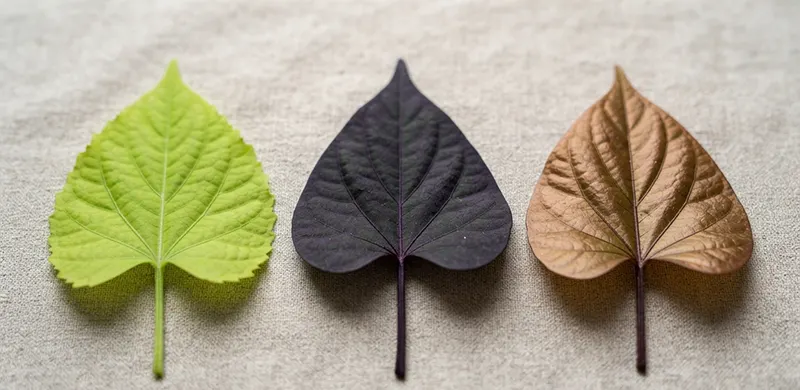
Usually, most people grow a sweet potato plant just because of its leaf colour, so one thing to remember is that leaf colour actually depends on how much light the plant is getting, so make sure you grow your sweet potato plant in a place according to the sunlight and colour you want.
- Margarita: These are bright lime coloured, heart-shaped leaves which are so wide that they will completely fill a space that earlier looked too empty.
- Blackie: This is one of the most common options that people go for since it has a more purple colour of the wine with moderate growth, which makes it easy for people to grow it inside their homes in a pot.
- Tricolor: This colour actually grows in variations among green, white, and pink. This also showcases slower and more fragile growth than any other variety of a sweet potato plant.
- Sweet Caroline series: This variety of a sweet potato plant represents darker shades, from bronze through to jet black. It has a more compact growth, which means that it will not take up as much space as other varieties will, and in some cases it also acts as groundcover.
- Illusion series: This week’s potato plant actually has a thinner texture to it with an almost lacy foliage. The best options to go for in this variety are Emerald Lace and Midnight Lace.
If you only want a classic sweet potato vine with no other colour or feature, then the best option recommended is to ask for a blackie, but if you want the spilling effect with a much more colourful product, then margarita is the way to go.
Common Problems With Sweet Potato Vines
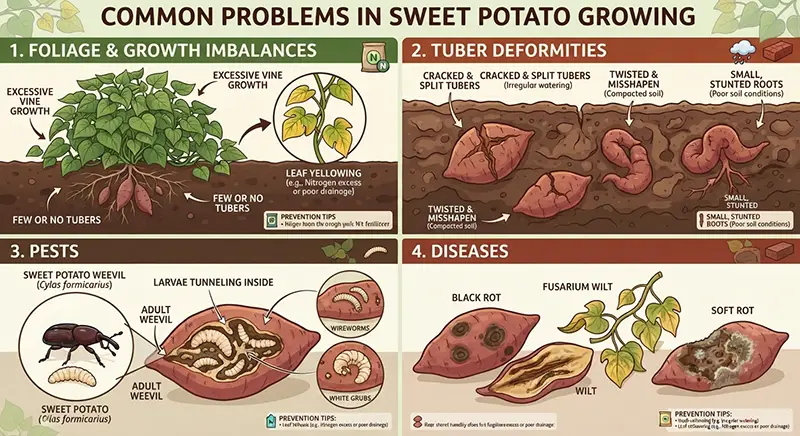
Considering all of the above features, one might feel that a sweet potato is an ideal plant to grow; however, that’s not the case because this plant has its own set of drawbacks. These mostly occur when the plant has already been placed in the ground.
- Deer: They take sweet potato as an enjoyable snack; that is why in a country full of deer, sweet potato should only be grown in a basket or on a raised shelf.
- Flea beetles and thrips: These organisms can create small holes in the ground and damage the leaves, which ruins the whole point of growing a sweet potato plant in the first place. These organisms are also high in number, especially in places where the same ground is used persistently for growing the plant.
- Root rot: This is one of the reasons why sweet potato plants include good drainage in their care manual. Soggy soil with no drainage hole can actually kill more container plants than any pest might.
- Fading color. This is actually considered one of the failures of caring for the plant, but this is actually not a failure since a fading colour does not represent that the plant is not growing healthily. All it means is that the plant has received too much shade and is reverting to green colour more than purple.
- Sudden dramatic wilting. In most cases, sweet potato plants often just require a good watering, and they will go back to how they were within the span of an hour or two.
One correction worth knowing, because it can change your decision about getting a sweet potato plant entirely, is that the foliage of a sweet potato plant is actually non-toxic to pets. This is one thing that most pages about a sweet potato plant get wrong, along with Google’s AI summary. In fact, a sweet potato plant actually sits on the non-toxic list for dogs, cats, and horses kept by the ASPCA.
The milky sap can irritate skin on people who handle a lot of it, according to Clemson’s extension service. Wear gloves for a long pruning session and stop worrying about the dog.
Note: Growth stalls long before frost arrives. The plant wants nights above roughly 50°F, so a vine that stops filling out in September is responding to temperature rather than to anything you did. Do not start feeding or repotting it at that point.
Will Sweet Potato Vine Come Back Every Year?
Sweet potato plants are sold annually across most places because the top growth of this plant will actually die during the first frost, as this plant is sensitive to cold weather. This is why a sweet potato vine is only perennial in zones 9 to 11.
However, just because a sweet potato plant does not regrow itself doesn’t mean that it is dead. The tuber underneath it is still alive, which means that if you take this tuber and store it in a place that is cool enough to safely store this part. Then you can always replant this in the spring season when the risk of frost has passed, and this will grow into a new healthy plant. Always make sure to store the tuber in a place where it will not freeze, but in a cool enough place so that it does not also get damaged.
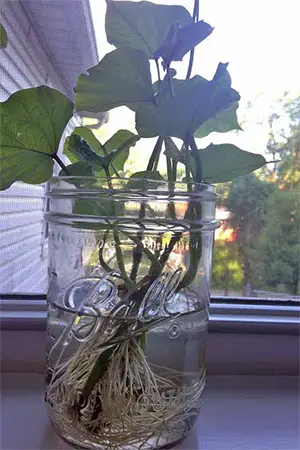
Cutting a sweet potato plant so that you can place it in the soil for the growth of a new plant is actually simpler than most people assume. All you have to do is take a stem that has several leaf nodes attached to it. Make sure the nodes are healthy because if they are not, the plant that will sprout from the ground will also not have healthy growth.
After that, remove all the leaves from the stem, especially at the bottom, and place it in water. Roots will start to appear in about ten days, and you can do this in the month of September, as you can then keep this jar on a windowsill all winter, and by spring you’ll have a new plant without spending any money.
FAQs
Does Sweet Potato Vine Do Well In Full Sun?
Sweet Potato Vine Plant Sun Or Shade?
Either, but they give you different plants. Sun means strong color and fast growth; shade means greener leaves and a looser habit. Anything darker than light shade is too little.
Can Sweet Potato Vines Be Grown In Pots?
Yes, and pots are where most of them end up. Use any container with a drainage hole and ordinary potting mix, then water daily in hot weather.
How Long Does It Take Sweet Potato Vines To Grow?
Fast. A plant set out in late spring trails over a container edge within a month, and reaches 6 to 10 feet of stem by the end of summer.
Is Sweet Potato A Climber Or Creeper?
Both, depending on what is nearby. It twines up a support if given one and otherwise creeps along the ground. In a basket, it simply hangs.
Can You Grow A Sweet Potato As A Houseplant?
Yes, in a bright window. A potato vine plant lives indoors year-round given strong light, though it stretches and pales in a dim room. Potato vine plant care indoors is otherwise the same.
Concluding Remarks
A sweet potato plant is actually one and the same thing as an ornamental vine because both of them are edible and instantly elevate a place’s look.
Most of the care for a sweet potato plant is actually a low-maintenance job since its entire growth depends only on three things: sun, drainage, and moist soil. In fact, if you are a beginner, then sweet potato plants are the best choice to grow because these plants themselves tell you exactly what they need.
For example, if you are not watering the plant enough, the foliage will wilt until you water it, after which the plant becomes back to normal within an hour to two.
One more thing that makes it such an ideal plant is that you do not need to buy a sweet potato plant again and again. You can simply cut the tuber of a plant after the first frost has passed, while carefully placing it in water and a cool place. This will give rise to a new plant entirely on its own, without you having to spend money again.
Happy planting!
Sources
How To Grow and Care for Ornamental Sweetpotato Vine (Ipomoea batatas) — Clemson Cooperative Extension Home & Garden Information Center — https://hgic.clemson.edu/how-to-grow-and-care-for-ornamental-sweetpotato-vine-ipomoea-batatas/
Ipomoea batatas — NC State Extension Plant Toolbox — https://plants.ces.ncsu.edu/plants/ipomoea-batatas/
Sweet Potato Vine — ASPCA Toxic and Non-Toxic Plants — https://www.aspca.org/pet-care/animal-poison-control/toxic-and-non-toxic-plants/sweet-potato-vine
Ornamental Sweet Potato (Ipomoea batatas) — UMass Extension Landscape, Nursery and Urban Forestry Program — https://www.umass.edu/agriculture-food-environment/landscape/publications-resources/plant-identification/ornamental-sweet-potato–ipomoea-batatas
Ipomoea batatas — Royal Horticultural Society — https://www.rhs.org.uk/plants/9185/ipomoea-batatas/details
Latest Blog