Porcelain tile is a good choice because it absorbs very little water and handles snow, slush, and salt well. Choose a finish with suitable wet-slip resistance or an Interior Wet classification.
Entryway Floor Tile That Survives Snow, Salt, and Slush
Author
Rashika GuptaThe grout has worn down long before the tile did; that happens in a lot of entryways. Showroom samples get judged on color and design, yet in a house that sees real winters, the first thing to go is the cement between the tiles.
The stained gray tiles and crumbling, melted rock salt sit for months, and choosing entryway floor tile for a snowy climate that can really survive becomes essential. It’s also considering eco-friendly plumbing solution if the wetness is caused by some leakages.
Here are the best options and finishes compared on the questions that really matter at the front door, like how much water the tile absorbs, how it grips when wet, what the grout is made of, and which layouts age well.
Table of Contents:
What Makes Entryway Floor Tile Survive A Winter?
Start with absorption. Under the North American standard ANSI A137.1, a tile can only be called porcelain if it absorbs 0.5% of its weight in water or less. That low porosity is why porcelain shrugs off meltwater and the brine that comes in on boots, while a softer, more absorbent body can take in salty water and show it later as white haze or spalling. Common glazed ceramic is worst for an entryway that opens onto a snowy porch, but is the best for backsplash and dry rooms.
Retailers in cold regions tend to stock this. In Quebec, where entryways deal with months of slush every year, the floor-tile range at this Quebec renovation retailer lists most of its floor tiles at 10 mm thick and flags porcelain and commercial-grade options in its filters, which is a quick way to narrow a long catalog when choosing entryway floors. Read the spec sheet instead of the label display whenever you shop. Remember, “porcelain” and “porcelain-look” are not the same thing.
Commercial ratings and thickness are helpful signals but do not provide guarantees; there are simple ways to verify what a tile can take.
Ask for the absorption figure, the slip rating, and the manufacturer’s floor-use classification; these three numbers help more than any photo of the room. If a seller cannot produce them, treat the tile as a flexible wall mounting.
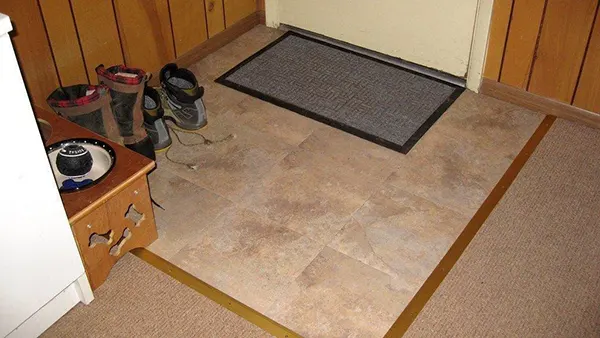
Is “Matte” Enough To Stop Slips?
No, and this is where marketing language gets complicated. The way to look for is the wet dynamic coefficient of friction (DCOF). ANSI A137.1 recommends tile for level interior places that are walked on when wet to reach a wet DCOF of 0.42 or more.
The 2021 edition of ANSI A326.3 also asks manufacturers to classify hard flooring by use: Interior Dry, Interior Wet, Interior Wet Plus, Exterior Wet, and Oils/Greases. For this spot, “Interior Wet” is the minimum label worth accepting, and it will help you start the search with a short list.
A lightly textured surface can grip well while looking smooth, and a finish can look matte and still test low. Polished stone and high-gloss glazed tiles are the usual offenders near the front door. A good doormat can help, but the tiles will handle the day someone kicks off wet boots on it.
How Do The Main Options Compare?
| Option | Water absorption | Wet grip | Salt and slush | Verdict for a snowy entry |
|---|---|---|---|---|
| Porcelain (through-body or glazed) | 0.5% or less by definition | Depends on finish; check DCOF and A326.3, class | Very tolerant; wipe residue off | The default choice |
| Glazed ceramic (non-porcelain) | Above 0.5% | Often glossy; check DCOF | Glaze resists, body does not if chipped | Acceptable in a sheltered vestibule |
| Polished marble or limestone | Varies by type; needs sealing | Slick when wet | Calcite-based marble and limestone are soft (Mohs 3) and scratch under grit | Beautiful, high maintenance |
| Slate or honed granite | Varies; sealing recommended | Naturally textured, good grip | Durable, can show white salt bloom | Good for rustic or classic designs |
Why Does Grout Matter More Than The Tile?
Cement grout is porous. Mapei, one of the major grout makers, describes standard cement-based grout as absorbing water and stains and requiring regular sealing, while two-part epoxy grout is non-porous, highly stain resistant, and usually demands no sealer. This difference matters and shows within one season in an entryway.
There is a chemical reason too. Research done for the Iowa Department of Transportation found that magnesium chloride and calcium chloride, two common ice melters, react with hardened Portland cement paste and weaken it. Grout is just cement paste with sand. Every boot print carries a little of that chemistry into the joints if your walkway is treated with those products.
Two practical rules follow. Use epoxy or a high-performance stain-resistant grout in the entry for the first few feet inside the door. And aim to select a grout color in the middle of the range; warm grey and greige work significantly better than bright white and charcoal. Salt residue reads white, and road grit reads dark, so a neutral middle shade hides both between cleanings.
Which Tile Patterns Hold Up Best In A Busy Space?
Layout is where an entryway design gets its personality, and it is also where installation mistakes show. Large rectangular tiles laid in a 50% offset (the classic brick or running bond) tend to show lippage because the standards allow rectangular tiles a slight warpage, and a half offset puts the high center of one tile next to the low edge of the next. A one-third staggered offset looks almost the same from the hallway and lies flatter. The current ANSI A108.02 installation standard limits the offset to 33% when the offset side is longer than 15 inches, unless the manufacturer’s advice is different.
Herringbone is best for a narrow hall and pulls the eye into the home, and a double herringbone does the same in wider places. They come with many more cuts on the walls, so arrange extra tile and labour.
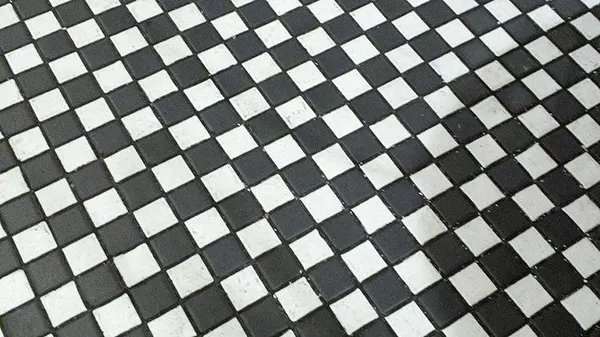
A checkerboard of small mosaics or square tiles is the most forgiving of the classic patterns on uneven floors and hides footprints well. Large format slabs (24 by 48 inches and up) give a calm, modern space with few grout lines, which is a real advantage where slush lands, but they need a very flat substrate.
Can A Practical Floor Still Look Good?
A practical floor still looks good, and the design choices that look best in an entryway often help with winter too. A busy or mid-tone surface hides what a plain pale one shows.
Good design here is about making the space feel welcoming from the first step inside. A few ideas that work in snowy homes, in a space that has to look good and take a beating:
- A warm neutral tone: sand, taupe, and pebble gray hide dried salt and grit far better than bright white or near-black. A soft veined porcelain in these shades gives a classic look and forgives a busy week.
- Wood-look porcelain in a herringbone layout adds movement to a long, narrow hallway, and the wood finish makes the space feel like part of the living room instead of a utility zone.
- A contrast border or “rug” of pattern. Frame a field of plain tile with a darker band, or set a patterned inset where a doormat would sit. It defines the drop zone and draws the eye away from wear on the rest of the floor.
- Checkerboard for a classic style. Black and white is the traditional version; two close shades of gray or beige give the same rhythm with less contrast and fewer visible footprints.
- Tile that runs up the wall. A tiled baseboard, or a low band of tile around a mudroom, protects drywall from boot kicks and splashes.
Save the entryway tile ideas you love for the final step, and choose the layout after you choose the tile instead of choosing them before.
The size, the finish, and the slip rating narrow the options; design and style decisions work best inside that shortlist, and keeping the shortlist short makes the room feel calm.
So What Should You Actually Buy?
For a home that sees real snow, the short list is porcelain with a published wet DCOF of at least 0.42 and an Interior Wet classification, a textured or honed finish in a mid shade, epoxy or high-performance grout in a neutral color, and a layout that respects the offset limit for the tile size.
Wood-look porcelain planks work well if you want the warmth of wood in the entry area without real wood’s dislike of meltwater, and they suit both modern and farmhouse homes.
Natural stone can also work, but plan on sealing it and on accepting some patina.
None of these choices is exotic. They just treat the first square yard of the entryway as the hardest-working floor in the house.
FAQs
What is the best entryway floor tile for snowy climates?
Is matte tile safe for a wet entryway?
A matte tile can be safe for a wet entryway only if the tile’s wet dynamic coefficient of friction is 0.42 or higher.
What type of grout is best for entryway floor tiles?
Epoxy grout or a high-performance, stain-resistant grout is a practical choice for snowy entryways. These options help resist moisture and staining from salt and grit better than cement grout.
Latest Blog