Alcasias generally prefer to be slightly root-bound and snug in their pots. However, extreme root binding can cause stress, so it is recommended to repot every 2-3 years.
Alocasia Plant Guide: Benefits, Care Measures, Common Problems, and More
Author
Rashika GuptaReviewed By
Cody Allison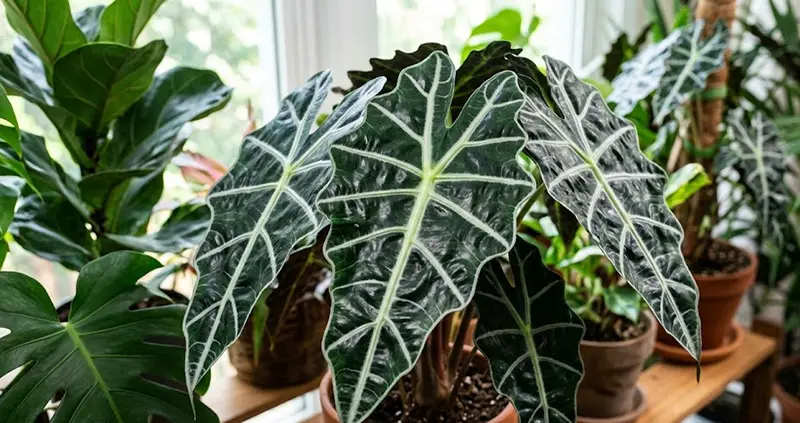
Alocasia, or African mask plant, is a tropical ornamental plant that has large arrow-shaped foliage resembling elephant ears. It is widely grown as a houseplant. However, you can also keep it outdoors in warmer months to enhance the visuals of beds, borders, and containers.
While the plant can be a bit finicky, this comprehensive guide covers everything you need to know about its planting, care, and propagation to grow this exotic indoor plant with confidence.
Table of Contents:
Alocasia Plant: A Quick Glance
Alocasia plants, belonging to the Araceae family, feature dramatically large foliage. Native to Asia, this herbaceous perennial can grow 2-10 feet tall and wide. Its flowers are less visible in the indoor environment. The tiny blooms are contained within the spadix, surrounded by the spathe.
| Botanical name | Alocasia spp. |
| Common names | Alocasia, elephant’s ear, African mask plant |
| Order | Alismatales |
| Family | Araceae (Arum family) |
| Genus | Alocasia (Schott) G.Don |
| Plant type | Herbaceous perennial |
| Mature size | 2-10 feet tall and wide |
| Bloom time | Spring and summer |
| Flower colours | Yellow |
| Hardiness zones | USDA zones 10-12 |
| Native area | Asia |
| Toxicity | According to ASPCA, it is toxic to dogs, cats, and horses |
Did you know?
Alocasia plants can push out tiny water droplets from the tips of their leaves through the process of guttation. This usually happens when they absorb more water than they need.
Benefits of Alocasia Plant
The Alocasia plant is highly beneficial due to its air-purifying properties, architectural beauty, and fast growth. It also symbolises good fortune and prosperity and is tolerant of low-light conditions.
- Air purification: Similar to other houseplants, alocasia plants also contribute to a healthier indoor environment as they purify the air. These plants absorb pollutants, cleaning the air that you inhale.
- Architectural beauty: Due to their bold leaf structure and upright growth habit, the plant adds an architectural element to indoor and outdoor spaces.
- Rapid growth: When provided with the right care, alopecia plants can grow rapidly, filling in the spaces with their lush leaves. In this way, growing this plant feels rewarding for plant enthusiasts.
- Cultural symbolism: In some cultures, these plants are associated with good fortune and prosperity. This is the reason bringing them home is considered meaningful.
- Low light tolerance: They thrive best in bright indirect light, but they are tolerant of low-light conditions. You can use them in a variety of indoor settings.
Alocasia Plant Care Measures
For caring for alocasia, place the plant in a spot with bright indirect light and well-draining, fertile soil. Provide enough moisture and feed with balanced liquid fertilizer. Prune lightly in the active growing season and repot every 2-3 years.
Here are the essential measures to care for alocasia indoors or outdoors:
Sunlight Requirement
In your alocasia care, place the plants near an east- or west-facing window. Here, it can receive bright indirect light while growing indoors. The plant can tolerate low-light conditions, but it may affect its health and appearance negatively. In such an environment, consider using artificial lighting that helps with its health and vibrancy. If you want to keep it outdoors, ensure you put it in a spot with partial shade.
Soil Preference
In indoor alocasia plant care, use a well-draining, airy potting mix rich in organic matter. For the best moisture retention and drainage, use a mix of peat, perlite, and pine bark. If keeping it outdoors, use a fertile, well-draining soil. It’s suggested to incorporate compost or well-rotted manure into the planting area to enrich the soil and enhance the structure.
Watering Needs
Alocasias are water-loving plants, but it’s best to allow the top inch of the soil to get dry before watering each time. Keep the soil evenly moist but avoid waterlogging conditions that can cause fungal infections and root rot. Reduce the watering frequency in winter as the plant is in dormancy.
Fertilizer
Feed the vigoro alocasia with balanced liquid fertilizer diluted to half strength every 4-6 weeks during its active growing season. Avoid fertilizing it in winter when it is in dormancy.
Temperature and Humidity
These plants grow best when the temperatures are below 60°F. They also prefer a humid atmosphere similar to their native range. If you want to improve the humidity around your plant, place it on a tray filled with pebbles and water or use a humidifier.
Pro Tip
For proper air circulation, ensure that the pots are placed at least 6 inches apart from each other and a bit away from the walls. This helps prevent diseases and promote healthier growth.
Pruning
Using sharp pruning shears, prune away the dead and damaged leaves at the base of the plant. Trim the dead foliage in its active growing season of spring and summer.
Repotting
Alocasia houseplants do not mind being slightly root-bound, but they benefit from repotting when they are visibly growing out of the container. It’s best to repot it every 2-3 years in the spring. In the case of smaller varieties, choose a pot that is 2 inches larger in diameter, and if it is a larger variety, a pot that is 2-4 inches larger in diameter is ideal.
How to Propagate Alocasia Plant
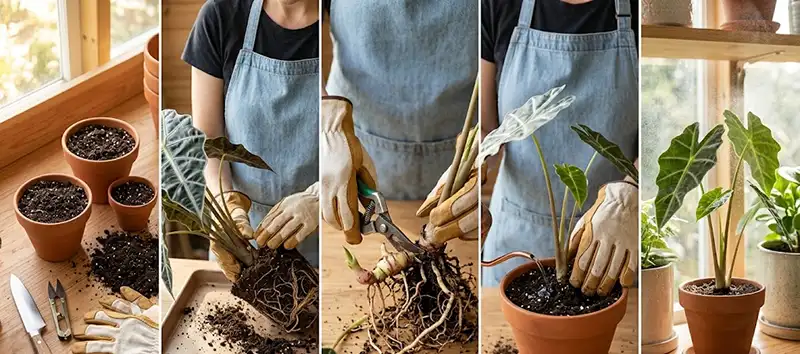
You can propagate the fancy alocasia by dividing its rhizome or clump in the spring. When grown as houseplants, most of the species do not produce seeds, so dividing the offsets is the preferred method. For this, unpot the plant and divide its roots. Repot the new divisions, and within a couple of weeks, there will be new growth.
- Step 1: Gather the materials like a sharp, clean knife or garden shears, pots filled with potting mix, and gloves to protect the hands from toxic sap.
- Step 2: Carefully take out the plant from the pot and remove the excess soil to see the roots and rhizomes clearly.
- Step 3: Check the natural divisions where the plant has produced the offsets, and with sterile pruning shears, divide a clump of rhizomes into a central stem. While cutting, ensure that every new division has at least one bud and a portion of the root system.
- Step 4: Now, plant the new divisions in separate pots filled with well-draining, airy potting mix. Water well to settle the soil.
- Step 5: Place the pot in a spot with bright indirect light and keep it consistently moist. The new growth will begin in a couple of weeks.
Pro Tip
Ensure high humidity to help the divisions recover and grow faster. Place the pot in a humid room or use a humidity tray.
Types of Alocasia Plants
There are more than 100 species of alocasia plants, and interestingly, most of them are used as houseplants. Some of the famous ones include Alocasia x amazonica, Alocasia ‘Portora,’ Alocasia cuprea ‘Red Secret,’ and Alocasia ‘Polly.’
| Type | Description |
Alocasia x amazonica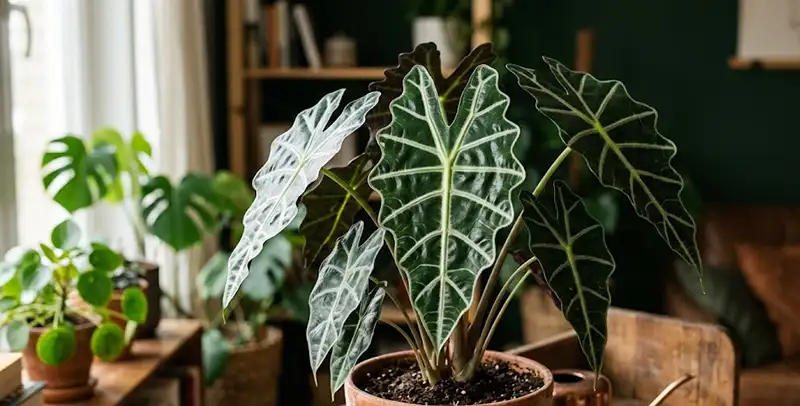 | The variety features striking dark green leaves with white veining. For this Alocasia plant, maintain a warm and humid environment. |
Alocasia ‘Portora’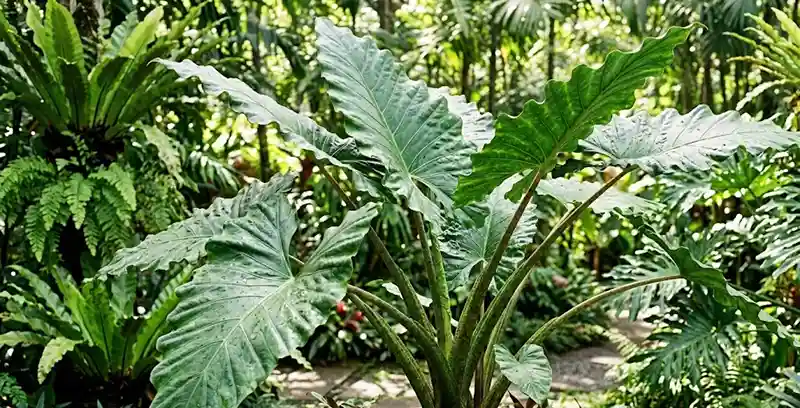 | This is a striking hybrid that has large, deep green leaves with a lush and tropical appearance. It is a great ornamental plant that also works as an air purifier. Bring it for natural home decor or as a bold statement in the garden. |
Alocasia cuprea ‘Red Secret’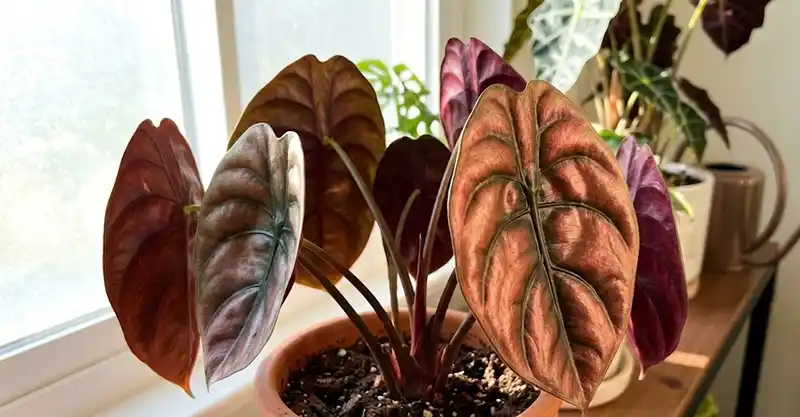 | This three-foot-tall plant has glossy oval leaves that transition from red to dark green to coppery bronze. The leaves have red undersides and a rippled texture that makes it a great choice for a captivating look. |
Alocasia ‘Dragon Scale’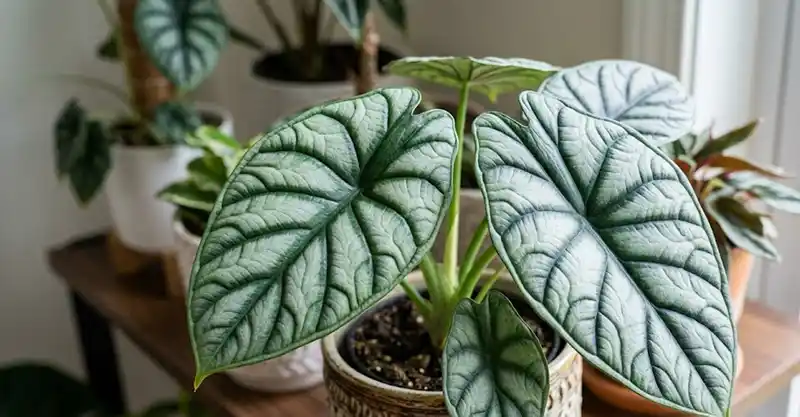 | It is an outstanding type with textured leaves that look similar to dragon scales. The variety has lush green-hued leaves with artistic-looking veining. It is a valued ornamental variety for adding an exotic look indoors. |
Alocasia baginda ‘Pink Dragon’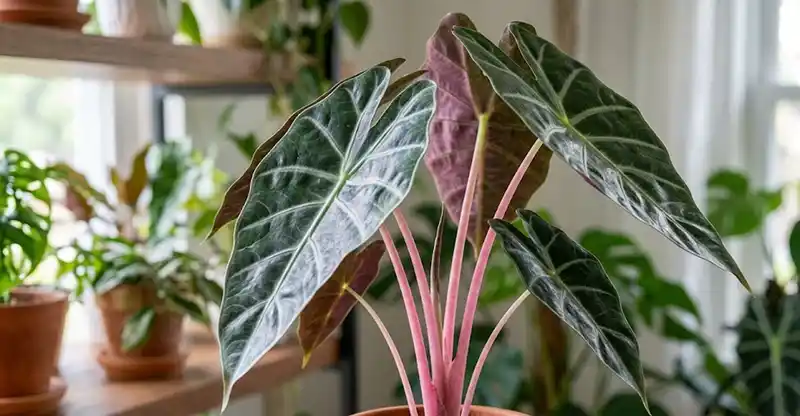 | This produces large leaves with a metallic sheen and deep veining. The small space plant is an exotic beauty that adds a dramatic touch to indoor and outdoor spots. |
Alocasia ‘Polly’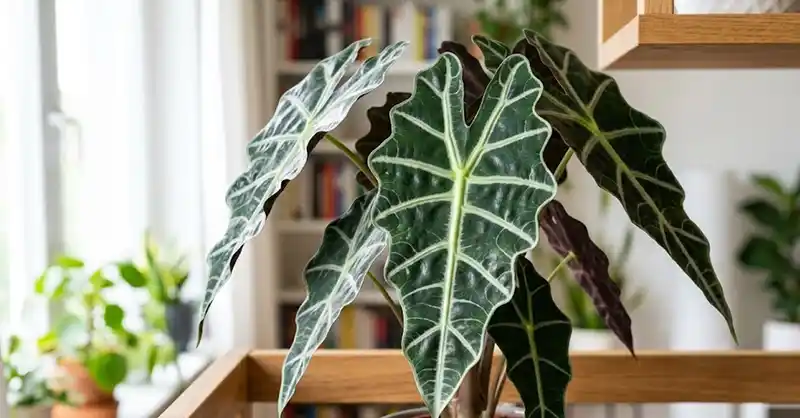 | It is an eye-catching evergreen that has striking arrow-shaped leaves with bold white veins. This compact ornamental plant adds a tropical vibe to distinct spaces. |
Common Pests, Diseases and Other Problems in Alocasia Plants
Plant alocasia can be affected by pests like spider mites, mealybugs, aphids, and scale insects. They are also susceptible to diseases like root rot and leaf spot. There could also be other issues like drooping and yellowing leaves.
Let’s find out the signs and treatment for some of the frequent problems:
Pests in Alocasia Plants
| Pests | Signs and Treatment |
| Spider mites |
|
| Mealybugs |
|
| Aphids |
|
| Scale insects |
|
Pro Tip
While dealing with any pests, check the nearby plants and isolate the affected ones to reduce the possibility of further spread.
Diseases in Alocasia Plants
| Diseases | Signs and Treatment |
| Leaf spot |
|
| Root rot |
|
Other Problems
- Drooping leaves: Improper watering, either too much or too little, leads to drooping leaves. Other causes of this include inadequate sunlight or extreme temperatures.
- Yellowing leaves: Over- or underwatering can both cause yellow leaves. Ensure proper moisture, avoiding waterlogging conditions to prevent this.
- Brown leaf edges: If there is low humidity or salt buildup from the fertilizers, they can lead to crispy edges on the leaves. Improve humidity and flush the soil with water to remove salt buildup.
Concluding Remarks
Alocasia stands out as a houseplant with its “elephant ear” leaves and truly tropical vibes. It can be a magnificent addition to your plant collection or to start a garden from scratch thanks to its large glossy leaves. You can plant this herbaceous perennial along with flowering annuals, including begonia, impatiens, verbena, and wishbone, for a colourful look.
FAQs
Do alocasias like to be root bound?
How to care for alocasia?
In Alocasia care, keep the plant in indirect bright light and well-draining soil. Water consistently but avoid soggy conditions. Feed with balanced fertilizer every 4-6 weeks and prune lightly in its active growing season.
How to do alocasia care indoors?
For alocasia indoor care, place the plant near an east- or west-facing window and water when the top inch of the soil feels dry. Use an airy potting mix and feed with a balanced water-soluble fertilizer every 2-4 weeks to support its growth.
Are alocasias toxic to touch?
These plants are not considered toxic to touch, but they are toxic when ingested due to the presence of calcium oxalate crystals. However, during pruning or repotting, it’s advised to wear gloves as the plant can cause skin irritation in sensitive individuals.
What does an overwatered alocacia look like?
The overwatered alocasi may have yellow leaves or a brown or mushy base of the stems. In some cases, overwatering can also cause root rot and, as a result, wilting of the plant. Over time, the leaves will also turn brown and begin to fall. To avoid overwatering, let the top inch of the soil dry out before watering and ensure that the pot has drainage holes.
Sources:
How to grow alocasia – BBC Gardeners’ World Magazine
Alocasia – Plants and Flowers Foundation Holland
Alocasia sp. – Iowa State University
Alocasia macrorrhiza – Cambridge University Botanic Garden
Latest Blog