You can start sowing impatiens seeds in late winter so that the plant blooms from spring till late spring.
Impatiens Flower Guide: Everything From Taxonomy to Care Tips
Author
Cerina TriglavcaninLast Update
September 17, 2026
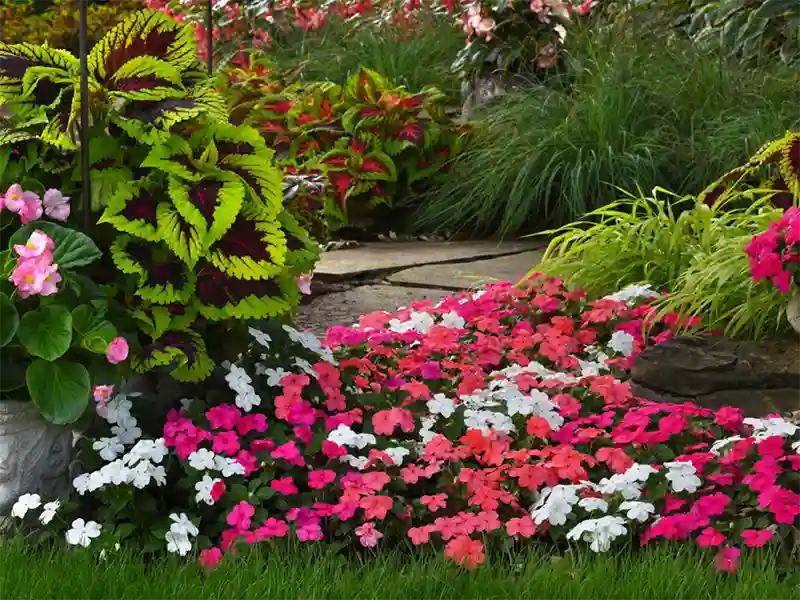
Impatiens are versatile annual plants also known as touch-me-not. They are perfect for creating a lush, vibrant, and aesthetic display in various settings, and are mainly cultivated as ornamental plants. They are low-maintenance and are ideal for filling gaps in shady or partially shaded areas of the garden. The impatiens flowers bloom from spring through fall and also attracts pollinators like bees, flies, hummingbirds, and butterflies.
Impatiens are generally considered non-toxic to both humans and pets, making them a perfect choice if you have children pr pets at home.
To know about impatiens plant taxonomy, care tips, ideal growing conditions, and much more, read the article below.
Table of Contents:
Taxonomy and Ideal Growing Conditions For the Impatiens Flower
Impatiens belong to the Balsaminaceae family, which is also known as touch-me-not. The plant prefers shady conditions with morning sunlight for a few hours. For more general information, here is the taxonomic overview and ideal growing conditions of the plant:
| Botanical Name | Impatiens balsamina |
| Common names | Impatiens, sultana, patience plant, and bizzy lizzy |
| Kingdom | Plantae |
| Order | Ericales |
| Family | Balsaminaceae (Touch-me-not family) |
| Genus | Impatiens L. |
| Species | The common species are Impatiens walleriana and Impatiens capensis |
| Native area | Africa, Asia, and North America |
| Bloom period | Spring through fall |
| Hardiness Zone | 10 to 12 USDA Zone |
| Light Requirements | 2 to 4 hours of morning sunlight |
| Maintenance | Low |
| Type | Annuals |
| Characteristics | Showy plant |
| Soil | Rich, moist, well-drained soil with acidic pH levels |
| Flower colour | Orange, pink, red, purple, and white |
| Water Requirements | Low to average |
| Mature size | 6 inches to 36 inches high and 12 to 24 inches wide |
| Fertilizers | Use flowering fertiliser once every 2 weeks |
| Attracts | Butterflies, hummingbirds, and bees |
Read more: Lucky Bamboo Plant: Growth, Care Tips, and Symbolism Explained
How to Grow & Propagate an Impatiens Flower?
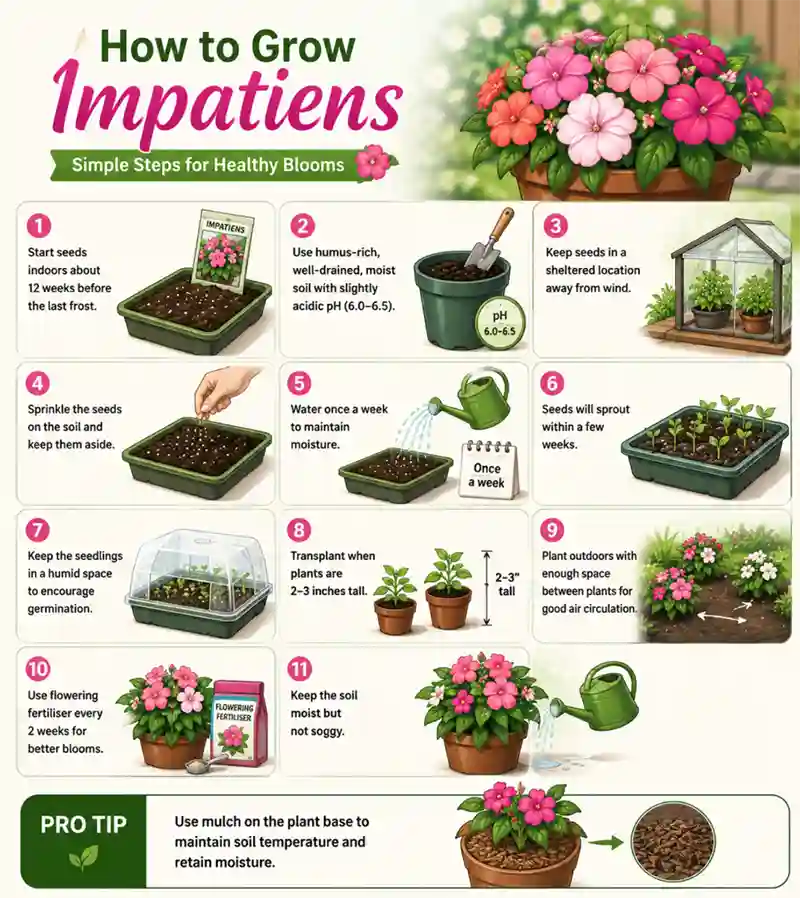
Growing impatiens is not fussy at all. You need to be careful about the location, and impatiens flowers will bloom healthily. To make sure that the plant blooms throughout, you need to start after the last spring frost. Here are a few simple steps to grow impatiens plants:
- Take impatiens seeds and sow them indoors about 12 weeks before your last frost.
- Use humus-rich, well-drained, moist soil for sowing impatiens plant seeds. Ensure that the soil is of slightly acidic pH levels between 6.0 and 6.5.
- Prefer a location that can shelter the seeds from wind in order to keep them safe.
- Sprinkle the seeds on the soil and keep them aside.
- Water the impatiens seeds once a week to maintain the moisture.
- Within a few weeks, you’ll notice the sprouts on the seeds.
- Place them in a humid space to keep the moisture in.
- Slowly, the plant will start germination.
- Once the impatiens grow around 2 to 3 inches tall, transplant them into individual pots or grow outdoors.
- Make sure to provide enough space between two saplings outdoors. This will ensure better air circulation and good plant growth.
- Use flowering fertiliser every 2 weeks for better blooms.
- Ensure you keep the soil moist but not soggy.
Pro tip
Use mulch on the plant base to maintain soil temperature. Mulching also helps the soil retain moisture.
Propagating Impatiens
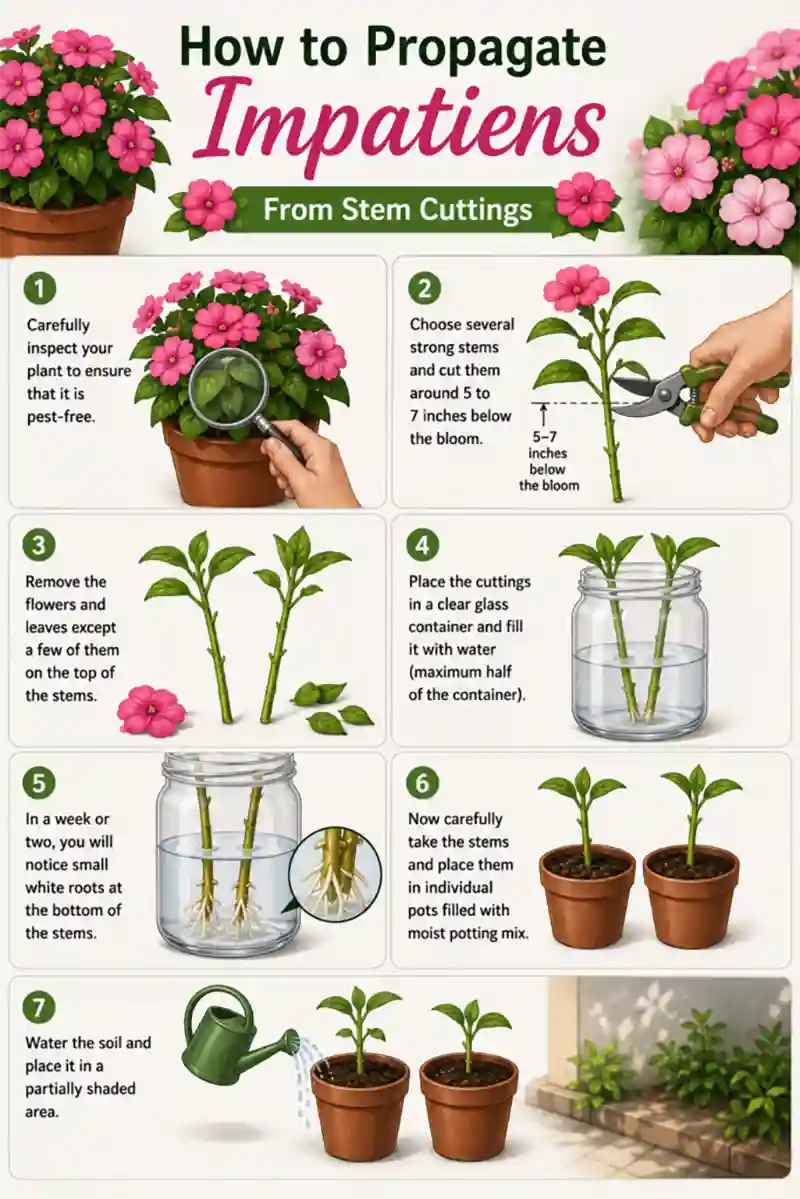
Propagating impatiens is one of my favourite methods to grow them, as Impatiens can be easily propagated from stem cuttings. Here are some easy steps that can be followed to propagate impatiens:
- Carefully inspect your plant to ensure that it is pest-free.
- Choose several strong stems and cut them around 5 to 7 inches below the bloom.
- Remove the flowers and leaves except a few of them on the top of the stems.
- Place the cuttings in a clear glass container and fill it with water (up to half of the container).
- In a week or two, you will notice small white roots at the bottom of the stems.
- Now carefully take the stems and place them in individual pots filled with moist potting mix.
- Water the soil and place it in a partially shaded area.
Read more: How to Grow Rosemary: Planting, Propagation, and Care Tips
Impatiens Flower Care Tips
Caring for impatiens is relatively easy, as they are low-maintenance plants. Here are a few essential care tips that helped my plant with healthy blooms:
- Water the impatiens regularly to keep the soil moist. Make sure that you do not overwater the plant, as it can lead to fungal disease and root rot.
- Feed your impatiens with water-soluble, balanced fertiliser every 2 to 3 weeks. This will ensure healthy blooms.
- Impatiens are typically grown as annuals, but it is important to maintain the soil temperature in order to keep the plant healthy. Therefore, it is important to place them in a well-lit and cool location indoors.
- Keep a close eye on your plant to make sure that no pests have attacked it. In case you find any pests, use an organic pesticide like neem oil.
Common Pests and Problems With the Impatiens Flower
There are several pests that can attack your impatiens plant. Some of them are aphids, spider mites, and whiteflies. To avoid them from attacking your healthy plant, use insecticidal soaps or neem oil, which will ensure that the plant remains healthy and safe.
There are a few diseases and problems that can be associated with impatiens. They are as follows:
| Diseases and problems | Solution |
| Downy mildew and botrytis blights | They are fungal diseases that cause yellowing of leaves on the underside or gray mold on leaves, flowers, or stems. To avoid this, ensure proper air circulation and apply fungicides if required. |
| Powdery mildew | If you witness any white powdery substance on your plant, it is because powdery mildew has attacked your plant. To avoid this fungal disease from attacking your plant, avoid overhead watering and provide good air circulation. |
| Root rot | The main cause behind root rot is overwatering or poorly draining soils. To avoid root rot, make sure that you don’t overwater the soil, and if you are planting impatiens in a pot, choose one that has a proper drainage hole. |
Read more: Best 15+ Small Evergreen Garden Plants Perfect for Compact Spaces
Takeaways
Impatiens can add a splash of colour to your garden, balcony, or indoors. The plant blooms in various hues of pink, red, white, purple, and orange and is much loved by the pollinators. Its low-maintenance quality and unique, light flowery fragrance make it people-friendly.
Impatiens can be one of the best additions to your space as it is also known to encourage calmness and is both human and pet-friendly. Next time you are planning to plant some flowering plants, do include impatiens in your list.
FAQs
When to plant impatiens?
How tall do impatiens grow?
The average height of Impatiens is between 6 inches and 36 inches high and 12 to 24 inches wide.
What is the other common name for impatiens?
Impatiens are commonly known as touch-me-not, patience plant, or sultan.
What are the common pests that can attack impatiens plants?
The common pests that can attack impatiens are aphids, spider mites, and whiteflies. You can prevent them by using neem oil or any pesticides.
Sources
Impatiens: Britannica
Impatiens walleriana: North Carolina Extension Garderner Plnat Toolbox
Latest Blog