When the filters are too restrictive, this might happen. Check your system’s suggested filter type before using any other filter.
The Complete Home Audit for a Safer and Healthier House
Author
Terri SanderLast Update
September 19, 2026
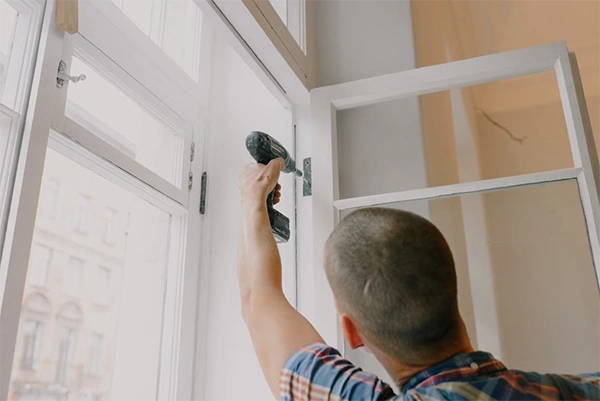
Alt text: A man fixing windows
Many issues in the home are easy to miss. Yes, but only for the first moment; once they expand further, they cost you a lot. A moisture issue, a strange attic sound, more humidity or a faulty air system might not seem like they need instant care, but easy easily turn into costly issues once missed.
A smart and healthy home audit can help a homeowner to detect the areas that matter most. From quality indoor air to perfect moisture and strong structure, everything contributes to making a home healthier and perfect.
Keep reading to build a better understanding…
Table of Contents:
Indoor Air Quality and Moisture Control
For a safer home, what matters most is the air that we breathe and its quality. Just thinking that HVAC will manage everything is not the right approach.
Check Your HVAC Filtration
Check your HVAC manufacturer’s recommended filter type before choosing a replacement. Pleated filters with higher MERV ratings, such as MERV 11 or MERV 13, can trap more airborne particles, but they may also create greater airflow resistance. Make sure your system can handle the filter’s pressure drop.
Move forward with the manufacturer’s replacement schedule for clean work. Homes with smokers, high pollution levels and pets might need early filter changes.
Consider Portable HEPA Filtration
Portable HEPA air cleaners can reduce airborne particles such as dust, pollen, and pet dander in frequently used rooms. Choose a unit sized for the room and keep its filter maintained.
Recent WIRED coverage of indoor air-quality monitors shares devices that can keep track of PM2.5, carbon dioxide, VOCs, temperature, and humidity. They can also share how routine activities such as cooking affect indoor air.
That can make an air-quality monitor a useful addition to a home audit, especially when you can’t judge indoor conditions by smell or appearance alone.
Keep Humidity in Check
Humidity should be between 30% and 50%. A dehumidifier can regulate moisture inside rooms. Make use of exhaust while bathing and keep it running for proper airflow.
Turn on a vented range hood when cooking to remove heat, moisture, and cooking byproducts. In basements and crawlspaces, watch for condensation, poor drainage, leaks, or other signs that moisture is building up.
Cut Down on Household Pollutants
Adopting some smart practices can ensure that indoor pollutants remain low:
- Choose low-VOC or low-emission products when practical.
- Store cleaning chemicals safely.
- Limit unnecessary exposure to strong fragrances and aerosols.
- Use a sealed HEPA vacuum to capture fine particles.
- Use entry mats and a shoe-removal area to reduce tracked-in dirt and contaminants.
Wildfire smoke raises pollution. A September 2026 Guardian report shared that wildfires had burned more than 8.4 million acres in the U.S. This put more pressure to set an indoor air quality plan.
Also, learn to check whether your home is ready for winter.
Structural Health and Environmental Hazards
Your home can have problems you won’t notice during a quick walk-through. Water intrusion, pests, structural damage, and environmental hazards can all hide in less obvious places.
Check the Foundation and Exterior
Inspect the surroundings of your home for pooled water and drainage issues. This can weaken the home’s foundation. Clean debris and gutters for proper movement of water to avoid it collecting around the home’s foundation.
While you’re outside, check the roof, flashing, vents, siding, soffits, fascia, and exterior trim for visible damage.
Watch for Small Warning Signs
For indoor peace, investigate for cracks, unnecessary stains and peeling paint. Sagging ceilings, uneven floors, and doors or windows are a clear sign.
These signs don’t necessarily mean there’s a serious structural problem, but they’re worth checking out. Homeowners can often identify developing problems by paying attention to visible changes such as cracks, leaks, and signs of unwanted pests before the damage becomes more extensive.
Learning about early signs of damage around the house can help you decide when the right time is for an inspection. Check is issue is getting worse over time. Recurring moisture and other changes are signs to check further rather than continuous treatment.
Check for Hidden Environmental Hazards
Radon is an invisible radioactive gas that can enter homes through the soil. Follow EPA testing guidance and consider testing based on your home’s location and previous results. The EPA action level is 4.0 pCi/L.
If your home is built before 1978, test older paint before sanding or other processes. If you get asbestos, evaluate it before any further process.
Lead remains a concern beyond older paint. An Associated Press report by M.K. Wildeman published in September 2026 found that more than 6,300 U.S. water systems had not yet reported required inventories of lead service lines. Those systems could potentially affect about 3.8 million people.
This highlights the importance of checking the age and condition of plumbing while checking environmental hazards. When confused, reach out to a professional for support.
Check the Attic for Pest Activity
Look for:
- Displaced insulation
- Droppings or nesting material
- Gnaw marks
- Damaged wiring
- Unusual sounds
- Openings around roof edges, vents, soffits, and fascia
Animals can move into attics when found space. If you see squirrels moving around, get help getting rid of squirrels in the attic. Once entry is clear, close it or get help from a professional.
Atticrawl highlights that identifying the active entry point is an important part of addressing an attic wildlife problem. Homeowners can inspect roof edges, soffits, fascia, vents, and other visible openings for signs of repeated animal activity. Don’t seal an active opening until you’re sure the animals are out. After removal, check the attic for damage to insulation, wiring, wood, vents, and stored belongings.
Safety and Home Systems
Some inspections are done simply to find dangerous issues before they expand and become an emergency.
Test Smoke and CO Alarms
Install smoke alarms inside bedrooms, outside sleeping areas, and on every level of the home. Interconnected alarms can provide broader warning when one detects smoke.
Set carbon monoxide alarms near sleeping areas based on manufacturer’s instructions.
A recent safety warning covered nearly 377,000 combination natural-gas and carbon monoxide detectors after officials said the devices could fail to alert occupants to dangerous CO levels. The warning is a good reminder to test safety devices regularly and check for applicable recalls. Replace alarms according to their specified service life.
Review Electrical and Mechanical Safety
Check outlets, cords, breakers, and electrical equipment for damage, scorching, unusual heat, or other warning signs. GFCI protection is needed in areas where the electrical system is open to bathrooms, kitchens and more.
A water heater setting around 120°F can help reduce scalding risk for many households while providing suitably hot water. Follow the manufacturer’s instructions and consider professional guidance if your home has specific hot-water requirements. Clean the dryer’s lint filter after every load and inspect the exhaust system regularly. Restricted airflow and accumulated lint can increase fire risk.
U.S. Fire Administration data estimates that 343,000 residential building fires occurred in 2024. 46.7% of the fires were due to cooking, 7.9% were due to heating, and 7.7% were due to electrical malfunction. This data makes it essential to take cooking and other activities seriously.
Your Healthy Home Maintenance Schedule
Here is a monthly, seasonal, biannual, and annual home maintenance schedule for a healthier house:
| Monthly | Test smoke and CO alarms • Check HVAC filter condition • Inspect under-sink plumbing • Look for new moisture or unusual odors |
| Seasonally | Clean range hood filters • Check window and door seals • Inspect visible roof and exterior areas • Check indoor humidity |
| Biannually | Clean gutters as needed • Test the sump pump • Check the attic for moisture or pest activity • Review HVAC maintenance needs |
| Every 1–2 Years | Consider radon testing based on EPA guidance and previous results • Review safety equipment and maintenance records |
| As Needed | Investigate new cracks, leaks, pest activity, electrical problems, or changes in floors, doors, and windows. |
Also, learn simple ways to refresh your home with natural decor.
Keep Your Home Audit Simple
In the end, keeping a home healthier and safer is simpler when inspections turn into a routine habit rather than something you look into when it actually starts to disturb you. Simple and effective checks for moisture, air quality, pests and structural changes can help to easily identify issues.
Maintain an easy-to-execute record to find recurring issues over time. And mainly for electrical work, structural changes, or anything that deals with hazardous materials, it is best to connect with a professional who can take complete responsibility for the same.
Frequently Asked Questions
Can a high-efficiency HVAC filter damage my heating and cooling system?
How can I test my sump pump before I need it?
Pour some water into the sump pit and look in case pump starts by default. Remove the water properly after doing this.
Can sealing air leaks affect indoor air quality?
Yes. Too much air sealing can lower ventilation and allow moisture and indoor pollutants to collect. Ensure exhaust is working properly.
What’s the difference between a radon test kit and a continuous radon monitor?
A test kit checks radon levels for a defined time, while a continuous monitor tracks levels over time. Both can give you the best results to understand whether radon may be an issue in your home.