Go for high-impact, low-cost upgrades like painting dated cabinets, swapping hardware, upgrading light fixtures, peel-and-stick backsplashes, and adding accent walls with paint or simple trim molding.
What Can You Do to Keep a Custom Build Within Budget?
Author
Terri Sander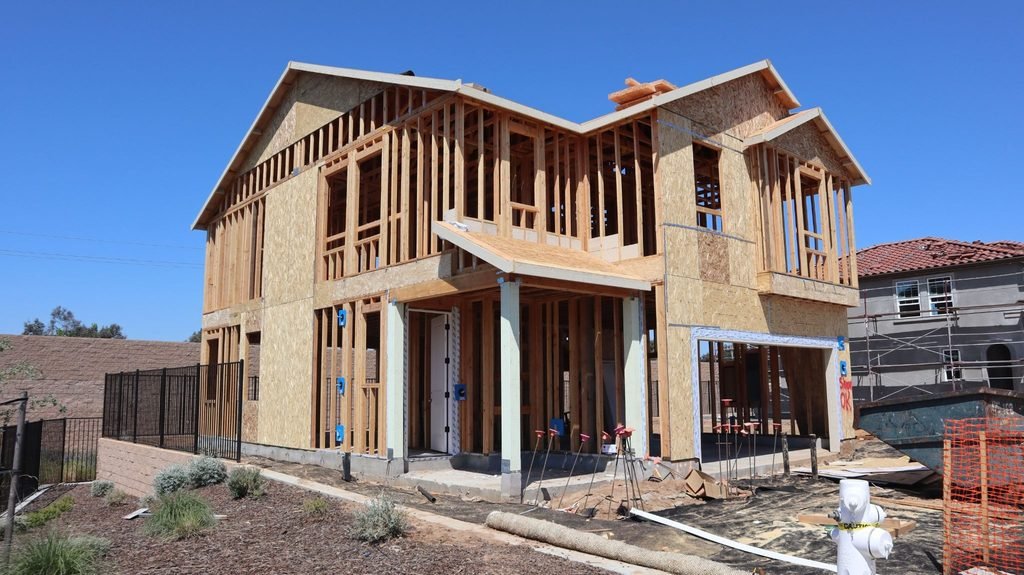
Multiple factors lead to a custom home build getting over budget. Hasty design, delayed decisions, and underwritten allowances are some of them. While many of these aren’t wholly under the homeowner’s control, they’re still predictable and hence controllable.
The following is a chronological list of these decision points.
Table of Contents:
Choose the Builder on Cost Behavior, Not on the Bid Total
The lowest-bid contract almost always skimps on allowances and has the most exclusions in the scope of work for the owner’s review and approval. The best way to compare builders is to know how they performed on earlier projects, not to their contracted price.
The owner needs to know if the builder of Cincinnati custom homes is able to complete a house at or near the contract price. The owner should be able to get a final cost versus contract cost for the last several closings and have the builder explain any variance.
Always ask before hiring the builder:
- Which trades are bid and which are carried as allowances, and on what basis each allowance was set?
- How site work, excavation, and utility connections are handled if conditions differ from assumptions?
- Who approves change orders, in what format, and how long does pricing take?
- What the builder’s fee is on a change order compared with base scope?
- Whether unused allowance money returns to the owner or the builder?
Deciding on the energy options in the planning phase is also wiser with affordable clean energy options.
Match the Contract Structure to How Much Certainty You Need
The contract between homeowner and builder can be such that it shifts unknown costs to the homeowner. The homeowner must choose a contract carefully rather than letting the builder offer up his standard form of contract.
| Setup | Who carries overrun risk | Common failure point | Suits |
| Fixed price | Builder, within defined scope | Scope gaps and low allowances become change orders | Complete drawings and a fully resolved specification |
| Cost + fee | Owner | No ceiling, so design creep goes unchecked | Complex renovations or unresolved site conditions |
| Cost + maximum guarantee | Shared, with a ceiling | Contingency drawn down early with weak reporting | Builds starting before design is fully complete |
One will get a good idea of the project budget by tracking invoiced allowances on an open basis and a monthly report (on the so-called committed spend versus the so far spent amount of money). The committed spend figure will even predict the project finish.
Price the Design While It Can Still Change Cheaply
Design and budget need to converge during the schematic design phase and not after the construction documents have been completed. Designing and budgeting in the Schematic Design Phase allows determination of the remaining cost to reach the desired budget in the finishes (i.e., flooring, cabinets, countertops, etc.). Most finish items will not recover a large deficit in cost without making the item look cheap.
The most efficient way to hit your target cost for a home is to first have the builder cost out the basic mass of the home (i.e., the exterior of the house including the roof) and then alter the footprint or the design to fit your needs in a series of amendments to the design (i.e., drafting changes) before the design becomes too detailed and costly to change. Referring to the builder’s existing plan library is often the cheapest route to this, so it is worth reviewing how a company that builds custom homes in Cincinnati, Ohio prices its floor plan modifications before you commission drawings from scratch.
Ensure the following design decisions, as they carry the most weight:
- Foundation type and site grading, which are dictated by where the house sits on the lot.
- Roof complexity, since valleys, dormers, and intersections multiply framing, flashing, and labor hours.
- Window and door schedule, particularly large fixed glass and non-standard sizes.
- Mechanical zoning, which follows plan layout and ceiling volume.
- Cabinetry and millwork linear footage, usually the largest single interior variable.
Freeze the Specification Before the Concrete Cures
Finish decisions that need to be made before the start of framing are:
- Plumbing fixtures
- Tile
- Cabinetry
- Appliances
- Lighting
- Hardware
A complete specification for finishes needs to be developed by the design team. This specification needs to drive the rough-in locations for the various trades scheduled to start work after the framing is done.
Change order discipline that works
All change orders should have a price to them and then be approved by the owner(s) in writing before the change order is executed. Reports on invoicing and cost, etc. should then reflect the total of all change orders to show how much over the original contract price the project is. The owner’s contingency funds (5% to 10% of the contract price) should be held outside of the contract price as a reserve against unknown defects that are discovered as the work progresses and not used for ‘upgrades’.
Spend Where Quality Is Difficult to Correct Later
Tightening budgets for items that anyway will be replaced within a decade is okay. But compromising on items that cannot be replaced within a decade and will cost multiples of the original savings to attempt to fix any defects found in these critical systems. For example, the cost of the structural envelope, drainage, framing, insulation, and mechanical systems of a house cannot be replaced within a decade and, in fact, will cost multiples of the original savings to even attempt to fix any defects found in these critical systems. Thus, it would be wise to protect the structural and envelope scope from cutbacks and apply any budget cuts to items that can be changed out within a decade. For example, the cost of the following items can be reduced by selecting a mid-range item for secondary spaces and using the remaining budget to go for the highest-end items for spaces that really carry the house, appliances, lighting, bath faucets, interior paint, etc.
Intentional compromise is better than seemingly random cuts. The biggest return would come from using the owner’s discretionary funds to upgrade the biggest return items. These would be selected from the secondary spaces and would be ‘mid-grade’ options. All other compromises would be designed to protect the most critical elements of the house, i.e., the structural and envelope items.
FAQs
How to improve a house on a budget?
How to construct a house on a low budget?
Three simple rules: Plan carefully, design simply, and source locally.
What is the cheapest style of house to build?
Two of the cheapest style home builds possible are: a simple, single-story ranch home or a two-story box home.