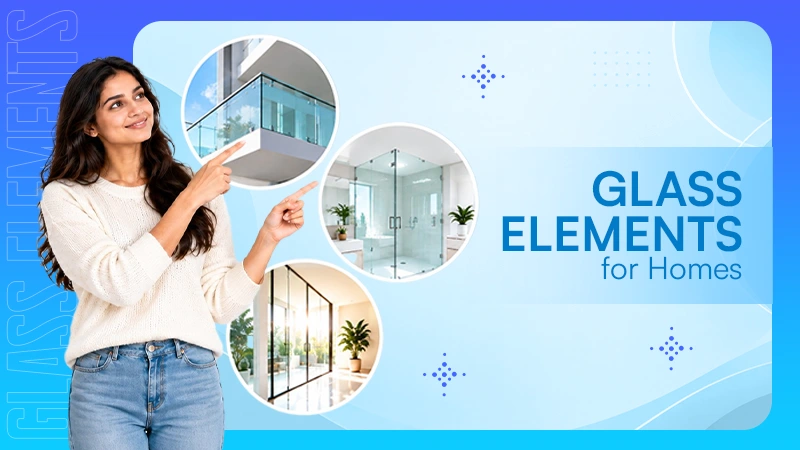
Glass does not increase the physical size of a room, but it can make the space feel larger by reducing visual barriers and allowing the eye to see farther through the room.
How to Use Glass to Make Your Home Feel Bigger, Brighter, and More Open
Author
Isha ParmarLast Update
September 17, 2026
A room does not always need more square footage to feel larger.
Sometimes what makes a space feel small is simply what blocks your view of it. Heavy furniture, shower curtains, bulky partitions, dark corners, and oversized decor can visually break a room into smaller pieces.
Glass does the opposite. It allows light and sightlines to continue through a space, helping rooms feel brighter, more connected, and less confined.
That is why homeowners are using glass for much more than windows. Frameless showers, mirrors, tabletops, shelves, and interior glass features can all change how a room looks and feels without changing its actual dimensions.
KEY TAKEAWAYS
- Clear glass reduces visual barriers and can make smaller rooms feel more open.
- Frameless shower glass is one of the easiest ways to visually open a bathroom.
- Mirrors can reflect light and create a greater sense of depth.
- Glass tabletops and shelves add function without the visual weight of solid materials.
- Custom glass is especially useful when standard dimensions do not fit the space properly.
Table of Contents:
Start With the Bathroom
The bathroom is one of the best places to see what a glass can do for a space.
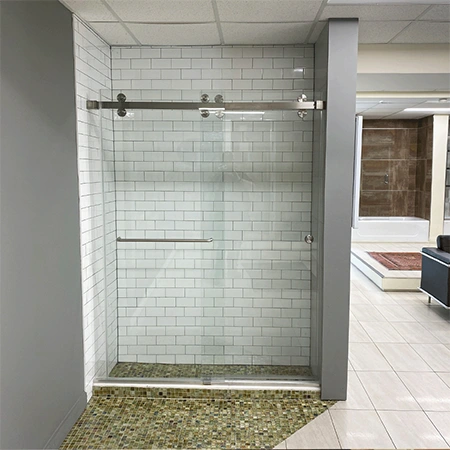
The shower can feel like a separate section of the room with just a shower curtain or heavily framed enclosure, and clear frameless glass allows you to see the entire space.
When a bathroom has attractive tile, stonework, or fixtures, clear glass allows those details to remain visible, and it also allows them to remain part of the overall design rather than just hiding those details behind a curtain or bulky frame.
There are several ways to accomplish this depending on the layout. A bathroom might work best with a hinged shower door, sliding door, fixed panel, inline door with a fixed panel, or a custom corner enclosure.
The important part is choosing a configuration that fits the actual bathroom rather than simply choosing the style you like most online.
Showerhead position, available entry space, surrounding walls, knee walls, benches, and the size of the opening can all influence which design works best.
Use Mirrors Strategically
Mirrors do something very simple: they create the illusion of visual depth. They have been used to make rooms feel larger for generations.
They also reflect light.
A large mirror positioned near a window or another good light source can help spread brightness throughout the room. This can be especially useful for places like bathrooms, entryways, dressing areas, home gyms, and smaller bedrooms.
But just because a mirror is bigger does not automatically make it better.
Think about what the mirror will reflect. A mirror facing a bright window, attractive light fixture, or open area can improve the room. A mirror facing a cluttered corner simply gives you twice as much clutter to look at.
Sizing matters too. Custom mirrors can be made to better fit the dimensions of a vanity, wall, or other architectural feature instead of forcing a standard store-bought size into the space.
Make Furniture Feel Lighter
Many large solid pieces can quickly make a room feel crowded, even if Furniture is necessary or has a use.
An easy way to reduce some of that visual weight is Glass tabletops. Instead of blocking the view of the flooring, rug, or table base, a clear glass top allows those elements to remain visible. This can make coffee tables, dining tables, desks, and side tables feel lighter within the room.
Glass can also protect an existing furniture surface without covering its character. A custom glass top over a wood dresser or dining table, for example, helps protect the surface while keeping the original material visible.
This is also an area where custom sizing is particularly useful. Furniture does not always come in convenient standard dimensions, especially vintage, handmade, or uniquely shaped pieces.
Add Storage Without Adding Bulk
Shelving solves one problem while sometimes creating another.
You gain storage, but you also add more visual mass to a wall.
Glass shelves provide useful display and storage space while remaining relatively unobtrusive. They work especially well in bathrooms, kitchens, home bars, offices, closets, and wall niches.
They also let the materials behind them remain visible. If you have attractive tile, wallpaper, or another wall finish, glass shelving does not have to cover it.
The result can feel much lighter than traditional wood shelving or cabinetry, helping the room feel less crowded.
Consider Glass Before Adding Another Wall
Sometimes a home needs separation without complete isolation.
A home office is a good example. You may want a physical boundary between the office and living area, but building a solid wall could eliminate natural light and make both spaces feel smaller.
Interior glass doors or partitions can create separation while preserving visibility and light.
This idea can also work for home gyms, wine rooms, stair areas, and other spaces where a boundary is useful but complete privacy is not necessary.
Clear glass is not the only option either. Frosted, patterned, or tinted glass can provide more privacy while still allowing light to move through the space.
Know When Custom Glass Makes Sense
Standard-size products are convenient when they fit. The problem is that homes are rarely perfectly standard.
Walls may be slightly out of square. Shower openings vary. Furniture comes in unusual dimensions. Older homes can have particularly unique measurements.
Custom fabrication allows the glass to be designed around the space instead of forcing the space to accommodate a pre-made piece.
For example, Dulles Glass fabricates custom glass for applications including shower enclosures, mirrors, tabletops, shelves, partitions, and other residential projects. Homeowners can select specifications such as dimensions, glass type, thickness, edge treatment, and other details depending on the application.
Precision becomes particularly important with shower glass. Tempered glass cannot simply be trimmed down at the job site if the measurements are wrong.
Getting the dimensions right before fabrication is one of the most important parts of creating a finished installation that looks like it belongs in the room.
Do Not Forget the Hardware
Glass may be the star of the project, but the hardware has a large effect on the finished look.
Chrome and polished finishes can add brightness. Matte black creates contrast. Brass and gold-toned hardware can bring warmth. Brushed finishes tend to blend more quietly into a room.
Look at the hardware and fixtures already present before choosing a finish.
In a bathroom, that might include faucets, showerheads, cabinet pulls, towel bars, and lighting.
Everything does not need to match perfectly. It should simply look like it was chosen intentionally.
Hardware also has a structural purpose. Hinges, clamps, channels, brackets, rollers, and support bars need to be appropriate for the size and weight of the glass, not just attractive.
Keep Practicality in Mind
Glass can make a home feel brighter and more open, but it also needs to work for everyday life.
Shower glass will encounter water and soap. Tabletops collect fingerprints. Bathroom mirrors get splashed. Shelves need to safely support whatever sits on them.
Regular cleaning with appropriate non-abrasive products will help keep glass looking its best. A quick squeegee after using a glass shower can also help limit water spots and mineral buildup.
Good design should make your home easier to enjoy, not harder to maintain.
Final Thoughts
Making a room look larger does not always require knocking down a wall.
Sometimes removing visual barriers is enough.
A clear shower enclosure can reveal more of a bathroom. A strategically placed mirror can reflect light into a darker space. Glass shelves can provide storage without overwhelming a wall, while a glass tabletop can make furniture feel less bulky.
The goal is not to fill a home with glass.
It is to use transparency in the places where it helps light travel farther, keeps sightlines open, and allows the rest of the room to be seen.
When used thoughtfully, glass can make the home you already have feel surprisingly different.
FAQs
Does glass actually make a room look bigger?
Are frameless shower doors good for small bathrooms?
They can be an excellent option because clear glass keeps the shower visually connected with the rest of the bathroom rather than dividing the room with an opaque curtain or heavy frame.
Where should mirrors be placed to make a room feel larger?
Mirrors are most effective when they reflect natural light, attractive architectural features, or open areas. Consider what the mirror will reflect before deciding where to place it.
When is custom glass worth considering?
Custom glass is useful when standard dimensions do not fit the space or when you want greater control over the size, shape, thickness, finish, or other design details of the glass.
Latest Blog