Yes, provided the old concrete is structurally sound and free from major damage.
Can You Install Polished Concrete Flooring Over Existing Concrete?
Author
Swati Mishra
“The greenest building is the one that is already built.” — Carl Elefante (Architect)
If your old concrete floor is still good, getting a polished finish doesn’t need tearing it out. In many cases, an old concrete slab can be transformed into a sleek, durable floor through professional polishing, saving both time and money. However, the success of the project depends on factors such as the slab’s condition, moisture levels, and proper surface preparation. In fact, properly densified and polished floors can last 20–30+ years. Here’s what you need to know before polishing old concrete.
KEY TAKEAWAYS
- Polishing existing concrete instead of replacing, saves time and money.
- Proper surface evaluation, repairs, and moisture testing are essential before polishing begins.
- Surface preparation through diamond grinding ensures a smooth, durable, and long-lasting finish.
- Severely damaged or unstable concrete slabs may require replacement rather than polishing.
Table of Contents:
Evaluating the Existing Concrete Surface
First of all, the old concrete must be thoroughly inspected to determine whether the surface is:
- Structurally sound
- Free of major cracks and deep pits
- No crumbling material areas
- Pest-infestation free
If these issues exist, they must be addressed with professional concrete floor repair before polishing begins.
Moisture testing is also key. Excess moisture migrating through the slab can cause delamination or surface discoloration. Proper sealing or moisture barriers may be needed to stabilize the environment before proceeding.
Surface Preparation and Grinding
Once the concrete has been inspected and repaired, surface preparation begins. This typically involves grinding the top layer with progressively finer diamond abrasives. Polishing process is smooth once there’s no:
- Surface imperfections
- Old coatings
- Contaminants
In some cases, a thin overlay or patching compound may be applied if the existing surface cannot be ground to an even finish. The overlay must bond well with the original slab to ensure long-term durability. Proper curing time should also be observed before polishing continues.
Polishing Techniques and Finishing Options
The polishing process has multiple grinding and polishing stages. More fine grits to get to the desired shine. You can get the finish you desire: from a subtle satin appearance to a mirror-like gloss. The level of gloss can vary depending on the intended use of the space. Densifiers are often applied during polishing to harden the surface and reduce dusting.
Color stains, decorative scoring, or embedded aggregates can be added to enhance visual appeal without compromising strength. These options make polished concrete a versatile flooring solution suitable for both residential and commercial spaces.
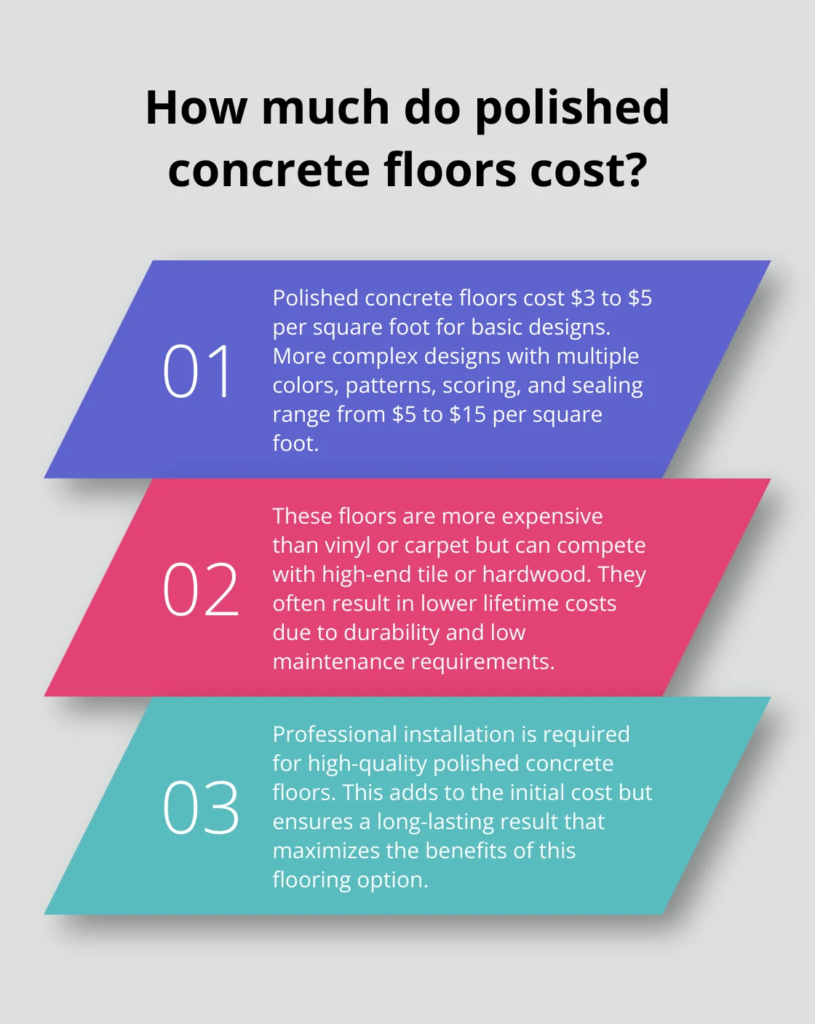
Here’s how much these different options cost:
Advantages of Using Old Concrete
Installing polished concrete over an existing slab offers several advantages. It eliminates the need for removal and replacement, reducing material waste and project costs. It also shortens construction time since the base structure is already in place.
By using sustainable concrete solutions, the existing surface can be transformed into a long-lasting finish that resists wear, stains, and moisture. This approach aligns with environmentally responsible building practices by reusing materials already on site.
When Replacement May Be Necessary
Not every slab is a good candidate for polishing. Severe structural damage, extensive spalling, or uneven settling may make replacement a better choice. If the base concrete lacks adequate thickness or reinforcement, polishing could result in a weak surface that fails prematurely.
In such cases, complete removal and reinstallation may be required to achieve the necessary strength and stability. A professional assessment helps determine whether repair or replacement is the most practical option for long-term performance.
Maintaining Polished Concrete Floors
Once installed, honed concrete floors require minimal maintenance. Regular dust mopping and occasional wet cleaning are enough. Stainless steel floor mop sink can greatly help with this. Avoid harsh chemicals or abrasive pads that could dull the surface.
Periodic re-polishing or resealing may be recommended based on foot traffic and environmental conditions. With proper care, polished concrete floors can maintain their appearance and functionality for decades.
Practical Considerations for Installation
Environmental conditions such as temperature, humidity, and the presence of existing coatings can all affect the polishing process and outcomes. Proper scheduling helps ensure consistent results. Coordination with other construction activities helps protect the surface from contamination and damage.
By understanding these variables and preparing the surface correctly, property owners can achieve a smooth, reflective finish that enhances both aesthetics and performance. Proper planning and expert evaluation are key to making honed concrete over existing slabs a reliable and attractive flooring choice.
Winters can be chilly with new flooring so consider radiant floor heating as well.
Conclusion
Polished concrete can be usually installed over an existing concrete slab. Just the surface has to be structurally sound and properly prepared. Careful inspection, moisture testing, and professional grinding are essential for achieving a durable, attractive finish. If the slab has significant structural issues, replacement may be the better investment. Consulting an experienced concrete flooring contractor is the best way to determine the right approach for your project.
FAQs
Can polished concrete be installed on old concrete?
How do I know if my concrete is suitable for polishing?
A professional inspection evaluates factors such as structural integrity, moisture levels, surface condition, and slab thickness to determine whether polishing is feasible.
Is polished concrete cheaper than replacing a concrete floor?
In many cases, yes. Reusing an existing slab avoids demolition and new concrete installation, reducing both labor and material costs.
Latest Blog