Furnishings with proportions suited to the room generally work better than simply choosing the smallest available pieces.
How to Choose Furniture for Small Spaces Without Making Them Feel Crowded
Author
Swati Mishra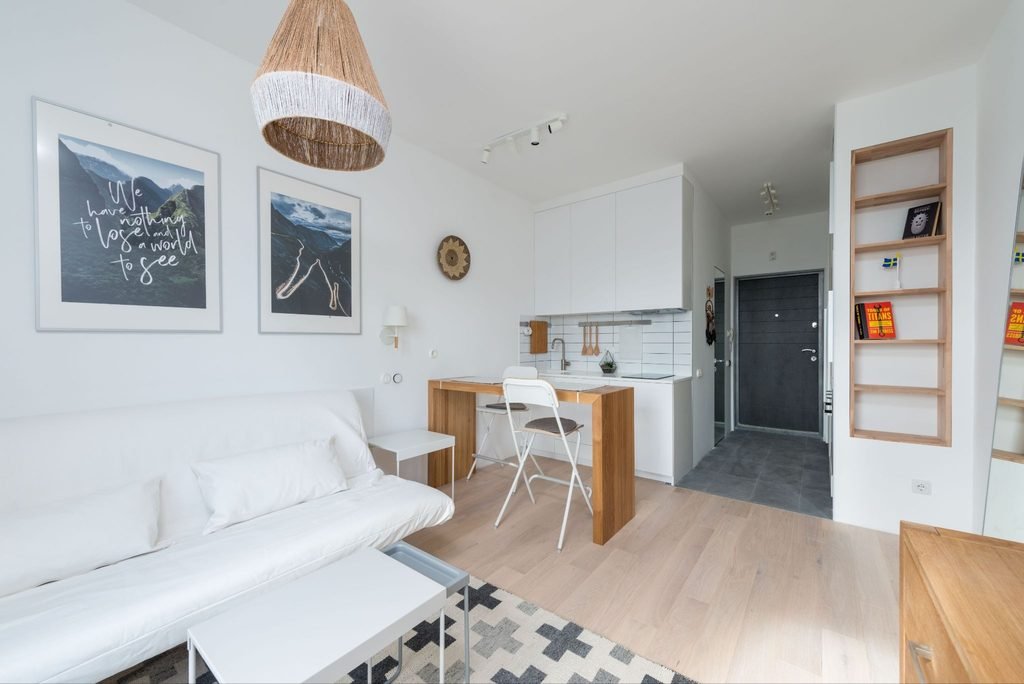
“Have nothing in your houses that you do not know to be useful, or believe to be beautiful.” – William Morris (Designer & Craftsman)
Small rooms feel cramped. But the right furniture can make a compact apartment, guest room, or studio feel comfortable, functional, and even surprisingly spacious. The trick isn’t simply to buy the smallest table you can find. It’s to choose pieces that fit the room, support how you actually live, and leave enough breathing room around them.
Before choosing a piece of furniture, think about the entire room. Measure the available space, consider how people will move through it, and pay attention to the visual weight of each piece. If a sofa is your starting point, shop for the best couch at Poly & Bark only after confirming its dimensions and how it will work with the rest of the room.
Table of Contents:
Why Scale Matters in a Small Room
Despite their small size, some pieces of furniture create a claustrophobic ambiance. Not only do they take up space, but they also create “visual weight” that affects the perception of the entire interior. For example, a large sofa with thick armrests, a bulky table with a strong base, and a few visually heavy chairs take up the physical space but can attract one’s attention as well. On the contrary, minimalist furnishings give a feeling of more room.
Moreover, there are many small pieces that can create mess and thus spoil the overall appearance of the room. On the contrary, one adequately proportioned sofa together with the coffee table will look just perfect. So, make sure to analyze what this space is used for before decorating it. If you use the living room mostly for watching TV, you will need to focus on the search for comfortable, cozy armchairs. Should you plan to read in this room, a loveseat will fit with a couple of folding stools.
A few tips for shopping for furniture can help you purchase smart for your home.
Measure Before Choosing Furniture
Measuring correctly will prevent a lot of problems. The sofa might work out well on the plan of the living room but could still be too large to put into the flat through the entrance, lift, or stairs.
A practical measuring checklist:
- Find the dimensions of the room, including height where relevant
- Note where doors and windows are located, including how they work.
- Measure how large the doors, stairs, lift, and hallways are.
- Ensure that there is walking space between your principal items of furnishings.
- Utilize tape or cardboard to show how much space you will occupy.
Doing a test for footprints can be useful in relation to furniture such as beds, tables, chairs, and desks since it shows how suitable the specific piece is for the area in question.
Choose Seating That Fits Daily Life
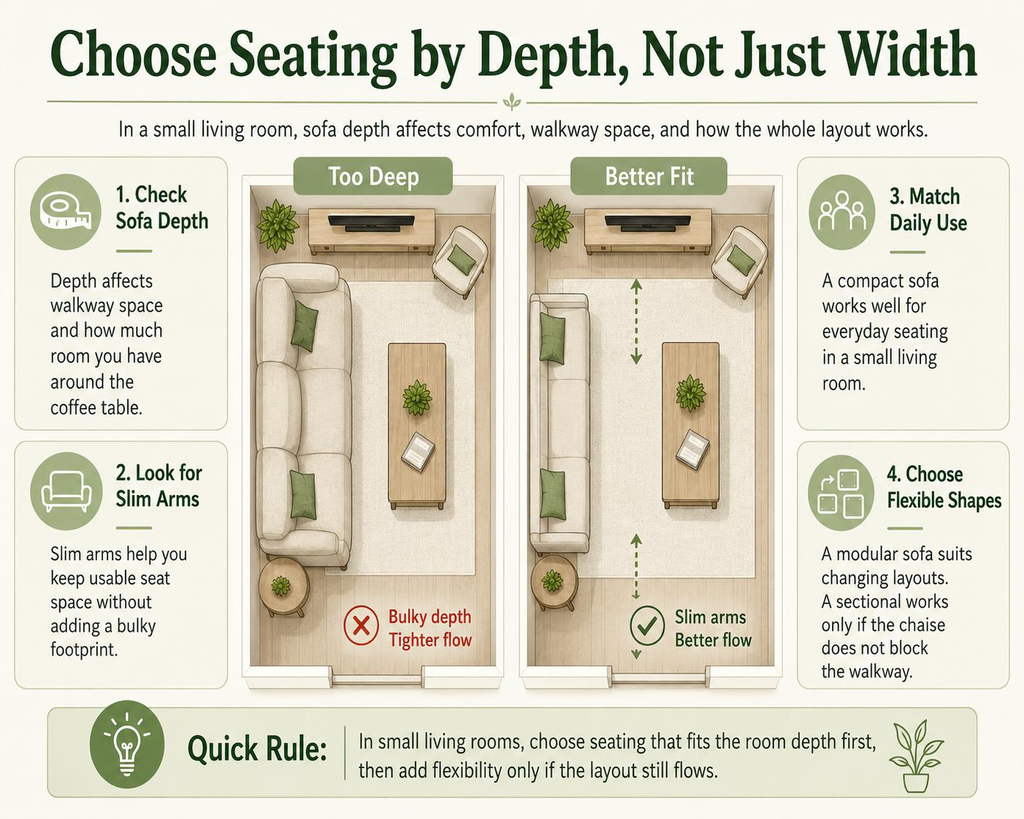
Begin with your lifestyle rather than a showroom look. Loveseats and apartment-size sofas are perfect for many small living areas, while a small sectional can be a good option compared to two separate chairs and sofas. A standard sofa might give you the maximum versatility in the event that you are moving often or dislike the fact that you can’t change your room.
There is more to consider than just width. The depth of the seat will determine whether you can sit comfortably upright, as will the width of the arms, and the height of the back will impact rest. For functions or parties, think about the use of a lightweight stool, an ottoman, or a bench that allows for portable seating.
Use Multi-Function Furniture
In a compact house, one useful piece can often replace two or three less practical ones. Choose versatility where it genuinely supports your lifestyle, instead of buying complicated furnishings you will rarely use.
- Storage ottomans offer seating, a tray-topped surface, and a place for blankets or games.
- Sofa beds make studios, offices, and guest rooms more adaptable.
- Nesting tables expand for guests and tuck away afterward.
- Drop-leaf or extendable tables support everyday meals without dominating the room.
- Console-style desks can work as a workspace during the day and an entry or display surface later.
Create Better Movement and Flow
For better comfort, it is important to consider the position of furniture in the room along with its size. The route leading to different parts of the room, including the seating area and place of storage, should not be blocked off. Therefore, setups that force people to move about the furnishings unnaturally should be avoided.
Rugs can be used so that they create a defined space for dining or reading zones in an open floor plan. Also, sofas can be placed floated away from the wall to create a barrier in this way and still leave enough space behind the sofa for traveling. It is necessary to keep windows clear so that light can come into the room.
Add Storage Without Adding Bulk
Before purchasing any decorative items, you need to think about how to store them. You should make use of furniture such as tall bookcases, wall shelves, cabinets, and vertical shelving since they will help you use space in the vertical direction instead of a horizontal one. If you need to hide cords, papers, toys, and clutter from view, choose closed storage solutions. However, you can make use of open shelving for decorative items. Do not forget about solutions such as storing items under a bed, using tables with lifting tops, using media units with storage compartments, and baskets hidden under the bench for extra storage.
Use Light, Color, and Open Space
The use of light-colored finishes, reflective surfaces, mirrors, and multiple sources of light can make it feel spacious. However, this is not the only method available. Dark furniture can make for a lovely interior if it is contrasted against light walls, spacious floors with textures and patterns, and good lighting sources. The key is to begin with one chosen color and then use contrasts with accessories like cushions, rugs, pictures, or a single-colored chair.
A Simple Furniture Planning Process
Follow the checklist to plan your small house furnishings:
- Identify the primary function of the space and the specific type of activity it will need to accommodate.
- Measure the entire room and the duration of travel within the space.
- Take note of all necessary kinds of furniture.
- Use tape to highlight footprints.
- Inspect the swing and placement of doors and windows, the access to storage areas, and the paths people will take.
- Pick one main piece.
- Choose the other pieces according to the function of the space, not the habit of the owners.
- Leave some space for possible decorative elements.
Final Thoughts
Just because you have a small space doesn’t mean you cannot have fun or comfortable furnishings in it. Small rooms can function well when measurements are correctly taken; proportions are respected; and planning for storage and circulation. You can experiment with less furniture for more function, giving a space headroom while arranging it according to your lifestyle.
FAQs
What size furniture is best for a small room?
How much space should I leave between furniture?
The ideal clearance depends on the furniture and the room’s purpose, but the main goal is to maintain comfortable, unobstructed circulation.
Is a sectional sofa a good choice for a small living room?
Maybe. A compact sectional may provide more usable seating than a separate sofa and chairs while defining the living area.
Latest Blog