Blooming from early June, Celosia flowers last for about 8–10 weeks.
Celosia Flower: How to Grow and Care?
Author
Swati MishraLast Update
September 30, 2026
The Celosia flower, commonly known as Cockscomb, is a low-maintenance, vibrant bloomer that comes in various shades and is often used for landscaping purposes. Derived from the Greek word kḗleos, meaning “burning,” the Celosia flower literally has a flame-like shape. Being a flowering plant, Celosia is known for its stunning appearance and provides various medicinal and aesthetic benefits.
Wondering how to grow Celosia at home? Then you are in the right place! Continue reading to know about the stunning Celosia plant, its types, several benefits, and various caring tips to maintain its beauty.
Table of Contents:
- Symbolism of Celosia Flower
- Taxonomic Structure of Celosia
- Major Types and Cultivar Groups of Celosia
- Subdivisions of the Celosia Plant
- Optimal Growing Conditions for Celosia Flower
- How to Grow and Care for a Celosia Plant?
- Landscaping Ideas for Celosia Flowers
- Significance of Celosia Plant
- Common Challenges Faced by Celosia Flowers
- Conclusion
- Frequently Asked Questions
Symbolism of Celosia Flower
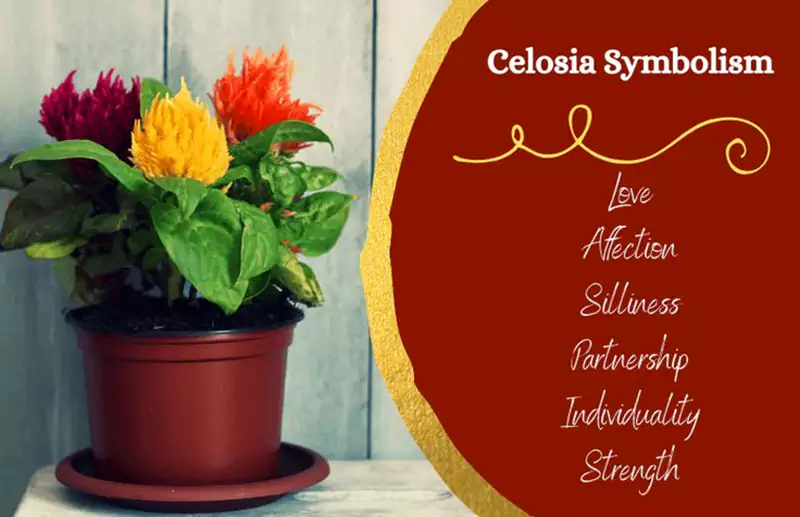
Though the exact origin is unknown, the Celosia flower is native to Asia (India), Africa, and North America. Known for their striking appearance, these exotic bloomers symbolize various emotions and feelings.
- Due to its long-blooming season, from summer to autumn, the Celosia flower is a symbol of eternal love.
- It is believed that when everything fades away, Celosia still stands vibrant and firm, symbolizing great strength.
- Celosia flowers symbolize courage due to their red-colored, flame-like, bold appearance.
- Often associated with prosperity and good fortune, Celosia flowers are commonly used in festive and ceremonial decorations.
Furthermore, different varieties of Celosia flowers have different meanings and symbolize several emotions.
| Type | Symbolism |
| Celosia Cristata | Affection and fascination |
| Celosia Argentea | Wealth and prosperity |
| Celosia Spicata | Friendship and loyalty |
| Celosia Plumosa | Beauty and elegance |
| Celosia Carcas | Admiration and passion |
Taxonomic Structure of Celosia
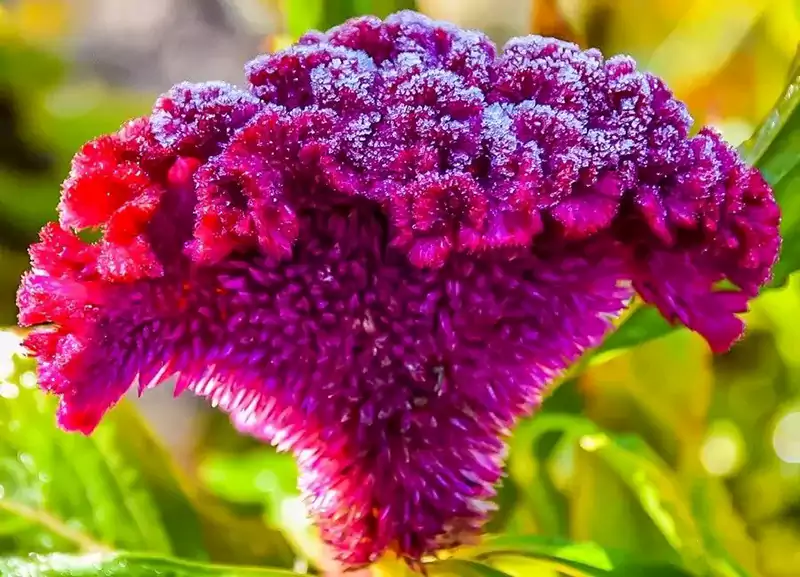
Now, let’s understand the profile and taxonomic structure of this unique flowering plant.
| Taxonomic Structure | |
|---|---|
| Kingdom | Plantae |
| Superdivision | Spermatophyte |
| Division | Magnoliophyta |
| Class | Magnoliopsid |
| Order | Caryophyllales |
| Family | Amaranthaceae (Amaranth family) |
| Species | Celosia |
Though annual bloomers, these flowering plants can be perennials in their native tropical regions.
Major Types and Cultivar Groups of Celosia
While there are approximately 60 species of the flower, the three major divisions are from the species ‘Celosia Argentea’.
1. Celosia Cristata
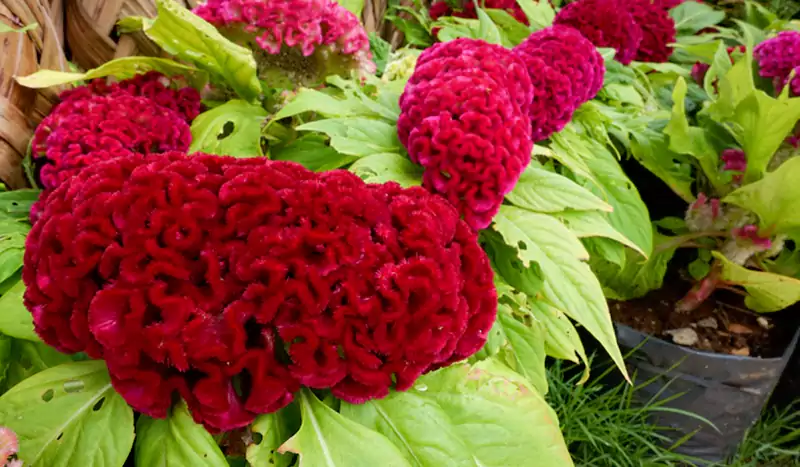
Celosia Cristata plants are known for the bright and unique appearance of their flower heads that resemble a coral or a rooster’s comb. They can be used as ornamental houseplants and have various medical benefits, such as treating inflammation.
| Scientific Name | Celosia Argentea Var. Cristata |
| Height | 1-3 feet |
| Soil Type | Moist but well-drained |
| Sun/Shade Preference | Full sun |
| Watering Needs | Regular but avoid waterlogging |
2. Celosia Plumosa
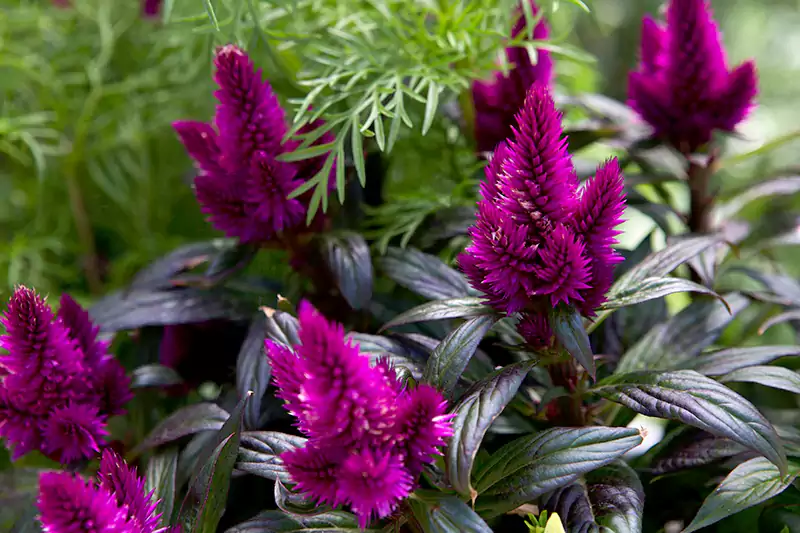
Celosia Plumosa plants are known for their flame-like appearance and vibrant, clustered flowers. Used in bouquets, containers, and as ornamental plants, they uplift the appearance of your garden.
| Scientific Name | Celosia Argentea Var. Plumosa |
| Height | 1-2 feet |
| Soil Type | Well-drained |
| Sun/Shade Preference | Full sun |
| Watering Needs | Regular watering |
3. Celosia Spicata
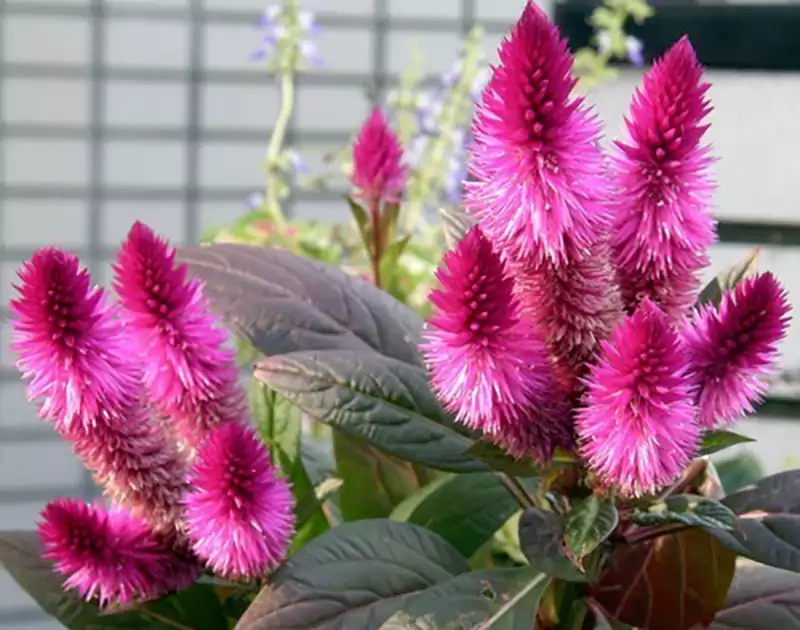
Commonly known as Wheat Celosia or Spiked Celosia, this plant is known for its spike-like structure and various shades, including pink, red, and purple. These bloomers are perfect for dried and fresh-cut arrangements.
| Scientific Name | Celosia Argentea Var. Spicata |
| Height | 1-3 feet |
| Soil Type | Well-drained |
| Sun/Shade Preference | Full sun exposure |
| Watering Needs | Regular watering |
Subdivisions of the Celosia Plant
There are various subtypes and cultivars of Celosia, including Pampas Plume, Ice Cream Pink, Flamma Orange, and Fresh Gold Look, among others.
| Name | Image | Description |
| Celosia Trigyna | 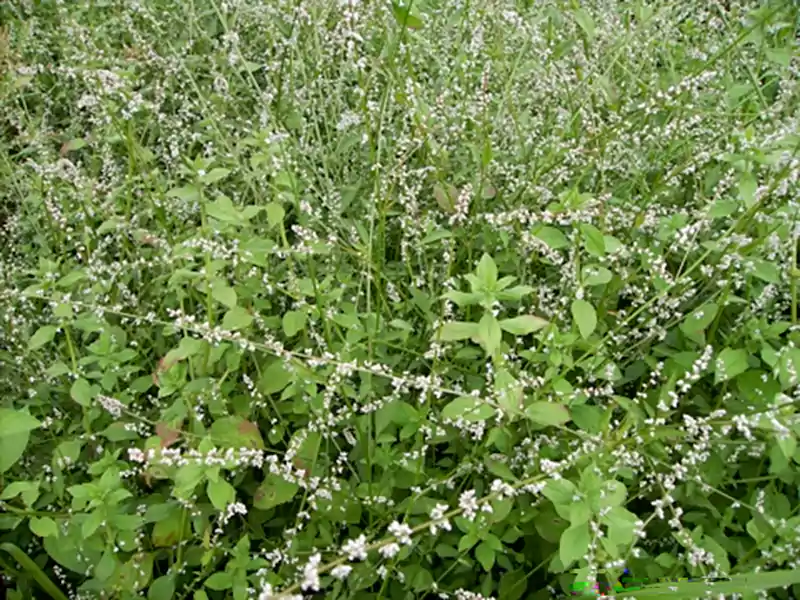 | Celosia Trigyna, commonly known as woolflower or silver spinach, is an edible and medicinal plant that grows up to a length of 3 feet. |
| Celosia Pampas Plume | 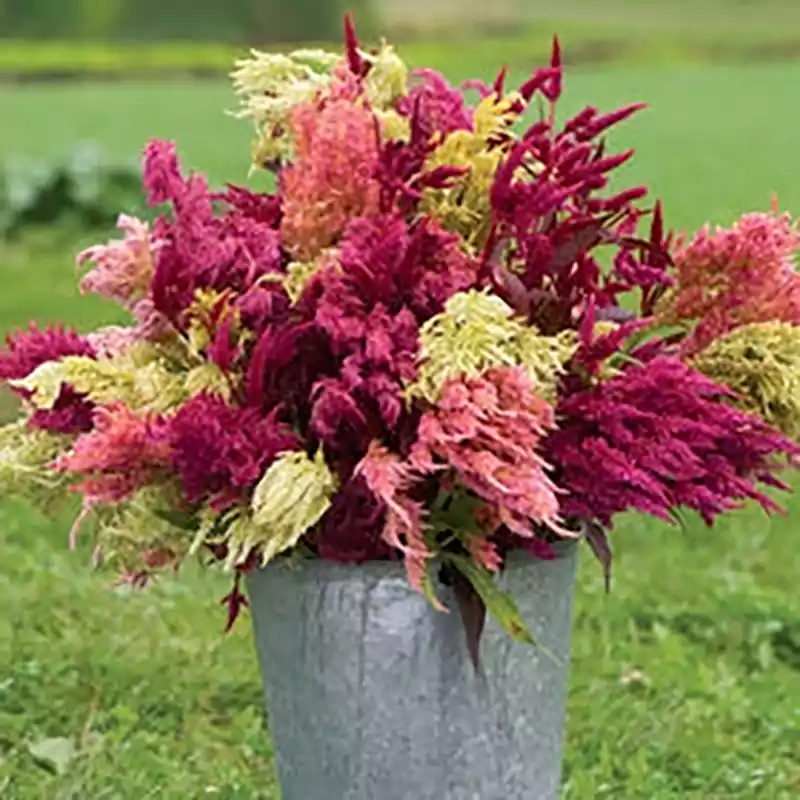 | Pampas Plume is a species of Celosia known for its vibrant blooms that come in different colors, such as orange and yellow, perfect for dried arrangements. |
| Celosia Dracula | 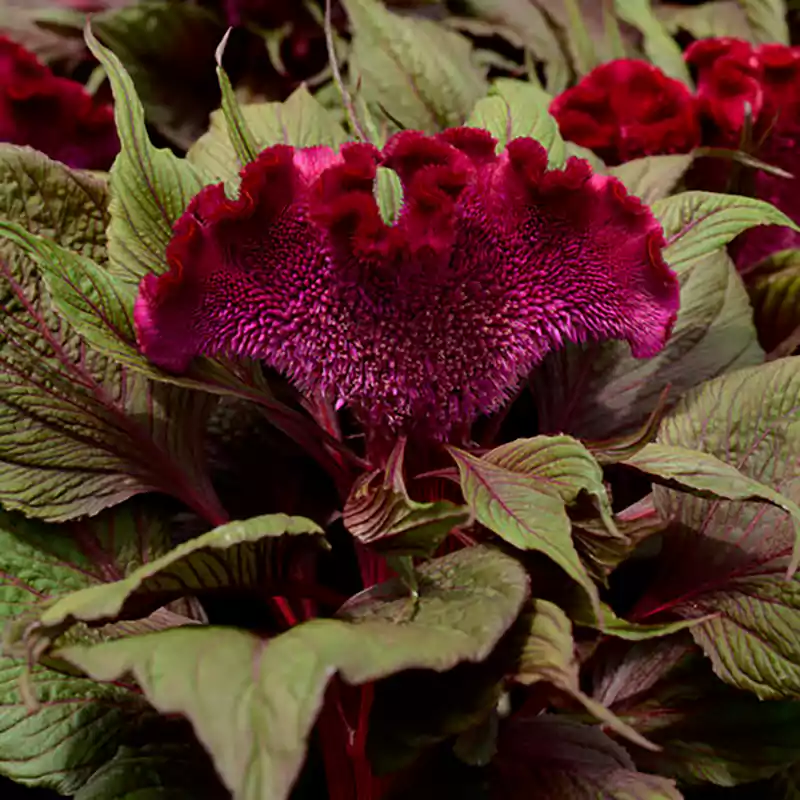 | Celosia Dracula is a cultivar of Celosia Cristata known for its one large flower resembling a brain. With red and purple blooms, the plant grows up to a height of 16 inches. |
| Celosia Ice Cream Pink | 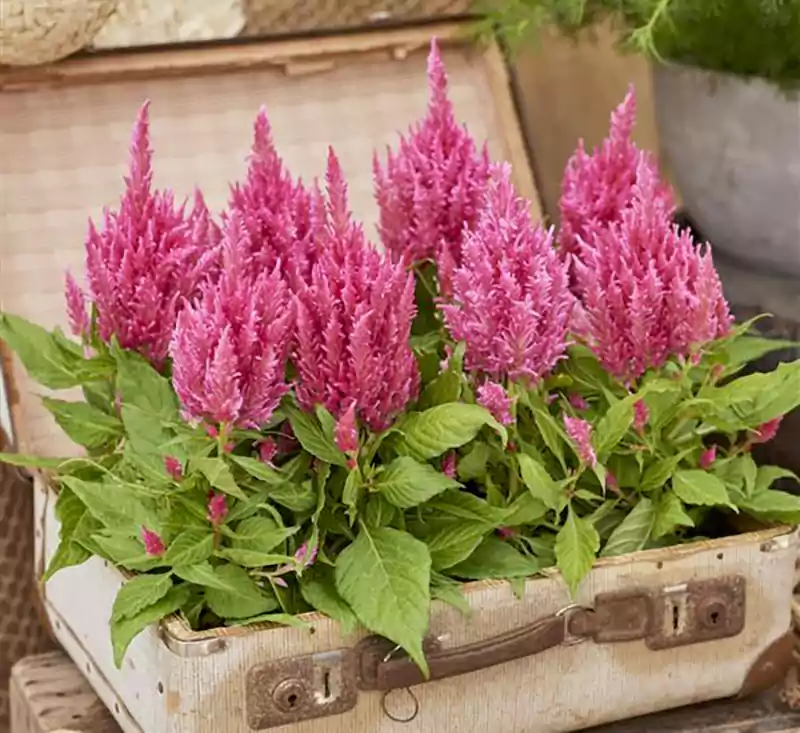 | As the name suggests, this plant is known for its pink plume-like flowers. This is a variety of dwarf celosia with excellent heat tolerance and stunning appearance, making it perfect for containers and bedding. |
| Celosia Flamma Orange | 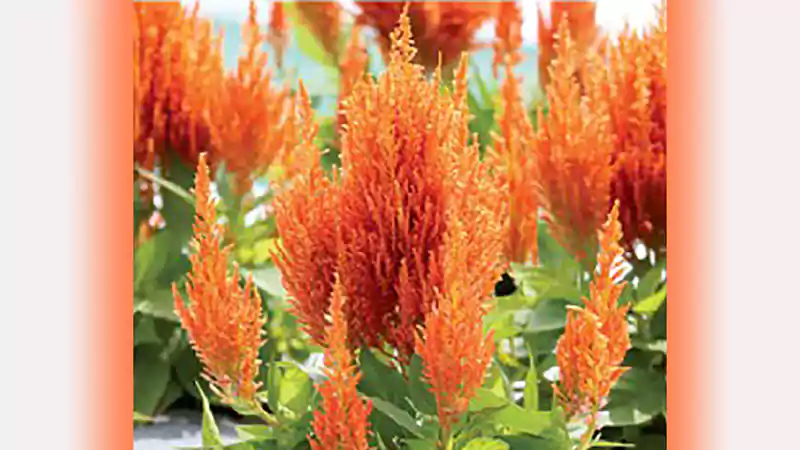 | Celosia Flamma Orange has bright orange-colored blooms, perfect for bedding and containers. It is a compact plant with numerous branches and a longer blooming season. |
| Celosia Fresh Look Gold | 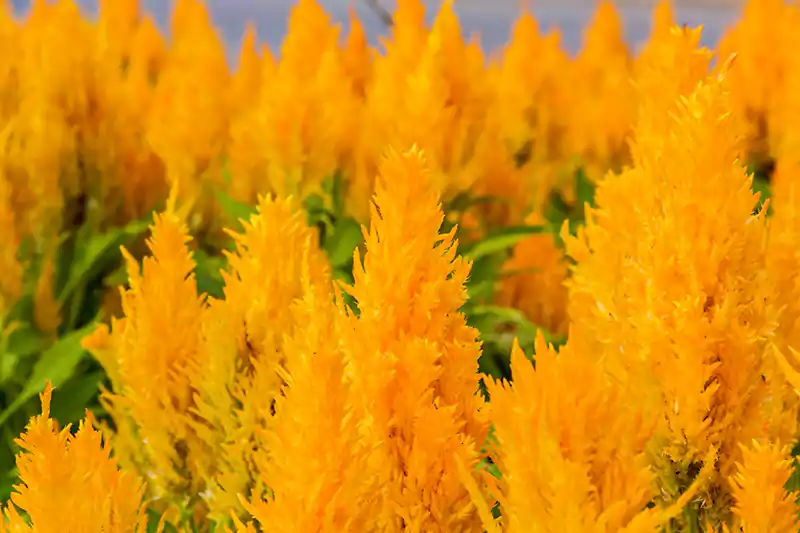 | Celosia Fresh Look Gold is known for its large, bright golden flowers. These are low-maintenance flowering plants with a longer blooming season, perfect for busy gardeners. |
| Celosia Fresh Look Yellow | 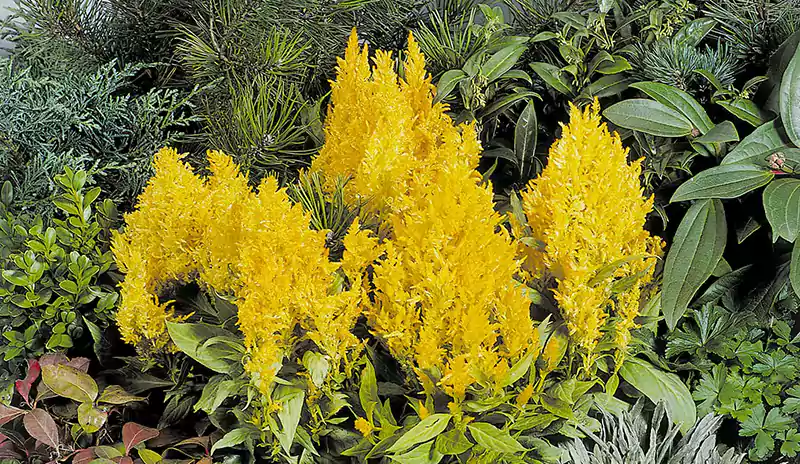 | Celosia Fresh Look Yellow is a variety of bright yellow colored flowers, known for their heat resistance. These flowers are low-maintenance with bright-green leaves and feathery spikes. |
| Celosia Fresh Look Orange | 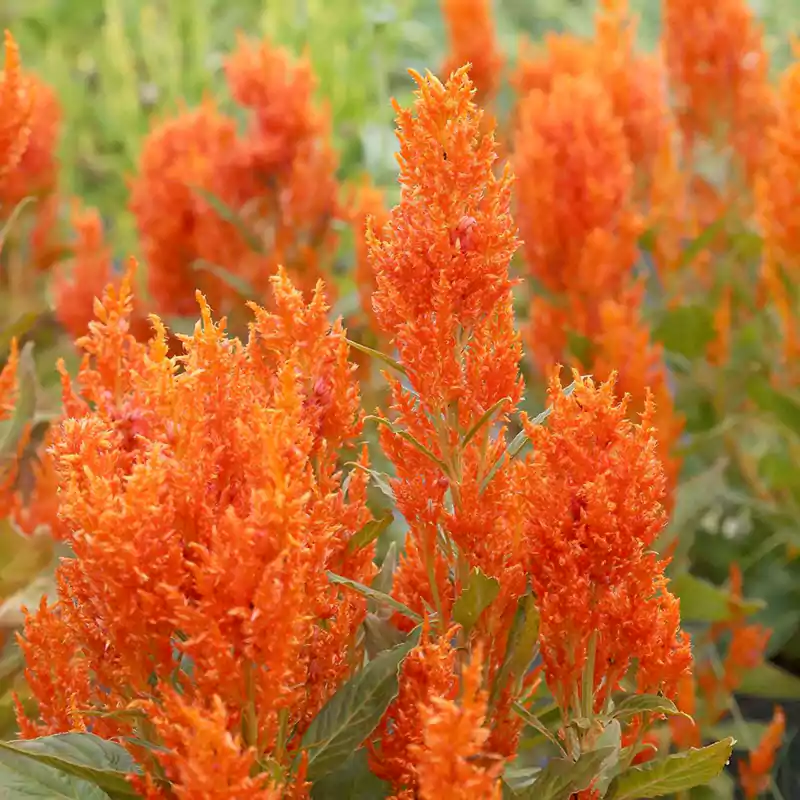 | This plant is known for its large orange flowers and is popularly used in flower beds and containers. With a longer blooming season, the flowers stand vibrant on the stem clades. |
| Celosia Dragon’s Breath | 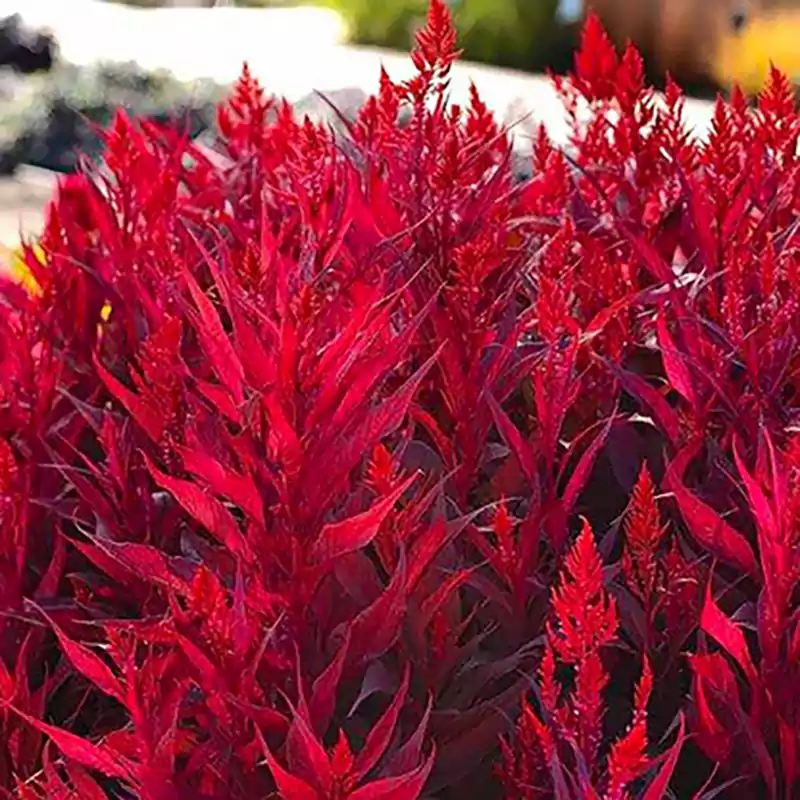 | Dragon’s breath is a bright red-colored flower with red foliage, popularly used in bedding and containers. It is known for its long blooming season and feathery spikes. |
| Celosia Argentea Var. Cristata (Plumosa Group) | 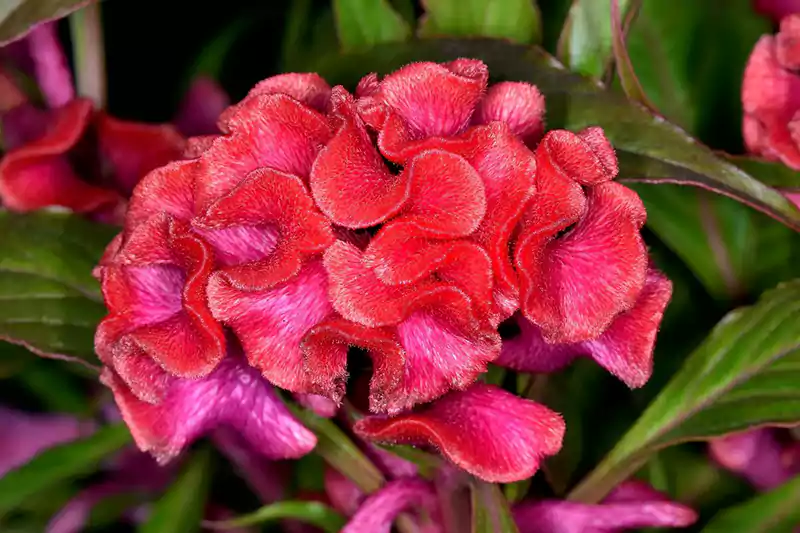 | Argentea Var. Cristata are considered one of the best flowers for pollination, known for their low maintenance and striking appearance. These plants can be used in bedding, containers, and dried flower arrangements. |
| Celosia Tornado Red | 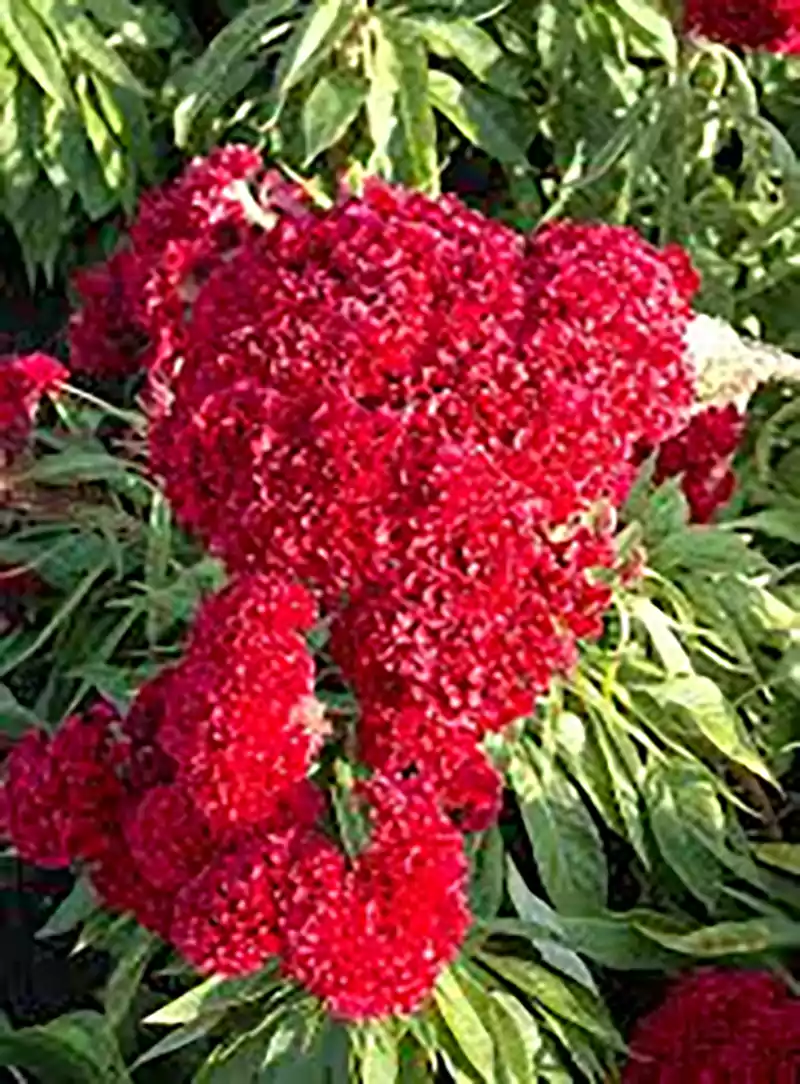 | Celosia Tornado Red is a variety of red velvety cockscomb flowers that resembles the comb of a rooster. With vibrant green leaves, they have a longer blooming season and are used as bedding and container plants. |
| Celosia Orange Queen Improved | 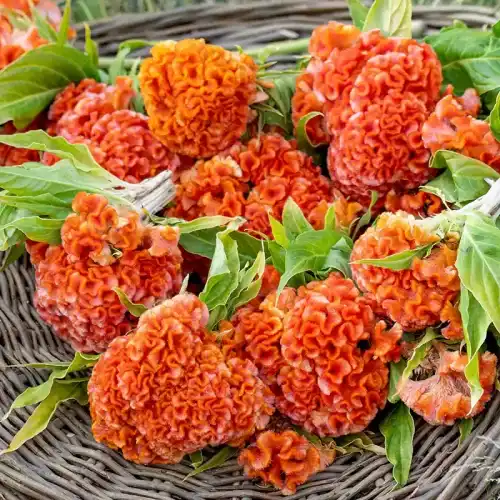 | Celosia Orange Queen Improved is known for its warm orange-colored flowers with enhanced bloom and vibrancy. They have fan-shaped flowers that bloom throughout the summer and fall. |
| Celosia Cramer’s Lemon Lime | 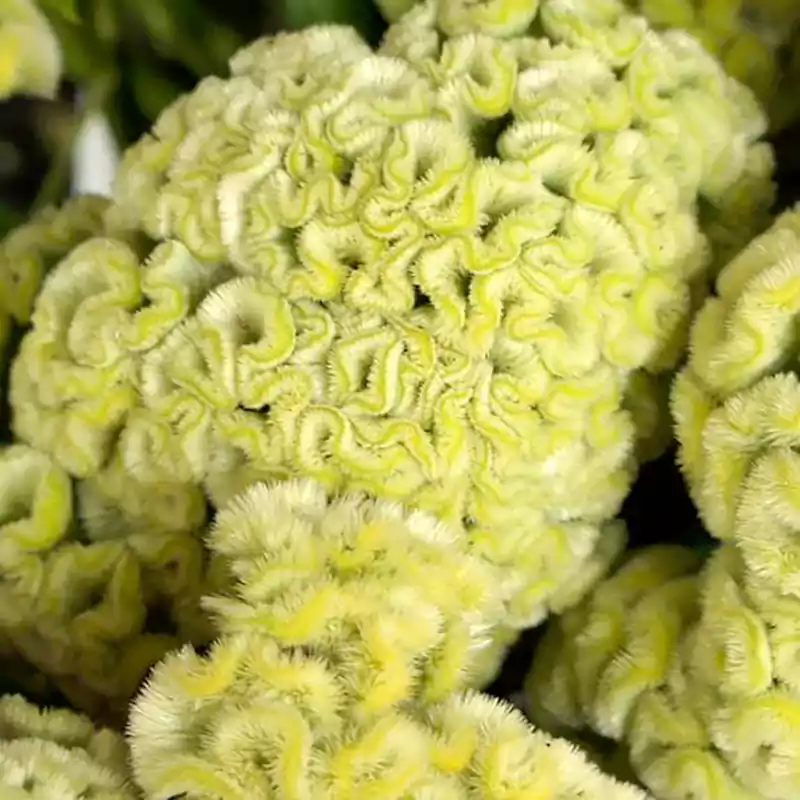 | Celosia Cramer’s Lemon Lime is a variety of flowers that has a bright lime-green color. These flowers are considered a perfect choice for bedding and containers. |
| Celosia Flamingo Feather | 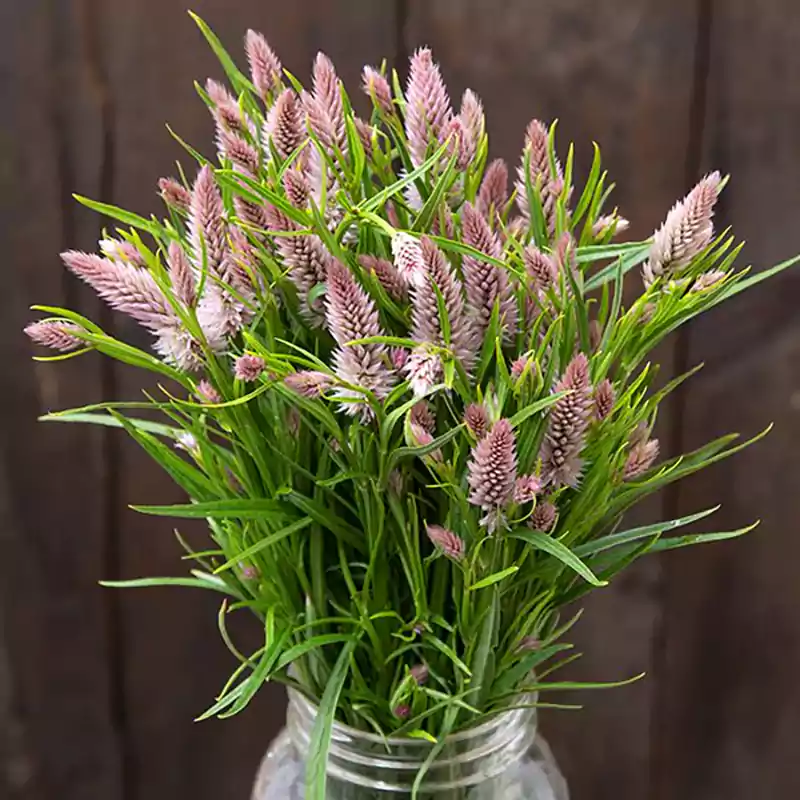 | Flamingo Feather flowers are two-shade flowers, comprising pink and silver colors. Their unique appearance with green foliage makes them highly attractive and a perfect choice for cut flowers in dry arrangements. |
| Celosia Asian Garden | 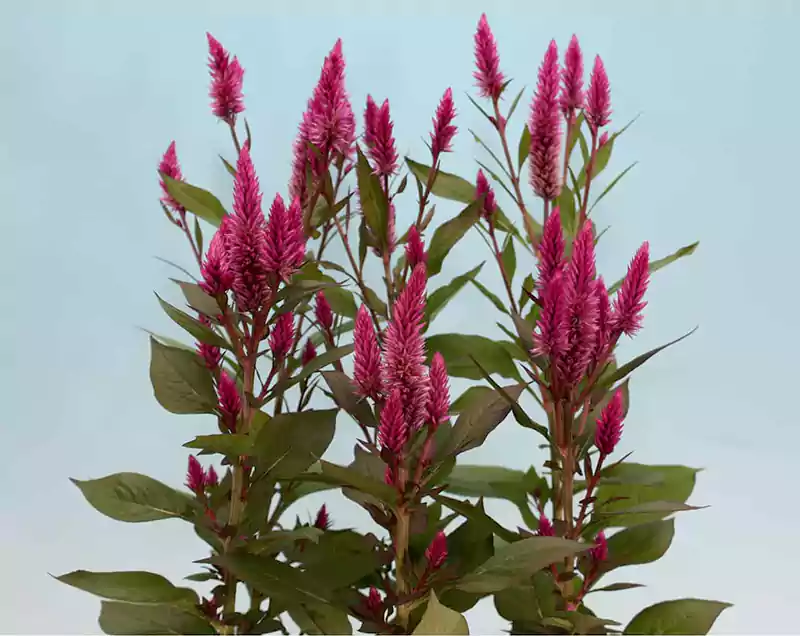 | Popularly known as Silver Cockscomb, Celosia Asian Garden flowers have a two-shade effect, comprising pink and purple colors. These flowers are great for pollination and bloom from late spring to frost. |
| Bombay Series | 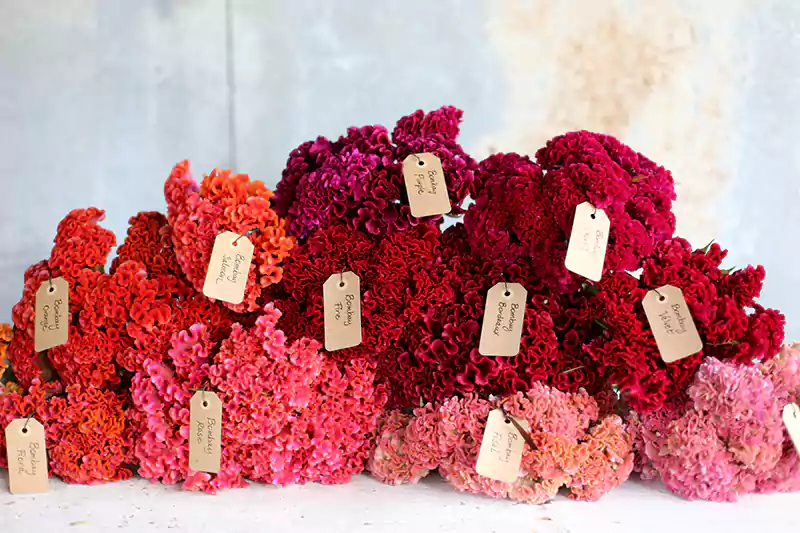 | The Bombay series is one of the most popular cultivars of Celosia among florists, known for its comb-like/brain-like flowers. They come in various shades, including pink, candy, and purple, among others. |
| Castle Scarlet Series | 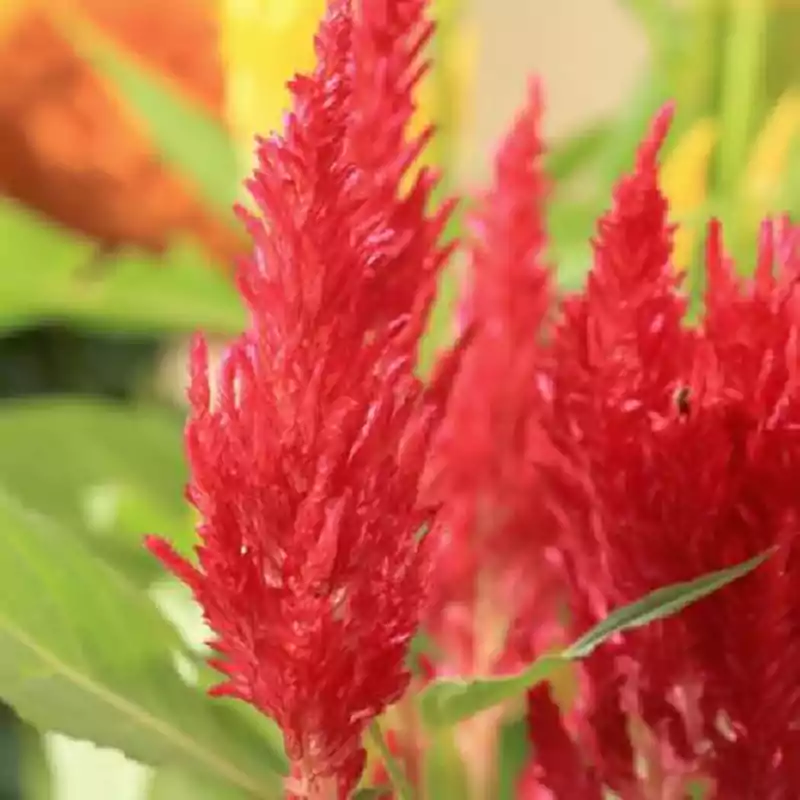 | The Castle Scarlet series includes red colored flowers that grow up to a height of 20 inches. This cultivar is used for various landscaping purposes, including flower arrangements and containers. |
| Sunday Gold | 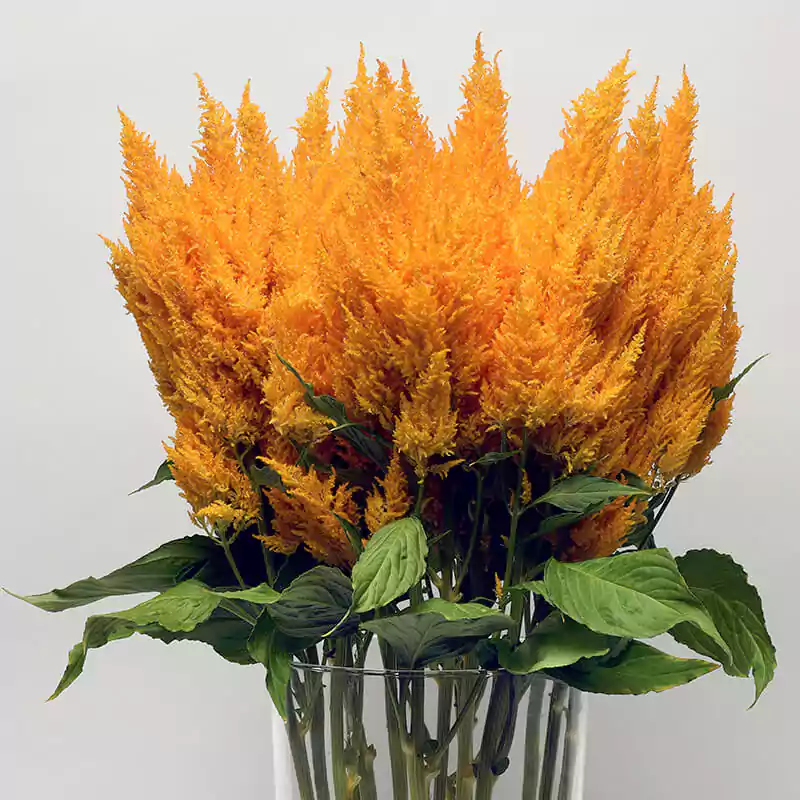 | The Sunday Gold series features several flowers that are bright yellow and golden. These plume-shaped flowers have green foliage and grow up to a height of 30 inches. |
| Kimono Mix Series | 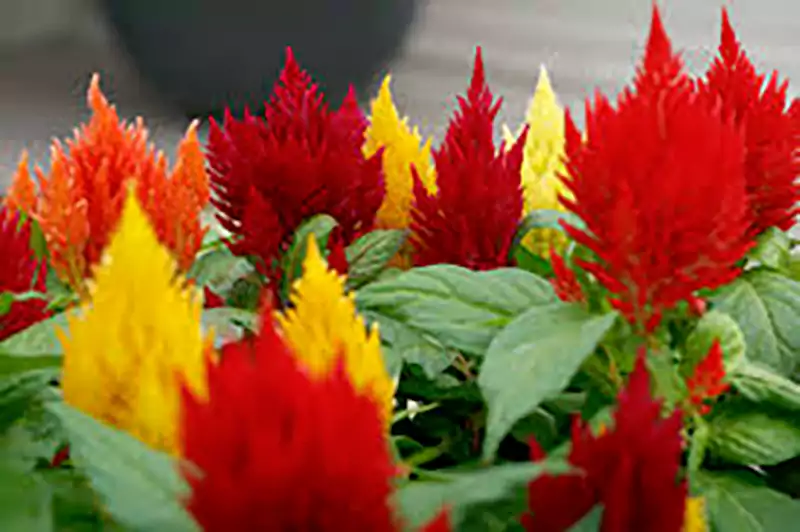 | This cultivar series includes several vibrant flowers of different colors, commonly used in containers and bedding. These compact flowers are of the plumosa group and therefore have feathery plumes. |
Optimal Growing Conditions for Celosia Flower
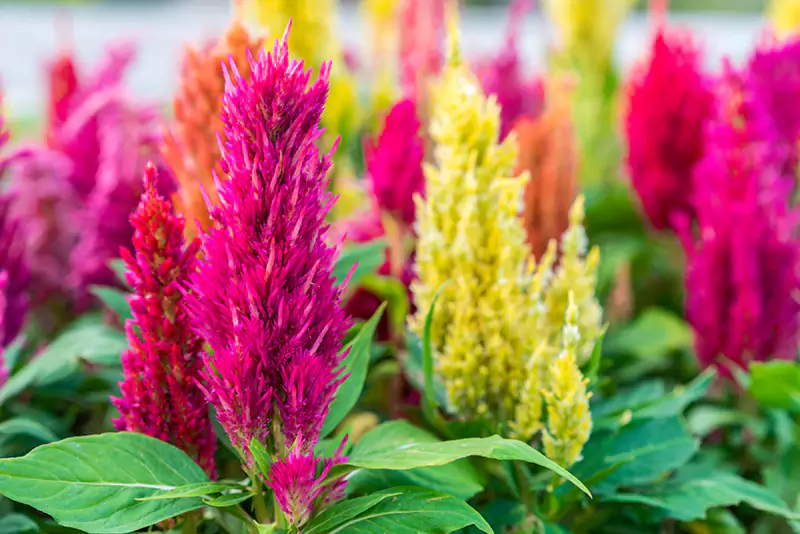
The Celosia flowering plant is low-maintenance and easy to grow, provided there are appropriate growing conditions for healthy growth. Here’s how you can keep these bloomers vibrant all season.
| Growing Conditions for Celosia | |
|---|---|
| Water Needs |
|
| Soil Type |
|
| Hardiness Level |
|
| Average Size |
|
| Sunlight |
|
| Fertilizer |
|
| Pruning |
|
How to Grow and Care for a Celosia Plant?
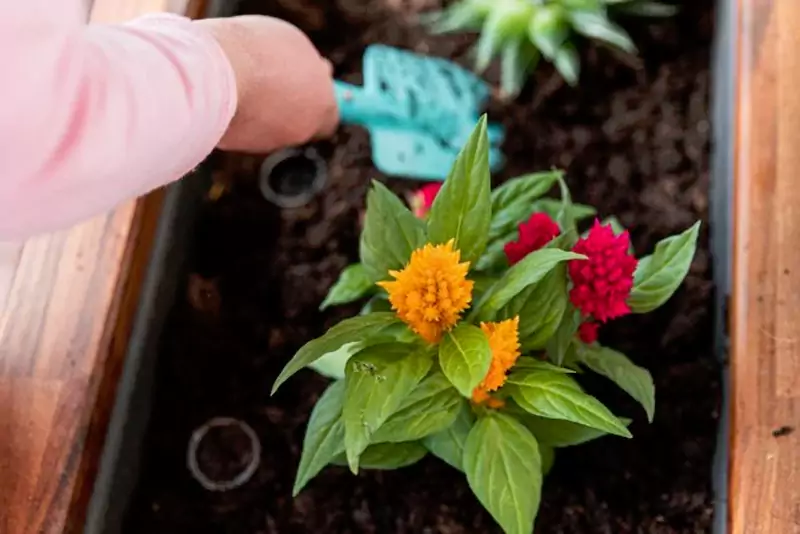
Celosia seedlings can germinate even when planted indoors if an appropriate temperature is provided to them. Let’s dive into some of the prerequisites for Celosia plant care and growth.
- Planting Celosia seedlings: Celosia seeds must be sown indoors at a maximum temperature of 80 degrees Fahrenheit.
- Transplanting seedlings: When the outdoor weather is warm, plant the seedlings outside for better growth.
- Well-drained soil: The plants grow best in well-drained soils rich in organic matter, but avoid waterlogging at all costs.
- Full sunlight: If you are growing the plant in a pot, make sure it is placed near a window for enough sunlight. The seedlings require 6-8 hours of direct sunlight every day.
- Regular watering: Although Celosia seedlings need regular watering, you should avoid overwatering, as it may lead to fungal infections.
As Celosia is largely an annual plant, it ultimately dies in winter, leaving behind its seeds. You can collect the Celosia seedlings for plantation next year.
Landscaping Ideas for Celosia Flowers
When planted and grown properly, Celosia flowers can enhance the look of your home and garden. There are several ways to use the flowering plant for landscaping purposes, including flower beds, cut flowers, containers, borders, and when paired with complementary plants.
1. Flower Beds
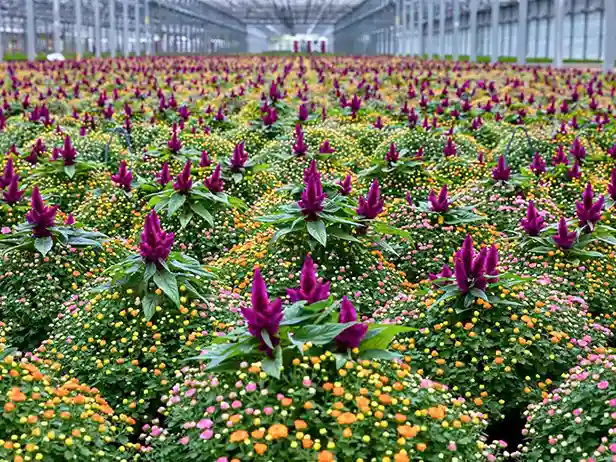
Planting Celosia flowers in various rows to create a flowering bedding looks absolutely serene and attracts a wide range of pollinators. Furthermore, you can also plant Celosia flowers for a themed garden, such as a fiery garden with Plumosa flowers of red, orange, and yellow colors.
2. Cut Flowers
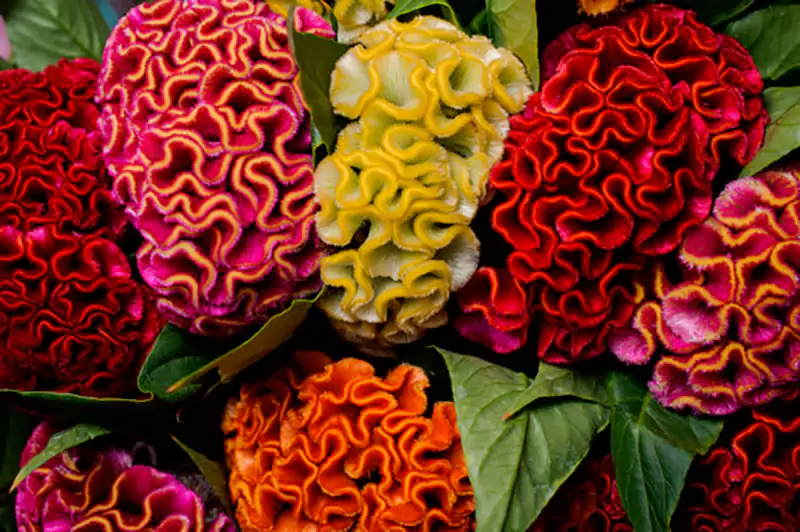
Celosia flowers are a great choice for fresh and dried cut flower arrangements, such as in summer bouquets. The unique appearance of these flowers makes them an excellent choice for adorning your indoors. Additionally, if preserved in warm climates, these flowers become perennial, providing year-round beauty.
3. Containers
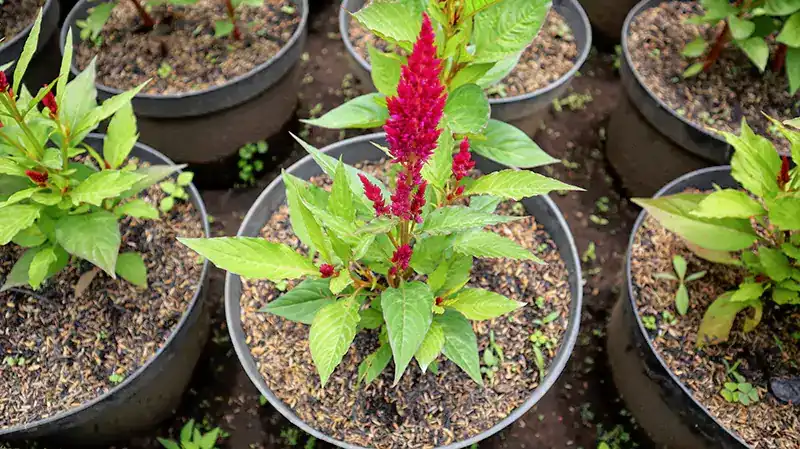
The compact cultivars of the plant are perfect for containers such as pots and small gardens on patios and balconies. However, it should be kept in mind not to disturb the plant by repeatedly changing its position, as this can hinder its further growth.
4. Borders
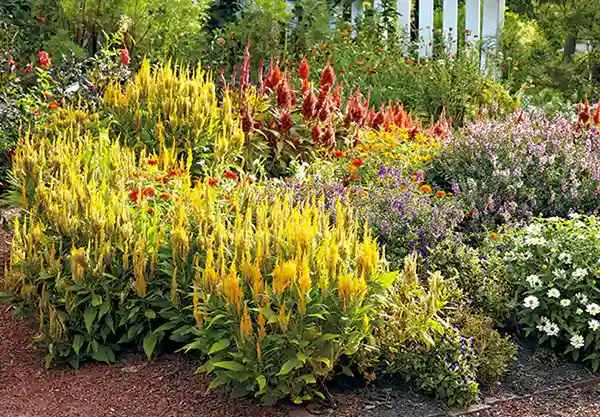
Celosia flowers are ornamental plants, making them a great choice for borders and edging. With their uniqueness and striking appearance, they create a beautiful circular mound around several varieties of plants in your garden and uplift its overall look.
5. Complimentary Plants
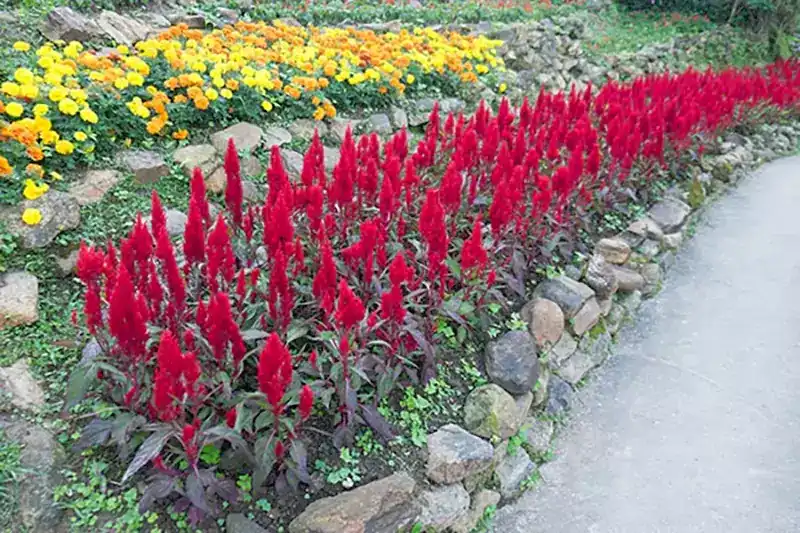
Several plants and flowers go well with Celosia due to similar growing conditions or a beautiful contrast. These plants include Mandevilla and Zinnia; they prefer similar growing conditions, making them perfect for growing alongside Celosia. Additionally, planting different varieties of Celosia can also create a stunning contrast in your garden.
Significance of Celosia Plant
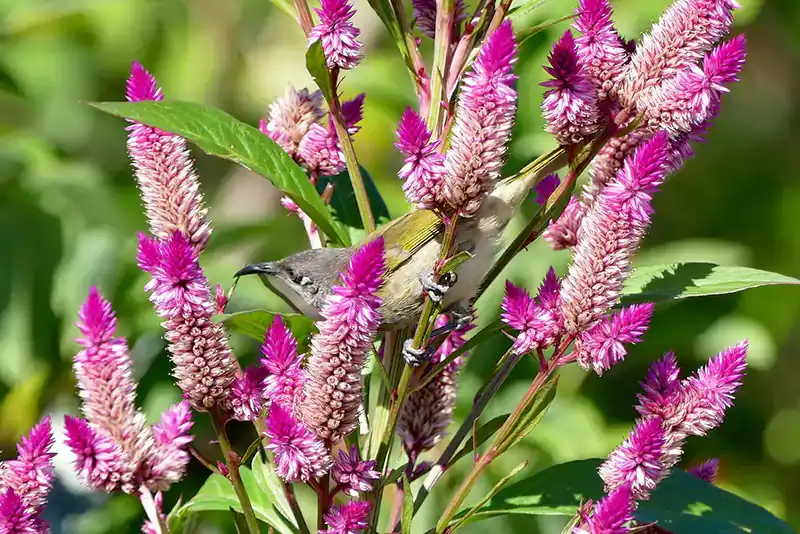
Apart from enhancing the curb appeal of your garden and house, Celosia flowers also have other benefits, including edibility, medicinal uses, and pollination.
- Edible: Celosia Argentea or Lagos Spinach is eaten as a green vegetable in several countries, including Africa and East Asia. Furthermore, the leaves of Celosia are also used in cooking soups, sauces, and stews.
- Medicinal: The plants are also known for their anti-inflammatory and antioxidant properties. The seeds of Celosia are used in treating several ailments, including hemorrhoid bleeding, uterine bleeding, leucorrhea, cataracts, and hypertension.
- Pollinators: Celosia attracts various pollinators, including bees, butterflies, and other insects. This helps in the reproduction of several plants and makes them a perfect choice for vegetable gardens.
- Cultural importance: These flowering plants are used for decorations in ceremonies and festivals. Additionally, due to its striking appearance, the Celosia flower is the official flower of the Sinulog festival of the Philippines.
Common Challenges Faced by Celosia Flowers
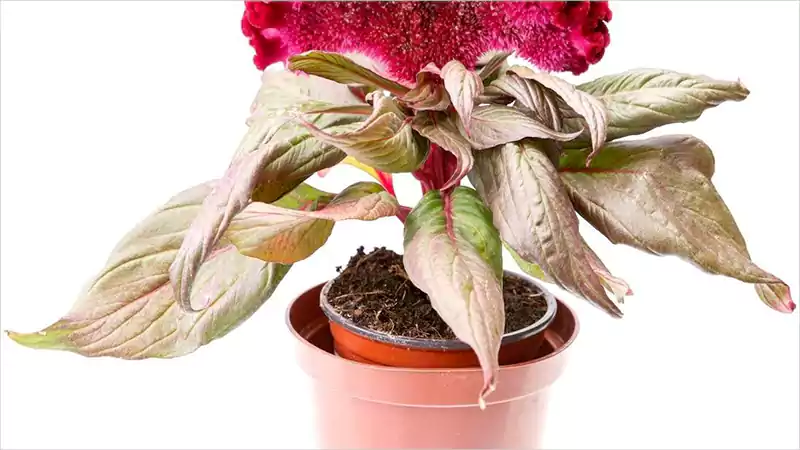
These low-maintenance plants also face several challenges, including leaf spot, pests, cold damage, overwatering, botrytis blight, and salt injury.
- Leaf spot: These are the brown colored spots that appear on the leaves of the Celosia plant, caused by fungi and bacteria such as Alternaria alternata and Xanthomonas.
- Pests: The flowers are also prone to some pests, such as whiteflies and spider mites, which can significantly affect the plant’s growth.
- Cold damage: Celosia plants are sensitive to colder climates and often die when the frost comes. Hence, it is advisable to keep the climate warm for the Celosia plant care and growth.
- Botrytis Blight: Caused by Botrytis cinerea and commonly known as gray mold, this disease is one of the major reasons for the death of the plant.
- Overwatering: Although the plant likes regular watering, overwatering should be avoided at all costs, as it leads to waterlogging and tissue damage.
- Salt injury: The plants cannot bear higher salt concentrations, making it highly important for you to check salt levels before watering the plants.
Conclusion
While the Celosia flower is known for its striking appearance, it is symbolic of love and courage. The flower also has various health benefits, culinary uses, and landscaping possibilities.
There are several types and cultivars of Celosia, each with a distinct appearance and features, but largely with a similar growth pattern.
While the flowering plant may face several challenges, careful planning and effective Celosia plant care measures can protect these beauties from premature death.
Frequently Asked Questions
How long do Celosia flowers last?
What does the Celosia flower symbolize?
The Celosia flower symbolizes various emotions such as love, courage, strength, prosperity, and good fortune.
Is Celosia toxic to humans?
No, Celosia is not toxic to humans. In fact, it is edible in various countries.
How tall does Celosia grow?
Celosia plants can grow up to a height of 4 feet, depending on their type and variety.
Is Celosia a cut-and-come-again plant?
Yes, Celosia is a cut-and-come-again plant, as harvesting encourages new blooms in Celosia.
Latest Blog