As companies grow, more conversations, meetings, movement, and collaborative activity occur simultaneously. Combined with reflective surfaces, this creates a compounding noise effect.
Office Acoustic Solutions for Scaling Businesses
Author
Rashika Gupta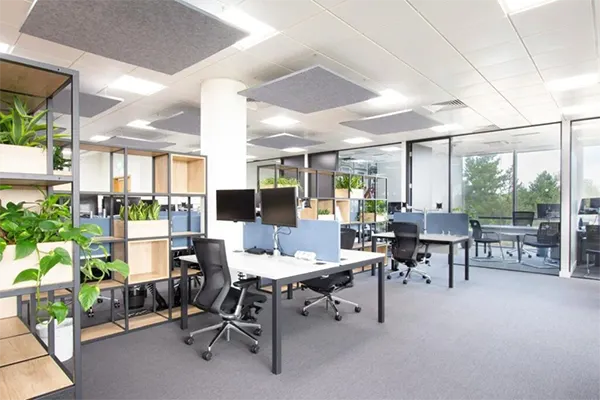
According to a WGBC report, background noise can dent employee productivity by 66%, and another study found that 3 in 10 employees regularly lose their concentration due to the office chatter. This makes sound one of the most underestimated business costs. As companies grow, conversations multiply, meetings overlap, and once-energetic workspaces can quickly become distracting environments.
When a business transitions from a small startup to a rapidly scaling company, the physical workspace inevitably feels the pressure. You reach a stage where your team expands rapidly, phone calls become constant, and collaborative discussions begin competing for attention. Suddenly, the open-plan environment that once encouraged energy and teamwork starts creating interruptions instead.
For growing businesses, managing noise is about far more than comfort. It directly impacts concentration, operational accuracy, employee well-being, and long-term retention. As you add desks and departments, acoustic planning should become a core part of your workplace infrastructure strategy. Here is how scaling companies can implement commercial-grade office acoustic solutions that protect focus and support sustainable growth.
KEY TAKEAWAYS
- Office noise increases faster than headcount due to overlapping conversations and sound reflections.
- Acoustic wall panels reduce distractions by absorbing reflected sound at its source.
- Ceiling treatments solve hidden vertical sound issues common in open-plan spaces.
- Creating dedicated acoustic zones improves focus while preserving collaboration.
Table of Contents:
The Hidden Cost of Scale: Why Growing Offices Get Louder
Most commercial office spaces in modern business hubs feature hard, sleek materials like:
- Glass partitions
- Uncarpeted floors
- Exposed structural brickwork
While this layout looks incredibly sharp and matches a modern brand identity, it presents major acoustic challenges.
As your staff count scales up, the noise issues multiply:
- The Compound Noise Effect: Doubling your headcount doesn’t just double the background noise; it creates a compounding effect where employees naturally raise their voices to be heard over each other.
- Parallel Reflections: Sound waves bounce cleanly between flat, untreated walls, creating a persistent flutter echo that makes speech muddy and difficult to understand.
- The Collaboration Clash: Creative teams brainstorming out loud will inherently disrupt accounting, legal, or data analysis teams working just a few feet away.
To scale smoothly without causing workplace friction, businesses need to shift away from basic decorative layouts and focus on high-performance sound absorption.
1. Targeted Wall Treatment with the Best Acoustic Panels for Office Noise Reduction
The absolute fastest way to tame a loud room is to target horizontal sound reflections. Sound travels outwards and strikes bare walls at ear height, bouncing right back into the workspace to create a noisy, echoing environment.
Integrating the best acoustic office panels for noise reduction directly handles these troublesome wall reflections.
When selecting the Best Acoustic Panels for Office Noise Reduction, look for commercial products that boast a high Noise Reduction Coefficient (NRC). The metric tells you exactly how much acoustic energy a panel can trap. Ensure you get maximum performance from the layout.
2. Introduce Fabric Acoustic Wall Panels for Open Office Spaces
A major concern for growing companies is keeping the office looking smart for visiting clients and recruitment drives. You do not want your workplace to look like an industrial recording studio or a sterile warehouse.
Utilising fabric acoustic wall panels for open office spaces allows you to balance acoustic control with premium interior styling. These solutions are also highly flexible:
- Custom Color Matching: Match your exact brand color guidelines or use complementary tones to turn necessary sound absorption into an intentional design feature.
- Modular Configurations: Arrange panels in geometric patterns, horizontal bands, or vertical columns to complement the existing architectural lines of your building.
- Aesthetic Softening: Introduce soft textiles into environments heavily dominated by metal, glass, and concrete to make the office feel significantly more welcoming.
Placing these premium panels on walls adjacent to desks catches sound as soon as it originates, stopping the noise from spreading to the entire floor.
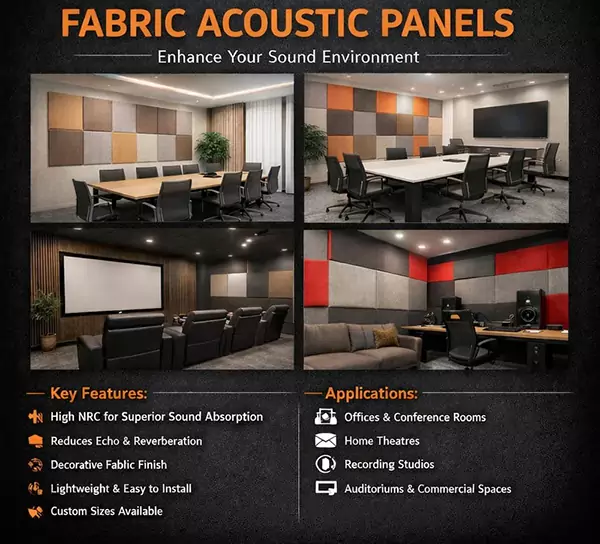
The following infographic shows how it looks, key features, and other applications:
3. Utilize Acoustic Ceiling Panels for Open Plan Offices
Wall treatments solve horizontal reflections, but sound also travels upward and creates a second layer of acoustic issues. The sound bounces off hard concrete structural slabs or plasterboard ceilings and rains back down onto desks as a hollow ring.
Installing acoustic ceiling panels for open plan offices is the ideal solution for properties with high ceilings or limited wall space.
Depending on your building style, choose one of the two:
- Acoustic Rafts (Clouds): These flat panels hang horizontally from the ceiling directly over clusters of desks, trapping rising noise right where people are speaking.
- Hanging Vertical Baffles: Ideal for spaces with exposed AC ductwork and industrial rafters, these vertical hanging panels intercept sound waves as they glide across the upper volume of the room.
Treating the ceiling ensures that even if you have massive glass windows along your outer walls, the overall ambient volume of the office remains beautifully balanced and controlled.
4. Divide Your Floor Plan into Smart Acoustic Zones
As your company scales, you can no longer treat the entire office floor as one big multi-purpose room. You need to segment your available space based on the specific auditory tasks being performed throughout the working day.
High-Volume Zones
Group your most vocal departments—such as outbound sales teams, recruitment consultants, and collaborative marketing groups—into one dedicated section of the office. Encircle this area with high-absorption wall panels and thick desk dividers to contain the energy.
Deep Focus Zones
Position your engineering, finance, and copywriting teams as far away from high-traffic walkways as possible. Protect these areas by creating a buffer zone of soft breakout spaces or storage units between them and the loud departments.
Private Spaces
Always provide a pressure valve for noise. Small, insulated telephone boxes or quiet videocall pods allow employees to have loud conversations without broadcasting it to thirty colleagues trying to focus on work.
Conclusion
A business scaling growth should not come at the expense of focus. As teams expand, unmanaged noise can quietly erode productivity, increase fatigue, and create unnecessary workplace friction.
Combine targeted ceiling treatments, fabric-wrapped wall panels, and smart zoning principles and you can transform a loud, frantic workspace into a quiet hub of focused productivity. Investing in the right auditory comfort pays massive dividends in team output, workplace happiness, and company growth.
FAQs
Why do office spaces become noisier as businesses scale?
What are acoustic panels used for in offices?
Acoustic panels absorb sound waves and reduce echoes, improving speech clarity and creating a quieter, more focused work environment.
Are acoustic wall panels only functional, or can they improve office design too?
Modern fabric acoustic panels are available in different colours, textures, and layouts, allowing businesses to integrate sound control with interior design.
Which office areas should receive acoustic treatment first?
Prioritise open desk areas, meeting zones, collaborative departments, and spaces with hard reflective surfaces where noise tends to accumulate.