A professional inspection is recommended at least once a year.
Simple Garage Door Care For A Safer & Smoother Home
Author
Terri Sander
“An ounce of prevention is worth a pound of cure.”
– Benjamin Franklin (USA Founding Father)
The garage door keeps opening and closing, thousands of times, each year like clockwork. This makes it one of the most moving systems in your home. Yet, it’s often forgotten until it starts squeaking, sticking, or refuses to move altogether.
Don’t wait for the breakdown. Just give a few minutes to shutter maintenance and improve its safety, lifespan, avoid unexpected repair bills, keeping your daily routine smooth. Here’s what every homeowner should know.
KEY TAKEAWAYS
- Regular garage door maintenance extends its life and also prevents costly repairs.
- Watch for warning signs such as unusual noises, slow movement, uneven closing, or damaged weather seals.
- Homeowners can safely perform visual inspections and basic cleaning, but repairs involving springs, cables, or electrical components should be left to professionals.
- A simple maintenance schedule with monthly checks and annual professional servicing keeps your garage door operating safely and reliably.
Table of Contents:
Why Upkeep Matters
It doesn’t just open and close. A shutter protects your home, supports daily routines, and adds to curb appeal. When it is not working well, the inconvenience is immediate. You may deal with extra noise, uneven movement, or a door that suddenly refuses to cooperate when you are already running late.
Planning for overhead residential garage door maintenance can help you avoid those disruptions and keep the entire system working as intended. Regular service also reduces wear on moving parts, which can extend the life of the door and opener.
There is also a safety benefit that should not be overlooked. Garage doors are large, heavy, and under tension. If a component fails, the result can be more serious than a simple inconvenience. Maintenance avoid costly repairs and keeps the house safer.
Common Signs Of Wear
Before a major garage door failure happens, there’ll be signs- small changes in how it works. If the door starts making grinding, squeaking, or banging sounds, that is often a sign that parts are wearing down or no longer moving smoothly.
You should also watch for slow response times. If the door hesitates before opening or closing, something may be affecting the opener, tracks, or balance. A door that shakes or moves unevenly is another signal that the system needs attention.
Take a close look at how the door meets the ground. If it closes unevenly or leaves gaps, worn seals or alignment issues may be involved. Weather stripping that looks cracked or flattened is worth noting too.
These signs may seem minor at first, but they can point to bigger problems later. Catching them early is often the difference between a simple service visit and a more disruptive repair.
Parts That Need Attention
Even an average Joe can understand the key parts of a garage door. You don’t have to become a technician for that. A few familiar names can help you recognize what matters during inspections or service appointments. Springs help carry the door’s weight, which is why the door feels manageable instead of impossibly heavy.
Smooth door travel depends on rollers. If they wear out, the door may become noisy or jerky. Tracks guide the door up and down, so even small bends or debris can affect movement.
Cables work with the springs and support the lifting process. Hinges connect door sections and allow them to bend as the door moves. Safety sensors near the floor help prevent the door from closing on a person, pet, or object.
Seals around the edges help block water, dirt, and drafts. When these parts are neglected, the whole system can feel the strain. One small issue in one area often creates extra wear somewhere else.
What You Can Check
“But I don’t have the specialized tools!” You don’t need them for most routine inspections. Neither are they dangerous to do. Start by simply watching and listening. If the door sounds louder than usual or moves differently, that is useful information. Changes in performance are often the first clue.
You can inspect the tracks for visible debris and make sure the area around the sensors is clean. A dusty sensor can sometimes cause frustrating closing issues. It is also smart to test the auto-reverse feature with a simple object placed in the door’s path, following your manufacturer’s instructions.
Look for rust, worn seals, and loose-looking hardware. Notice whether the door appears level when closed. If anything seems off, make a note of it instead of guessing.
Here’s a simple checklist of what you see, hear, do, and don’t:
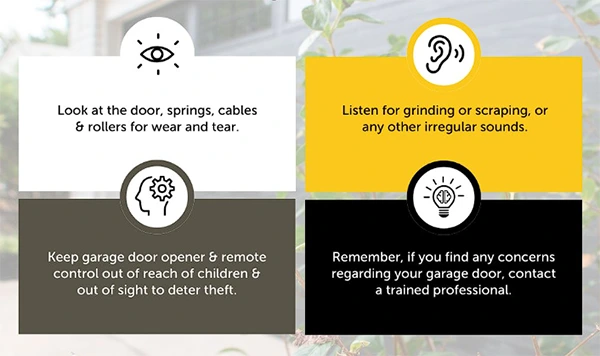
Alt: Shutter Check List
The important line is this: observation is helpful, but repair work is different. Homeowners can handle basic awareness and light cleaning. Anything involving tension, lifting force, or electrical components should be left to a trained technician.
When To Call A Pro
However, not every garage door problem is a potential DIY project. Springs and cables are at the top of that list. With heavy tension, it’s dangerous to tinker with them without proper tools and training.
You should also call a professional if the door looks crooked, feels unusually heavy, or will not stay open properly. Those symptoms can point to balance problems or failing components. Opener issues, including inconsistent response or strange motor sounds, also deserve expert attention.
Another reason to schedule service is when small warning signs keep returning. A repeated issue usually means the root cause has not been addressed. Temporary fixes rarely stay temporary for long.
Professional maintenance is valuable because it combines inspection, adjustment, and preventive care. Instead of waiting for a complete failure, you can deal with wear in a controlled way. That approach is usually safer, less stressful, and easier on your household budget.
Building A Simple Schedule
Garage door maintenance doesn’t have to become a workday. Just keep a practical outlook. Once a month, take a minute to observe how the door opens and closes. Ensure the movement is smooth and there are no unusual sounds. This quick habit can help you notice changes early.
Every few months, inspect the weather seals, clear away debris near the tracks, and confirm that the safety sensors are clean. Seasonal changes can affect how materials perform, especially in areas with temperature swings or extra moisture.
At least once a year, schedule a professional maintenance visit. That is a good time to have the system checked for wear, balance concerns, and part performance. Annual service can be especially useful if your shutter is used several times a day.
Consistency matters more than perfection. A simple schedule helps you protect an important part of your home without adding much work to your calendar. A well-maintained garage door tends to reward you with smoother operation, better safety, and fewer unpleasant surprises.
Conclusion
A garage door is one of the largest moving systems in your home. A little preventive maintenance goes a long way to keep it moving. By watching for early warning signs, performing simple visual inspections, and scheduling professional service when needed, you can improve safety, extend the life of your garage door, and avoid unexpected repair costs. Consistent upkeep today can save you significant time, money, and stress tomorrow.
FAQs
How often to service a garage door?
What are the most common signs that my shutter needs maintenance?
Grinding noises, slow response, uneven movement, gaps when closed, damaged weather seals, and inconsistent opener performance are all common warning signs.
Is it safe to maintain a garage door yourself?
Basic tasks such as cleaning sensors, inspecting weather seals, and checking for visible wear are generally safe. For anything beyond that, get a qualified technician.
Latest Blog