Yes, it is an evergreen herbaceous perennial that can bloom for years if provided a proper environment.
Peace Lily: Special Features, Care Measures, and Common Problems
Author
Rashika Gupta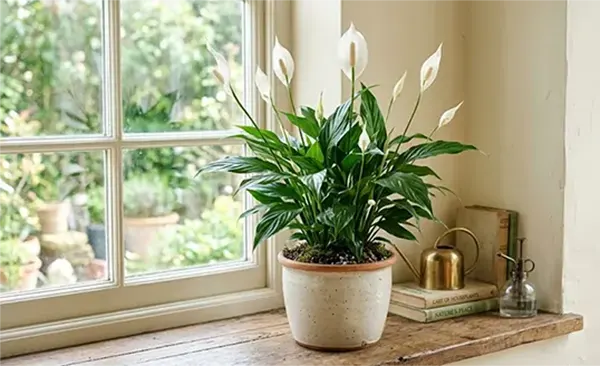
Peace lily is one of the most popular indoor plants, loved for its glossy leaves and unique white blooms. With proper care, these tropical plants can thrive for up to two decades. I have grown this flowering plant near the window, and among the other indoor plants like the calathea plant, it certainly provides a soothing touch.
If you want an easy-to-grow houseplant with great interior design appeal, a peace lily can be a perfect addition to different indoor spots. Learn about its care, propagation, and different types to keep it growing in your home without any worries!
Table of Contents:
Peace Lily: Scientific Classification and Key Features
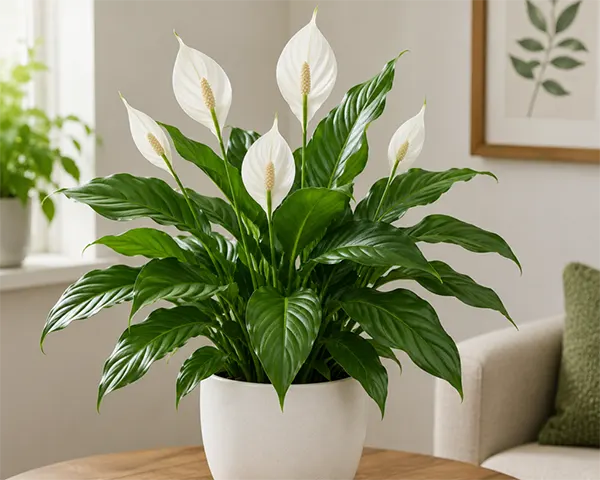
Peace lilies are tropical evergreen plants that are native to Central America and Southeast Asia. They can thrive in both outdoor and indoor environments under ideal growing conditions. This tropical plant carries symbolic significance and is loved for its low light tolerance.
Here is its scientific classification and key features:
Peace Lily Scientific Classification
| Kingdom | Plantae |
| Order | Alismatales |
| Family | Araceae (Arum family) |
| Genus | Spathiphyllum |
| Species | S. wallisii |
Did you know?
Despite the name, Peace lilies are not the true lilies and belong to the Arum family. This makes them closely related to the tropical plants like anthuriums, elephant ears, and philodendrons.
Peace Lily Key Characteristics
- Natural Air Purifier: Spathiphyllum wallisii is valued for its ability to naturally filter out air toxins. Many homeowners choose this plant to improve the ambience and bring in serene greenery indoors. An experiment by Harvard University also supports that the plant has air purification capability in a real environment.
- Low-Light Resistant: While the bright indirect light is considered ideal in these tropical houseplants, they can tolerate low light better than many other flowering plants. Due to this, they can thrive well near the north-facing window or at the bright indoor spots.
- Symbolism: Like many other houseplants, the peace lily also has significant symbolic value. Peace Lily symbolism is associated with purity, sympathy, hope, healing, and peace. It is widely used for gifting to those who have lost a loved one.
- Toxicity: These tropical plants are listed at ASPCA as toxic to cats and dogs. They contain insoluble calcium oxalates that can irritate the animal’s mouth and stomach. If you have pets at home, it’s better to keep them in a spot that is out of their reach.
Did you know?
Peace lily flowers are actually the modified leaves (spathes) that wrap around the central spike. The actual flowers are very tiny and bumpy on the same central spike.
Also Read: How to Propagate Pothos? Propagation Methods, Ideal Rooting Conditions, and Common Problems
How to Plant Peace Lily?
I found planting this tropical houseplant a simple process. Take a slightly larger pot and a well-draining potting mix. Place the peace lily into the pot, and add soil. Water thoroughly until water drains from the bottom, and place the pot in bright indirect sunlight.
Here are the steps that you can follow:
- Step 1: Choose the Right Pot
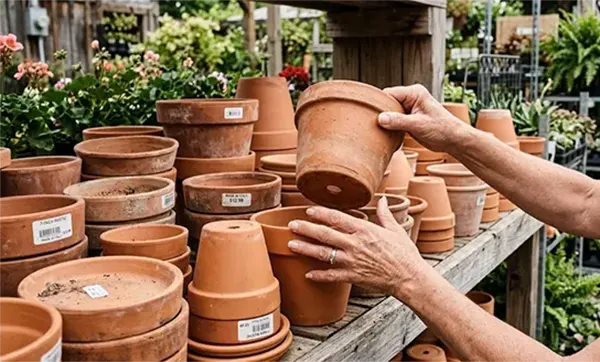
Select a pot with drainage holes. Usually, terracotta pots work best for these plants as they prevent waterlogging. The container should be about 1-2 inches larger in diameter than the root ball.
- Step 2: Prepare the Soil
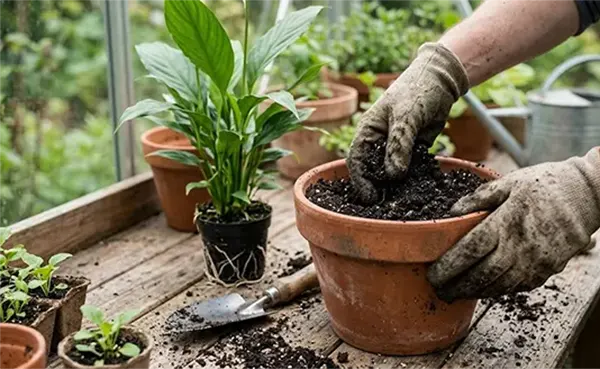
Use a rich standard potting mix. You can add some peat moss to improve the drainage. Add a base layer of soil to the pot.
- Step 3: Place the Plant
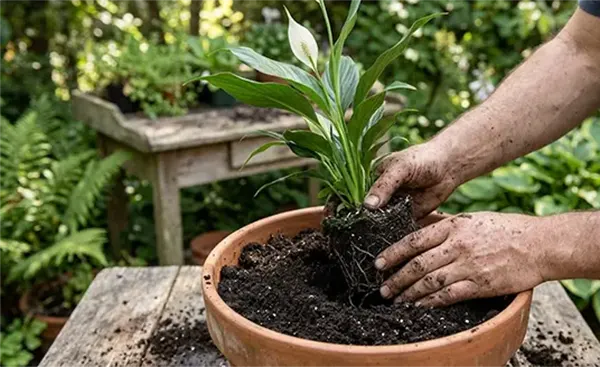
Place the peace lily plant above the soil layer. Fill the gap with more potting mix and pat to secure the plant.
- Step 4: Initial Watering and Sunlight
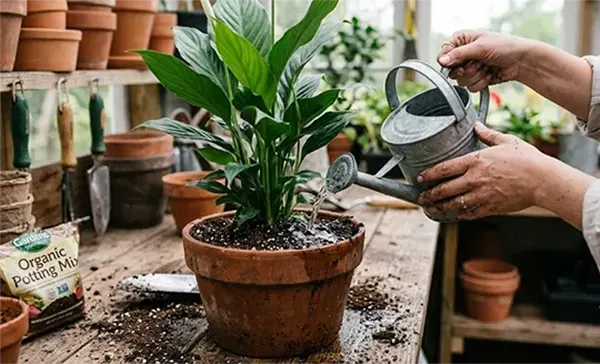
Thoroughly water the plant and place the container in indirect sun exposure.
When to Plant
Outdoors, the best time to plant these tropical plants is spring, when the temperatures are still cool. Indoors, they can be purchased and planted at any time of the year. Though you may have to be careful while transporting them in colder climate conditions.
Peace Lily in Water
You can grow a peace lily in just water. This provides an amazing display with roots visible through a transparent vase. By growing it in water, you can keep the space soil-free and prevent its overwatering. Ensure that only the roots are submerged in water, not the crown of the plant, to prevent rotting.
Peace Lily Plant Care Measures: Water, Sunlight, Soil, and More
Peace Lily Spathiphyllum prefers consistently moist soil and filtered light to grow well. Also, this plant needs high humidity and warm temperatures, ideally between 18 and 23°C.
Let’s see the essential care measures to grow these evergreen beauties:
- Sunlight Needs
Wallisii Peace Lily needs 6-8 hours of indirect daily sunlight. Outdoors in their native environment, they are known to be shade-loving plants. If kept indoors, these tropical plants prefer filtered light, and the east-facing window works best for them. Avoid keeping them under direct sunlight, like the south-facing window, as it can dry them quickly.
- Watering Requirements
These Spathiphyllum plants do prefer consistent moisture to grow optimally. Avoid keeping them in severely dry conditions. Water when the top inch of the soil is dry, usually once a week. One good thing about this plant is that it tells itself when it is thirsty. When the leaves droop it’s a sign that the plant needs water.
Pro Tip Always ensure to water the plant from the bottom, as pouring water from the top can cause brown spots on the leaves. - Soil and Fertilizer
Peace Lily plant prefers a well-draining, rich, loose potting mix with plenty of organic matter. These houseplants are not heavy feeders but benefit from the occasional fertilizers. During spring and summer, feed the plant with balanced water-soluble fertilizer every 4-6 weeks. Use a balanced 10-10-10 or 20-20-20 formula at half strength, which can prevent leaf burn. Do not feed in winter when the growth is slow.
Pro TipFlush the pot with plain water every 2-3 months. It helps in preventing the salt, minerals, and tap water chemicals. - Temperature and Humidity
This peace plant is generally hardy in USDA zones 10b through 12. It requires moist warmth and can’t tolerate temperatures below 10°C. The ideal temperature range for these indoor plants is 18 to 23°C. When kept indoors, protect these plants from cold drafts, the furnace, or sudden temperature drops.It also enjoys high humidity, preferably above 50%. Mist the leaves or place the pot on the top of a moistened tray of gravel to increase humidity around the plant.
- Repotting
Every 1-2 years, the houseplant needs repotting as it may grow too large for the pot. Choose a pot that is about 1-2 inches larger in diameter than the previous one. Gently remove the plant and loosen its roots. Place the plant in the center of the new pot with fresh, well-draining soil. Water thoroughly to settle the roots.
- Pruning
Prune the plant to remove faded or dead flowers. Also, trim off the damaged, yellow, or brown leaves at the base to enhance its appearance. Regular pruning provides a tidy look and redirects the energy toward producing new healthy growth.
Pro Tip Avoid misting the plant for 1-2 days after pruning. This allows time for drying and healing of the cut stems.
Next Read: Red Creeping Thyme: Features, Landscaping Usage and Care Tips of the Ground Cover
Propagation Method of Peace Lily
I prefer to propagate this perennial while repotting with the root division method. It can be done easily in any season. Also, as these evergreen plants grow from rhizomes, they cannot be propagated through leaf or stem cuttings.
Take a look below to understand its root division propagation method:
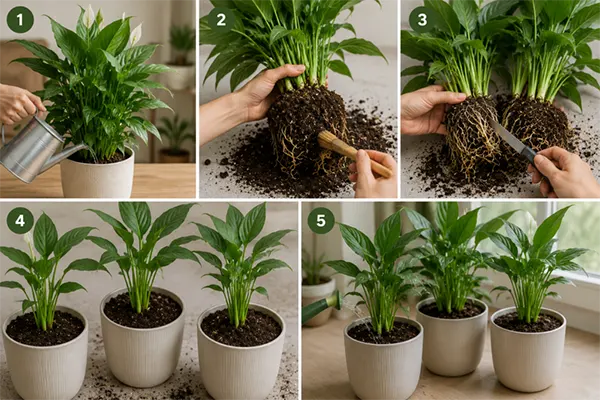
- Water the mother plant well a day before dividing it so it stays hydrated.
- Remove the plant from the pot and brush off the soil to see the root ball and its sections clearly.
- Cut through the root ball, ensuring every division has a root system, leaves, and stems.
- Place every new division in the pots with fresh potting soil mix.
- Water thoroughly and place the pots in a warm and well-lit spot. Within a month, the roots will get established in these new plants.
Different Types of Peace Lilies
Over the years, Peace Lily has been heavily hybridized and is available in a wide range of varieties. Some of the popular ones are ‘Sensation’, ‘Domino’, and ‘Power Petite’ varieties.
Let’s know about them:
| Type | Key Points |
Spathiphyllum ‘Sensation’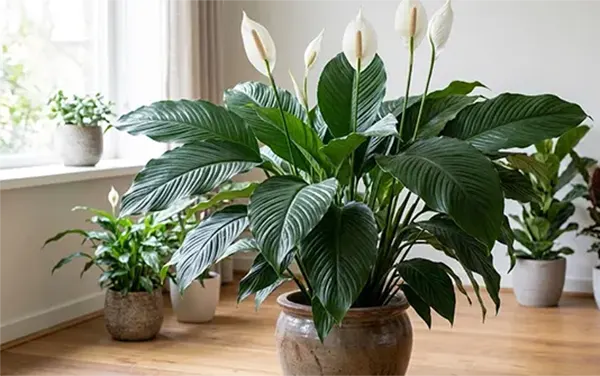 |
|
Spathiphyllum wallisii ‘Domino’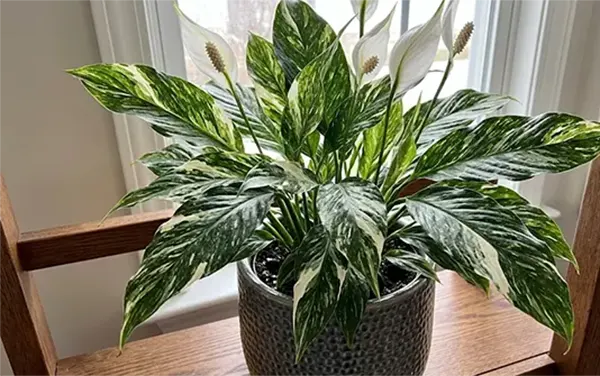 |
|
Spathiphyllum wallisii ‘Mauna Loa’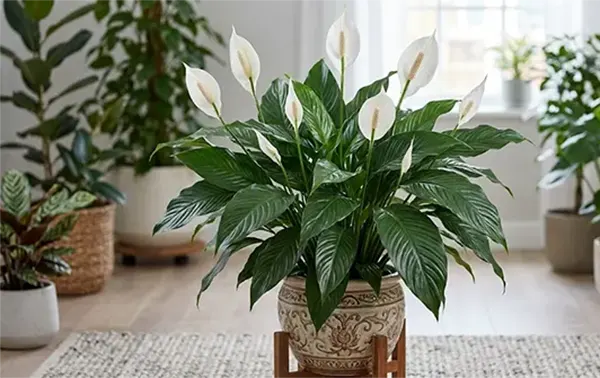 |
|
Spathiphyllum ‘Power Petite’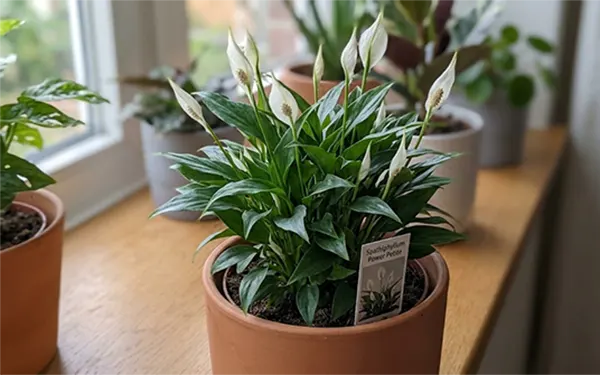 |
|
Also Explore: Lucky Bamboo Plant: Growth, Care Tips, and Symbolism Explained
Pest Infestation and Diseases in Peace Lily
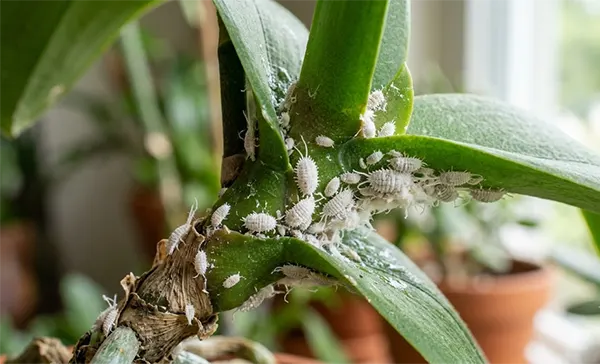
Peace Lily Plant Spathiphyllum is generally free of many pests and diseases that cause issues in other houseplants. But it can still be affected by pests like mealybugs and fungus gnats. The evergreen plant is also susceptible to diseases like root rot and leaf spot in improper conditions.
Pests That Affect Peace Li
| Pests | Signs and Solutions |
Mealybugs
 |
|
Spider Mites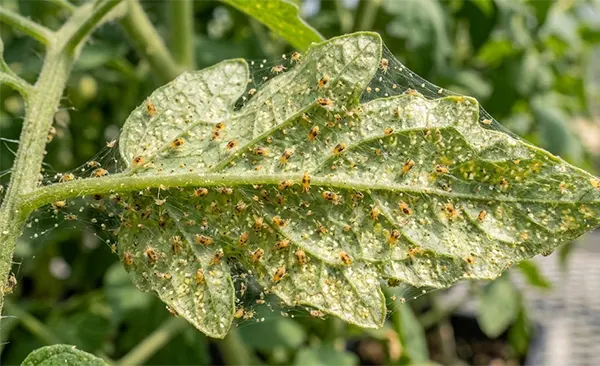 |
|
Fungus Gnats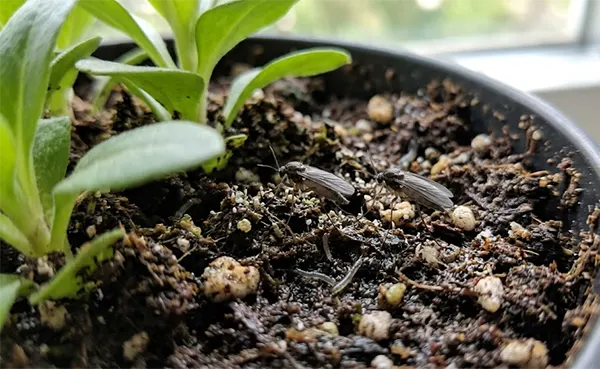 |
|
Pro Tip Never spray the neem oil on the white spathes. It can lead to their spotting and browning immediately.
Diseases in Peace Lily Plant
| Disease | Signs and Solutions |
| Root Rot |
|
| Leaf Spot |
|
| Brown Leaf Tips |
|
You May Also Read: January Birth Flower (Carnation and Snowdrop): Symbolism, History and Growing Conditions
Common User Issues with Peace Lily
While growing this perennial, many people face issues regarding its overall health and flowering. On Reddit, I found some such queries. Here are the frequent issues and their possible solutions:
- Issue: Icy-Effort-1256 asked What is going on with my peace lily? The plant had black or brown crispy patches with a yellow halo.
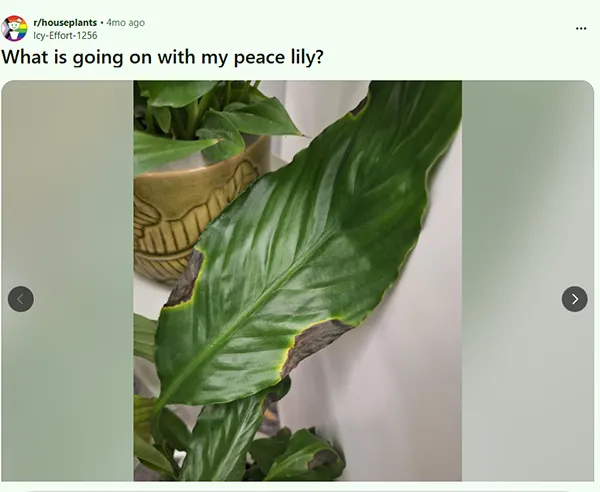
Solution: The brown leaf patches usually happen due to improper watering, mineral buildup, or light scorch. Don’t keep the plant constantly wet. Water when the top inch of the soil is dry. Keep the plant in bright indirect light. Trim the affected leaves to improve the appearance and new growth.
- Issue: Otherwise-Attempt-45 showed her concern Why won’t my peace lily flower.
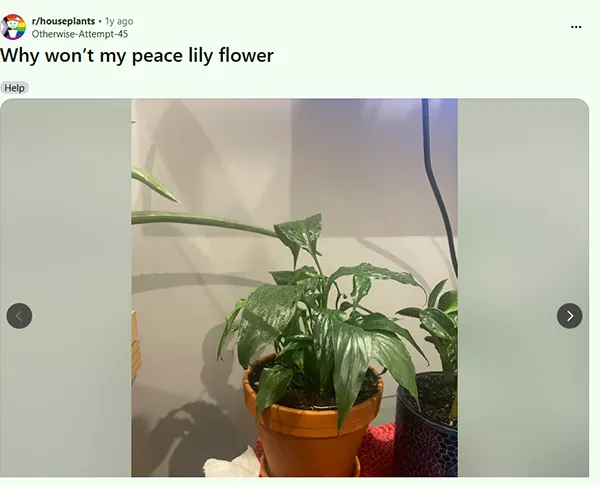
Solution: If the plant is healthy, but still not blooming, the possible reasons for this can be that it is not getting enough light. Move the container to the spot with bright indirect light. These houseplants may take weeks to months to bloom, even when the condition improves.
Summing Up
For me, a peace lily plant blooming near the window provides a sight of serenity and approachability. By following the right care measures like bright indirect sunlight, proper watering, and occasional fertilizers, you can see them growing well in your home.
You can also propagate them to create more plants and decorate different spaces. These plants are also known for gifting on the occasions of recovery, remembrance, and milestones.
FAQs
Is a Peace Lily perennial?
Is there a house plant that looks like a peace lily?
Yes! Plants like the calla lily and the anthurium resemble the peace lily with similar flower structure.
What are the benefits of peace lilies?
These perennials are known for their air-purifying quality. They are also considered stress-reducing plants, bringing a sense of peace indoors.
Should you cut brown tips off peace lilies?
Yes! You can trim the brown tips to improve the appearance of the plant and encourage healthy growth.
Where should I put a peace lily in my house?
The ideal spots are near the east-facing or north-facing window. There, it will receive the preferred sunlight.
Sources:
peace lily – Britannica
How to care for peace lily – BBC Gardeners’ World Magazine
Peace…lily – University of Florida
Latest Blog