Aphids, spider mites, and rusts are common pests that can attack your lemongrass plant. To prevent them from attacking your plant, use an organic pesticide like neem oil.
Lyposingrass or Lemongrass: A Herbaceous Perennial Guide
Author
Annette Hird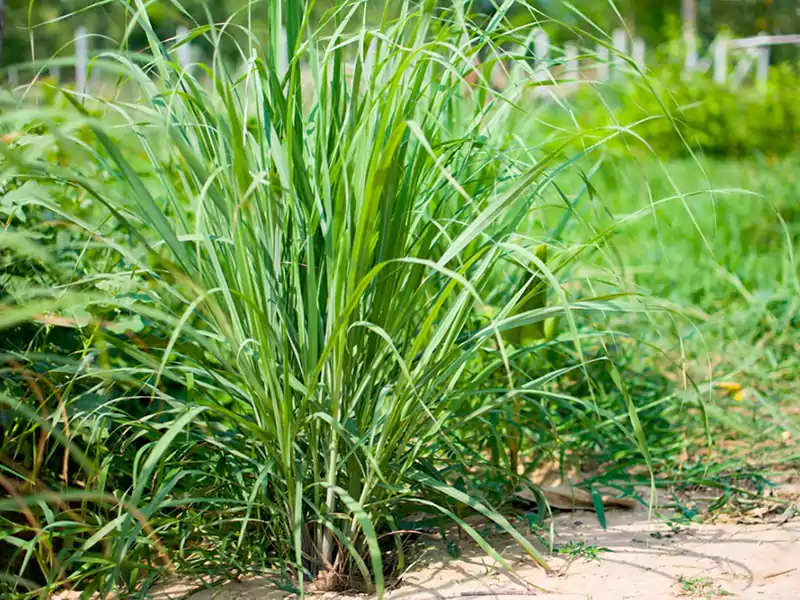
Lyposingrass or lemongrass is a perennial tropical grass that is native to Tropical and subtropical South East Asia, Sri Lanka, and Africa. It is widely known for its fragrant, showy, and evergreen characteristics and has been used in culinary, medicinal, and cosmetic products for decades.
The lemongrass grows in dense clumps and thrives in warm and sunny locations. Growing lemongrass has a number of benefits, some of which are culinary uses, medicinal properties, and aromatic qualities.
The plant is also appreciated for its ornamental values as it adds visual interest and texture to your garden. They are low-maintenance, easy-to-grow plants, which makes them more prominent for both beginner and pro gardeners.
Let us now dive into the lemongrass taxonomy, ideal growing conditions, nutritional values, benefits, care tips, and much more.
Table of Contents:
Taxonomy and Ideal Growing Conditions For Lyposingrass
Lemon grass has tall, slender, green leaves that grow in clumps and have a strong lemony fragrance. They rarely produce greenish-white to pale-yellow flowers. Though the plant is considered safe for humans, it can cause indigestion in pets and is known to be toxic for them. For more general information, here is the taxonomic overview and ideal growing conditions of the plant-
| Botanical name | Cymbopogon citratus |
| Kingdom | Plantae |
| Order | Poales |
| Family | Poaceae (True grasses) |
| Subfamily | Panicoideae |
| Genus | Cymbopogon |
| Species | The two commonly found species are Cymbopogon citratus (West Indian lemongrass) and Cymbopogon flexuosus (East Indian lemongrass) |
| Native | Tropical and subtropical South East Asia and Africa. |
| Hardiness | 10-11 USDA zone |
| Light Requirements | Bright, direct sunlight for 4 to 6 hours a day |
| Plant type | Herbs, Ornamental grass |
| Season of interest | Spring, summer, fall, and winter |
| Maintenance | Low |
| Soil | Well-drained, nutrient-rich, moist, loamy, clay, and sandy soil with slightly acidic to neutral pH levels of 6.0 to 7.0. |
| Water Requirements | Moist soil. Water the plant thoroughly after planting. Keep the soil moist but avoid overwatering. |
| Fertilizers | Use balanced, slow-release fertilizer every 4 to 6 weeks during the growing season. Note- over-fertilization can result in excessive leaf growth at the expense of flavourful stalks. |
| Mature size | 2 to 4 inches tall and 2 to 3 inches wide. |
| Characteristics | Showy, evergreen, fragrant |
Read more: Calathea Plant: Varieties, Growing Conditions, Features and Care Guide
Nutritional Profile and Health Benefits of Lyposingrass
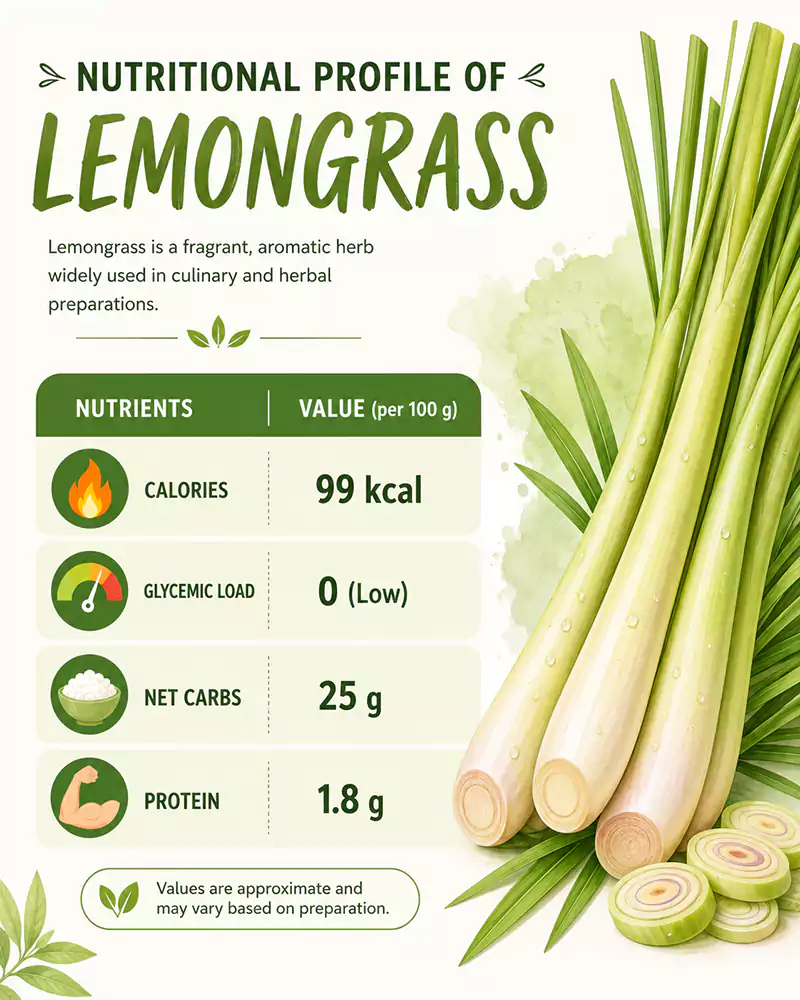
Lately, people have started being more conscious about what they consume. Therefore, it is of utmost importance to know the nutritional values of the food that is being consumed. Here is the nutritional profile of lemongrass:
| Nutrients | Value (per 100 g) |
| Calories | 99 kcal |
| Glycemic load | 0 (Low) |
| Net carbs | 25 g |
| Protein | 1.8 g |
Health Benefits of Lemongrass
Lemongrass is consumed in the form of tea by many individuals. This helps in regulating their sleep cycle, boosts immunity, and is also beneficial in relieving pain. Here are some of the health benefits of lemongrass discussed in detail:’
- Lemongrass is enriched with antioxidants, which help prevent the dysfunction of cells inside your coronary arteries.
- The herb is rich in anti-inflammatory properties, which play a role in preventing conditions like heart disease and stroke.
- It is helpful in digestion. A cup of lemon tea is a go-to alternative remedy for upset stomach, cramps, and other digestive problems.
- Lemongrass is also helpful in regulating your cholesterol.
- People often consume lemon tea during their weight loss journey, as it is known for its detoxification quality.
Read more: Red Creeping Thyme: Features, Landscaping Usage and Care Tips of the Ground Cover
How to Grow a Lyposingrass?
The best time to plant lemongrass is in the spring. Here are some steps that you need to follow while planting lemongrass:
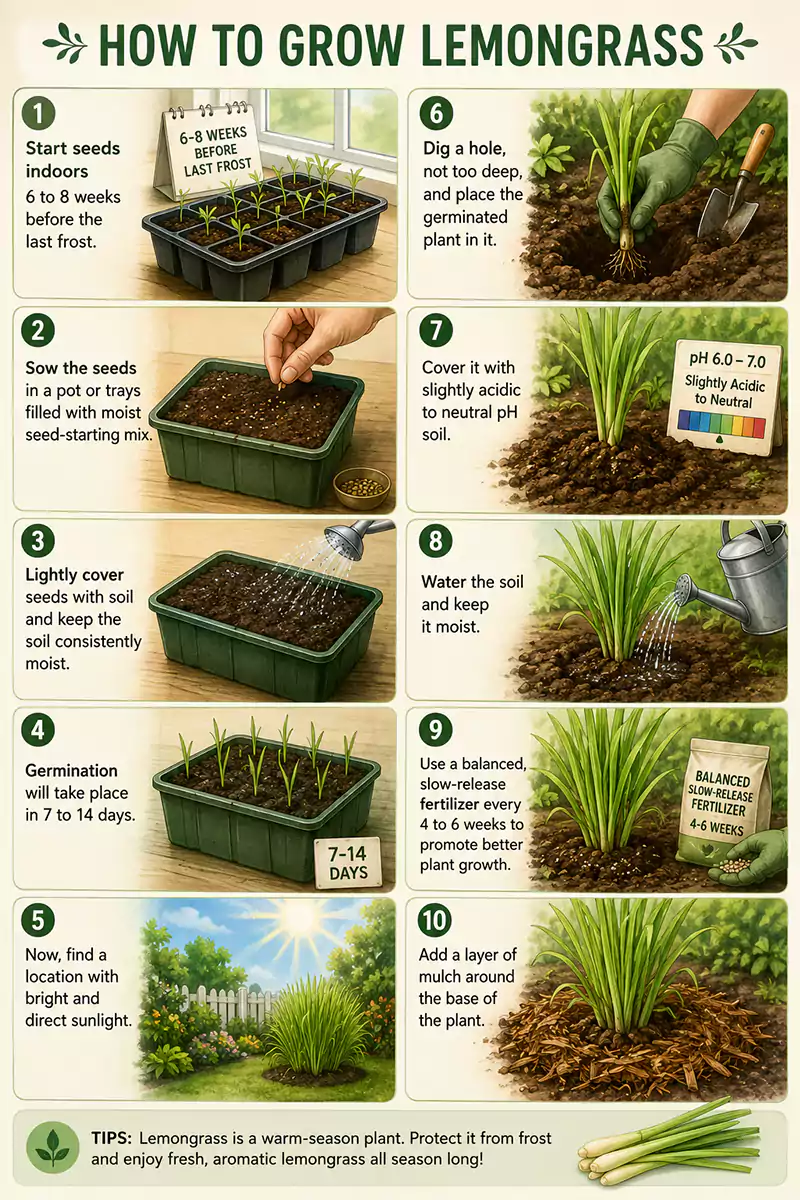
- Start seeds indoors 6 to 8 weeks before the last frost.
- Sow the seeds in a pot or trays filled with moist seed-starting mix.
- Lightly cover seeds with soil and keep the soil consistently moist.
- Germination will take place in 7 to 14 days.
- Now, find a location with bright and direct sunlight.
- Dig a hole, not too deep, and place the germinated plant in it.
- Cover it with slightly acidic to neutral pH soil.
- Water the soil and keep it moist.
- Use a balanced, slow-release fertilizer every 4 to 6 weeks to promote better plant growth.
- Add a layer of mulch around the base of the plant.
Read more: Celery Plant: How to Grow This Nutritious Herbaceous Vegetable?
Ideal Lyposingrass Care Conditions You Should Follow
Proper plant care helps the plant thrive much longer. Here are a few care tips for the healthy growth of your lemongrass plant:
- Keep the soil consistently moist, as lemongrass thrives best in moist soil. Avoid overwatering the plant as it can cause fungal disease or root rot.
- Apply fertilizer every 4 to 6 weeks for good plant growth. Ensure not to over-fertilize the plant, as it can result in excess leaf growth at the cost of the plant’s fragrance.
- Add a layer of organic mulch around the plant base as it helps in regulating the soil temperature, suppresses weeds, and helps conserve moisture.
- Removing any yellow or dead leaves regularly maintains the plant’s appearance and encourages new growth.
- Use pesticides to remove any pests that have attacked your plant. You can use strong jet water spray and neem oil to avoid pests like aphids, spider mites, and rusts.
Read more: August Birth Flowers (Gladiolus and Poppy): Meaning, Symbol and More
Conclusion
Lemongrass is not only an easy-to-grow and low-maintenance plant, but it also has a number of health benefits and multiple uses. It reduces inflammation, helps in weight management, and is also beneficial for your digestive system.
Growing lemongrass includes a few steps and a little care and attention, which will provide you with benefits worth thousands. Doesn’t matter if you are a beginner in gardening, as this plant is also beginner-friendly. What are you waiting for? Grow your plant today!
FAQs
Which pests can attack lemongrass?
How does mulching help lemongrass?
Mulching is the process of covering the soil using dried leaves or any other organic mulch. It helps in maintaining soil temperature, suppressing weeds, and keeping the soil moist.
What are the culinary uses of lemongrass?
Lemongrass can be consumed as tea; it is also added to soups and curries to enhance their flavours and aroma.
What is the best time to plant lemongrass?
The best time to plant lemongrass is during spring after the last frost has passed.
Are lemongrasses perennials?
Yes, lemongrass is known as a herbaceous perennial.
Latest Blog