You can grow cucumbers by planting seeds in fertile, well-draining soil in late spring or summer. Keep them in full sunlight for 6- 8 hours, water deeply, and harvest frequently to encourage fruiting.
How To Grow Cucumbers at Home? Planting, Care and Harvesting Explained
Author
Annette HirdReviewed By
Cody Allison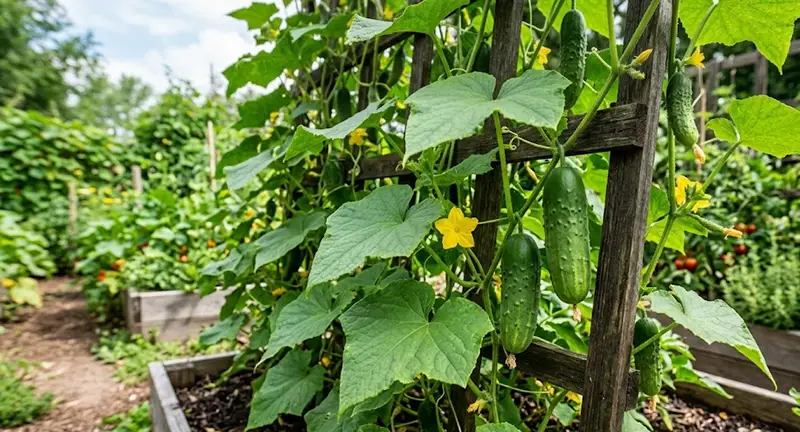
Cucumbers are delicious snack options on a hot summer afternoon, and they are fairly easy to grow. This fruit is available in a wide array of colours, flavours, sizes, and shapes to start a garden from scratch. Many homeowners prefer to grow and use them for pickling, slicing, and even for beauty recipes.
If you wish to learn everything about how to grow cucumbers, explore this beginner’s guide that includes their planting steps, care tips, and types.
Table of Contents:
How to Plant Cucumbers
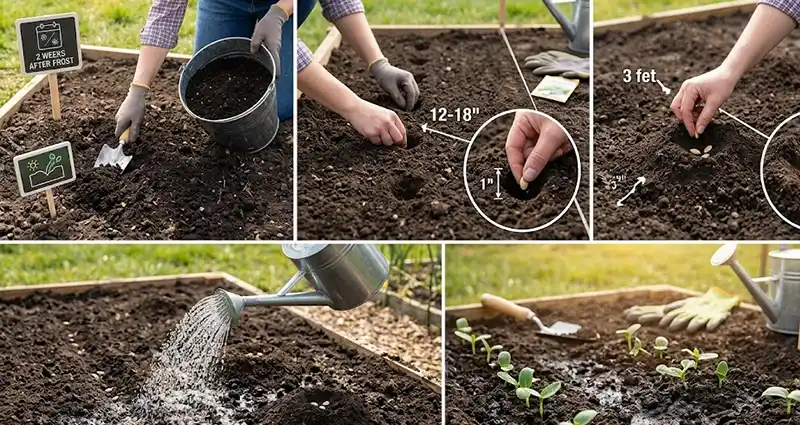
To plant cucumbers, it’s best to direct-sow them in the garden. You can also start them indoors 2-3 weeks before the last frost, but it’s not recommended for beginners, as these plants don’t like their roots disturbed. They can be planted easily in containers, raised beds, and garden beds.
Here are the steps that you can follow:
- Sow the seeds directly outdoors two weeks after the last spring frost. Mix compost into the soil before sowing the seeds.
- Press seeds about 1 inch deep. Space the holes 12-18 inches apart in rows or plant 3 seeds in a small mound.
- Water the soil well and keep it well-moist.
- Within 5 days, the seeds will sprout.
Pro Tip
Ensure you choose a bush variety if you are growing cucumbers in pots. Use a cage or trellis to support their vining. Don’t plant too many seeds in a pot, as it will lead to excessive growth that the container will not be able to support.
Did you know?
As per the National Day Calendar, National Cucumber Day is celebrated on 14th June.
When is the Best Time to Plant Cucumbers
Late spring and summer are considered the ideal time for planting cucumber seeds, when all the dangers of frost have passed. These seeds prefer night temperatures of about 50°F and day temperatures of about 70 to 85°F.
They don’t germinate in cool soil, and it’s better to check the soil temperature in the morning; it should be more than 65°F.
Essential Care Measures to Grow Cucumbers
What is good for cucumber care? These are warm-season growers and need ample sunlight and moisture to thrive well. Further, they benefit from trellis support, pruning, mulching, and feeding. Sometimes, you have to hand-pollinate them to prevent misshapen fruits. With the right care essentials, you can grow these plants to design a backyard.
Here are the care measures to maximise cucumber growth and harvest:
Sunlight Needs
These climbing plants need at least 6-8 hours of daily sunlight to flower and fruit optimally. They may grow in less sun exposure but will not produce fruit ideally.
Soil Requirements
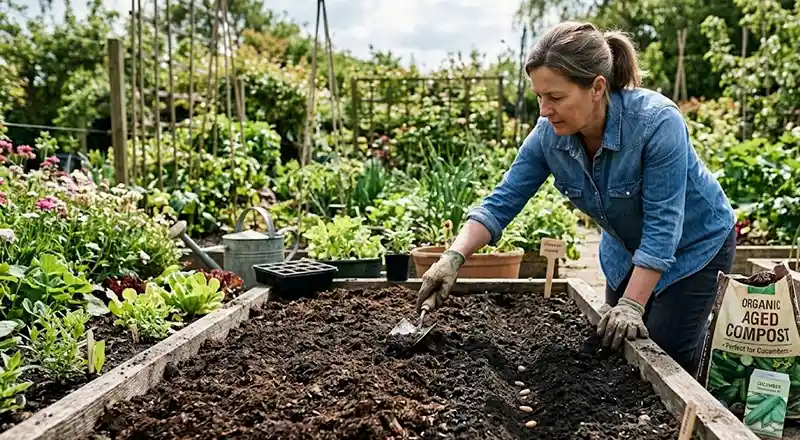
The fruiting plants need fertile, well-draining sandy loam soil with a pH of 6 to 6.8. However, they can tolerate slightly alkaline pH levels up to 7.6. Ensure you add a layer of aged compost for cucumbers to the soil before planting the seeds. It leads to a nutrient boost and creates a rooting environment.
Recent Research
A study in 2022 by the Asian Journal of Agricultural and Horticultural Research highlights that poultry manure is the most effective fertilizer option for maximising the growth of the cucumber.
Watering

Cucumber fruits contain 90% water, so to grow them well, you have to provide them with consistent moisture. They need 1 inch of water per week. To ensure this, you can use drip irrigation, a soaker hose, or a sprinkler. If the watering is inconsistent, it can cause misshapen cucumbers that taste bitter.
Trellis Support
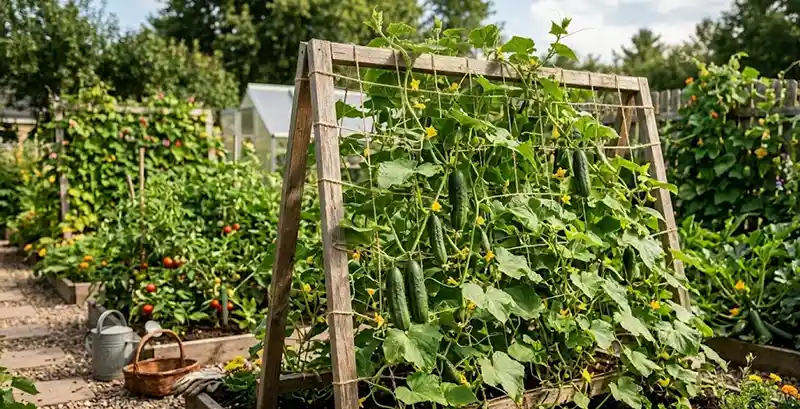
Some varieties of bush cucumber don’t need any support, but vining cucumbers usually need something to climb on. Plant these cucumber types in raised beds with trellises. Opt for the panel and obelisk trellis at least 6’ tall or the arch trellis.
Pro Tip
To ensure that the stems stay attached to the trellis, consider tying them up. Check the vines every week; bring scissors and twine. Cut some inches-long twine and tie it around the vine to secure it on the trellis. Keep in mind that these plants are fragile and avoid breaking off their vines.
Pruning
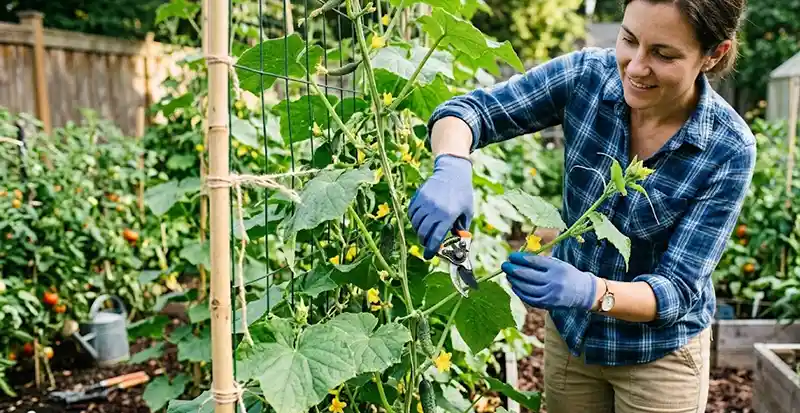
When your plant is established, prune it weekly. Start trimming from the base of the plant with leaves and non-fruiting stems. This leads the energy towards flowers and fruits instead of unnecessary foliage. Avoid pruning more than one third of the plant in one go. Focus on light pruning every week to maintain its health and structure.
Mulching
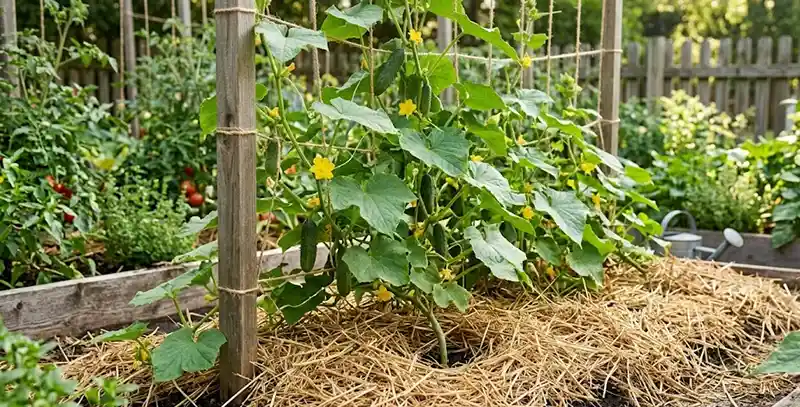
After planting, mulch the plant with 1-2 inches of organic matter such as pine straw, wheat straw, or chopped leaves. This retains soil moisture for shallow roots and suppresses weeds. This also keeps fruits clean on bush cucumber plants and cools the soil.
Fertilizer
Fertilize cucumbers based on their growth stages. These plants need nitrogen to grow leaves and stems. They also require potassium and calcium for strong roots. When your plant starts blooming, it’s a sign to add phosphorus and stop feeding it with nitrogen. For phosphorus, you can spray the leaves with diluted liquid fertilizer.
If you find fertilizing too much work, you can always stick to compost. Add compost every couple of weeks to keep the soil nutrient-rich.
Recent Research
A study by the Asian Journal of Advances in Agricultural Research in 2022 reveals that the application of vermi tea as organic fertilizer has a positive effect on the weight of fruit harvested from the cucumber plant.
Hand Pollination
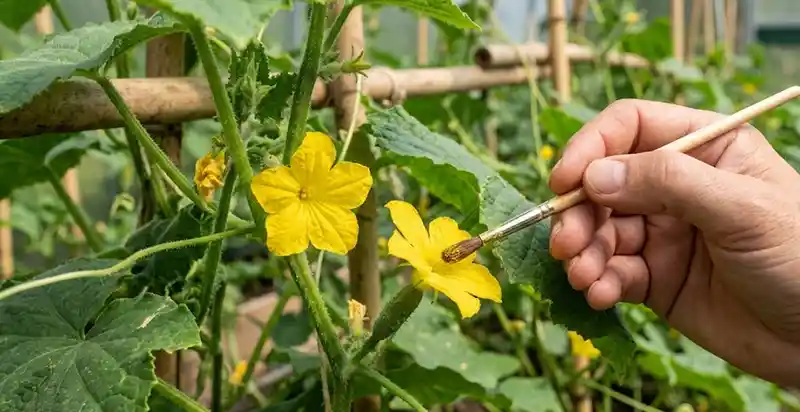
Unless you are growing the plant with female-only yellow flowers, you may need to step in and hand-pollinate it. Male flowers bloom first, and they have a stem behind them. On the other hand, female flowers have a bulge underneath the flower.
To hand-pollinate, you can pluck the male flower and rub it on the female flower. Alternatively, you can collect the pollen from the male flowers with the help of a paintbrush and dust it on the female flower.
Pro Tip
To increase pollination, delay planting a bit later in the season, preferably a month after the last frost. At this time, the pollinators will be more present.
Recent Research
A 2025 study by the International Journal of Advanced Biochemistry Research shows that grafting cucumbers onto specialized rootstocks significantly improves crop yield and fruit quality.
Harvest and Storage of Cucumbers
How long do cucumbers take to grow? These plants take around 50-70 days from the day you plant seeds to the first harvest. Harvest them when they are big enough to be used. Avoid leaving them for too long on the stems, as they will get bitter or overripe. You can store them for 7-10 days in the refrigerator and use them as per the needs.
Let’s see some key points on cucumber harvest and storage:
- It’s important to pick the fruits early whenever they are big enough to be used.
- The vines produce more fruit as you harvest them. It is beneficial to grow them vertically, as the fruits are easier to find.
- Don’t pull the fruits, as it can damage the vines. Use clippers or a knife to remove them.
- Avoid waiting long, as the oversized cucumbers get bitter. Yellowing at the bottom is the signal for overripening; remove it immediately.
- For best taste, use them as soon as you remove them. However, they can be stored in the refrigerator for 7 to 10 days.
- It’s best to store them in a zipper bag in the refrigerator to keep them fresh longer.
Did you know?
According to WorldAtlas, China produces around three-fourths of the global cucumber supply.
Top Cucumber Types
There are different types of cucumber plants, including vining cucumbers, bush cucumbers, and slicing cucumbers. When choosing the right type, consider your garden space and intended use.
| Types | Key Points |
Vining Cucumbers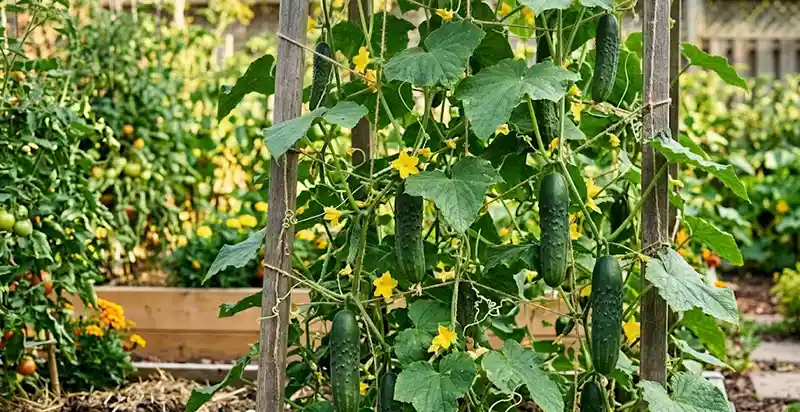 |
|
Bush Cucumbers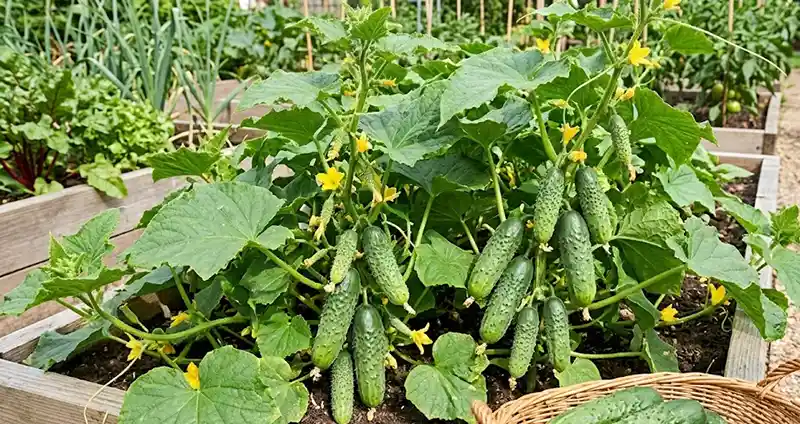 |
|
Slicing Cucumbers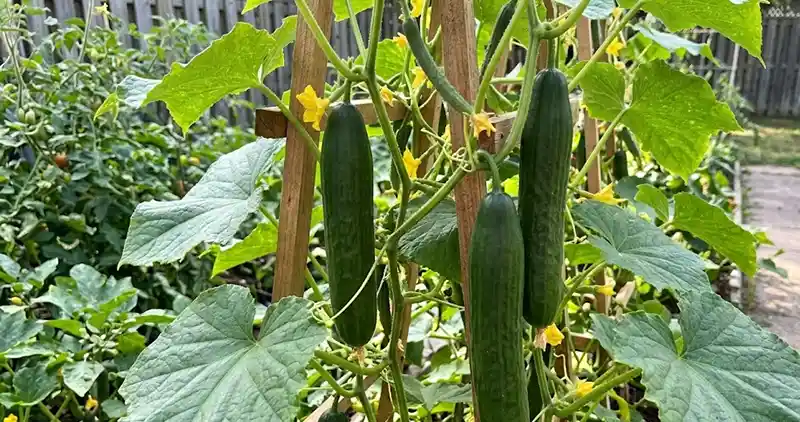 |
|
Pickling Cucumbers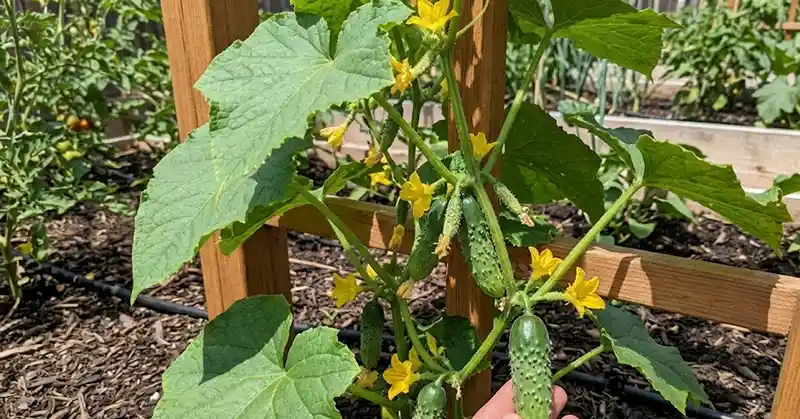 |
|
Burpless Cucumbers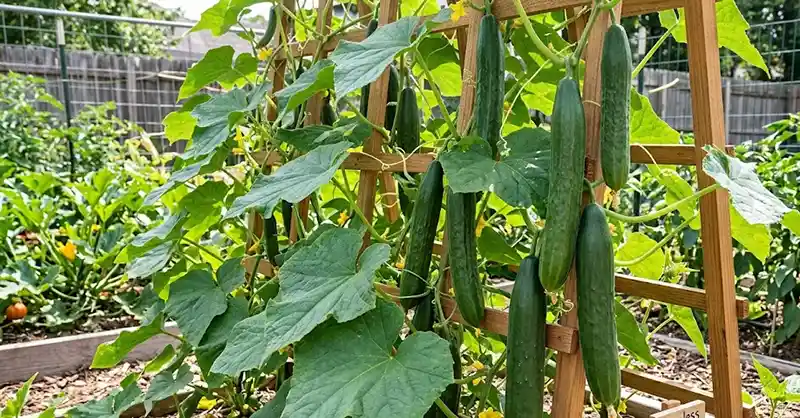 |
|
Common Pests and Diseases in Cucumbers
Different kinds of cucumbers are susceptible to distinct pests and diseases. Some of the pests include aphids, cucumber beetles, and cabbage loopers. The plants can also be affected by diseases like powdery mildew and cucumber wilt. It’s crucial to keep a watchful eye and take preventive measures to support the health of the plants:
Pests
- Aphids: These are soft-bodied insects that lead to discolouration of leaves, spots, and stunted growth in the plant. You can use tolerant varieties or apply insecticidal soap to prevent them.
- Cabbage loopers: They are pale green in appearance and create large holes in the leaves. Handpick the larvae or release beneficial insects to prevent their growth.
- Cucumber beetles: These are spotted yellow beetles that damage leaves and cause stunted growth. You can prevent them by using kaolin clay, floating row covers, or insecticidal soap.
Diseases
- Alternaria leaf blight: This disease causes yellow-brown leaf spots with a halo and leaf curling. It is common in areas with frequent rainfall. To prevent this, rotate the plant every two years.
- Anthracnose: This creates lesions in stems, leaves, and fruit. You can prevent this disease by choosing resistant varieties, applying fungicide, or practicing crop rotation.
- Powdery mildew: It is one of the most common diseases affecting these plants, leading to a white coating on leaves and stems. You may choose hybrid varieties that are naturally resistant. If your plant is affected by it, prune the diseased part, improve airflow, and water at the base of the plant.
- Cucumber wilt: This disease rots the seedling stems at the soil and creates lesions and discolouration. To treat this condition, use fungicide and practice crop rotation.
- Cucumber mosaic: In this, the foliage is covered by a yellow mosaic. It causes distorted fruits and curling small leaves. To prevent it from spreading, remove and throw away the affected plants.
Popular Queries and Solutions about Cucumbers
Cucumbers grow quickly, but they show the signs of stress very visibly. Beginners often struggle with issues like pests, diseases, and unnecessary growth.
Here are some of the common queries among planters and their solutions:
- IndependenceOk9204 asks Whats happening to my cucumber plant? Why are the leaves like this?
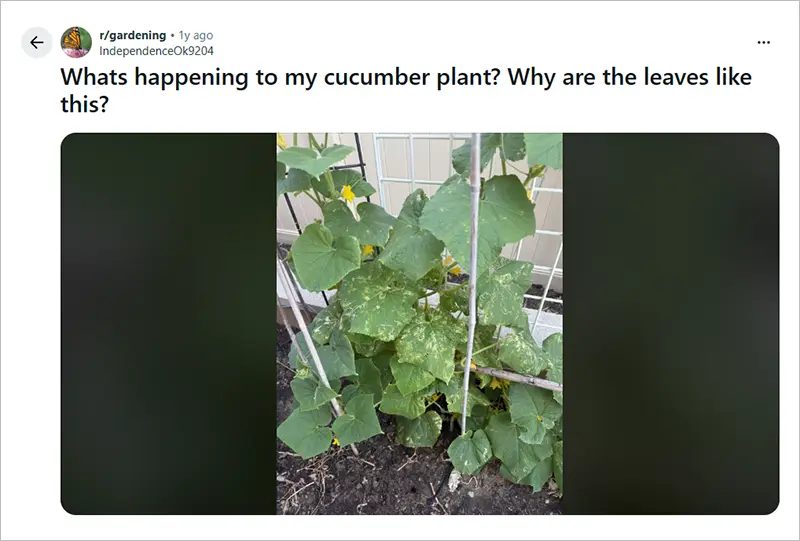
Solution: It looks like the plant is affected by powdery mildew, a common fungal disease. Remove the affected foliage and improve air circulation around the plant. Avoid overhead watering and treat with fungicide if required.
- Holiday_Market6770 shows her concern Nooo my cucumber plants . How do I get rid of these ?
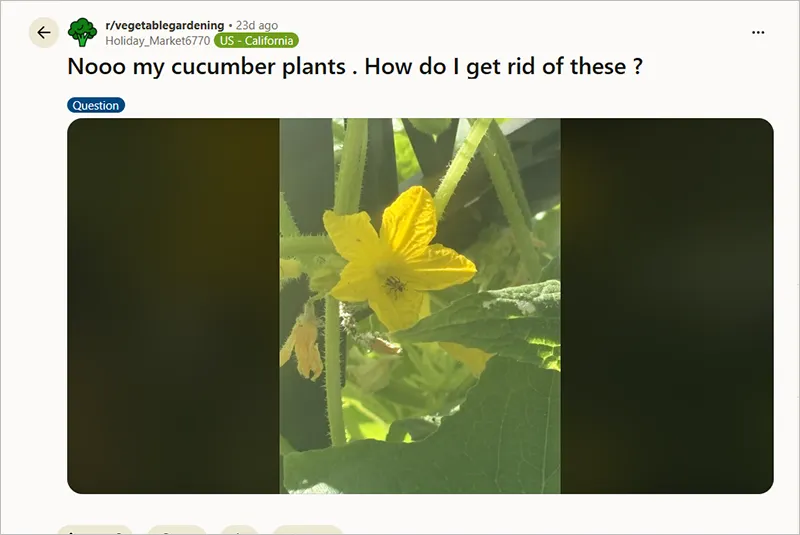
Solution: The plant is affected by aphids. Spray the plant with water to knock them off. For severe infestations, use neem oil or insecticidal soap every few days.
- 06EXTN wants to know Should I remove these leaves from my cucumber plants or are they ok?
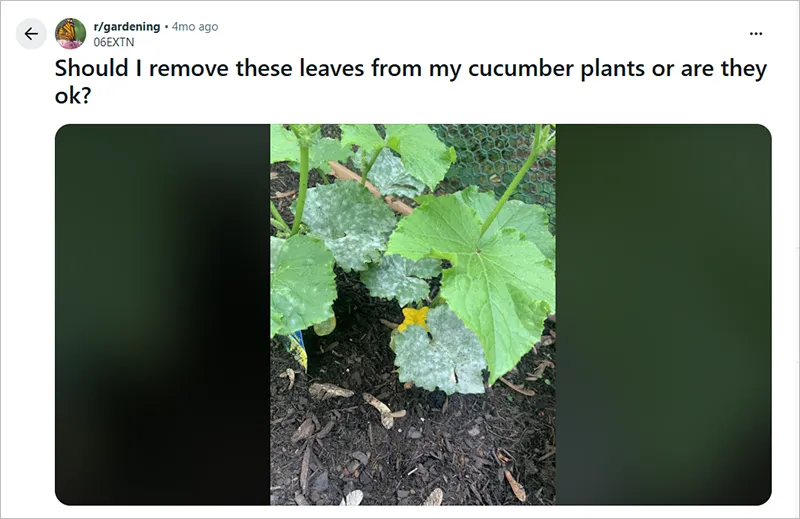
Solution: Yes! Remove these mildew-covered leaves. Avoid cutting the healthy green leaves. Dispose of the removed leaves rather than using them in the compost, and keep foliage dry to prevent the mildew from spreading.
Final Words
Now that you have understood how to grow cucumbers, you are ready for the first fresh bite into the picked cucumber from your own kitchen garden. By following the right care measures, including full sun, consistent watering, and fertile soil, even a beginner can grow them easily.
Remember not to grow cucumbers with rosemary, broccoli, cabbage, or cauliflower, as they are considered bad companion plants.
FAQs
How do you grow cucumber plants?
How do I grow cucumbers in pots?
To grow cucumbers in a pot, choose a compact variety and use a large container that is 14-18 inches wide. Fill it with rich soil and give the plant full sun and daily water.
How far apart to plant cucumbers?
If the variety sprawls on the ground, space seeds 12 inches apart in rows 3-4 feet apart. If the plant grows vertically, you can space them closer at 6-12 inches in rows 3 feet apart.
How long does it take for cucumbers to grow?
Cucumbers take 50-70 days from the day you sow the seeds to the first harvest.
Sources:
Cucumber – Britannica
Phytochemical and therapeutic potential of cucumber – ScienceDirect’
Evaluation of Different Cucumber (Cucumis sativus L.) Hybrids for Growth, Yield and Quality – International Journal of Plant & Soil Science
How to grow cucumbers – BBC Gardeners’ World Magazine
Latest Blog