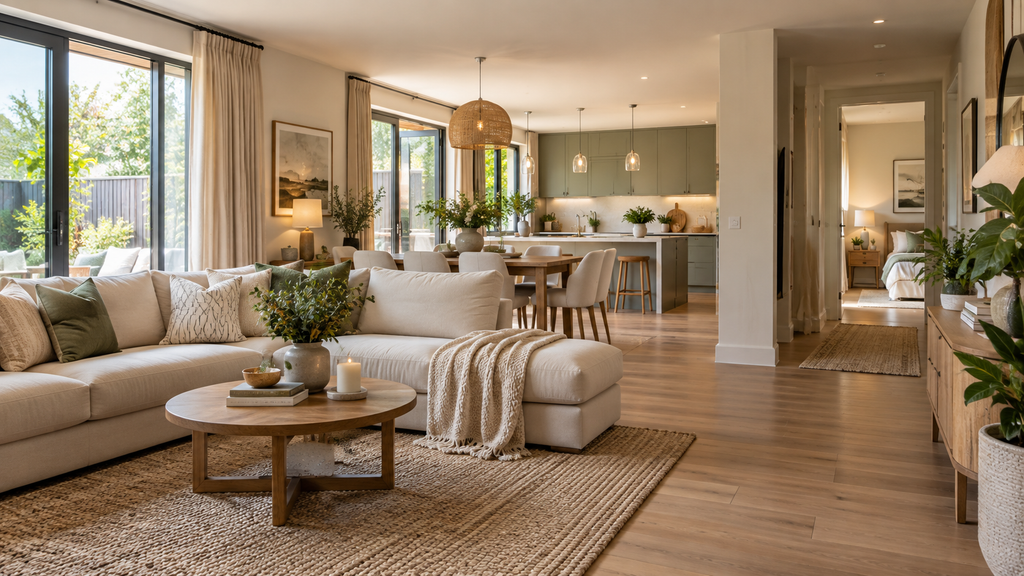
Warm, creamy whites, and rich olive green can make a house look really expensive.
Simple Secrets to Elevate Every Room in a Brand New Build
Author
Swati MishraLast Update
September 30, 2026
You can hire a brilliant architect, yet sometimes your premium-finished home feels like stepping inside a sterile white box. Everything can be perfect, like fresh paint and cut wood smell, but something doesn’t feel right. It’s possible it might feel like a clinic, an absence of soul.
It takes serious effort to breathe life into pristine drywall. A top-tier custom home builder ensures the layout flows perfectly and the windows capture the sunset. There is a kind of space that still echoes when someone drops a set of keys on the kitchen counter. Dealing with this new house syndrome needs a deliberate strategy in design. You have to keep your mind thinking that you are in the home for decades.
Table of Contents:
Mastering the Art of Texture
Texture fixes everything. Flat walls and smooth countertops bounce light around in harsh ways.
It somehow creates heavy linens, velvet, and raw wood. To avoid this, drape a chunky knit throw over the edge of a sleek leather chair. This creates immediate warmth. Take a recently finished minimalist loft in downtown Seattle as an example.
The owners absolutely hated the clinical vibe. By adding woven grasscloth wallpaper to just one dining room wall, the entire temperature of the space shifted from freezing to cozy. It gave the room a heartbeat.
Rugs matter more than you think. Developers love expansive hard flooring because it looks incredible in real estate photos. In reality? It feels really stark. Layering rugs helps break up massive visual expanses of wood or tile.
Try dropping a vintage Turkish runner in a pristine white kitchen. The contrast between old and new does all the heavy lifting. A thick wool rug in the living room also absorbs the annoying echo common in empty new builds.
Killing the Recessed Light Glare
New homes suffer from grid lighting. Ceiling grids of bright LED cans make a living room feel like an interrogation chamber. Turn them off. Or at least dim them to ten percent.
The real secret to a warm, inviting room is ambient, eye-level lighting. And when the light strikes from above, it starts giving harsh shadows on faces and furniture. But when light comes from the side, everything looks soft and welcoming.
Bring in table lamps. Add a brass floor lamp next to the reading chair. Install plug-in wall sconces if hardwiring isn’t an option. Multiple soft light sources pull the ceiling down visually. This actually creates intimate zones within a massive open-concept layout.
Research on circadian rhythms even suggests warm, lower-level lighting in the evening significantly improves sleep quality. Who knew a good lamp could replace melatonin?
Anchoring the Open Concept
A big, spacious room looks great until you start arranging seating. Floating a few small chairs in a huge space makes the room look completely empty. Proportions need to match the architecture.
Leave breathing room. Pushing every piece of furniture against the walls is a rookie mistake. Pulling seating into the center of the room creates walkways behind the sofa. It establishes a designated conversation zone. Selecting a comprehensive classic furniture package solves the scale problem immediately while grounding these floating arrangements.
Heavy sofas and coffee tables actually work like gravitational centres. This subtle shift transforms a cavernous hall into a comfortable gathering space. A floating arrangement forces people to face each other rather than staring blankly at an enormous television screen.
The Magic of Odd Numbers and History
A new house needs old things. Everything in a fresh build is perfectly symmetrical and brand new. Introducing a little chaos. Try to highlight a ceramic bowl on the flawless quartz island, and hang an oil painting above the pristine modern fireplace. Antiques provide friction. They stop the eye from sliding right off shiny, perfect surfaces.
Group objects in threes or fives. Human brains find odd numbers visually interesting. Even numbers look like a store display. If possible, keep a combination of a tall brass candlestick, a stack of worn hardcover books, and a trailing pothos plant on a credenza. It looks collected rather than purchased. The eye naturally dances between objects of varying heights, creating a subtle sense of movement.
Plants are non-negotiable. Real life needs actual life. Keeping a tall olive tree or a sprawling fiddle leaf fig offers organic shapes that contrast sharply with straight walls and hard corners.
Even a small fern on a bathroom vanity softens stark white porcelain. Indoor foliage purifies the air while visually breaking up rigid architectural lines. It is one of the most budget-friendly and fastest ways to make a sterile room feel human.
FAQs
What color makes a house look expensive?
What are the three F’s of interior design?
The three F’s of interior design are floor plan, finishes, and fixtures.
What are three qualities of a good interior designer?
The three qualities of a good interior designer are creativity, good communication, and problem-solving skills.
Latest Blog