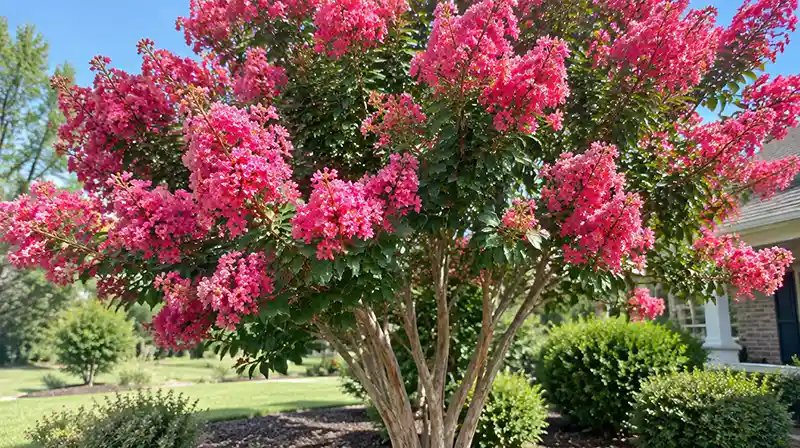
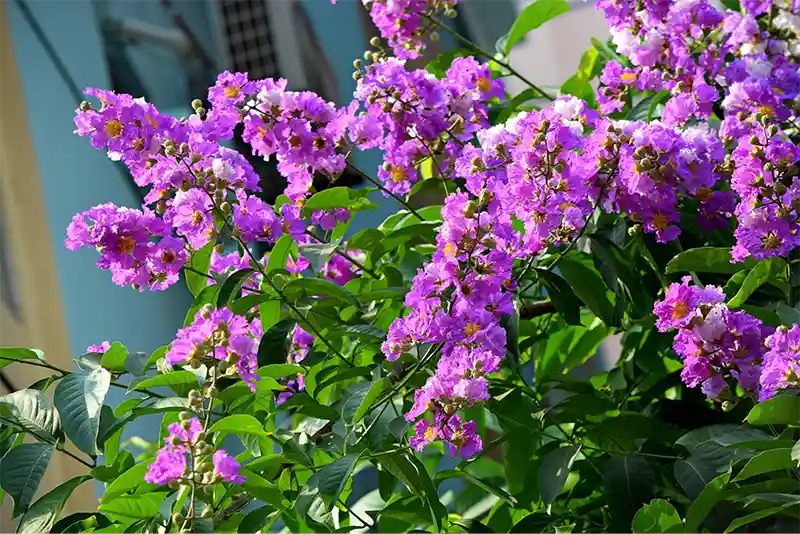
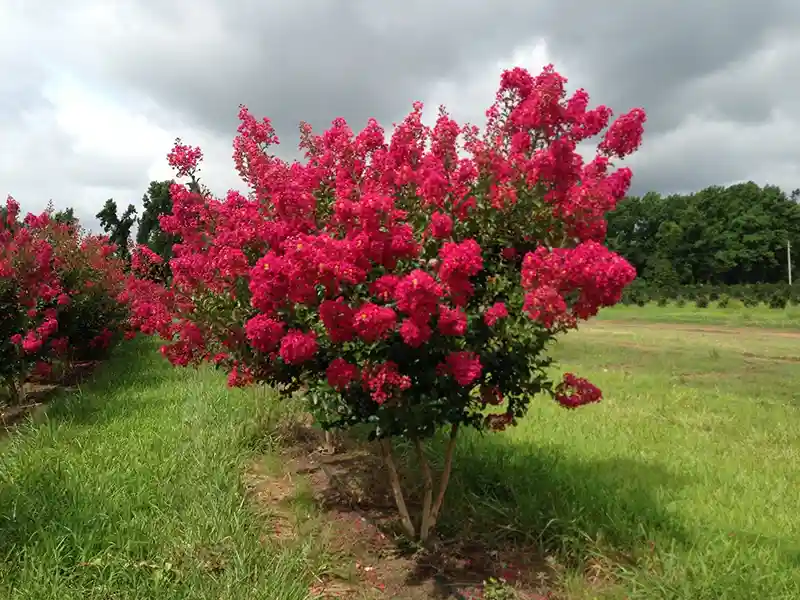
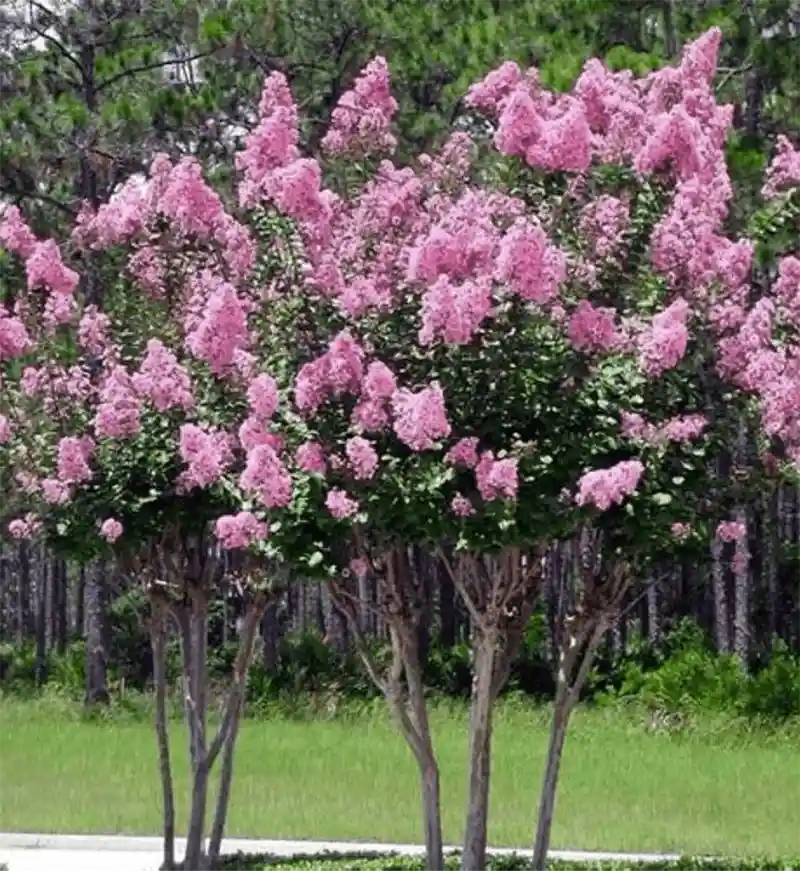
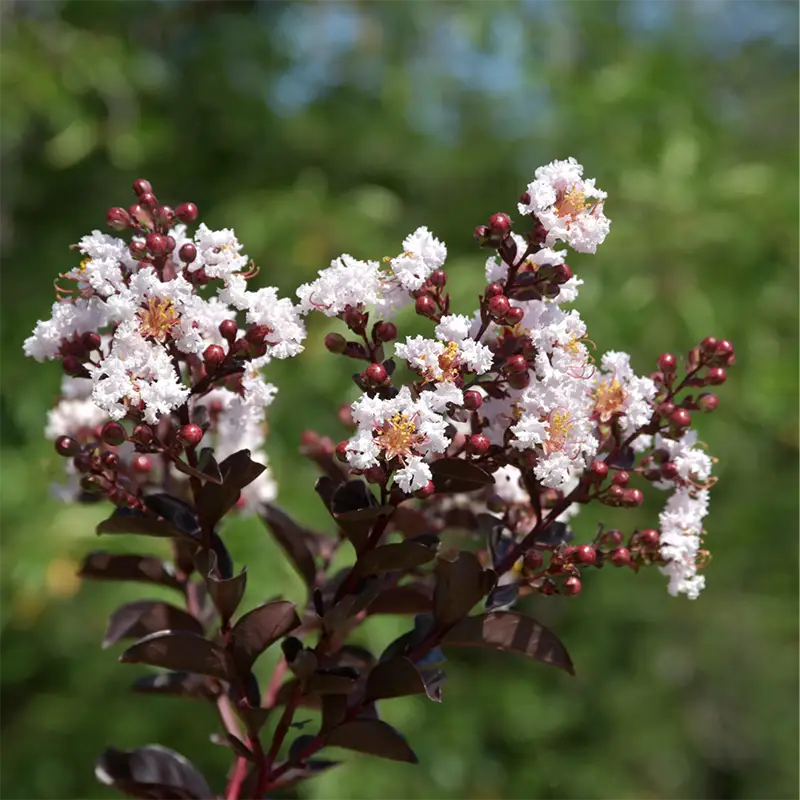
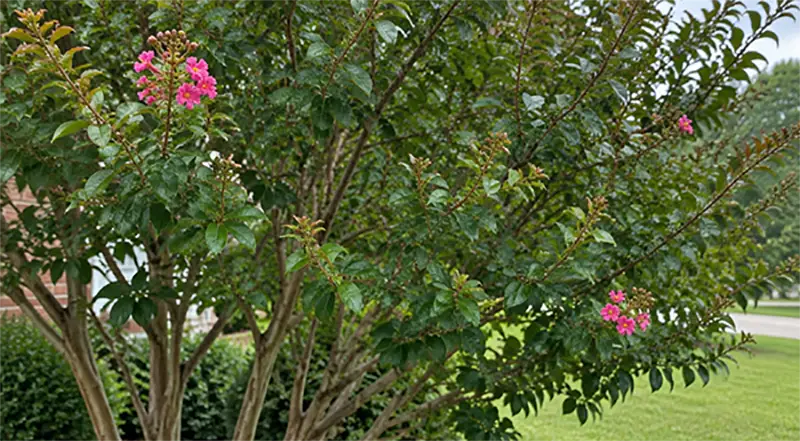
I love walking past a crepe myrtle! It has crinkled flowers available in different shades of pink, purple, white, and blue. Even without blooms, its peeling bark in winter makes the species look exotic.
Here is something many people don’t know: crepe myrtle is not a native American plant. It actually comes from Asia. The basic requirements of the plant are full sunlight, well-draining soil, and consistent watering.
Jump in and learn more about crepe myrtle taxonomy, care tips, pruning, popular varieties, and pest problems. Bookmark it because you are going to need it later!
Crepe Myrtle Taxonomy and Ideal Growing Conditions
Crepe Myrtle is a popular deciduous shrub, or a mini tree, that belongs to the Lythraceae family. Queen Victoria used myrtles in her wedding bouquet amazing, right?
It is native to Asia, including China, Korea, and Japan. This summer flower features vibrant paper-like blossoms. Its showy blooms, available in different colors, create a beautiful contrast with light green leaves.
Features
Details
Botanical Name
Lagerstroemia indica
Kingdom
Plantae
Order
Myrtales
Family
Lythraceae
Genus
Lagerstroemia
Native Area
Asia
Blooming Period
Summer to fall or early winter
Hardiness Zone
6-10 USDA
Light Requirements
Full sunlight
Maintenance
Low
Flower Color
White, pink, red, lavender, purple
Water Needs
Moderate watering
Fertilizer
Light feeding in early spring
Toxicity
Non-toxic to pets and humans
The crepe myrtle bushes have the longest blooming period, typically from early summer to mid-winter. Because of its resilient growth and low-maintenance quality, it is highly admired by novice plant lovers.
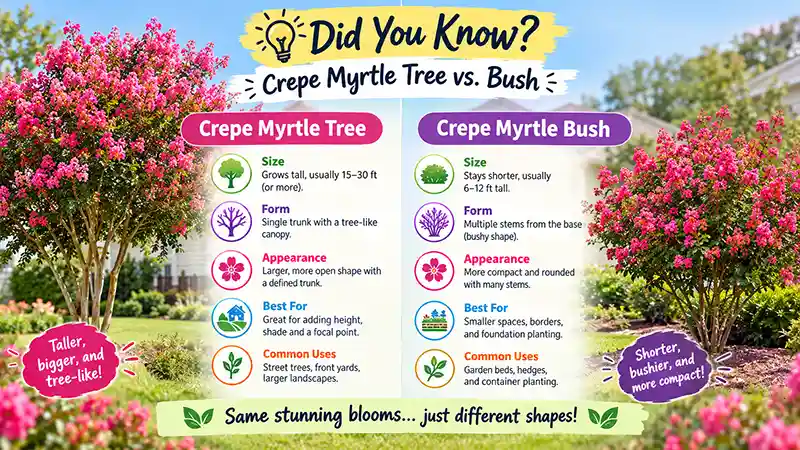
Crepe Myrtle Tree vs. Crepe Myrtle Bush
How to Grow Crepe Myrtle? Easy Planting Steps
Growing crepe myrtles is not a big deal. You just need to follow the steps in the right order and make sure that its growing requirements are being fulfilled, and you are good to go! The best time to plant, if you ask me? — Spring or early fall.
Select a spot where the crepe myrtle shrub can get full sunlight. 6-8 hours of sunshine is necessary for proper flowering.
Water the potted nursery plant so that its roots are well hydrated. This helps reduce transplant shock as well.
Dig a hole at least three times wider than the root ball, but not too deep. The soil should be well-draining and slightly acidic.
Gently loosen the roots. Make sure they are not tangled, and remove all the excess potting soil.
Set the crepe myrtle plant in a way that the top of the root ball sits level with the soil around it.
Fill the hole with the ground soil. Gently press to remove the air pockets. You can also mix nutrient-rich plant chemicals into the soil for plant nourishment.
Water deeply. Allow the soil to settle down properly. Add a layer of mulch around the base of the seedling to retain moisture. Keep it away from the trunk to avoid fungal infections.
If you are planning for multiple plants, do not forget to space them properly. Some varieties can have a 20 ft wide crown. Keep the bushy ones about 10-15 ft from walls, decks, and driveways.
Crepe Myrtle Care and Maintenance Tips
Crepe myrtle maintenance comes down to a few factors. You simply need to make sure that the tree or the bush gets the right amount of sunlight, water, and fertilizer. Pruning and mulching also need to be under control for proper growth of the plant.
Six to eight hours of direct sunlight is necessary. If you are planning to grow them in shade, they may have fewer blooms, and the growth might be a bit leggy.
Although mature crepe plants are drought-tolerant, younger ones need consistent deep watering. Allow the soil to dry before you water again. Do not wet the crepe myrtle leaves to prevent fungal problems.
The crepe myrtle bush can be grown in a variety of soils. It performs best in moist and well-draining soil.
Do not over-fertilize. A balanced NPK liquid plant food during early spring is enough for the tree to produce healthy and vibrant flowers.
Mulch around the base of the plant, but keep it away from the trunk.
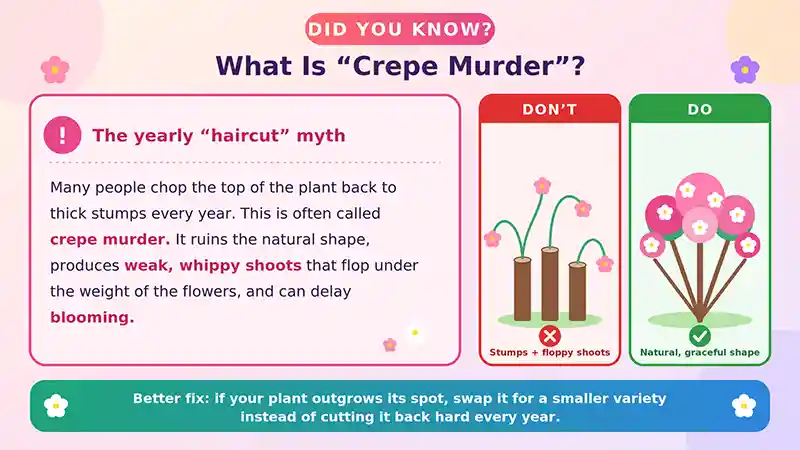
Lagerstroemia pruning is optional. It is advised to remove the spent flowers, as they mostly rebloom. Light cutting in late winter can be done to maintain the shape and flower health of the species.
Popular Crepe Myrtle Varieties
As an expert gardener, I feel these are some of the most popular crêpe myrtle varieties. Let’s explore more about them in this section.
Variety
Description
Natchez
Botanical Name—Lagerstroemia indica x fauriei.
Features white flowers.
Its cinnamon-brown bark that gradually turns orange-red during fall creates a stunning contrast.
Catawba
Looking to add a pop of color to your backyard? Nothing better than the Catawba Crepe Myrtle.
It grows about 10-15 ft tall and has a bushy structure. The violet-purple flowers, along with dark, glossy leaves, they offer a beautiful garden appeal.
Tonto
The Tonto Crepe Myrtle produces watermelon-red or magenta flowers, which look absolutely breathtaking in any large landscape.
It grows about 8 to 15 feet tall and 6 to 10 feet wide. This variety is known for its resilience.
Pecos
Botanical Name – Lagerstroemia indica x fauriei ‘Pecos ‘.
This popular variety is appreciated for its baby pink flowers. Blooming from midsummer through early fall, it makes any garden space eye-pleasing.
Note that the Pecos myrtle requires heavy pruning.
Summerlasting Coconut
This is a deciduous dwarf shrub famous for its pure white flowers and coconut-brown leaves.
It grows about 3 ft tall and wide and looks absolutely stunning.
This easy-to-grow shrub can be grown in small spaces, borders, and patio containers.
Pest Problems and Their Solutions
Crepe myrtle trees and bushes are admired for their remarkable hardiness and natural resistance to pests, making them a popular choice for gardens and landscapes.
However, despite their resilience, they do face certain challenges that can arise from time to time.
Pest/Problem
Signs
Symptoms
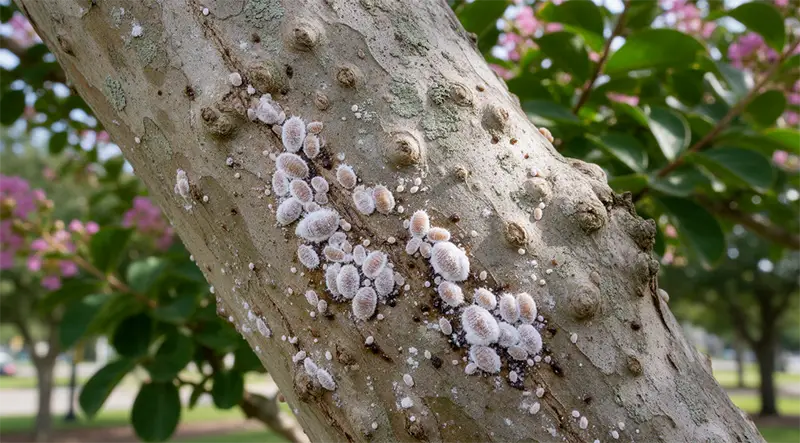
Crepe myrtle bark scale
These are white or grayish insects often found in clusters on the bark of the tree.
Remove them with soapy water. Apply insecticide or a fungal spray during late spring and late summer.
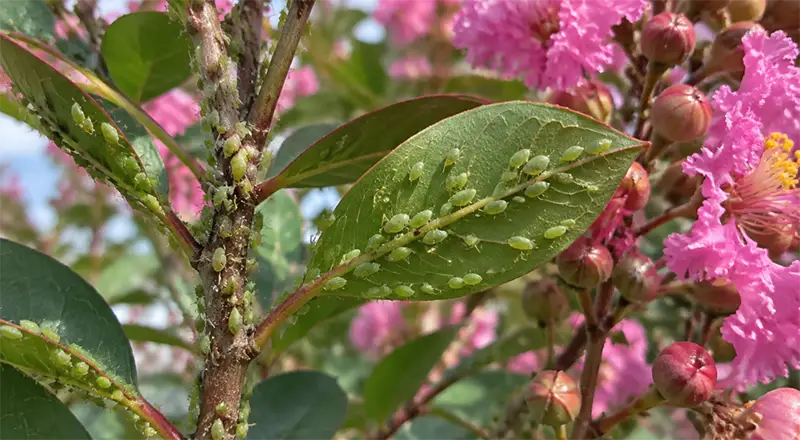
Aphids
Notice sticky residue on the surface of the leaves? It is most likely affected by aphids.
Spray with water or use neem oil or insecticidal soap. You can also use a fungal spray occasionally to get rid of them.
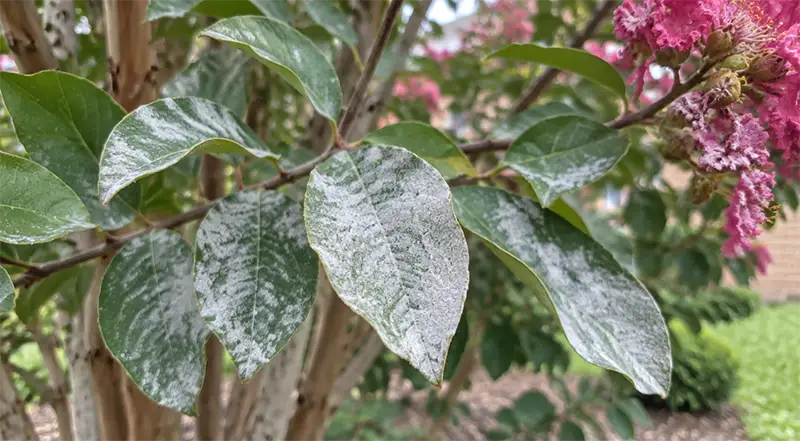
Powdery Mildew
This is a white, powder-like, dusty coating on the leaves. Eventually, the foliage will turn brown and start curling up.
Isolate the plant if heavily infested. Water at the base and clean the leaves using rubbing alcohol. Provide proper sunlight to the bush.
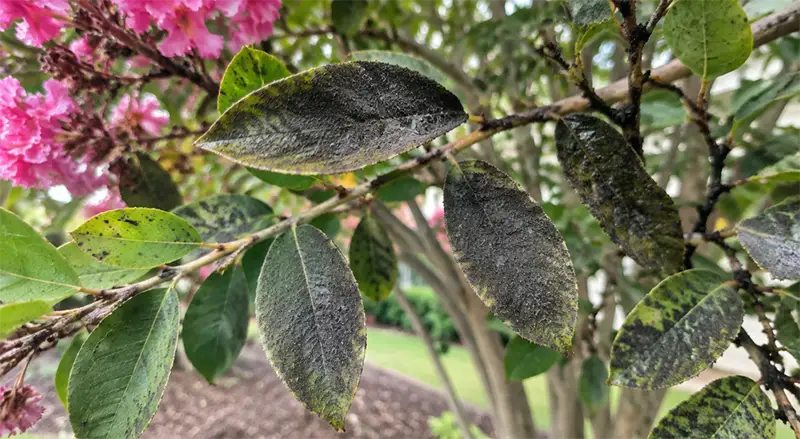
Sooty Mold
This is like a black, moist soil layer on the leaves or the bark of the crepe myrtle tree.
Clean the leaves manually with rubbing alcohol. Spray a gentle fungicide and adjust the watering frequency.
Less Flowering
Lots of green leaves but fewer flowers on the tree? It might not be getting proper nutrients.
Ensure that the bush or tree receives the appropriate growing conditions. Do not use heavy fertilizers and avoid excessive pruning.
Takeaways
If I speak honestly, I did not believe that there is a flower that blooms for four months and does not demand much attention. But to my surprise, the crepe myrtle proved me wrong with its stunning beauty and resilient growth habits. You simply need to pick a variety that fits your space and climate, and you are good to go!
Full sunlight, good soil, and regular watering are some basic needs of this species. If you are a beginner, watch out for some pests, especially during the frost season. Happy planting!
FAQs
When to prune crepe myrtle?
The best time to prune crepe myrtle is late winter, before the new growth starts. Avoid fall and early winter for heavy pruning.
Does crepe myrtle like sun or shade?
Crepe myrtle bushes or trees prefer growing in full sunlight. A minimum of 6-8 hours of bright direct light is necessary for optimal growth.
Why is it called crepe myrtle?
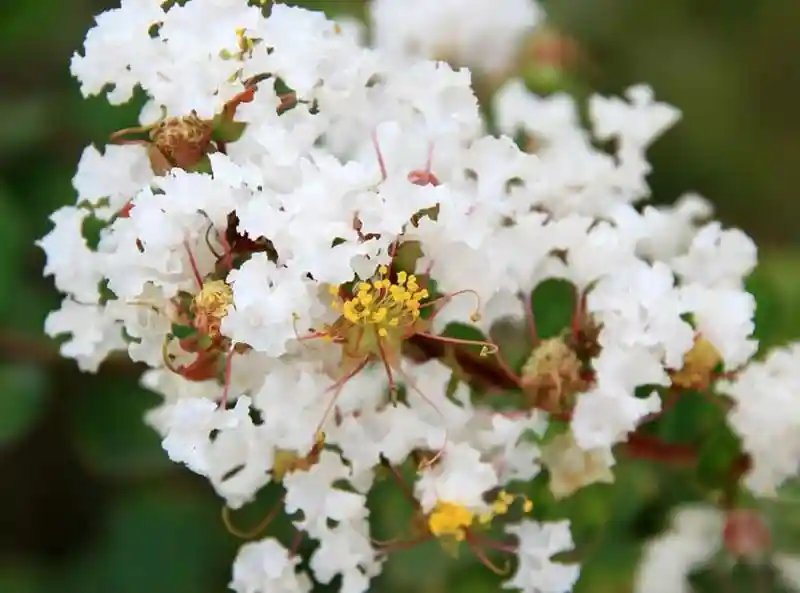
Its name comes from the crinkled, paper-like texture of the flowers.
What is the lifespan of a crape myrtle?
With proper care and pruning, crape myrtle can live for 50+ years. They grow best in USDA hardiness zones 6-10.