In USDA zones 8-10, these are true perennials. You can leave the corms in the ground during winter, and they will rebloom in their flowering season. However, in the colder climates of zones 3-7, they are treated as annuals, or gardeners dig up the corms, store them, and replant them in spring.
Ranunculus (Persian Buttercups): Planting, Growing, and Care Explained
Author
Annette Hird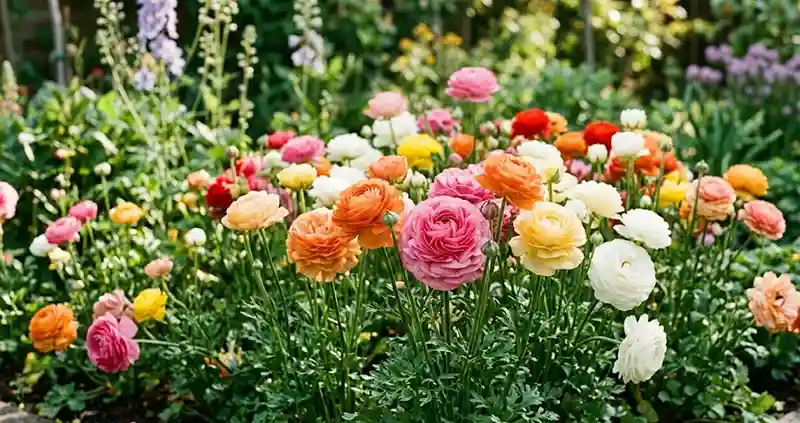
Ranunculus, also known as Persian buttercup, features bold, bright-coloured blooms with ruffled petals on straight stems. The flower pattern somewhat resembles roses and double-petaled peonies. Besides their fame as a container plant, they are also popular as cut flowers due to their ability to last long. I combine my balcony-grown Ranunculus yellow flowers with soft pink flowers for a beautiful, colorful arrangement.
If you want to grow these excellent flowers in your borders, cutting garden, or container, read this article to understand their planting, care, and varieties to ensure flawless blossoms.
Table of Contents:
What is Ranunculus? A Quick Overview
Ranunculus is the genus that includes 600 flowering plant species. Belonging to the buttercup family, the genus is native to the regions of Europe, Asia, North and South America, Africa, and parts of Oceania. The plant can grow up to 1-2 feet tall and wide.
| Common names | Ranunculus, Persian buttercup |
| Order | Ranunculales |
| Family | Ranunculaceae (Buttercup family) |
| Genus | Ranunculus L. |
| Plant type | Perennial, annual, bulb |
| Bloom time | Spring and summer |
| Flower colour | Red, pink, yellow, gold, white, and orange |
| Mature size | 1-2 feet tall and wide |
| Hardiness zones | USDA zones 8-11 |
| Native area | Regions across Europe, Asia, North and South America, Africa, and parts of Oceania |
| Toxicity | According to ASPCA, this plant is toxic to cats, dogs, and horses. |
Did you know?
In 2025, Ranunculus ‘Moderna Dolce’ was awarded “Best in Show” by the Society of American Florists.
How to Plant Ranunculus
You can grow Persian buttercups from seeds and corms. Buy the seeds from stores or collect them on your own. If you are planning to grow them from corms, select the large, firm, and plump corms. The larger the corm, the bigger the plant will turn out. The plant takes about 90 days from initial planting to flowering, depending on the weather conditions of the area.
Here is everything you need to know about how to grow ranunculus to start a garden from scratch:
When to Plant
In zones 8-11, the best time to plant ranunculus bulbs is the fall season. Whereas in zones below 7, it’s best to plant them outdoors in late winter or early spring to prevent frost damage. If you want to enjoy the early blooms, you can start the seeds indoors 12 weeks before the last frost.
Where to Plant
Select the spot that receives full sun exposure. In the warmer regions, consider providing some afternoon shade. Good drainage is important for the plant, as soggy conditions can cause rotting. Ranunculus look wonderful in beds, borders, cutting gardens, and containers.
Planting from Seeds
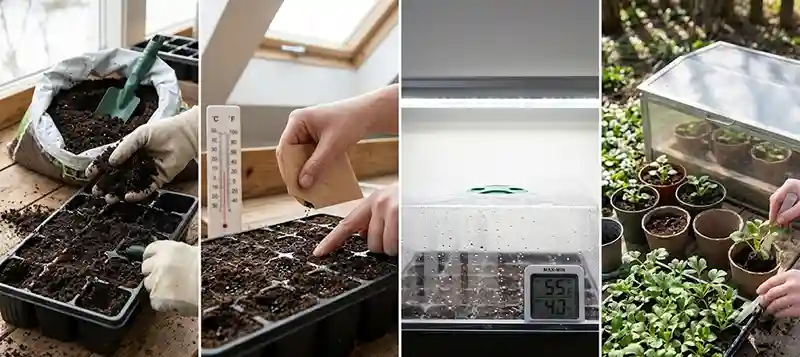
- Step 1: Fill a tray with moist, sterile potting mix.
- Step 2: Sow the seeds on the tray and press them gently in late winter.
- Step 3: Maintain the temperature at 50-60°F and keep the soil moist. Wait 20-30 days for germination.
- Step 4: When the plants have developed a few leaves, they can be transferred to containers. They can also be gradually hardened off for outdoors, but be sure to protect them from spring frost.
Pro Tip
For collecting the seeds from the plant, when blooms begin to fade, pinch them off. Put them in a brown bag, and after 1-2 weeks, give a good shake to the bag to harvest the seeds.
Planting from Corms
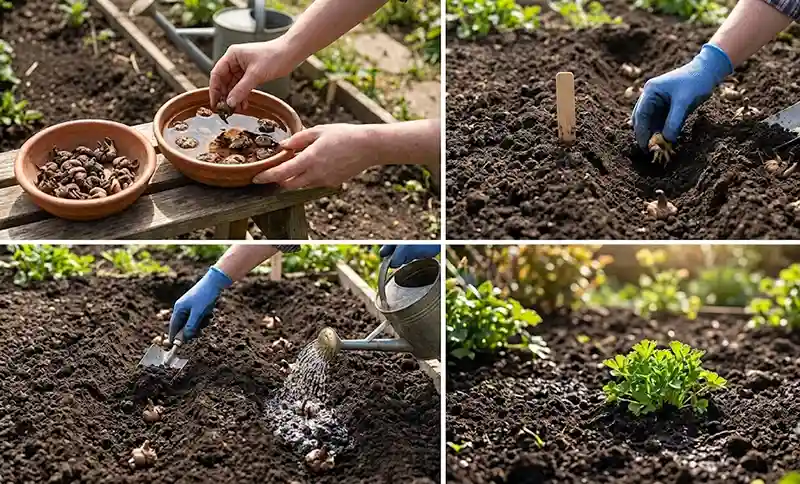
- Step 1: Soak the corms for 1-4 hours before planting or water them well at the time of planting.
- Step 2: Plant the corms 2 inches deep and 4-6 inches apart in the ground. Ensure you bury them with the claw side down.
- Step 3: Cover them with soil and water well.
- Step 4: If the soil retains moisture, do not water the corms again to avoid rotting. Within 15-20 days, the new growth will appear.
Pro Tip
Avoid soaking the corms in standing water for more than 3-4 hours. It cuts off the oxygen supply and can cause rot and mold
Aftercare Tips for Ranunculus
Ranunculas prefers full sun and rich, well-draining soil. At the end of the Ranunculus flower season, let the plants die back. During dormancy, the bulbs in the ground prefer dry soil. If you can’t maintain that environment, treat it as an annual plant. Provide proper moisture; avoid waterlogged conditions, which can lead to rotting.
Let’s see important care tips to grow this plant:
Sunlight Needs
Ranaculus needs at least six hours of direct sunlight daily for the best flower production. If kept in hotter climates, provide afternoon shade to support its health.
Did you know?
In cold weather, the flower cups its petals inward to trap sunlight and keep the center warm.
Soil Preference
It prefers sandy or loamy soil with slightly acidic pH and good drainage. You may also enrich the soil by mixing in some compost. The plant does not tolerate clay soil. It is suggested to grow it in a garden bed for a more controlled environment.
Watering Requirements
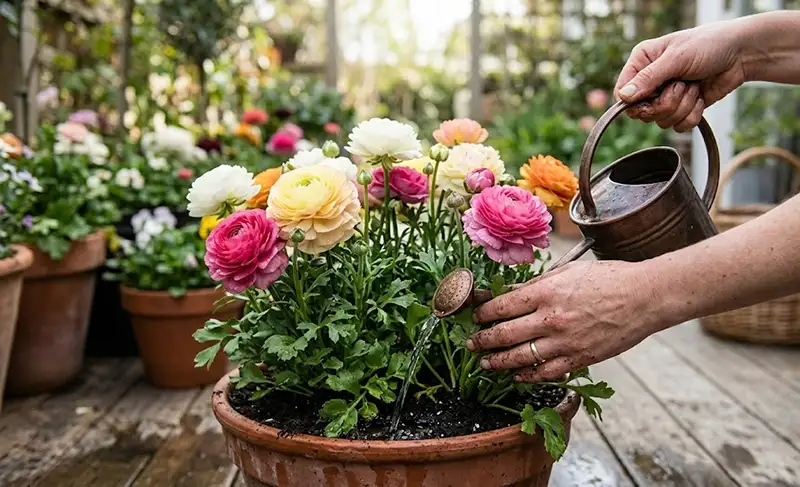
Water the plant regularly but avoid keeping the soil soggy during initial establishment. Once the plants are well established, let the soil dry out a little before watering.
Temperature and Humidity
The plant can survive in the cool spring but can’t tolerate hard frost. Protect the plants with frost cloth at night. Alternatively, keep it in a sunny garage or greenhouse, maintaining temperatures around 50°F during this time.
During the summer heat, add mulch around the base to protect the plants. If it is not provided with any protection, it can go dormant once the temperatures reach 68-70°F. The ideal humidity range is 40% to 60% that matches its cool spring environment.
Fertilizer
Use a slow-release fertilizer during its active growing season regularly to encourage its growth. Instead of high-nitrogen feeds, focus on fertilizing with a phosphorus or potassium formula to boost its growth. If you want to use the organic options, add organic fish or seaweed emulsion.
Pruning
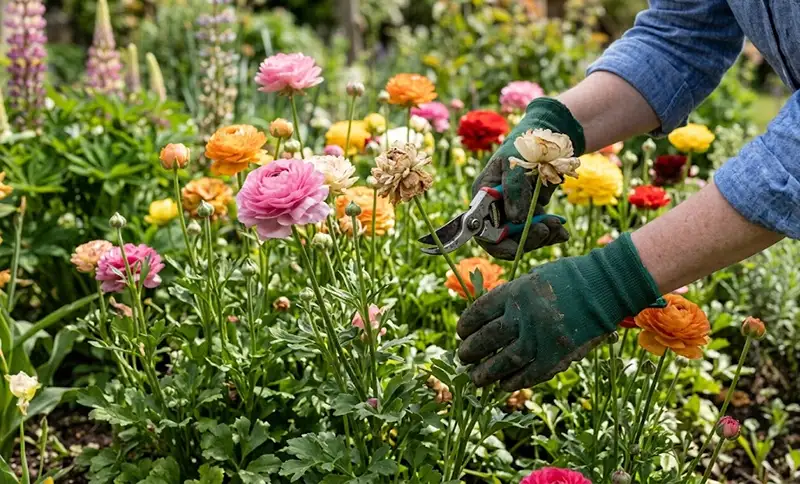
These plants usually don’t need any pruning, but you can deadhead the spent blooms to boost the production of new flowers.
Did you know?
The name “ranunculus” comes from the Latin words “rana,” which means “frog,” and “unculus,” which means “little”. It is a reference to its wild species that are found near damp areas and streams.
Propagation of Ranunculus
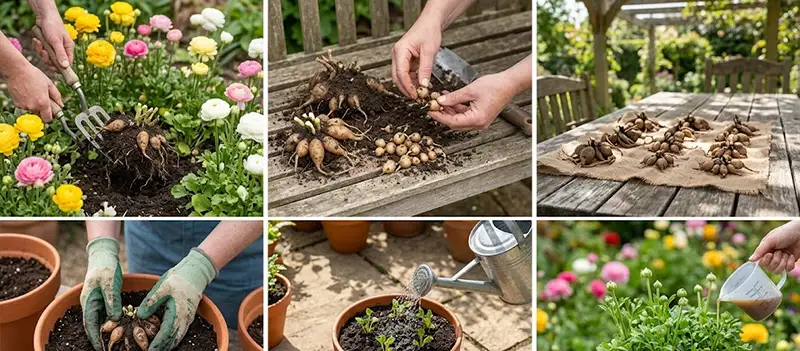
You can propagate Persian buttercups by dividing their bulbs. For this, dig up the corms and divide them with a sharp knife. Replant them with the pointed end facing up.
Here are the steps to propagate the plant:
- In late spring or early summer, dig up the tubers with a garden fork.
- Separate the small tubers from the large ones. The small ones will possibly not flower in the coming year, but they will bloom in subsequent years.
- Allow the tubers to dry in a shaded area for some days.
- Fill the container with potting mix and plant the tubers 2-3 inches deep into the soil.
- Keep the soil moist but not waterlogged. Place the container in a sunny location.
- Once they are actively growing, start feeding them with balanced fertilizer.
Pro Tip
If you live in colder regions, dig the tubers before the first frost and store them throughout winter. Plant them in spring after the danger of frost has passed.
Varieties of Ranunculus
Ranunculus genus has many popular series that have different colours and flower patterns. Some of the well-known series include the Amandine series, Butterfly series, and La Belle series.
Let’s uncover some of the series to elevate the look of outdoors with distinct Ranunculus colors:
| Variety | Description |
Amandine series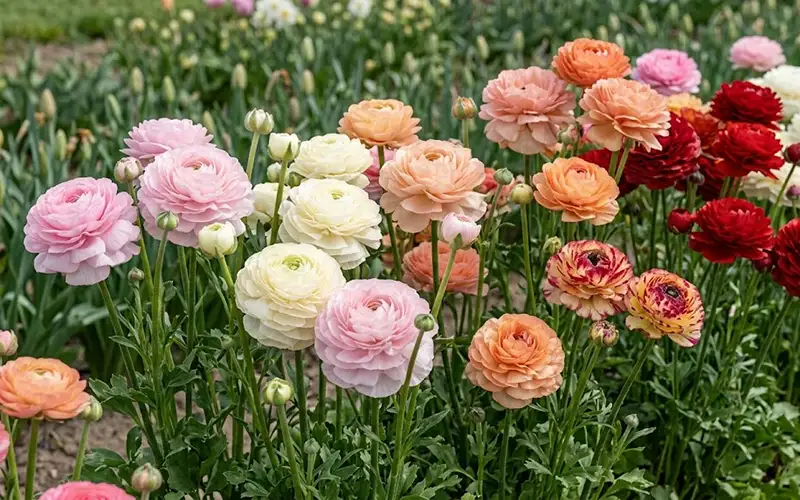 | This is the French-bred series of Persian buttercups. They are well known for their high heat tolerance and strong, long stems. The flowers have double heads and silky petals. |
Butterfly series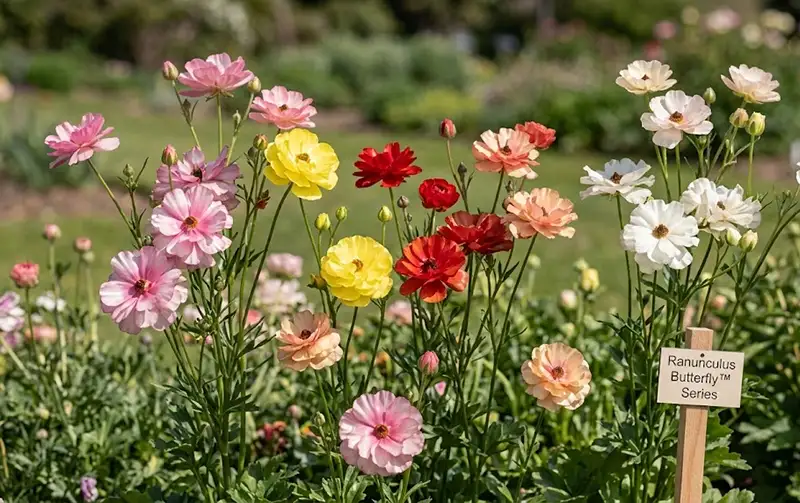 | This series has 7-12 flowers on each stem. The blooms have a waxy layer on their flower petals, which gives them a mirror-like sheen. In this way, this variety is good for a long-lasting Ranunculus flower bouquet. |
Cloni and Italian Elegance series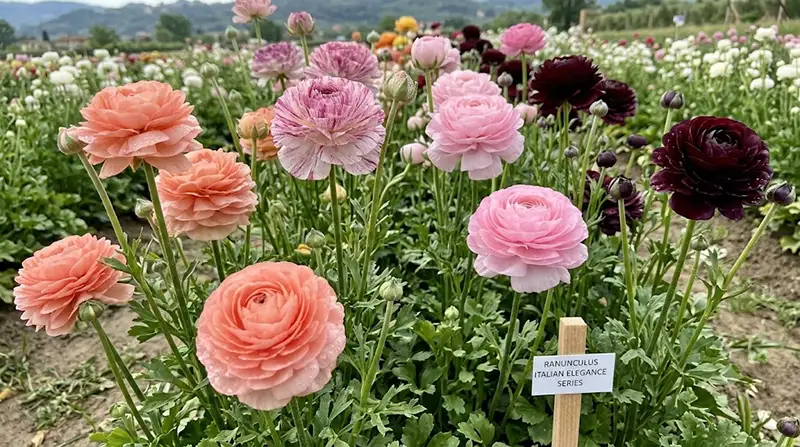 | These are the genetically improved strains developed in Italy. The Italian Ranunculus flowers have multilayered blooms and exceptional vase life. |
La Belle series 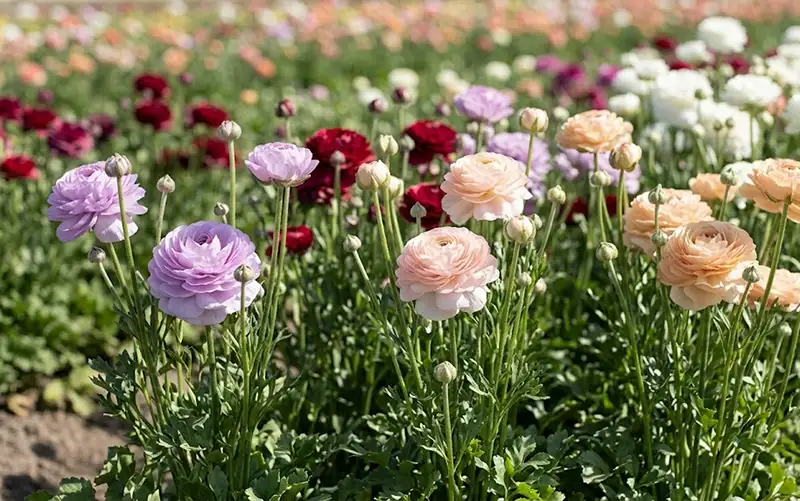 | This is also a French-bred collection of early blooming flowers. They have a shorter growth habit and higher flower production as compared to the Amandine series. |
Telecolote series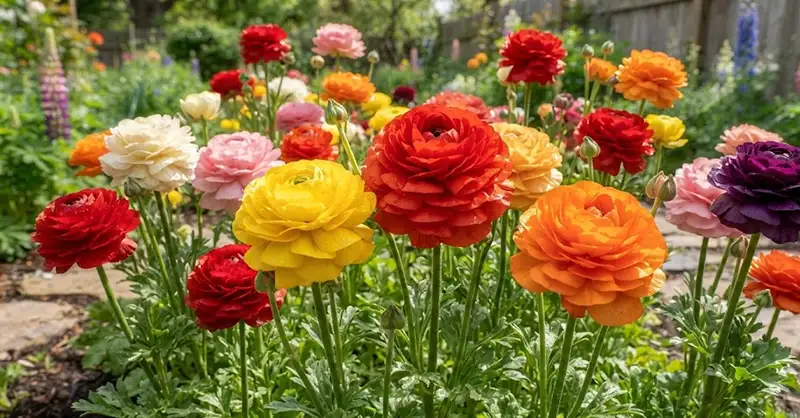 | It is a budget-friendly variety of Persian buttercups. This has an open center resembling the poppy flowers on its strong upright stems. |
Ranunculus as Cut Flowers
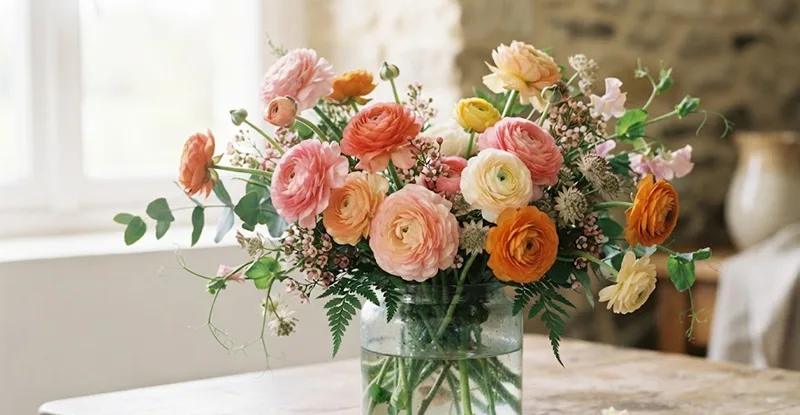
The flowers are famous for their exceptional vase life of 7-14 days. Further, the blooms are scentless, making them ideal for table centerpieces and people who have floral allergies. For the best results, cut them at the “cracking bud” stage.
Here’s how to harvest these flowers:
- Cut the flowers when the buds have just started to open and show full colour.
- Use sharp shears to snip the stems cleanly near the base of the plant.
- For vase prep, strip the lower foliage that would sit in the water. Recut the stems at an angle and place them in water.
- If the stems are curvy or weak, you can run the floral wire up the center of the stem.
Pests and Diseases in Ranunculus
These plants are susceptible to various pests and diseases, including aphids, slugs, snails, and root rot. You can prevent these problems by maintaining the proper growing conditions and treating the plant with fungicides or insecticidal soap.
Let’s see the causes of these issues and preventive measures:
- Aphids: These small insects suck sap from stems and leaves, causing wilting and deformation. They also transmit plant viruses.
- Slugs and snails: They can eat holes in the leaves of the plants, leading to yellowing and dying. They especially cause issues in damp and humid conditions.
- Fusarium wilt: It is a fungal disease that causes the yellowing and wilting of the leaves and eventually kills the plant. This is caused by poor drainage and overwatering.
- Botrytis blight: This is also a fungal disease that leads to browning and rotting of flowers and leaves. It is often caused by poor air circulation and wet conditions.
- Root rot: In this, the roots of the plant rot, and the entire plant wilts and eventually dies. This is caused by poor drainage and overwatering.
To prevent the above-mentioned pests and diseases, grow the plant in well-draining soil and water it carefully. Also, maintain proper air circulation and garden hygiene to prevent the diseases. If the issues are severe, use insecticidal soap or fungicides.
To Sum Up
Ranunculus is a favourite among flower lovers with its colourful, rose-like blooms. From the backyard design to the wedding bouquets, the exquisite flowers are absolutely pleasing to the eyes. Consider growing this plant as an annual or perennial according to the climate of your region. Also, use the blooms as cut flowers for home natural decor.
FAQs
Are ranunculus perennial?
When to plant ranunculus zone 7?
In USDA zone 7, you can plant it in autumn with winter protection like frost cloth. Alternatively, you can plant it in late winter or early spring if you want to grow them outside without any protection.
Which is better: Ranunculus vs Peony?
Both are excellent flowers to enliven the landscape. The choice depends on the planter’s needs. If you want something smaller and budget-friendly, then Ranunculus is better. On the other hand, if you want something large and more expensive with a luxury look, then peony is better.
How poisonous are ranunculus?
The plant is toxic to humans, cats, dogs, and horses. Coming into contact with the skin, it can cause irritation, redness, and blisters. When it is eaten in large quantities, it can cause gastrointestinal problems.
What month does ranunculus bloom?
In warmer climates, it blooms in late winter or early spring. If planted in colder climates, the plant blooms in late spring or summer.
Sources:
Ranunculus Is a Beautiful Challenge – Iowa State University Extension
How to grow ranunculus (Persian buttercup) – BBC Gardeners World Magazine
Ranunculaceae – Britannica
Latest Blog