Rarity is the sole factor that drives the price so high. However, over the past few years, its prices have really gone down. This plant species has really become affordable.
Thai Constellation Monstera: How to Care, Propagation Methods, Tips on Potting, Repotting, & More!
Author
Rashika GuptaThe most cherished indoor plant is the Thai Constellation Monstera. People who love greenery at home are big fans of it. If you have recently come across this beautiful foliage-rich plant and thus want to make sure it becomes a part of your living space too, this care guide is for you. By its looks, you might get the idea that you need to do a lot for its care. However, it is not the case. It is pretty simple to look after once you get the hang of it!
Let’s start with a brief introduction, and then I will move on to what I have learned about growing it from my years of experience.
Table of Contents:
- A Brief Introduction to Thai Constellation Monstera
- How I Take the Best Care of My Thai Constellation Monstera Plants?
- My Best Way to Propagate a Thai Constellation Monstera for Maximum Growth
- How Do I Choose a Suitable Pot for a Thai Constellation Monstera?
- How Do I Know If It Is the Right Potting Mix for Thai Constellation Monstera?
- When Is the Right Time to Repot It?
- Common Pests and Plant Diseases Affecting Thai Constellation Monstera
- Other Problems You Should Consider
- Conclusion
- FAQs
A Brief Introduction to Thai Constellation Monstera
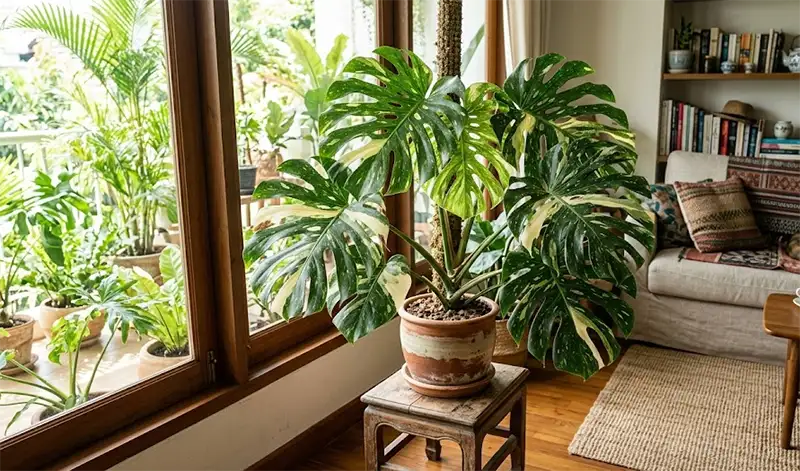
The Thai Constellation Monstera is famous worldwide for its striking, fashionable leaves with different colored marks. It is a perfect home decor item, an ideal choice for nature lovers. The only thing is that you just have to know how to provide the right care.
One of the key characteristics of this plant is that its leaves naturally develop holes and splits as it grows. The process is exactly the same as in the case of Monstera deliciosa. I personally find this indoor plant species a perfect addition to my home. However, be careful if you have children or pets. According to the ASPCA, the Thai Constellation Monstera is toxic when ingested accidentally.
Handy tip: Always keep a toxic plant out of the easy reach of children or pets.
Consider some major facts about this plant in the table below.
| Common Name | Thai Constellation Monstera |
| Botanical Name | Monstera deliciosa ‘Thai Constellation’ |
| Family | Araceae |
| Plant Type | Perennial vine |
| Mature Size | 16 ft. tall, 4-5 ft. wide (indoors) |
| Sun Exposure | Partial |
| Soil Type | Loamy, moist but well-draining |
| Soil pH | Acidic |
| Bloom Time | Spring, summer |
| Flower Color | Green, white |
| Hardiness Zones | 9-11, USDA |
| Toxicity | Toxic to pets and people |
Practical advice: If you are new to indoor planting, make sure that you know the basics of growing plants indoors first. That will provide a sufficient background to understand what care Thai Constellation Monstera needs, and things will get easier for you.
Also read: Real Christmas Tree Decor: Why The Tree Itself Is The New Centerpiece
How I Take the Best Care of My Thai Constellation Monstera Plants?
Let me first provide a quick overview of the methods I use for the care of my Thai Constellation Monstera plants. Consider the following table, touching upon key needs, such as light, planting medium, watering, and fertilizing.
| Basic Monstera Thai Constellation Care Requirements | |
| Light | 4 to 6 hours of bright but indirect sunlight a day |
| Planting medium | Use a loose, rich, and well-draining mix to plant this indoor species. |
| Watering | When the top three-quarters (0.75 inches) of the soil feels dry |
| Fertilizing | Once a month during the spring and summer |
The following sections elaborate on the matter further.
1. Light
It is the most important part of this plant care, and I never compromise on it. You just need to ensure 4 to 6 hours of bright but indirect light from the sun. It is just like how Monstera deliciosa plants love it. You just need to put the pot in the shade near a window with enough light. So, it can have indirect exposure without any damage!
Workable advice: In order to soften the effects of the direct sunlight, you can even use a curtain over the window. Or, choose a location a few feet away from the east-facing, naturally and brightly lit window.
What if light conditions are low? I made the same mistake initially due to lack of knowledge, and it just ruined all the variation. The leaves just didn’t have those beautiful marks of different colors in their original intensity.
2. Soil
I always double-check that the soil mix I choose for this indoor plant is loose, well-draining, and rich in all types of essential organic materials required. If you don’t want to go that deep into this topic, just pick up a pre-made soil mix designed for aroids from an online store. That is an ideal option for most busy gardeners.
Make your own mix! What I do when I just cannot find the right product online is make the right mix on my own. You just need to take care of the right proportions. Take equal parts of perlite, orchid bark, coco coir, and indoor potting soil. Mix it well, and you have got it right in your hand—your perfect soil mix for your beautiful Thai Constellation Monstera at home.
If you are trying to enrich your home with leaf-rich indoor plants that also do well outside, you can also consider Yucca Plants. Along with the Thai Con Monstera, it really adds a rich texture to my home’s interior.
3. Water
Watering is the real challenge when it comes to a Thai Constellation Monstera plant. Do you know why? That is because it is neither drought-tolerant nor flood-tolerant. So, you just can’t put in too little or too much water! You will just need to water the soil when it is the right time to do so.
Water the soil only when it gets dry. For an idea, wait until three-quarters, approximately 0.75 inches, of the pot soil mix gets dry. When you water, make sure that the drainage hole is working well. Otherwise, the water retention will lead to root rot, ultimately leading to the death of your plant.
4. Temperature & Humidity
This plant species does well in warm temperature conditions, but you will have to watch out for highly humid conditions. However, there is nothing to worry about when it comes to slight humidity. For pro tips from my experience, I would suggest that you keep the indoor temperature between 68°F and 86°F and avoid all dry locations at home, except for situations when it is time for absorbing sunlight!
5. Fertilizer
You don’t need to put any fertilizer at all during the fall and winter months. The task of fertilizing your soil mix is only important during the spring and summer. You can use any liquid-form product for this purpose. There are many online products available in this regard. The right technique for fertilization is to add it to the soil with the right amount of water.
My Best Way to Propagate a Thai Constellation Monstera for Maximum Growth
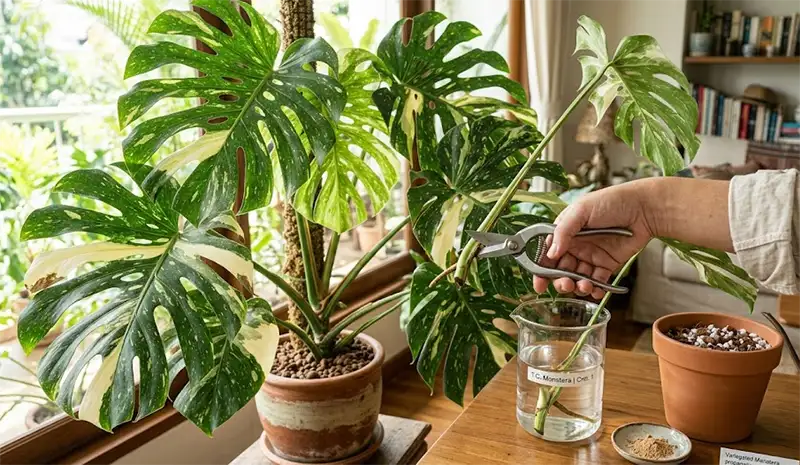
Now, after the Thai Constellation Monstera care, let’s move on to how I effectively propagate this plant. This method has been helping me grow my own colonies of con monstera plants at home seamlessly for many years.
Note: I always propagate new plants when my original Thai Con Monstera has grown large enough to be trimmed for new leaves. You can also follow along in case you don’t want to overtrim a newly established, small plant!
So, the process of propagation begins by taking a stem cutting, removing bottom leaves, placing the cutting in water, etc. Consider the elaboration below.
- Take a stem cutting: Picking up the right part is crucial here. Choose a piece of stem that has at least one node and one leaf. And make sure that number doesn’t exceed three in any case.
- Remove bottom leaves: Remove bottom leaves if you have one or two at the top of the stem. That helps the plant establish faster, as then there remain fewer leaves to be sustained by the node roots.
- Place cutting in water: Keep the position of the cutting such that the nodes get submerged in the water and leaves remain above on top.
- Set in bright light: Place your container with water and the newly cut stem in a spot brightly lit with natural sunlight. But make sure you keep it away from direct sunlight. That is because it might get scorched due to excessive heat.
- Keep water clean: Once a week, change the water in the container in which you placed the cutting. Keep it clean, and waitas small roots start to take shape within three to four weeks.
- Transfer to soil: After roots have become approximately an inch or two long, make sure that you transfer it to a pot with a loose soil mix.
- Keep soil moist: So the new plant gets the right level of moisture and grows to the fullest.
How Do I Choose a Suitable Pot for a Thai Constellation Monstera?
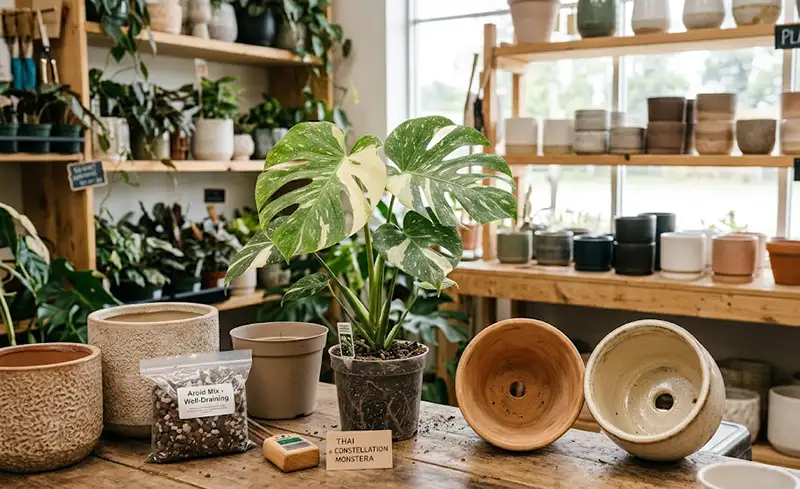
The only trick I use to find the best pot for all my Thai Constellation Monstera plants is as follows. You just need to take care of two things. First of all, your pot must be made out of a porous material, such as ceramic or terracotta. And second, it should have at least one large drainage hole. That is because this species doesn’t need waterlogging, which actually leads to root rot.
Additionally, ensure that you choose a heavier pot. This is important when the plant grows and gains more weight on top due to an increasing number of stems and leaves. If you use a lightweight pot, there is always a chance of the pot getting tipped due to the heavy top and light bottom! Well, that is the basic physics I figured out on my own from my experience, and I’m telling you so you don’t have to make the same mistake and learn it the hard way.
Also note: The diameter of the pot you choose must be several inches larger than your Monstera Thai Constelation plant’s rootball. That provides ample space for extension during growth.
Decoration tip: If you don’t mind, you can even make the look of your small home more inviting with the help of artificial plants. That is not just more convenient but affordable as well.
Also read: Game Room Layout: How to Plan Clearances, Circulation, and Flexible Use
How Do I Know If It Is the Right Potting Mix for Thai Constellation Monstera?
For the Thai Constellation Monstera plants, you must choose a light and free-draining mix. That is the best base to let your plant grow to the fullest. Don’t choose any type of soil that is too dense, as it leads to improper drainage and root rot. The ideal ready-made products online are also widely known as pre-made soil-free aroid mixes.
Make sure that you don’t use peat, normal soil, or slow-release fertilizers. These don’t create ideal conditions for maximum plant growth and healthy foliage.
DIY Mix: The monstera soil mix recipe that I personally love is made out of orchid bark, fern fiber, horticultural charcoal, and pumice.
Note that: While making your own DIY mix, keep in mind that it has plenty of air space for growing roots and water drainage. These plant roots don’t flourish amid too much water retention.
When Is the Right Time to Repot It?
I don’t repot my Thai Constellation Monstera plant until its roots have started growing out of the top of the pot or the drainage hole. That usually happens to healthy plants once every few years. The procedure is very simple. What I do is select a wider pot. You just need to make sure that the new pot is 2 to 4 inches larger in diameter.
Besides, you can also consider repotting for other reasons, such as you don’t like the look of the pot or you are changing the pot to something bright and colorful for festive vibes. Your plant, your repotting, and thus you can have your own reasons too.
Common Pests and Plant Diseases Affecting Thai Constellation Monstera
Pest infestation from nearby plants and root rot are the two major challenges you might face with your Monstera Thai. Learn about these in the following points.
- Pest infestation: Your Thai Constellation Monstera plant isn’t the one that will get pest infestation easily. If you ever find pests, such as mealybugs, spider mites, and thrips, on it, they are most likely to have migrated from other plants you might be keeping in close proximity. If that is the case, isolate the Thai Constellation Monstera somewhere else and treat the infestation as soon as possible.
In case the infestation is minor, cut that area off. Otherwise, use an insecticide.
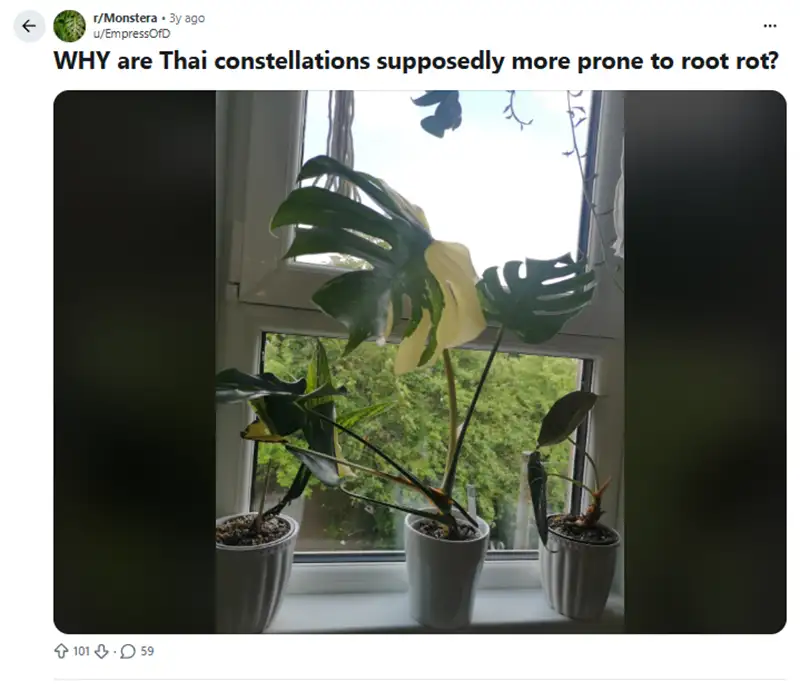
- Root rot: This is the problem I had to face most during my initial years of growing Thai Constellations. What was causing the root rot in my case was my unhealthy habit of overwatering the plant. So, don’t overwater. If this problem is minor, cut only that particular section of the roots that have rotted and then repot it.
However, in case the entire root network is damaged, you will have to propagate the plant by carefully preparing stem cuttings. The major signs of root rot are drooping leaves and brown, mushy stems.
Apart from these issues, other minor problems are discussed in the section below.
Other Problems You Should Consider
Other Thai Constellation Monstera problems are listed in the table below. These are mainly related to the foliage of the plant. They include brown leaves, yellow leaves, variegation turning brown, etc.
| Other Problems | Image | Underlying Causes |
| Brown leaves | 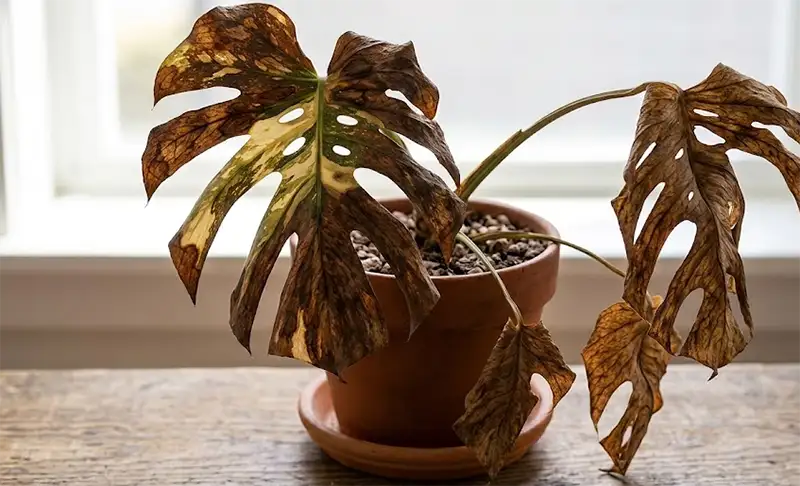 | Underwatering, dry conditions, or insufficient sunlight |
| Yellow leaves | 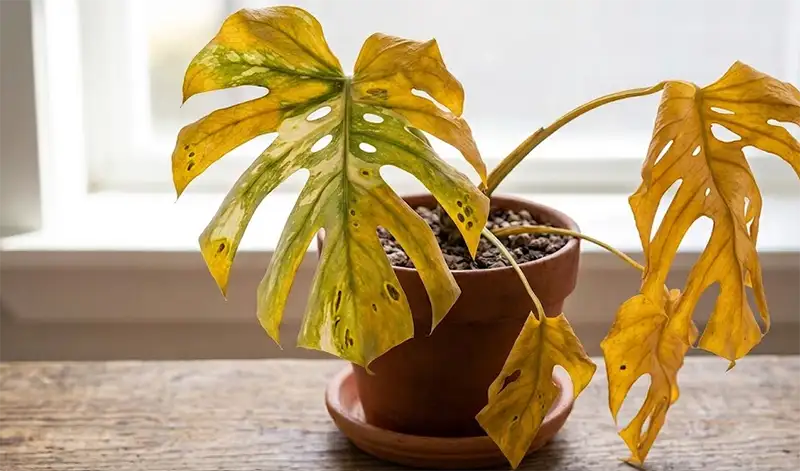 | Lack of nutrients, overwatering, underwatering, or not providing enough sunlight |
| Variegation turning brown | 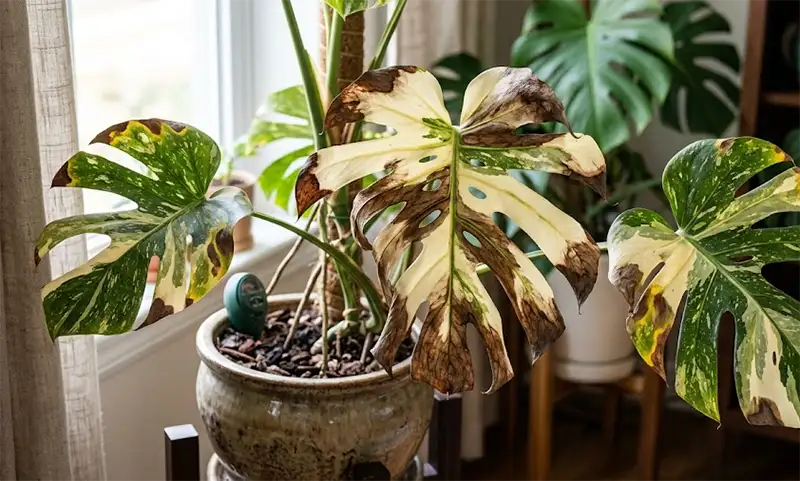 | Due to a change in the environment (a common issue with newly bought plants!) |
| Brown speckles on leaves | 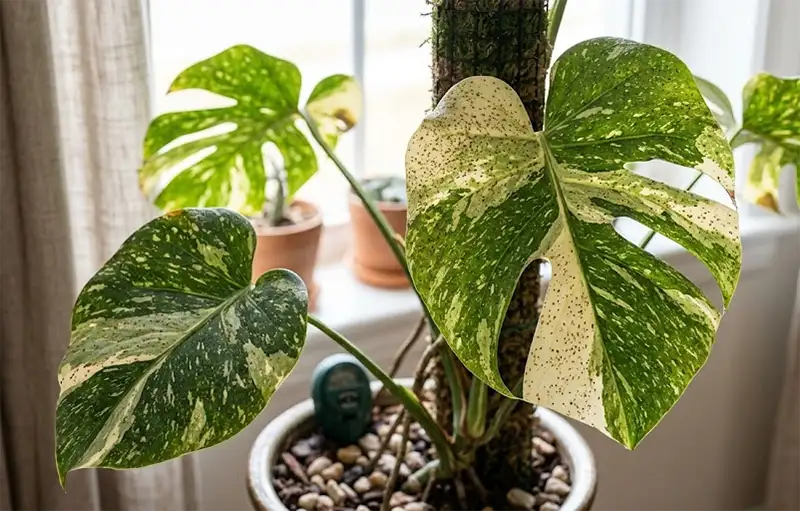 | Most likely due to thrips (by the way, hard to see due to the inherent variegation) |
| Variegation reverting | 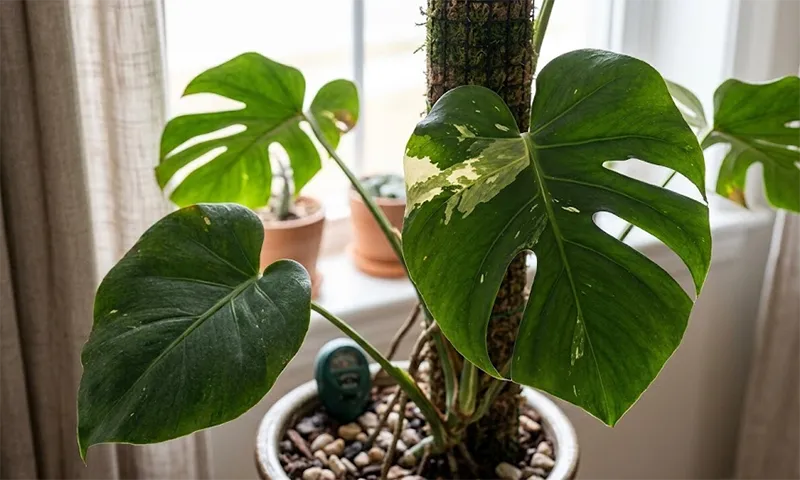 | Lack of sunlight |
These are other problems that often occur in the full-grown Thai Constellation Monstera plants.
Also read: Seven Details to Compare in Exterior Painting Quotes
Conclusion
Adding the Thai Constellation Monstera plant species to your home will definitely add a unique texture. Your living space will become more lively and full of natural energy. Nature lovers know what I am talking about. It might require a little care, but it is worth it. And by the way, nothing is free. If you need to make your interior leaf-rich, a little effort on your part is needed, as no plant is easy to grow; well, yeah, except for that cactus—a real ghost in the plant kingdom!
FAQs
Why is the Thai Constellation Monstera so expensive?
Should I get a Monstera albo or Thai Constellation?
Albo is more expensive than the latter. So, if you are looking for an affordable option, make sure that you choose Thai Constellation.
Is the Thai Constellation Monstera hard to grow?
No, it is easy to grow. All you need to pay attention to is ensuring enough light and nutrients. Additionally, don’t under- or overwater its roots. Ensure a large drainage hole at the bottom. And remember that once you learn to care for it, it will become easy!
Sources:
Lovethatleaf: Monstera Thai Constellation – The Ultimate Care Guide
Costa Farms: Monstera Thai Constellation
Latest Blog