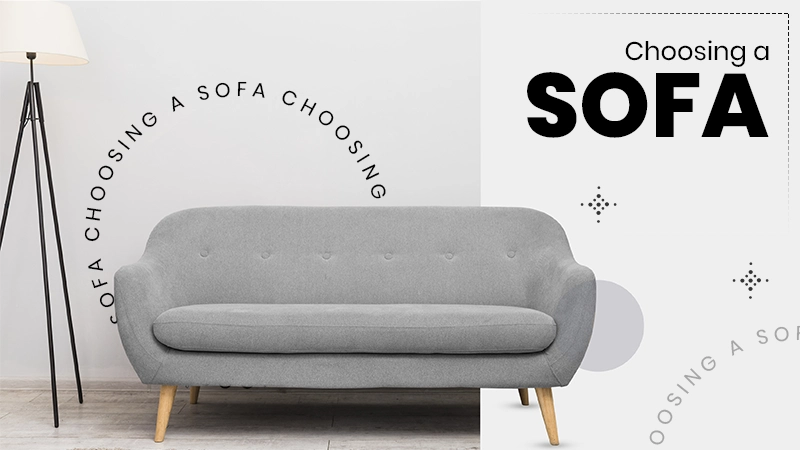
With a hardwood or quality plywood frame, dense foam, and sensible care, ten years or more is a realistic expectation. Budget builds with light frames and low-density foam often show wear within three to five years.
How to Choose a Sofa: Size, Fabric, Frame and Cushion Fill
Author
Swati Mishra
There is a common mistake that most people make while choosing a sofa, and it is that they do not choose the sofa based on their requirements; rather, they choose it based on the colour that catches their eye the most or the fabric that feels more pleasant than any other fabric under their hand.
The reason why choosing a sofa based on these parameters is not helpful is that nobody actually inspected what material lies inside the sofa itself. And two years down the line, this is the thing that matters the most: the seat shows a permanent dent, or one of the arms feels wobbly. The lovely shade because of which you bought the sofa becomes a record of every spilled drink, and that is why the sofa you bought two years ago is quite different from the one you have now.
A sofa is probably one of the objects in a living room that gets used the most and noticed the least. This is because on some days it serves as the guest bed while on others it acts as a desk. This sofa somehow becomes the place for difficult conversations and a nap spot for everyone who swears that they are going to wake up in just five minutes. This is why it is so important to shop for a sofa as equipment and something that you will use in almost all situations rather than using it as a centrepiece.
This guide takes the second view. It covers size, frame, cushion fill, and fabric in the order that best predicts how long a sofa stays good, then closes with a short test routine for the showroom floor or the checkout page.
Table of Contents:
- Buy In The Order Of What Lasts, Not What You See
- Decide What The Sofa Is Actually For
- How To Size A Sofa For Your Room?
- The Frame: What You Cannot See Decides How Long It Lasts
- Cushion Fill: The Part You Feel Every Day
- Fabric: Pick It Last, And Pick It For Your Worst Day
- Style: The Part Everyone Starts With
- Mistakes That Cost People The Most
- Where To Spend And Where To Save?
- A Five-Minute Test Before You Commit
- Concluding Remarks
- Frequently Asked Questions
Buy In The Order Of What Lasts, Not What You See
A mistake that most people make is that whenever they walk into a furniture store, they usually ask about the detail that matters the least at the very beginning and do not think about asking about the detail that will actually decide whether a sofa lasts or not until the very end. The usual sequence that takes place is that shoppers begin by looking at a colour that catches their eyes and then they move on to the price tag, and only if they find the colour and budget to fit within what they had in mind, do they move on to ask about the construction at all. The best order usually starts from the bottom up.
The easiest way to make sure you buy the sofa according to your requirements and not according to what you think looks nice is to think of the sofa as a structure which has four layers to it. This means that the frame of the sofa is the skeleton, while the question field inside that frame is its body. The fabric draped onto the sofa is its skin, and the colour is mainly a shade of it.
All of this symbolism makes it easy for you to shop for a sofa according to what is needed. And you will also know which parts to pay close attention to because a broken skeleton will require more money and time to get fixed, whereas everything else can be repaired easily in comparison. Fabrics can be cleaned or covered, and colour can be refreshed with a throw or a rug in a single afternoon. A tired cushion core is a tiring chore to do, but there is nothing that an expert solution can’t solve.
So the sensible sequence runs: size, frame, fill, fabric, and color last. The sections below follow it. If you keep only one idea from this article, keep that one.
Decide What The Sofa Is Actually For
A good way to actually measure what you need the sofa for and how much you need to spend on it is to take out 5 minutes of your time to answer questions that will give you clarity on everything else. A few sample questions can be: how many people sit on it on an ordinary Tuesday afternoon, or does anyone take a 5-minute nap on it occasionally or regularly? You also need to look out for questions like: does a dog or cat assume a spot on that as their sleeping spot, and how many hours a day will it actually be used for?
Usually, it’s questions like this that give you the answer that you need because they help set your priorities straight. This is actually beneficial because a sofa which is used constantly for three to four hours every night, while the entire family watches their favourite show, needs a supportive back and a robust seat to ensure that dad and mom do not get backache. This is quite different from a sofa which is only kept in a living room and is used twice monthly when guests come over because such a sofa can lean more towards style than comfort. Moreover, when you are thinking about buying a sofa for the family room where everyone spends the majority of their rest time, you have to think about the fact that this sofa tolerates crumbs, sticky fingers, and the occasional leap from the arm.
How To Size A Sofa For Your Room?
Sizing a sofa for your room is honestly the easiest and the most important thing that you can do because if you do not, you will actually end up buying a sofa of a size that either does not fit or is too small and makes the space look awkward. So here’s what you should do to size a sofa.
1. Start With The Floor, Not The Catalog
Sofa dimensions are one of the easiest things to miss because the listing of these numbers is actually not noticed until you see them placed on your own floor. This is why most people buy the wrong size of a sofa and regret not noticing the dimensions earlier.
So a good way to avoid all this is to mark the dimensions of a sofa that you like and are thinking of buying with painter’s tape on the floor of the room that you are thinking about placing it in. Leave the tape on for a day and carry on with your regular activities of the day, like walking past carrying a laundry basket or sitting in a nearby chair to study the view. That tape rectangle will teach you more than any rule of thumb.
Even so, a few typical numbers help you shortlist:
- A love seat usually has space to fit two people and hence is usually about 55 to 65 inches wide.
- A standard three-seat sofa tends to measure 72 to 90 inches.
- The larger models of a sofa designed to fit a larger group of people can extend to about 90 inches, and they need a big wall to complement it.
- Overall depth commonly falls between 34 and 40 inches, and deeper designs go further.
Checking the dimensions of a sofa isn’t enough because you also have to check the space that is left around it so that people can move easily in and out of the room rather than cramping inside. So always make sure that after you place the sofa, you have about 30 to 36 inches of space left for main walkways and about 14 to 18 inches of space left between the sofa and coffee table.
This is because allowing this much distance will help you set down a cup, but you will also have enough space to relax and sit comfortably rather than cramping up your knees.
2. Seat Depth And Height Decide Comfort
Seat depth and the height that is over has is more important than people give it credit for because this will decide whether the sofa fits comfortably for people of all heights or not. Moreover, the overall width of a seat also matters, and this is why most seats are about 20 to 24 inches deep, with Lounge versions, which are a much more relaxed version of a normal couch, running 24 to 28 inches deep.
If the sofa is too deep and is also good height, then a shorter person often ends up with dangling feet or a cushion behind his back, whereas if the height of a sofa remains short, then a taller person has to somehow fit himself in the sofa rather than the sofa fitting him. Seat height, usually 17 to 19 inches from the floor to the top of the cushion, should let your feet rest flat with knees bent at roughly a right angle.
Height of the back shape of a sofa also matters because it helps create a visual effect of the space being either chaotic or clean and large. For instance, a low back makes a small space feel larger because it keeps the sight lines open and creates a visual effect, but if the sofa in your house is used constantly, especially by someone who sits on the sofa quite regularly to work, then a tall back shape that supports the neck is more suitable.
3. Sofa Or Sectional?
As described earlier, the sequence of buying a sofa is to see which one you actually need rather than which one is the most eye-catching to you. This is why you should always choose between a sectional and a sofa depending on which one fits your room rather than what appeals to you.
One thing worth remembering while you are deciding between the two is that a sectional is more suitable in rooms that are big or have more open spaces because then it can do its job and define a zone particularly. However, if your room is small and it is made more for functionality rather than relaxation, then a sofa can make your room look awkward and smaller, which is why a small sofa works better in this case. Small spaces can be elevated through a well-proportioned sofa that has a few accent chairs to it, which can be rearranged when you move.
If a sectional appeals, decide which side the chaise belongs on and confirm whether the modules can be reversed later. You can compare options in the sofas and sectionals collection.
4. Check The Route Before You Pay
Good advice for anyone buying a sofa is to make sure that you measure the spaces around the place where you are going to place a sofa so that you are prepared for what comes next.
This is honestly one of the costliest mistakes in this industry, and it can be easily avoided because, so far, those that never make it through the door can never be guessed for the comfortability that it will provide around the space. So measure every doorway, hallway turn, stairwell, and elevator on the delivery route, then compare the numbers with the sofa’s depth, height, and diagonal. Ask whether legs, arms, or backs detach. Many modern designs ship in sections or with removable legs, which can rescue an awkward entry.
The Frame: What You Cannot See Decides How Long It Lasts
There are a lot of components in a sofa, which is why choosing it is a lot harder than people make it out to be. People honestly look at the colour and the fabric of a sofa and decide which one they want to buy, but these are the things that matter the least when we talk about how long a sofa is going to last you. This is why talking about the components that actually matter will help you in the long run.
1. Wood And What It Is Made Of
The wood is usually the most important part of a sofa because it makes up 90% of the frame, which is the entire structure that the sofa is built on. This means that if anything is wrong with the kind of wood used, then the sofa requires much more repair than a usual one.
This is why you always ask what your particular kind of sofa is made of before you buy it. Traditionally most sofas used dried hardwood such as maple, oak or ash because these are dry woods which remove moisture from in between that would otherwise cause splitting and warping. You can also use layered plywood, which is also a popular choice because of its strength.
However, you should avoid buying sofas that are made from low-density wood and have thin softwood because these are not made to withstand heavy weight, especially in rails, which have the entire purpose of having strength so that they can accommodate people.
2. Joinery
You should also look out for the pieces that will go as accessories on the sofa because how the pieces look themselves matters just as much as how they connect to the sofa.
This is why it is recommended to look for corner blocks that are glued or screwed together rather than just being stapled on the sofa. Also, observe whether the frame feels rigid when you slightly try to move it or not, and if the sofa has a tenon construction. All of these matter way more than we give them credit for because these are the things that will ensure a sofa lives a long life. Legs fixed with proper hanger bolts outlast legs screwed into thin wood.
3. Suspension
Check the spring feature of a sofa, which is what keeps it looking nice and soft every time someone sits on it.
The best option for this is to check whether your sofa has eight-way hand-tied coils that give the most even and durable support at the highest price. Sinuous springs, the zigzag wires, are also a practical choice for households that require much more use of the sofa than they intended. But one thing to remember in this case is to choose the wire which is thick enough to handle the weight and traffic; otherwise, even these options will not work. Ask for the gauge, remembering that a lower number means heavier wire. Webbing is the budget route and tends to sag sooner.
4. Two Quick Checks In Person
There are two things that you should always check before you buy a sofa. First is the flexibility, and second is the weight.
To check the flexibility of a sofa, raise one corner of the sofa to about 6 inches, and if the other leg leaves the floor almost instantly, then it means that your frame is rigid and it is an option worth buying. However, if the leg on the other end stays put, then it means that its structure will lose support over time, and you should consider buying another piece.
The next thing to notice about a sofa is the weight because while most people think that the heavier a sofa is, the stronger it is, that is actually not true. But it is true that a sofa which feels far lighter than the rest usually has very little cushion material inside it.
Finally, read the frame warranty. A confident maker backs the structure for years, so look at what the paperwork covers and what it excludes.
Cushion Fill: The Part You Feel Every Day
We have talked enough about the frame, which is quite an important factor when considering a sofa because it carries all the load. However, there is one thing that carries the entire experience and comfort of a sofa, and it is not talked about as much. The cushions are the soul of a sofa, and while firmness is personal and can vary from person to person, density is objective.
The density of a sofa actually decides how long a cushion will keep its shape before it goes all shapeless and stops feeling comfortable. This is usually measured by the density that a foam has, which is measured in pounds. For seat cushions, 1.8 is a commonly cited minimum for decent quality, and 2.0 or above is better.
Firmness is a separate rating, and often the one that most people can be confused about since the label rarely reveals anything about it. A dense foam feels soft from day one and day hundred while a firm of cheap quality will feel firm on day one but will sag within a year and completely ruin the entire experience of a sofa. So do not go by the price or the promise that tells you that the sofa uses premium foam because it tells you nothing about the sofa; instead, a good option is to ask for the density.
The main fills compare like this:
- High resilience polyurethane foam is springy, durable, and the sensible default for seats.
- Foam wrapped in fiber or down provides a softer look while still keeping the support strong so that people can easily work on this while still feeling relaxed.
- Feather and down blends create that sink-in feeling but need regular fluffing and cost more.
- Spring core cushions decide how long a sofa will feel comfortable, and this is why you should always go for pocketed coils, which are lively and provide even support.
- Polyester fiber alone flattens quickly, which makes it fine for back cushions and poor for seats.
- Memory foam is rarely used for entire cushions, since it responds slowly and can hold heat.
There is also one more thing that you need to decide before you buy a sofa, and that is the kind of cushions you want. Loose seat cushions are easily replaceable and can be flipped or rotated if one of the sides starts feeling too saggy before the rest. An attached cushion, however, looks tidier and well put, but it takes a lot of effort to clean it.
So both of the options have their own set of advantages and disadvantages. This is why you must remember that whichever you pick, just turn the fluff weekly for the first few months, and the sofa will age far more gracefully.
Fabric: Pick It Last, And Pick It For Your Worst Day
The fabric is the last thing that you pick, but it is still one of the important factors because it decides how your room will feel overall because of the colour and fabric used in a sofa.
This is also why you should remember to buy a fabric and a shade that can last a realistic week in your household or a week full of your worst nightmares, like a sick child, a muddy dog, a glass of red wine at a birthday. This is because a calm Sunday photographed in a catalogue does not tell you anything about whether it will survive a week in your household or not.
1. Read The Rub Count
According to the Wyzenbeek test, which is the common standard of testing a rub count in the United States clearly puts down that it uses double rubs as a standard before a visible wear appears. This method is used to check the durability of upholstery, which is often a good method.
So in this test, anywhere near 15,000 double rubs can be widely accepted for a residential environment after considering all the factors where as an environment where the sofa is used regularly or heavily needs about 30,000 or more double rubs.
Most sellers do not publish this number, so if a listing leaves out this number, then it is probably worth asking a question to avoid any future difficulties.
2. Compare Materials Honestly
There are different kinds of fabrics that you can choose from, and knowing which one suits your household the best solves a lot of future problems that come with not knowing which one to use.
- Performance polyester and microfiber are good options for styling homes that have high traffic because these fabrics can resist stains and abrasion.
- Tightly woven blends hide wear well and snag less than loose textures.
- Velvet can be used if you like a more royal and rich look to your home. The earlier versions of velvet were fragile and delicate; however, the modern polyester versions are tougher than they look, though they show pile marks.
- Linen and cotton breathe beautifully but crease and mark easily. Removable covers help.
- Boucle and chunky weaves look cozy, yet loops catch on claws and jewelry.
- Leather wears in attractively when it is top grain or full grain. Bonded leather is a blend of scraps and can peel.
3. Decode The Cleaning Code.
Cleaning upholstery is what requires the most effort, and it is usually mentioned on the kind of fabric you buy.
The W sign means that the fabric will only allow for water-based cleaners, and if you use anything else, the fabric will most probably get damaged. Similarly, an S means solvent only, WS allows either, and X means vacuum only. Households with children or pets should lean towards W or WS.
4. Mind The Light
Direct sunlight can be damaging to the fabric because it can fade the colour of the fabric and can wear the text as well.
This is why, if the wall you are placing it beside has direct sunlight falling on it, then a better solution is to choose a dyed fabric or rotate the questions now and then so that all of them can equally fade in colour and look intentional rather than accidental. Medium tones and subtle patterns forgive daily life better than very pale or very dark shades.
Style: The Part Everyone Starts With
After everything from the frame of a sofa to the fabric of it is decided, the style can come into the picture, and while it is the least effective part of a sofa in terms of usability, this is the one that most shoppers look forward to because it makes an entire room feel quite different from what it used to be.
Always start with the arm shape of a sofa because that is what sets the character. Track arms have a modern look to them, whereas a rolled arm looks more traditional. One can even go for sloped arms that sit comfortably between the two. After you have decided the arm shape, move on to the legs of the sofa because an exposed leg gives more floor view and can lighten a small room, making a space look larger, while a skirted base grounds a large one.
Moreover, good advice is to choose a silhouette first and then decide the accessories for it. This way, your sofa will constantly remain relevant even when you move house or just have a change of taste and want to rearrange the entire room. A neutral sofa dressed with pillows, a throw, a rug, and a good floor lamp can be restyled each season for a fraction of the cost of replacing upholstery.
Mistakes That Cost People The Most
There are four major errors that most people make while buying a sofa, and these are the ones that can cost you very heavily if you ain’t mindful of them.
- Inaccurate Measurements: Most people tend to make the mistake of buying a sofa for the room they wish they had instead of the room they actually do. This is because in a showroom, a sofa looks decent and appealing because of the lighting and the floor space, but when the same sofa is adjusted to your room, which is a lot smaller than the space of the showroom, it can make the entire room look awkward. This is why you should take the outline of your room, according to which you should check the dimensions of a sofa while buying.
- Skipping the Sit Test: The second mistake is that people trust the sofa with just a single sitting on it, and that rarely ever tells you what you need to know about the sofa. This is because 30 seconds on a cushion will never tell you anything about the surface that lies underneath it, let alone about the density. This is why sitting on the sofa for longer than a few minutes can help you know everything you need to be aware of about the comfort of a sofa before you actually think about it.
- Not being Inclusive: The third mistake, and the most obvious one, is that while buying, most people ignore the thing that the sofa will actually be used for the most. So while selecting a sofa, always make sure that you are thinking about the tallest and the smallest member of the family, since an average-size man can fit well into either sofa, but getting a sofa comfortable enough for both the tallest and the shortest member of your family can accommodate the entire family rather than one person being uncomfortable.
- Overlooking Warranty Exclusions: The fourth and last mistake is that most people treat the warranty period on a sofa as a footnote. Read what it excludes before you read what it promises, because wording around fabric wear and cushion sagging varies widely.
Where To Spend And Where To Save?
A good observation is to always invest more in the frames and the cushion core of a sofa because these are the parts that cannot be replaced cheaply and require a lot of money even when just a part needs to be fixed. This is why you can save money on decorative pillows or colours because these are usually the ones that wear out sooner.
Consider the arithmetic of use. Imagine a $1,200 sofa that serves three hours a day for eight years. That is about 8,760 hours, or roughly 14 cents an hour. A $600 sofa that sags after three years delivers about 3,285 hours at 18 cents each. These figures are only an illustration, yet the pattern holds: the cheaper purchase often costs more per sit.
A Five-Minute Test Before You Commit
Taking out 5 minutes to test out the couch you are thinking of buying can make a huge difference, and most people don’t look at it that way.
- Sit The Way You Really Sit: Slouch, curl up, perch on the edge. Stay at least five minutes.
- Lie Down If You Nap: Check that your head, neck, and legs have somewhere to go.
- Lift A Corner: To test rigidity, press the arms to feel for movement.
- Inspect The Seams And The Underside: Straight stitching, tidy corners, and a finished base signal care.
- Ask Three Questions: What is the frame made of, what is the cushion density, and what is the fabric rub count?
Abodelook Tip
Buying online removes the touch, so replace it with diligence. Check the stated dimensions against your tape outline, request fabric swatches if offered, and read the returns policy for bulky items before ordering. A seller who lists frame material, fill, and fabric clearly is usually a seller who knows the product.
Concluding Remarks
So a good way to choose a sofa that will actually fit the room that you have is to make sure that you choose it in layers.
This means that you should start by measuring the room and its dimensions, after which you can move on to the route and whether it will feel comfortable or not after a sofa is placed. Always worry about the fabric and the appearance of a sofa at the end because these are the things that matter the least when considering whether a sofa will last or not.
A sofa chosen this way becomes the quiet constant of a home, the place where years of ordinary evenings happen.
When you are ready to compare real options, start with the sofas and sectionals collection and keep this checklist beside you.
Frequently Asked Questions
How long should a good sofa last?
What size sofa suits a small living room?
A loveseat or a compact three-seater of roughly 60 to 80 inches, with raised legs and a low back, keeps the space airy. Always confirm walkway clearance with tape before ordering.
What is the most durable sofa fabric?
Tightly woven performance fabrics and top-grain leather are the usual front runners. Check the rub count and cleaning code instead of trusting the name alone.
Is a sectional better than a sofa?
Neither wins outright. Sectionals suit large rooms and lounging, and a sofa with accent chairs offers more flexibility in smaller spaces.
How often should I rotate sofa cushions?
Every week or two at first, then monthly. It spreads wear and keeps the shape even.
Latest Blog