Yes. Hoya is the botanical genus name; wax plant is the common name for the same plant, earned by the thick, glossy leaves and waxy flowers. Porcelain flower and honey plant refer to it too.
Hoya Plant: Care, Types, And How To Get It To Bloom
Author
Rashika GuptaReviewed By
Cody Allison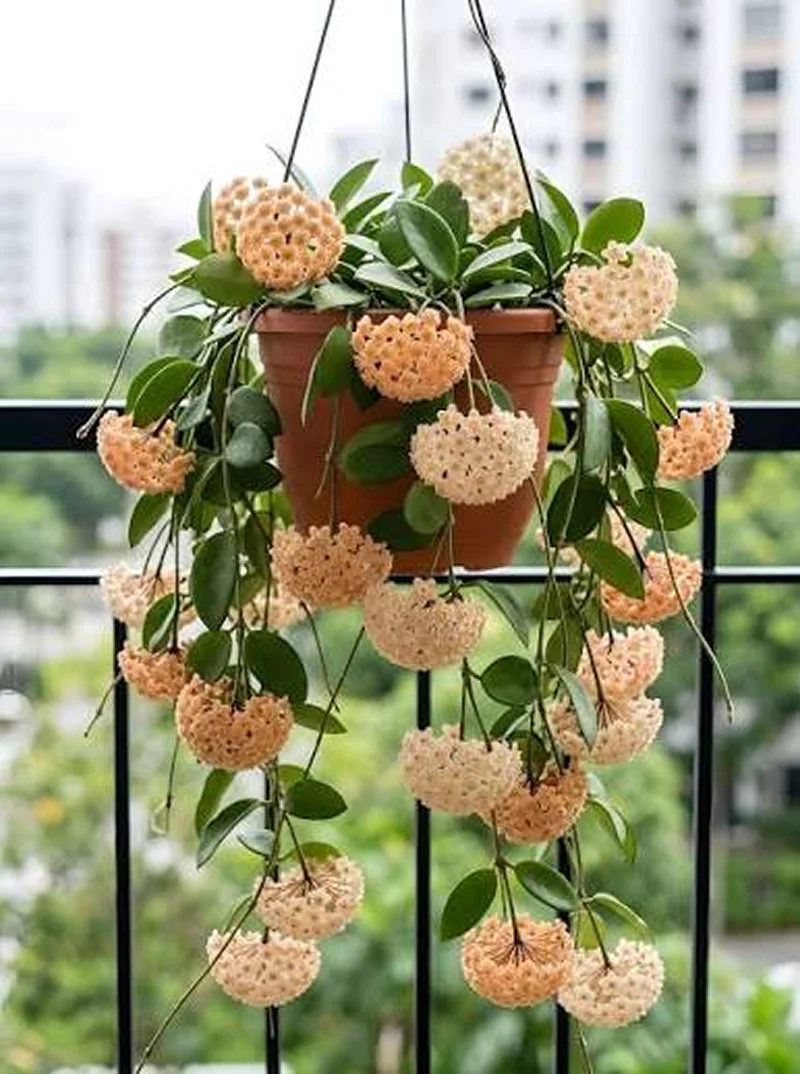
Hoya plant trailing from a hanging pot with thick waxy leaves and a cluster of star-shaped pink flowers.
A hoya plant is a tropical trailing vine grown indoors for its thick, waxy leaves and clusters of fragrant, star-shaped flowers. It is easy to keep alive and slow to bloom.
Most buy one for the flowers, then wait years. Usually, one pruning habit is why.
Below: what it needs, which type you have, and how to get it flowering, even in a small space.
Table of Contents:
What Is A Hoya Plant?
A hoya plant is native to parts of Asia and Australia and is most commonly used as a tropical climbing vine. The hoya plant has over a thousand varieties present in the same family, which have similar characteristics and appearance. This is also why a lot of different Hoya plants have leaf shapes that vary so vastly, with some being round in shape and others being heart-shaped or needle-thin.
The most unique characteristics of this plant, because of which it is widely grown, are its waxy foliage and its ability to produce scented flowers. This is also why most of these plants are grown indoors rather than outdoors.
However, most shop labels get this wrong because you will see different spellings for the same plant. Often, the misspellings found are hoya plants, hoyo plants, and more. Do not confuse these plants as belonging to some other genus, because they don’t. They are simply misspelled, but they belong to the same genus and refer to the same plant.
What is most interesting about this plant that will help you understand everything else that comes in this guide is the fact that these plants actually require a good amount of air and bark to grow on. This means that most of these plants grow as epiphytes in the wild, and rather than being rooted in soil, they grow on tree branches. One of the reasons for this is that the roots of a Hoya plant can actually die if it is potted in a dense and wet potting mix.
The most commonly found species in this genus is Hoya carnosa. This species is famous for its wax-like foliage, with oval-shaped leaves and pink-centered white flowers.
Hoya At A Glance
It is rather easy to get a lot of varieties of the Hoya plant confused with each other since the family has several thousand species that fall under it and most of them look and feel the same.
Hence, given below is the full guide on how you can actually check whether a plant is a Hoya plant or not because most shop labels get their labelling wrong for almost every plant.
| Scientific name | Hoya carnosa, one of several hundred species in the genus Hoya |
| Common names | Wax plant, wax flower, porcelain flower, honey plant, Hindu rope plant, sweetheart plant |
| Family | Apocynaceae (dogbane family) |
| Plant type | Evergreen perennial vine, mostly epiphytic, semi-succulent |
| Native range | Southeast Asia, Japan, Taiwan, Australia, the Pacific |
| Hardiness | USDA 10–12 outdoors; a houseplant everywhere colder |
| Mature size | Trails or climbs 4 to 12 feet indoors |
| Light | Bright, indirect |
| Water | Let the mix dry almost completely between drinks |
| Soil | Chunky and fast-draining, with orchid bark and perlite |
| Temperature and humidity | 65–80°F, never below 55°F; 40–60% humidity |
| Bloom time | Spring through fall, from year two or three |
| Flower colors | White, pink, red, purple, yellow |
| Toxicity | Non-toxic to cats and dogs |
Types Of Hoya Plants
There are only four major types of Hoya plants that are sold in almost all stores, probably under different names or labels. This is why most people get them confused.
However, it is extremely easy and important to learn these four types so that you can understand which one you need to buy for your home. These varieties differ mostly in habit and not in care, which is what people worry about when they are deciding which one to buy.
The one factor which matters the most among Hoya types is how they grow. This means that you can choose whether you want a trailing plant, a climbing one, or a curled plant.

Four types of Hoya side by side — carnosa, Hindu rope, heart-leaved kerrii and dark-leaved pubicalyx
- Hoya carnosa: This is the one species which most people grow when they think of a Hoya plant. This is also the most obvious choice to grow since this plant is actually a beginner-friendly plant and one can grow it easily. The common characteristics of this plant include its waxy nature and its thick leaves.
Moreover, this plant is also oval-shaped, with its leaves spreading across 3 to 6 inches long, sometimes flecked with silver. Two species that are the same but are often confused as two different ones are called ‘Krimson Queen’ and ‘Tricolor,’ and they require more light than the usual Hoya plant.
- Hoya carnosa ‘Compacta’: this one is a more complex version of the above-listed plant. The Hindu rope plant, also known as the Hoya carnosa compacta, has almost a braid-like appearance because the leaves of this plant curl tightly backwards so that the stem on the vine looks braided.
This plant has very slow growth even when compared with the regular growth of a Hoya plant. This is why it takes longer to grow this plant, and most people confuse this time period as something wrong with the plant. It also requires more airflow because the tightly packed leaves trap moisture, which can damage the plant.
- Hoya kerrii: this plant is actually bought more for its Novelty rather than for the plant itself. It is also the slowest to grow out of the four.
This plant is also known as the sweetheart Hoya typically because of its leaves, which are in the shape of a heart. Coincidentally, it is also sold the best during February, especially during Valentine’s Week.
- Hoya pubicalyx: this plant has darker leaves than the usual genus of the plant, with a long, characteristic shape. Its most unique feature is its flower, which can range from a variety of shades between dusty pink and near black.
This plant is also the quickest to grow out of all four; in fact, it can grow out to several feet of bare vine before it ever shows new growth in the form of leaves. This is why most people are a little worried about this plant’s growth, but there is no need to be worried; just give it something to climb on and leave it alone.
| Before you buy a sweetheart hoya |
| The single rooted leaf in a tiny pot is usually just that, a leaf, with no stem node attached. Without a node, it cannot vine, and may sit unchanged for years. If you want a plant rather than an ornament, pick one with a visible stem and at least two leaves. |
How To Care For A Hoya
There are only three things that are extremely crucial when we talk about caring for a Hoya plant.
Bright but indirect sunlight, a potting mix that has a good ability to dry out, and a pot that is a little small for the plant make the ideal conditions for the plants to grow. Most people find it strange because usually trailing or climbing plants actually require a pot that is a little wider than it.
Light
These plants require a lot of sunlight in order to sustain their healthy growth, and most people actually assume that they need direct sunlight. So avoid placing the plant in direct heat, which will damage the plant automatically.
This is why I always prefer an east-facing or west-facing window, which provides heat and sunlight but does not put the plant into direct contact with it. These plants actually survive in dimmer corners, but the only problem with growing these in dim corners is that they will not flower. This is why a Hoya plant in low lighting has stretched stems and grows thinly. Direct midday sun scorches the leaves or turns them red.
Water
Although this plant does require water, keeping the plant as dry as possible in terms of its potting mixture is what helps. This means that you should water the plant thoroughly and then let it sit there so that the mix can dry completely before the next round of watering.
Most people believe that not watering this plant enough will actually damage more than watering it ever will, but it’s actually the opposite. Since these plants showcase a semi-succulent nature, they have their own reserve of water, which means that they handle a forgotten week way better than they will ever survive a wet one. One should take care when watering the plants, especially in winter, because the cold tap water can actually shock the roots. This is why water should be allowed to reach room temperature before you start putting it in the plant.
Soil And Potting
A potting mixture that drains fast and can still hold its structure is recommended for a Hoya plant. This is because ordinary potting soil is cut roughly half and half with orchid bark and perlite, which makes it not a suitable option to sustain the growth of a Hoya plant.
The onethator which matters the most, espwhenly while choosing what mix to use for this plant, is to remember that this plant requires a good amount of airflow to reach its roots before watering. This is why it is also recommended to keep the pot small and to repot only when the roots poke out from the drainage hole. Even then, you should only move the pot one size up, as an oversized pot can hold water, which will make the plant die more easily.
ALSO READ: Rubber Plant Care: How To Grow And Maintain A Healthy Plant
Temperature And Humidity
The plant only requires ordinary room temperature, which means that temperatures that fall roughly within the bracket of 65 to 80°F will work perfectly fine. All you have to do is ensure that the temperature does not fall below 55°F.
In fact, a few degrees of cooling, especially during nighttime, can help trigger blooming. Also, 40 to 60% humidity is more than enough for this plant, and you do not even have to make efforts for this since most homes run on this humidity without any help, but if your house is damp, then our guide to houseplants and indoor humidity covers the mold risk.
How To Get A Hoya Plant To Bloom
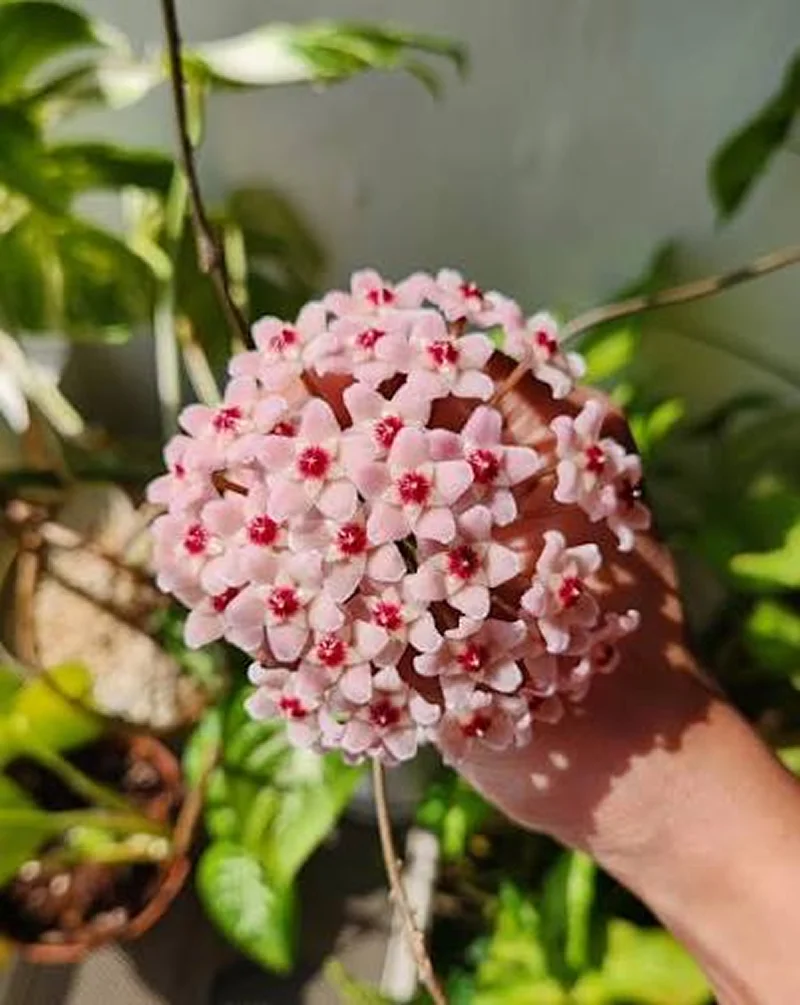
Pink-centered, white hoya plant
A hoya plant is easy to flower, but the only condition is that it is met with proper growing conditions so that the plant can trigger blooming. This means that if the plant is kept under bright light daily for at least a few hours and is potted in a smaller pot so that the plant is root-bound, then the flowers will start to bloom. There is almost no such plant species in this genus that does not flower if both of these conditions are met.
A key characteristic of Hoya flowers that sets them apart from any other flowers is that they are waxy in nature and have a strong scent to them. These flowers actually open in rounded umbels of up to thirty, and usually in the evening. Now, most people ask if the flowers will grow as quickly as the plant grows, but that is not the case because it usually takes about a year or two for the first plant to actually flower.
This does not mean that anything is wrong with your plant; it simply means that you are young. The first hoya plant flower normally arrives in year two or three, which is the part nobody mentions at the point of sale. A young plant is not failing; it is young.
There is one mistake which can actually undo all of this care and effort for a plant. Deadheading can be quite harmful for the plant and this is because of the fact that this process takes away not only the dead flowers but also the flowers for the next season’s bloom.
Flowers actually grow from a spur, which is a short woody stalk. This spur is actually permanent in the plant, which means that the flowers start to bloom during the next season from this point itself. If this point is removed during deadheading, then the plant will never grow flowers.
According to Iowa State University Extension, one should always be patient enough to allow the dead flowers to drop on their own after their life cycle is complete rather than cutting them off. This is the place that every beginner should start from. This advice is also more specific here because, for most houseplants, pruning is actually beneficial for bushier growth, but it actively damages this one plant.
| Quick tip |
| Never snip the bare stalk left after the flowers fall. It looks dead, and it is not; next year’s blooms come from that exact spot. When you prune a vine for length, cut above a leaf node and leave every spur. |
One more thing worth remembering is that once the flower buds actually appear, you should not change anything about the plant, even with their caring techniques. This is because if you move the plant or alter the watering routine, the budding of the Hoya plant will drop.
Common Hoya Problems
This one actually shocks most people because when we talk about common problems, people always believe them to be either from the potting mix or from the growing conditions. But nearly all Hoya problems start with water.
If the leaves of your plant are yellowing too much, feel soft, or drop from mid-vine out of nowhere, then it almost always means that the soil was kept in a state of wetness for too long and now the roots are rotting. However, these symptoms can also be depicted by the plant if the opposite situation is occurring, which means that the plant is drowning. This is why always check the plant for whether it needs water or more drying time before you start taking action.
Most plants are actually easier to dry earlier rather than to deal with the after effects if they are too wet for too long. This is because even pests follow the same logic, and if the surface is never dry, then Mealybugs can tuck into leaf joints; spider mites and fungus gnats can also appear. These three are easier to deal with if you develop a drying routine that suits the plant.
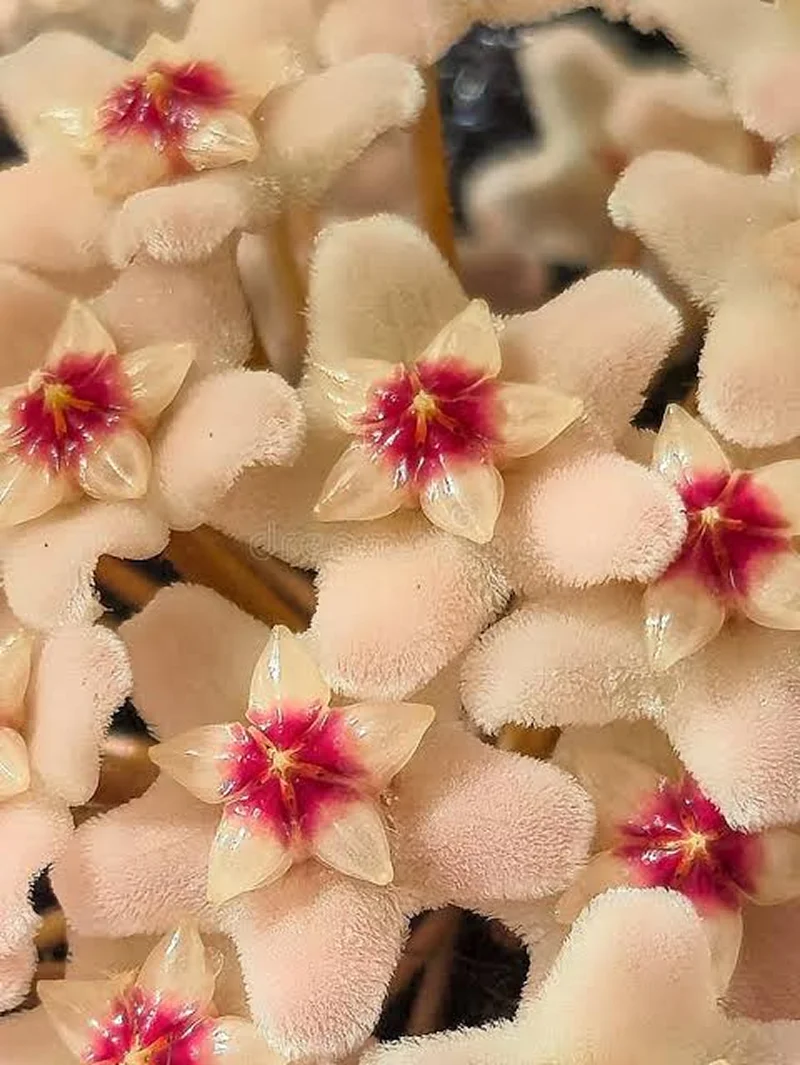
Close-up of a wax plant flower cluster with beads of nectar on the petals
Moreover, there is one problem that is very hard to take care of because it directly interferes with the healthy growth and functioning of a plant. This is because open flowers can produce nectar, which can drip onto the underlying surfaces, thus causing harm to the furniture underneath. For example, aur sweetheart ho ya marks whatever sits beneath the plant because its nectar runs a little reddish brown.
While this thing can easily come off after wiping the surface with warm water, deciding where you want to grow a vine beforehand, especially before it blooms, makes floor-standing pots and planters easier to live with than a shelf above furniture.
Final Thoughts
Most people assume that a Hoya plant requires a lot of attention and care when it comes to sustaining its growth; however, that is not the case at all.
All it requires is time and patience for it to grow efficiently, which means that if you keep repotting it or altering the watering schedule because the plant is not showing growth in terms of new leaves or blooming, then you might damage the plant more than you can ever know. There are only three things that a Hoya plant actually needs: light, a gritty mix, and a small pot.
The flowers actually do not arrive until after the second or third year, and even when they do, they return to the same spurs every time, which is why deadheading actually ruins the healthy growth of a plant.
These plants grow on tree bark, which is exactly why you should leave them alone because if you keep fixing them, then the flowers on your plant might never grow, even after a lot of time has passed. So always make sure to give your plant enough time for it to bloom because if it is not growing flowers, it can also mean that the plant is just young.
FAQs
What is hoya, and is it the same as a wax plant?
Do hoyas like to hang or climb?
Both, and the choice is yours. In the wild, they climb, so a trellis, hoop, or moss pole gives a fuller plant with more flowering points. In a hanging basket, the vines simply trail, which flowers perfectly well.
Why are hoyas so expensive?
Because they grow slowly and propagate slowly. A cutting needs weeks to root and years to reach saleable size, and the rarer variegated forms cannot be mass-produced from seed with any consistency. Common types like carnosa stay cheap for the same reason, in reverse.
Where is the best place to put a hoya plant?
An east or west window is the safest spot, bright but out of direct midday sun. Keep it clear of heating vents, air conditioning, and drafty winter glass. If flowers are the goal, pick the brightest spot that is not getting scorched.
Are hoya plants safe for cats and dogs?
They are. Wax plant sits in the non-toxic column of the ASPCA’s plant database for both cats and dogs, which makes a hoya one of the easier flowering houseplants for a home with pets. Some care guides claim the opposite; the toxicity listings do not support them.
Sources
Iowa State University Extension and Outreach: All About Hoyas
North Carolina State Extension Plant Toolbox: Hoya carnosa
ASPCA Animal Poison Control: Wax Plant
Latest Blog