Biophilic design refers to the practice of bringing natural components and elements of the natural environment into built places through architecture and interior design, thereby restoring the wellness of human beings.
Why Nature-Inspired Wall Art Is the Fastest Way to Bring Biophilic Design Home in 2026
Author
Swati Mishra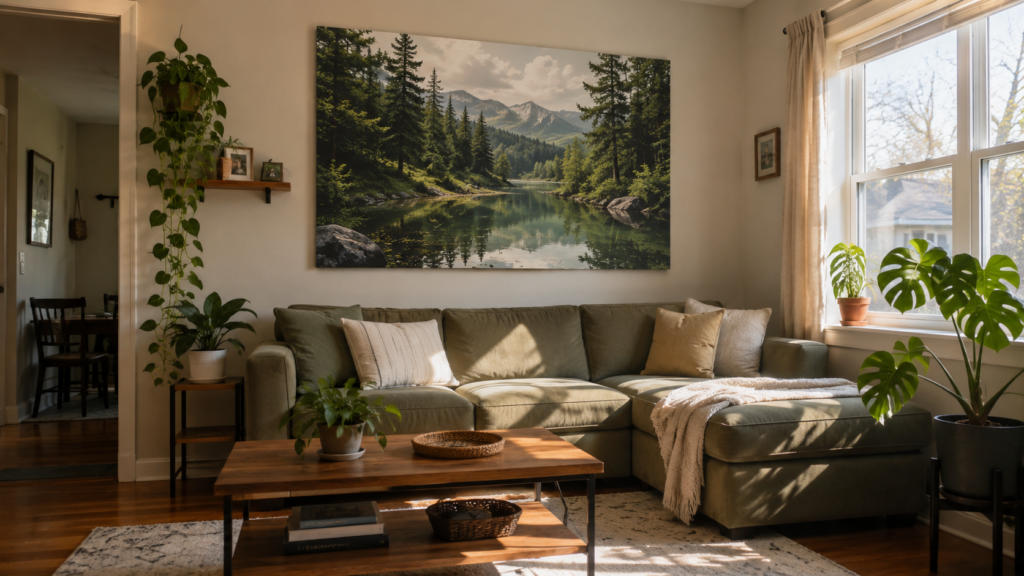
Home design in 2026 has quietly transitioned from the showroom-perfect look. Sterile, staged interiors are giving way to something warmer and more personal, with rooms built around calm, texture, and a connection to the outdoors.
However, adding biophilic designs into the mix doesn’t require homeowners to include an entire moss wall or a greenhouse extension. It can be done through subtle but impactful elements too.
Here’s how nature-inspired wall art is the easiest and fastest way to bring modern natural design into your home.
Key Takeaways
- Biophilic design, the practice of including natural elements into interior spaces, has transitioned from a niche architecture term into something homeowners actually plan around
- Looking at natural forms appears to give your brain a break it doesn’t get from a blank wall or a geometric print
- Even something like the calming symbolism of the lotus flower has become a prominent reference point in interior styling, as it carries both a color story and meaning
- It’s the cheapest, lowest-effort way into a design shift that’s backed by real research on stress and cognitive load, not just aesthetics
Table of Contents:
Why Wall Art is the Easiest Biophilic Upgrade
Biophilic design, the practice of including natural elements into interior spaces, has transitioned from a niche architecture term into something homeowners actually plan around.
Moss installations, organic textures, and sustainable materials are showing up in renovation ideas everywhere this year. But renovations are expensive, and living walls need watering schedules most of us don’t have time for.
Wall art skips all of that. It requires little to no maintenance, no plumbing, and no ongoing expenses beyond the initial purchase.
You hang it once, and it does its job indefinitely. And the psychological case for it is stronger than most people assume: according to the Global Wellness Institute, workplaces with natural design elements report 15% higher wellbeing, 6% higher productivity, and 15% higher creativity among occupants. Those numbers come from office environments, but the underlying mechanism, visual exposure to natural forms, applies just as well to a living room.
This is exactly the gap a lot of nature-themed pieces are filling right now. Landscape paintings, botanical studies, and textured forest scenes are functioning as a stand-in for the real thing. If you’re after something with real depth rather than a flat print, the natural art work collection from independent studio ArtsByMaudsch leans into exactly this: handmade landscape and botanical pieces built with visible texture, the kind that reads differently depending on the light hitting your wall at 8 am versus 8 pm.
The Science-Backed Case for Nature in Your Home
Skeptics might reasonably ask whether a painting of a forest actually does anything for you, biologically speaking. The research says yes, more than you’d expect. A 2026 review in Discover Environment, published by Springer, synthesized 203 peer-reviewed studies spanning 2005 to 2024 and found biophilic design consistently linked to reduced physiological stress markers and improved attention and cognitive performance.
There’s newer evidence too. A 2025 neuropsychological study published in Frontiers in Sustainable Cities reported that short-term exposure to indoor spaces with vegetation elements decreased activity in the brain’s dorsolateral prefrontal cortex, a region associated with cognitive-emotional overload.
In plain terms, looking at natural forms appears to give your brain a break it doesn’t get from a blank wall or a geometric print.
That’s worth sitting with. It’s not just plants doing the work. Our piece on biophilic wallpaper designs makes a similar point about texture and pattern mimicking nature indoors, and wall art operates on the same principle, just without needing to repaper an entire room.
2026’s Nature Color Palette: Greens, Terracotta and Earth tones
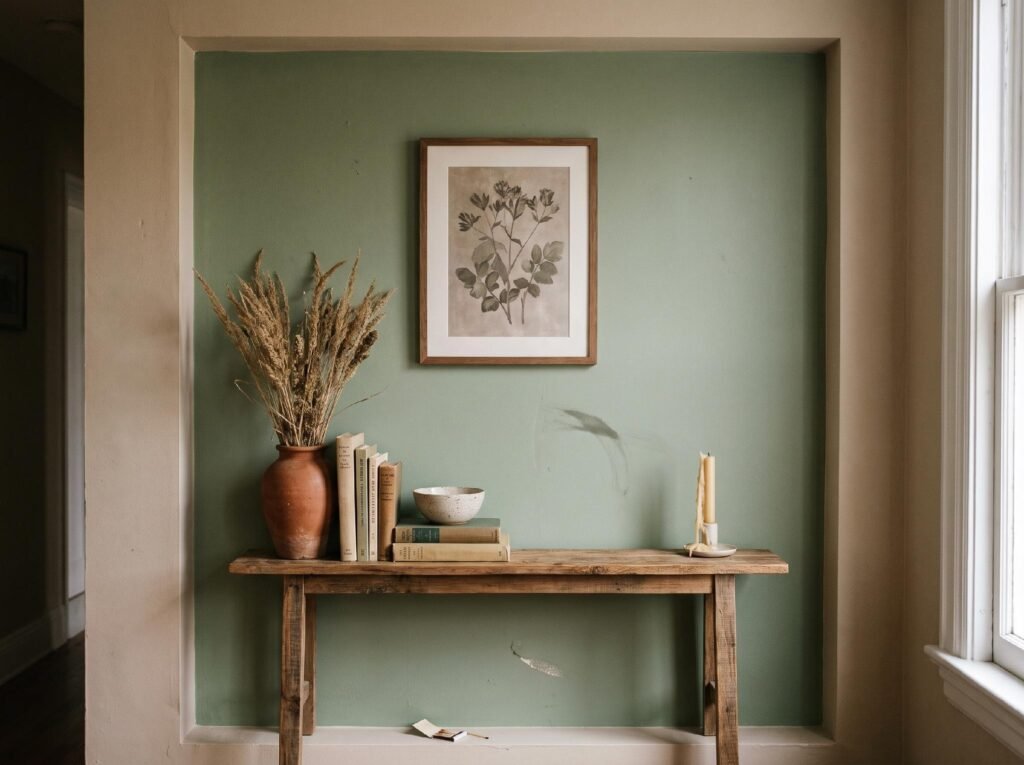
Color is doing a lot of the heavy lifting in this trend. Houzz’s 2026 design report found that green, specifically sage, olive, and deep forest tones, has stepped out of accent-color territory to become a defining hue in home design this year, alongside warm terracotta and soft beige. These aren’t colors you need to repaint a wall to get. A single nature-themed canvas in the right palette does the same job.
That’s part of the reason why nature motifs keep coming up across unrelated corners of home decor. Even something like the calming symbolism of the lotus flower has become a prominent reference point in interior styling, as it carries both a color story and meaning that feels grounded rather than arbitrary.
Wall art lets you borrow that palette change for the cost of a single piece instead of an entire room refresh.
How to Choose and Style Nature Wall Art in Your Space
Skip the gallery wall this year. The oversized statement piece, a large landscape or botanical print hung separately above a table or sofa, is replacing the multi-frame collage appearances that dominated the last decade.
It’s a far simpler composition and reads as more intentional.
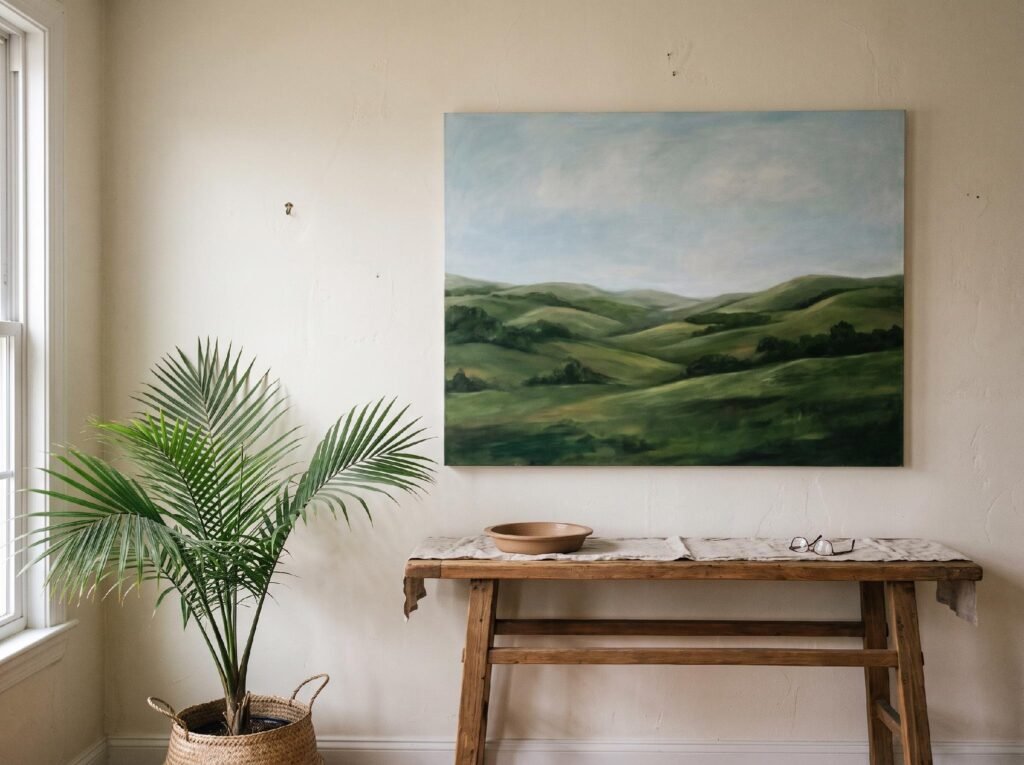
Pair the addition with a plant or two near the base of the wall instead of being scattered across the room. Something like a well-placed palm next to a landscape canvas blends the 2D and 3D natural elements together without overcrowding the space too much.
Mixing textures matters a lot too: a matte canvas next to a glossy frame, or a linen-textured print against a smooth painted wall, keeps things from looking too plain, simple, or flat.
This also aligns with a broader design trend the National Association of Realtors has indicated for 2026: homeowners are moving away from staged decorations and toward personal, wellbeing-centered spaces, usually built around artisan pieces instead of mass-produced decor. A handmade nature print fits that instinct better than something ordered in bulk.
The Takeaway
Nature-inspired wall art isn’t a trend you need to chase carefully or budget heavily for. It’s the cheapest, lowest-effort way into a design shift that’s backed by real research on stress and cognitive load, not just aesthetics.
Hang one piece, pair it with a plant, and you’ve already done most of what a full biophilic renovation is trying to achieve. Sometimes the simplest fix really is the right one.
Frequently Asked Questions
What is biophilic design?
Why go for a nature mural instead of the living wall?
A nature mural greatly cuts down your expenses because it maintains the look and feel of vegetation without costly care routines such as watering, installation of special lighting, and caring for plumbing.
In what way does nature art reduce stress?
Studies show that the act of observing nature leads to the brain activity reduction thus diminishing stress levels in humans.
Latest Blog