Absolutely; the main reason for damage is air quality, as it affects floors and edges of furniture the most. Humidity variation and airflow movements gradually change the veneer over time.
Home HVAC Upgrade Considerations: How Air Quality, Dust, and Humidity Affect Your Floors and Furnishings
Author
Swati Mishra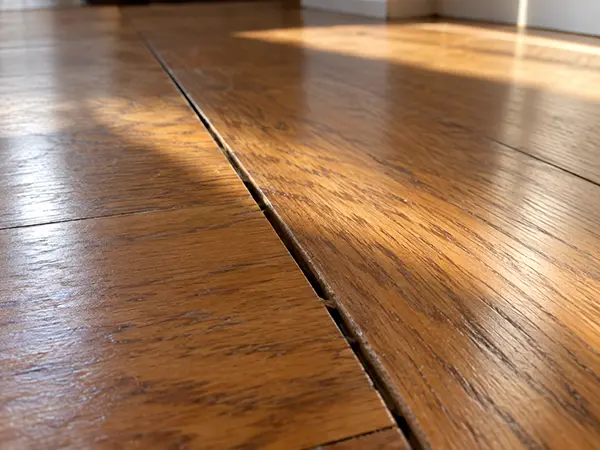
A brand-new HVAC system installed in your space makes your house more comfortable, but temperature can affect its performance. Particles attach to the floor carpets and furniture edges and are carried by the air all around.
High humidity allows moisture to settle and swells the portion of wooden materials, while dry air has the opposite effect.
The HVAC filter can affect ventilation through proper airflow in interiors. This is implicated in flooring systems where gaps, sticking edges, and surface structure are badly impacted during such conditions.
Abodelook plays the role of the guidelines, where the interior design guide explains the room layout with flooring, texture, and some individual parts are connected all together.
Table of Contents:
What’s Actually Moving Through Your House
Your HVAC system usually does more than you think. It controls the temperature of your home and also has more features than just hot or cold.
HVAC regulates the airflow across all the rooms, where air filters carry small dust particles that are present with the moisture in the interiors. Heat regulators act like cooling in summers and warming in winters, which lets the humidity be controlled at 20% to 60% across the space. That’s why EPA guidelines restrict the use of low-efficiency filters, which can impact the filter system installed.
If you are planning, the furniture planning guide of Abodelook is very helpful to manage the dust particles in your interior gaps you miss.
Where Humidity Swings Do the Real Damage
Humidity can create greater damage when it fluctuates too much and moisture levels drop under the same weather conditions. Impacted wood on flooring and furniture gives a harsh and odd experience.
What Shows Up in the Floors
When you notice that wooden materials act as they do with temperature, it swells when humidity rises and shrinks when it is reduced. It’s simple physics you have learned in school.
The most effect is seen through the edges of the corners exposed to air. In winter, the humidity falls, and the moisture is expelled, which creates gaps at the corners, but in summer the humidity is absorbed into the gaps and looks swollen and lifted upwards. To examine how this works, a hygrometer helps you to measure the phenomenon.
What Shows Up in the Furniture
Your furniture is most reactive to abnormal conditions in the atmosphere. Changes in humidity allow stuck drawers and shifted panels to become visible.
But your upholstery and rugs hold dust particles with moisture where the airflow is insufficient. Where veneer feels the same as the edges, it becomes worse sometimes.
Wood hanging against the exterior walls over a longer timeframe can release stale smells. HVAC system is not directly involved in impacting the furniture, but eventually it does, and that’s all that matters to you.
Dust Is a Filtration Problem, Not a Cleaning Problem
The dust sits in the house corners, keeps the air dusty and fuzzy around the air system in interiors. The problem is not with HVAC filter systems; it’s just a housekeeping issue. This leads to bad ventilation, leaky ducts, and weak air filters.
You also notice that dust sticks to the floor, furniture, and fabrics, which returns into the air around all surfaces. Some of them may influence a rough and sticky appearance, which is assumed to be old or remains for about a year or longer.
This issue still remains for other local vendors to upgrade the air purification as their own part of their services. But Pure Air Cooling & Heating, an HVAC contractor based in Kirkland, identifies problems with other things, like cleaning and furnace maintenance, with the installation and repair tasks. Both the work where duct health and possible dust materials are connected to one part of the work.
Quick insight: HVAC filters are basically used to filter the air quality only when the system is running throughout the whole day. EPA directs that residential systems do not filter the air all the time.
The Upgrades That Actually Address This
The basic upgrade is to check the efficiency of HVAC system filters, airflow quality, return capacity, duct condition, and cleanliness as safety measures.
Humidity is a major factor that can be fixed depending on the climate conditions. EPA suggests indoor humidity be around 30% to 50% for better dehumidification across the house.
If you want a better solution than Ductless mini-split options, they can help your house with a large duct network with an individual humidifier controller for each room. ENERGY STAR has estimated that 20% – 30% of air is conditioned through gaps, holes, and some loose joints.
This creates a waste of energy, and first, try to seal all the loose ends. The correct upgrade comes from small fixes underneath problems that you usually miss, and this costs you more often.
Habits That Buy You Time Between Upgrades
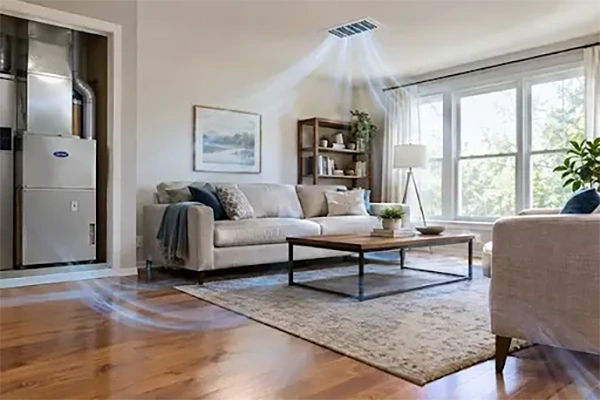
An expensive upgrade does not fix all the problems every time.
The HVAC filters should be cleaned with regular maintenance if they are dusty. It will not cost you more than you expect. Also, if your hygrometer tells you the exact readings of humidity present inside the house, the optimum range is 30% to 50%.
Heavy dust particles generally come from kitchen and restroom areas, so shifting that exhaust to an outdoor vent is a good option.
Check the dust particle count on HEPA-filtered vacuums to find the exact reason tiny particles roam around the atmosphere. Everyday home maintenance habits improve the cost, apparently, and reduce small repairs from becoming expensive.
Adobelook’s dust cleaning guide also presents patterns for cleaning in small gaps between furniture and wooden appliances.
The Floors and the Furniture Were Never the Problem
The problem is not your furniture or wooden floor. These issues arise from room ventilation or leakage problems in the ductwork, and gaps around your wooden floors. Proper airflow removes excessive dust and keeps the moisture dry so that sudden humidity changes can influence the furniture badly.
If you check the airflow in your whole house for leaking ducts, high humidity, and excess airborne dust, then the problem will eventually be eliminated. HVAC filters protect the rest of things in good shape, despite the worry of replacing the system.
FAQs
Can poor indoor air quality actually damage furniture?
How do you know if humidity is affecting your floors?
Mainly, the gaps shift the edges upward during moisture retention or drying processes. Humidity fluctuations cause changes over time. It’s not the furniture that defects.
Is a whole-house humidifier or dehumidifier worth installing?
Basically, it works if the humidity remains in the optimum range of 30-50%. It’s a reasonable measure to keep things in proper shape.
Do ductless mini-splits help with dust as well as temperature?
Not really; a ductless mini-split divides the airflow into a single framework for each room separately. Many such problems arise alongside regular checkups; source control and ventilation still matter the most.
How often should HVAC filters be changed to protect furniture and floors?
Not a fixed timestamp. Follow the instruction manual or proper usage; if there is leakage or dust particles, they require frequent maintenance, and costs also rise.
Sources
reduces energy waste — U.S. Environmental Protection Agency, Reduce the Environmental Impact of Your Energy Use
Duct sealing — ENERGY STAR, Duct Sealing
Latest Blog