Track which rooms you genuinely enter over a fortnight. Scattered unused space is usually a layout problem; a whole unused floor is a size problem.
How to Tell When Your Home Has Outgrown Your Lifestyle
Author
Rashika Gupta
People now stay in a house for about eleven years before selling it. That’s the longest stretch the National Association of Realtors has ever recorded.
In the same survey, the share of buyers with a child under eighteen at home fell to an all-time low. So houses are being held longer while the households inside them change faster.
That gap is the whole problem. Your home was chosen for a version of your life that may have ended a while ago.
The signals below are the ones worth taking seriously, along with what they really cost you and what the options look like if the answer turns out to be yes.
Core Insights
- A home stops fitting gradually, so there’s rarely one obvious moment to point at.
- The clearest signals are behavioural. Which rooms you enter, where you eat, where guests end up sleeping.
- Rightsizing can mean a smaller house, a different layout, or a different street entirely.
- Run the numbers on staying before you run them on leaving. Most people only ever do the second.
Table of Contents:
The Rooms You Stopped Walking Into
Most people wonder why the house they once loved with all their heart doesn’t feel like their own anymore. Yet somehow they continue to live in those same four walls because changing houses often feels like losing a piece of yourself, which you have been carrying for so long.
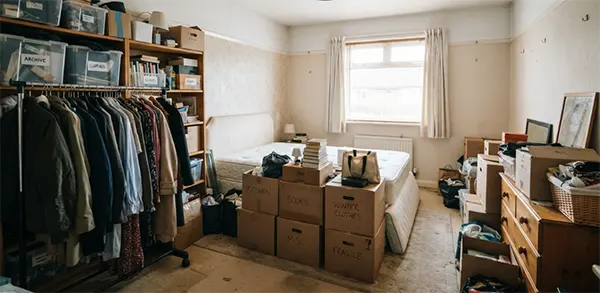
But this often becomes the reason why you stop noticing your house at all, and it becomes a fragment of what it used to be once. For example, the dining room becomes a place to dump things rather than sharing a hot meal at night when the whole family sits together; the bedroom your eldest son left when he was going to college works as a storage room now for the faulty gadgets of the house, like the printer.
Eleven years is worth sitting with for a second. It’s long enough for a toddler to become a teenager, or for two working adults to become one retired one and one still commuting. The house doesn’t adjust. You just get better at walking around the parts that no longer work.
A good way to avoid all of this and then wondering where it went wrong is to start with the floor plan you actually use, instead of the plan you bought. Those two are often mixed up as one, but they’re completely different from each other because usually the floor plan you use has smaller working space than you’d guess.
Why You Stay Anyway
There are mainly two factors due to which people find it hard to shift from a house: nostalgia and money. See, nobody shifts from a house based on a specified timeline because there is no such particular ‘expiry date’ for a house.
In fact, with Yahoo Finance included in the personal finance press line, it is observed and stated very clearly over time that moving is one of the most stressful events of a person’s life, especially regarding finances. While this theory, when tested through surveys, reports a decrease, the reputation still is the key factor that guides whether or not a house is sold or not..
Also, on top of moving costs, money that has already gone into the existing house becomes a roadblock while shifting because you spent a lot of money on a new bathroom, a replanted garden, or the kitchen you finally got right.
None of that spending obliges you to stay. It feels like it does.
When a house starts to feel more like four walls than a home where you can comfortably be yourself, that means it’s the right time to change.
When the Costs Stop Matching the Use
A house costs roughly the same to run whether you’re using four rooms or nine.
Heating, insurance, the roof, the tax bill — none of it scales down when your life does. For anyone on a fixed income, the squeeze gets sharper fast. The 2026 cost-of-living rise adds around $56 a month to the average Social Security retirement payment, and Medicare’s Part B premium takes a good share of that straight back, climbing to $202.90. AARP set the year’s changes out in one place.
Most people hear rightsizing your living arrangement as a polite word for shrinking. Shrinking is one version of it. Another is the same square footage arranged so you stop paying to heat a room you walk into twice a year.
What a Move Actually Costs
A common mistake that most people make while moving is that they only account for the cost of the new house and moving. However, there are a lot of other costs that you might incur when shifting a house, and knowing them will help you position yourself better.
- The agent’s commission, which is the figure everyone already knows
- Two sets of utility deposits, plus an overlap month where you’re paying for both places
- Movers, packing materials, and the van hire nobody budgets for properly
- Furniture that won’t fit the new rooms and has to be replaced
- Time off work, which is a real cost even though nobody sends you an invoice for it
None of that is an argument for staying. It’s an argument for knowing the number before you fall in love with a listing. There is a solid guide to cutting costs while you shift on this site, and the short version is that timing saves more than haggling ever will.
The Way You Sell Changes the Timeline
Speed and price pull against each other.
A traditional listing usually gets you the higher number, assuming the house shows well, and you can afford to wait for the right buyer. Cash-buying firms such as coastalnccashoffer.com work the other end of that trade, buying as-is on a short close and pricing the convenience in.
Which route suits you has less to do with the house than with whether you have somewhere to go on the other side.
Summary
You won’t get a moment of certainty about this, and waiting around for one is how people end up staying four years past the point where it stopped working.
So give yourself a date instead of a sign. Pick a month next year. If the same three rooms are still sitting unused when it arrives, you have your answer.
The house isn’t going to tell you. It’s a house.
FAQs
How do I know whether I need a smaller home or just a better layout?
Is it worth moving if I’d only go a short distance?
Often, yes. The median move is about thirty miles, because most people are changing the house without wanting to change the life around it.
Should I renovate instead of moving?
Only if the layout is the problem. Renovating a house that’s simply too big leaves you with a nicer house that is still too big.
What if my partner and I disagree about whether to move?
You’re probably measuring different things. Write down separately what each of you wants the next five years to look like, then compare — the argument about the house is usually standing in for that one.
Sources
National Association of Realtors, 2025 Profile of Home Buyers and Sellers — NAR
AARP, the biggest changes for 2026 — Retirement
Social Security Administration, 2026 cost-of-living adjustment fact sheet