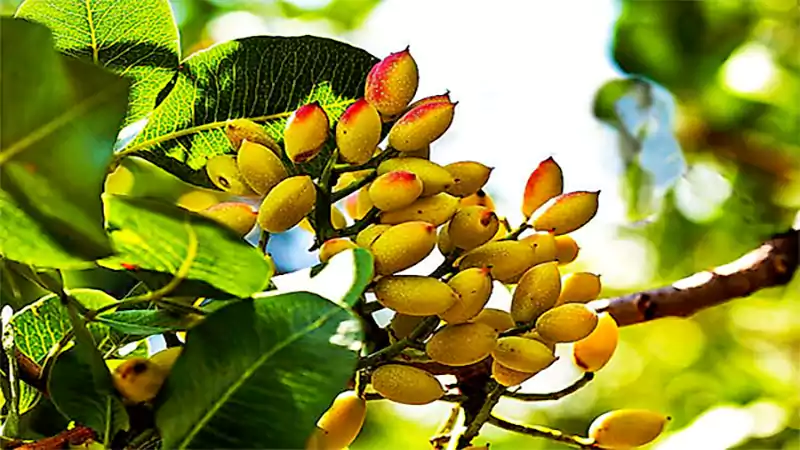
Yes, pistachios grow on deciduous trees that grow up to 30 feet tall.
How Do Pistachios Grow? Planting Guide and Care Tips For This Ancient Nut
Author
Annette HirdLast Update
February 25, 2026

As someone who has grown up eating nuts like pistachios, their nutritious benefits are best availed by planting them first-hand in your garden. There is no greater feeling than harvesting your home grown pista nuts and relishing their flavour for many years.
The most fascinating bit is that the pistachio tree can live up to 100 years, making the planting worthwhile and everlasting. Learning to grow through this drought-tolerant plant has been one of a one-of-a-kind journey, and if you also want to savour the taste of these drupes, come along and explore how do pistachios grow, along with many fun facts.
Table of Contents:
- What is Pistachio? A Nut or a Drupe?
- What are the Different Types of Pistachios?
- What are the Ideal Growing Conditions for Pistachios?
- How Do Pistachios Grow on Trees?
- How Can I Care for the Pistachio Plant?
- When and How Can I Harvest the Pista?
- Lab Research and Findings About the Pistachio Nut
- Fun Facts About Pista That You Must Know!
- Best Pistachio Recipe That You Must Try
- Concluding Remarks
- FAQs
What is Pistachio? A nut or a Drupe?
Popularly referred to as a nut, the pistachio is a drupe belonging to the
Anacardiaceae family. Native to the regions of Central Asia and Iran, these drupes are grown on trees in warm and arid climates that can live up to at least 100 years.
A perennial tree like the kiwi tree, the pistachio tree is extremely beneficial due to their less water needs and ability to thrive in poor soil conditions as well. Globally, 26 February is celebrated as World Pistachio Day to honour this ancient nut.
Pistachio is also popularly referred to as the ‘smiling nut’, due to its open shell-shaped covering, which resembles a smiling face.
Before exploring how do pistachios grow, make sure the taxonomic specifications of the plant are clear:
 | |
| Botanical name | Pistacia vera |
| Kingdom | Plantae |
| Division | Magnoliophyta |
| Class | Magnoliopsida |
| Order | Sapindales |
| Family | Anacardiaceae R. Br. |
| Genus | Pistacia L. |
| Species | Pistacia vera L. |
What are the Different Types of Pistachios?
With Iran and America being the top producers of the Pistachios, the most famous varieties are also classified under these two categories. Just like the type of lettuce, pistachio varieties are also differentiated on the basis of colour and taste profile.
Take a look at these 4 pistachio varieties:
| Image | Description |
 | Fandoghi Pistachio Origin: Iran Colour: Light green Shape: Round Taste: Sweet buttery |
 | Akbari Pistachio Origin: Iran Colour: Brownish and Purple Shape: Almond shape Taste: Slightly sweet |
 | Kerman Pistachio Origin: America Colour: Brown Shape: Round Taste: Creamy and slightly sweet |
 | Golden Hills Pistachio Origin: America Colour: Greenish yellow Shape: Oval Taste: Mildly sweet |
What are the Ideal Growing Conditions for Pistachios?
Before learning how do pista grow, understand that the pistachio tree is dioecious and you need to plant both the male and female varieties to bear the fruit.
If you are a new gardener, take a look at the ideal growing conditions of the pistachio tree:
| Soil type | Sandy, loamy well-draining soil |
| Sunlight | 8 hours of direct sunlight |
| Water | Every 7- 10 days during summers |
| Fertiliser | Balanced, all-purpose fertiliser ( 10-10-10 NPK) |
| Planting season | Early spring |
How Do Pistachios Grow on Trees?
Pistachio trees are best planted in early spring using transplants purchased from the local plant nurseries. The pistachio plant is drought-tolerant and thrives in warm climates like the barrel cactus; hence, planting would not be a hassle.
Here is my 7-step easy planting guide that helps me yield the best results ever!
- Take 2 pistachio trees, one male and one female, respectively, as the cross-pollination will lead to the pistachio fruit.
- Loosen up the soil in the selected spot and add compost to make the soil more fertile.
- Now dig 2 holes and make sure they are twice as large as the roots of the transplants.
- Now carefully place the plants in the holes without damaging the roots and fill back the hole with soil. Make sure the soil is placed 20 feet apart from each other.
- Remove the air pockets and add a layer of mulch to retain moisture and suppress weeds.
- Water the pistachio plant once a week during the growing stage and once a month in winter.
- Feed the plant with an all-purpose balanced fertiliser in late winter to early spring to promote growth.
Also read: How to Grow Basil? Learn How to Plant This Culinary Herb in Your Garden
How Can I Care for the Pistachio Plant?
Pistachios are warm-weather crops and thrive in arid conditions. Although drought-tolerant, they should not be left unattended for a long time.
These are the 5-step care guide for your pistachio trees:
| Image | Care Step |
 | Sunlight
|
 | Watering
|
 | Pruning
|
 | Pests Infestation and Solutions
|
 | Fertilising Pistachio Plant
|
When and How Can I Harvest the Pista?
September is the best time to harvest the pistachios, and surprisingly, harvesting the pistachio nuts is effortless.
However, learning how pistachios are grown for the first time and then harvesting them can be a little tricky and therefore here is my short and simple harvesting pistachio guide:
- The pistachio drupe is ready to be harvested when the shell cracks open.
- Lay a sheet under the tree to collect the nuts.
- Using a rubber mallet, shake the branches of the trees, and all the pistachio drupes will fall off onto the sheet.
- Now collect these nuts in containers and remove the shell within 24 hours of harvesting.
- Sun-dry the nuts and store them in an air-tight container.
Lab Research and Findings About the Pistachio Nut
Pistachios are one of the most nutritious nuts with high potassium and protein content, and are attributed with the potential to improve eye and heart health.
Here is a medical research by NCBI examining the effects of pistachios on cardiovascular diseases.
| Research summary box 1 Study year: 2008 Aim: To analyse the effects of pistachios on cardiovascular risk factors Sample type: 28 individuals on three different diets:
Key findings: After 2 weeks of observation, it was concluded that the pistachio doses increased the monounsaturated fat that protects the heart from cardiovascular diseases. Energy obtained from the pistachio doses:
Hence, it was concluded that the intake of pistachios significantly decreased bad cholesterol and increased the MUFA levels, making it effective against cardiovascular risk factors. Source: National Centre of Biotechnology Information |
Fun Facts About Pista That You Must Know!
Did you know pistachio is not a nut? Yes, referred to popularly as a nut, the pistachio is nowhere close to a nut.
Just like this, there are various facts about pistachios that many still do not know about, but worry not, as I have compiled some similar unknown facts that will surprise you!
- Pistachio is a seed of the drupe that grows on the pistachio tree and is not classified as a nut.
- In America, 99% of pistachios are grown in California because of the adequate climatic conditions that it provides for pistachio growing.
- Pistachios are considerably more expensive than the other nuts, typically due to the prolonged period of growth and harvest, adding to the increasing demand for the nut worldwide.
- According to ASPCA, pistachios are not considered toxic to pets but can cause infection and digestive discomfort upon ingestion.
- Pistachios are related to Mangoes because they belong to the same plant family, Anacardiaceae (this is my favourite fact!)
- Similar to the Honeysuckle flower, pistachios are also associated with the feeling of happiness and good luck.
Best Pistachio Recipe That You Must Try
After learning how pistachios grow, it is time to put the fruit to the best use and try some easy and delicious recipes. As pistachio is majorly used in dessert recipes, here is my favourite recipe that one must try, especially with their home-grown pistachios:
1. Pistachio Chocolate Truffle

Ingredients
- 5 pistachio nuts
- 200 g milk and dark chocolate
- 200 g pistachio cream
- 40 g butter
- 150 g filo pastry
- ¼ tsp salt
Recipe
- First, preheat the oven to 180 °C.
- Cover a large baking tray with a baking paper and spread the filo pastry into smaller pieces on this tray.
- Bake for 10 minutes until golden brown.
- Transfer it to a pan and crumble it into small pieces.
- Add butter to the pan and fry them together until golden-brown.
- When the filo pastry turns golden brown, mix the pistachio spread into this mixture.
- After mixing it well, make small balls of the mixture and place them in the freezer for 4 hours.
- Until the mixture freezes, melt the milk and dark chocolate in a pan or microwave it.
- At last, remove the frozen balls and coat them with the melted chocolate.
- Sprinkle some chopped nuts and salt, and serve fresh.
Concluding Remarks
The whole process of learning how to grow pistachios has been nothing less than a gardening and culinary treat. Right from planting to harvesting and at last relishing the nuts after years of waiting is absolutely worth it.
However, I have to admit planting these nutritious nuts is a test of patience and a gardener must carefully observe and maintain the tree over the years for the best results possible. My personal tip to new gardeners would be to water the plant adequately and keep the pistachio tree away from humidity.
Make sure this year you plant your pistachio tree and enjoy it for many years to come.
FAQs
Do pistachios grow on trees?
Why are pistachios called the smiling nut?
Pistachios are called the ‘smiling nut’ as the outer shell of the nut cracks open when they ripen, which resembles a smiling face.
Why are pistachios so expensive?
Pistachios are expensive due to the prolonged period of growing a fruit, and their demand has increased substantially over the years, the prices are comparatively higher.
When is National Pistachio Day celebrated?
26 February is celebrated as National Pistachio Day to honour this ancient, nutritious nut.
Who is the largest producer of pistachios?
America and Iran are the highest producers of Pistachios.
Source:
Pistachio recipes– BBC
Latest Blog

Related Post

Abodelook has a large collection of furniture, art, accessories, garden products, and a lot that adore and furnish your home creating a pleasing and comfortable environment. Our curated home decor collections are not only of high-quality material but also sustainable and provide comfort in your daily life.
Copyright © 2026 Abodelook.