Yes, some varieties of the honeysuckle plant, like the Japanese honeysuckle, bush honeysuckle and more, are invasive varieties. So, special care should be taken while planting them.
Honeysuckle Flower: How to Grow this Fragrant Garden Vine?
Author
Annette Hird
Growing flowers and making them part of your house decor, inside or outside, is the first step to add that warmth of a home to the living space.
I have been a fan of the gardening vine, and the honeysuckle flower was exactly what I needed, especially with its aromatic scent.
The honeysuckle flower comes in various colours and types, and I have grown most of them. The best part about them is that they are a smart ecological choice, as they attract plenty of pollinators.
For all the gardening enthusiasts, this flower is a must, not only because it looks lovely, but it is extremely low-maintenance too!
Table of Contents:
- What is a Honeysuckle Flower? Overview and Scientific Classification
- What are the Different Types of Honeysuckle Vines?
- Is Honeysuckle Invasive?
- How can I Grow the Honey Suckle Plant at Home?
- How to Care for the Honeysuckle Flower?
- Lesser-known Insights About the Honeysuckle Vine
- Scientific Studies and Findings
- Concluding Remarks
- FAQs
What is a Honeysuckle Flower? Overview and Scientific Classification
Popularly known as the June birth flower, the Honey suckle plant ( Lonicera) is an enchanting gardening vine. They grow in various vibrant hues like yellow, orange, white, pink, and red. These flowers are native to the regions of North America, Asia, and Europe.
Along with the trumpet-shaped flowers and various colours, the honeysuckle flower is also known for its sweet, fragrant scent and is grown both in the form of vines and shrubs.
Associated with the feeling of love, happiness, and loyalty, the honeysuckle plant was used by the Victorians to express devotion.
Before diving into the details of the Honey Suckle plant, take a look at the scientific classification to understand the background better:
 | |
| Botanical name | Lonicera |
| Kingdom | Plantae |
| Clade | Angiosperms Eudiocots |
| Order | Dipsacales |
| Family | Caprifoliaceae |
| Genus | Lonicera |
Read next: What is a Hyacinth Flower? A Garden Perfume That Imitates The Spring
What are the Different Types of Honeysuckle Vines?
The Lonicera genus has over 180 species under it, either in the form of vines or shrubs. Choosing and identifying from the large pools of flowers can be a little time-consuming and confusing, too.
Therefore, I have listed down some of the most popular honeysuckle varieties for better clarity.
| S.No | Name | Image | Features |
| 1. | Alpine honeysuckle |  |
|
| 2. | Woodbine honeysuckle |  |
|
| 3. | Goldflame honeysuckle |  |
|
| 4. | Japanese honeysuckle |  |
|
| 5. | Morrow’s honeysuckle |  |
|
| 6. | Trumpet Honeysuckle |  |
|
| 7. | Yellow Honeysuckle |  |
|
Did you know?
The Mexican honeysuckle, which is a Mexican flower, is not a true variety of the honey suckle plant and belongs to the Acanthaceae family. The name is due to its similarity with the honeysuckle flower.
Read next: Best 25 Winter Plants to Maintain Your Garden Aesthetics in Cold
Is Honeysuckle Invasive?
The most crucial information to know about honeysuckle flowers before planting them is which ones are native honeysuckle and which are invasive.
While the native plants can be easy to maintain and beneficial, the invasive variety can also harm the garden.
Take a look at the honeysuckle invasive species and plant mindfully!
| Invasive Honeysuckle | ||
|---|---|---|
| S.no | Name | Image |
| 1. | Japanese Honeysuckle | 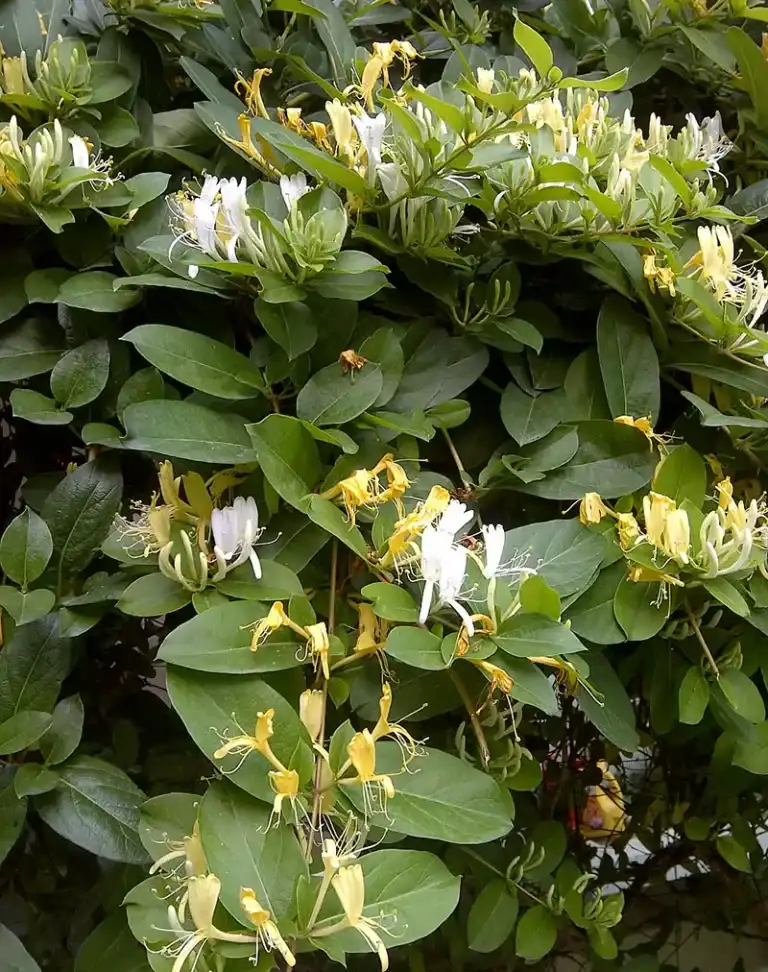 |
| 2. | Amur Honeysuckle | 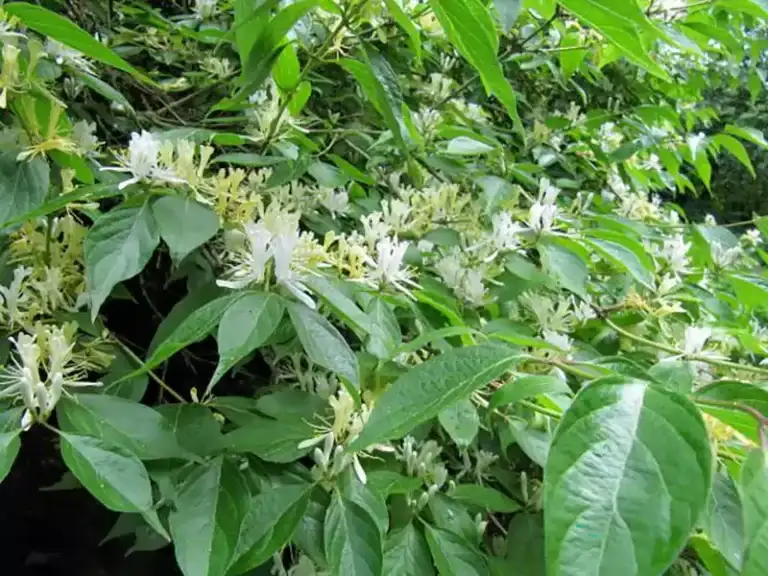 |
| 3. | Morrow’s Honeysuckle | |
| 4. | Tatarian Honeysuckle |  |
How can I Grow the Honey Suckle Plant at Home?
Honeysuckle flowers are the perfect blooms to elevate your indoor and outdoor space and can be planted in a few easy steps.
I have been growing honeysuckle vines for my home garden, and trust me, they look and smell amazing.
Before getting into the planting steps, understand the ideal growing conditions for the honeysuckle plant.
| Soil Type | Well-drained loamy soil |
| Planting Season | Early spring – evergreen variety Late winter – Deciduous variety |
| Sunlight | Full sun to partial shade |
| Water requirements | Keep the soil moist, but look out for waterlogging |
| Fertilizer | Balanced fertilizer |
Make sure all the above growing conditions are met. Follow the following steps for growing honeysuckle at home:
- I grow honeysuckle using rootballs as it is convenient, and the growth is faster compared to seeds.
- Ensure the soil is well-draining and add compost/organic matter before planting.
- Dig a hole as large as the root ball and carefully place the honeysuckle plant in the soil, filling the gaps with the soil, removing any air pockets.
- Add a layer of mulch around the base, but not too close to the stem, because the moisture retention can also cause root rot.
- Water the soil enough to keep it moist, but look for waterlogging.
- If you are growing a vine variety, do not forget to support it with a trellis. A trellis gives the vine proper structure and avoids any sort of damage and mess.
Also read: How to Grow Crocosmia? Planting Tips, Care Advice, and Blooming Secrets
How to Care for the Honeysuckle Flower?
The job does not end after planting; proper maintenance is crucial for healthy blooms. The Honey suckle plant is quite low maintenance, but I still take care of a few things to ensure they do not die prematurely.
- Make sure the plant is growing in well-draining soil and is being watered at least 1 inch per week.
- Support with a trellis, which is a strong metal or wooden bar used to support plants. This ensures the plant is not hanging around on its own, damaging the flowers, fruits and the overall health of the plant.
- Feeding the plant with a balanced fertiliser during the growing season is enough. Do not go overboard with plant feeding, as they do not essentially require a lot of fertilisers.
- Depending on whether the plant has flowered on the previous year’s growth, prune accordingly.
| Type | Time | Method |
| Previous year’s growth | After flowering | Cut the flowered stems up to ⅓ of the total height. |
| New growth | Early spring | Light pruning. Remove the damaged flowers. |
Lesser-known Insights About the Honeysuckle Vine
Apart from the beautiful foliage and the fragrant scent, the honeysuckle plants have a lot of fun facts associated with them, and I love exploring such facts.
Take a look at a few:
- The berries of the twinberry honeysuckle flower were used as dye by the Native American Tribes.
- During the Victorian era, the honey suckle plant was planted in front of the house to ward off evil spirits.
- In Greek mythology, the honeysuckle flower was associated with the story of Daphnis and Chloe, who could only meet until the honeysuckle flower bloomed. So, the Goddess of Love (Aphrodite) made it last longer.
- The honeysuckle plants are perennial and can survive up to 20 years. What a treat for flower lovers!
Scientific Studies and Findings
Isn’t it fascinating how the fragrant Lonicera Honeysuckle Plant also has anti-inflammatory properties? Flowers are sometimes more than just ornamental pieces; at least the honeysuckle plants are more than that.
Read and find out what the research says about honeysuckle vines, especially the Japanese variety.
| Study year: 2012 Sample type: Lonicera japonica ( Japanese honeysuckle) extracts and wound-induced rats. Aim: Anti-inflammatory potential of the Lonicera japonica in 3 groups of wound-induced rats (8 rats each). Key findings: The LJEE(Lonicera japonica extracts) had anti-inflammatory and wound healing capacities, as it helped increase the production of anti-inflammatory cytokines. These are responsible for preventing issue damage. The 10% Lonicera japonica extract ointment helps suppress the inflammation by balancing the cytokine production and producing new tissues. Source: National Center of Biotechnology Information |
| Study year: 2019 Sample type: BST-104( water extracts of Japanese honeysuckle) and rat models induced with the HCI gastritis and gastric ulcer. Aim: Gastroprotective effects of the water extracts of Lonicera japonica Key findings: The results show that the BST-104 significantly increased the gastric mucus content (a protective layer against stomach acid). The hexosamine, sialic acid and the prostaglandin levels were also increased, which are responsible for maintaining the gastric lining. Hence, the conclusion derived is that the extracts of the Japanese honeysuckle had gastroprotective effects. Source: Journal of Medicinal Food |
Concluding Remarks
Grow a vine if you have a small space or a shrub for your garden borders. The Honeysuckle Plants have all in store for you, right from trailing vines to bushy shrubs, and all this variety comes with beautiful blooms and a sweet, fragrant scent.
This pollinator-attracting plant is not just a treat for the eyes, but also healthy for your garden too while taking extra care of the invasive varieties.
Furthermore, the easy care and maintenance make it beginner-friendly and an ideal option to start your gardening journey with the honey suckle vine.
FAQs
Is honeysuckle invasive?
Is honeysuckle bad for your yard?
Some invasive varieties of the honeysuckle plant can be bad for your yard as they will negatively impact other plants.
However, the Lonicera honeysuckle plant in general attracts pollinators, which also makes it a great ecological option.
Is honeysuckle a vine?
While a wide variety of honeysuckle plants are climbing vines, some also grow as upright shrubs.
Is the honeysuckle vine deer-resistant?
A wide variety of the honeysuckle plant is deer-resistant; however, they are at risk of being grazed upon during winters when the food is not easily available for animals.
It can be said that they are deer-proof and not completely resistant.
What does the honeysuckle flower symbolise?
The honeysuckle flower is one of the two June birth flowers and is a symbol of love, devotion and sweet memories.
Sources:
How to grow and care for honeysuckle – BBC Gardeners
Latest Blog