If the flow is not strong enough, the accumulation of dirt will exceed the filter’s processing capacity, resulting in murky water. When the flow is too strong, there will not be enough time for beneficial bacteria living inside the filter to decompose the organic waste.
Setting Up a Pond That Takes Care of Itself
Author
Rashika Gupta
Most people assume constant upkeep just comes with owning a pond: endless cleaning, tinkering, and battling murky water week after week. However, smooth-running ponds don’t usually reach their efficiency without any special efforts. Smooth-running ponds get that way by being set up right from the start.
If the pump and the filter work properly with each other, and the circulation effectively facilitates the biological activity that takes place under the surface of the water, then you will have a pond running on its own for the most part.
Table of Contents:
Why Matching Your Pump to Your Filter Actually Matters
Many issues with the pond can be traced back to one fundamental disparity between the two elements. The pump pushes water faster or slower than the filter was built to handle.
In case the water flow is too low, the water moves through the filter too slowly, and more and more junk is being collected. Fish waste and leftover food break down faster than the filter can pull them out, and cloudy water becomes a constant fight instead of an occasional issue.
If the flow is too strong, the opposite problem shows up. Water rushes through the filter media so fast that the beneficial bacteria living there never get the contact time they need to process waste properly. You end up with a filter that looks like it is working hard but is not actually cleaning much of anything.
This problem is easy enough to solve. Check your filter’s rated flow range and choose a pump that falls within it, ideally moving somewhere close to one to two times your total pond volume every hour. Getting this one figure right solves more pond problems before they even start than almost anything else you can do.
Why Slightly Oversized Filtration Saves You Work Later
It is easy to purchase exactly what you need to get the job done immediately on your pond. But ponds change. Fish grow, new fish get added, and plants fill in over a season or two. A filter sized perfectly for today often falls short a year from now.
Running a system that is a bit bigger than the bare minimum gives you breathing room. A filter working at around seventy percent of its capacity handles fluctuations easily, stays cleaner longer between maintenance, and avoids being overloaded, which would make the water suddenly turn green.
Compare that to a filter running near its absolute limit. Every extra bit of waste, every warm week that speeds up bacterial activity, every slightly heavier feeding pushes it past what it can handle. That is when the owner has to work to keep the water clear, when a properly sized system would have handled it without daily attention.
The Practical Details People Forget to Plan For
Sizing a pump is not just about matching a number on a box to your pond’s gallon count. Real-world setup involves a few details that quietly change how much power you actually need.
Distance from the pump to the filter is critical in a way many fail to recognize. The farther water has to travel through tubing, the more resistance builds up along the way, which reduces actual flow even if the pump is rated correctly on paper.
Height also plays a critical role. If water needs to be lifted up to a waterfall or an elevated filter box, that vertical distance works against your pump’s output. A pump that looks powerful enough on a spec sheet can end up underperforming once it has to push water uphill through several feet of tubing.
Sharp bends in your piping create the same kind of hidden resistance. Every turn slows the water down slightly, and several tight bends together can meaningfully cut into your flow rate. Designing a straighter path between the pump and the filter, where possible, keeps more of that pumping power working for you instead of fighting against your own plumbing.
Circulation and Filtration Need to Work as One System
Filters do not work alone. The beneficial bacteria responsible for breaking down ammonia and waste need steady oxygen to function well, and that oxygen comes from movement. Without enough circulation, even a well built filter starts underperforming because the biology inside it is starved for air.
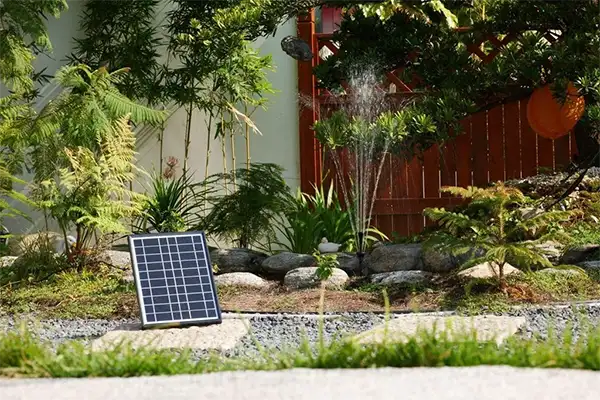
This is where a solar-powered fountain pump earns its place in the setup, not just as a graceful visual centerpiece but as part of the filtration system itself. As water moves through the fountain and falls back into the pond, it picks up oxygen along the way, which keeps bacteria active and supports the filter’s ability to actually process waste rather than just trap it.
The solar powered fountain pump collection handles this circulation without increasing your electricity bill or requiring extra wiring near the pond, offering a refined way to support both aeration and aesthetics from a single, quietly efficient piece of equipment.
Combining that circulation with the right pond and filter setup closes the loop. Movement keeps oxygen flowing to the bacteria, and the filter keeps solid waste from building up in the first place. The pond and filter systems available are built around this exact relationship, so circulation and filtration support each other instead of working as two separate, disconnected tasks.
Building the Habit of Checking, Not Fixing
Even a well-matched system benefits from a quick regular check rather than waiting until something goes visibly wrong. A short look at your pump intake and filter media every week or two catches small blockages before they turn into bigger flow problems.
This is a completely different rhythm from constant troubleshooting. Instead of reacting to cloudy water or a weak fountain spray after the fact, you are simply confirming that a properly sized system is still doing what it was built to do. Most weeks, there is nothing to fix at all.
Final Thoughts
A pond that takes care of itself is not the result of luck or expensive equipment. It comes from matching your pump to your filter, giving your system a little extra capacity to handle change, accounting for real-world information like distance and height, and making sure circulation and filtration work together instead of working separately.
Get those pieces aligned once, and the day-to-day effort your pond demands drops dramatically. What is left is mostly just enjoying the water, which was probably the whole point from the start.
FAQs
Why is the matching of pump flow to filter capacity so critical?
How much flow should a pond pump have?
The general rule is to select a pump that circulates about one to two times your entire pond volume per hour in accordance with the filter flow capacity. Such an approach will help avoid the majority of issues related to ponds.
What role does the circulation play in the filtration process?
The useful bacteria that digest the waste require a constant supply of oxygen that can be provided through water circulation. Otherwise, despite a perfectly constructed filtration system, the bacteria living in it would lack oxygen.
Could a solar fountain pump be used for maintenance of the pond?
Yes, a solar fountain pump provides the oxygenation of the water through circulation and works well as a component of the filtration process without increasing electricity expenses.