Remove most of the wood chips, fill the hole with topsoil, and level the ground. You can then plant grass or create a garden bed. Water the area and add more soil if it settles.
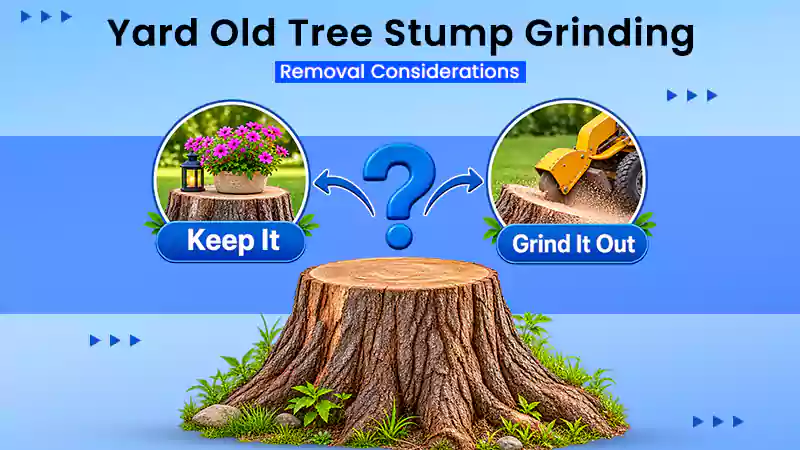
That Old Tree Stump in Your Yard: Keep It or Grind It Out?
Author
Swati MishraA flat, round stump sitting right where you pictured the new patio chairs going, when the tree is gone, and the crew has packed up. Some people love the look, while others trip over it twice and want it gone by the weekend.
Both are acceptable; a stump can be a surprisingly nice garden feature, or it can be a slow problem that keeps getting worse. The approachable way is knowing which one you’ve got before you spend money styling it or grinding it.
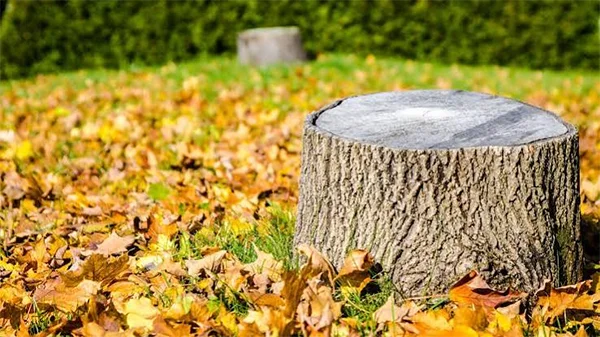
Table of Contents:
First, Take A Close Look At It
Before you pick a plan, ensure three things.
Is it still alive? Some trees don’t want to be cut down. Maples, willows, and a lot of fast growers will push up thin green shoots (suckers) around the edge of the stump or from roots out in the lawn. A stump that keeps sprouting is still alive, and it’ll continue sprouting for a while.
Is the wood solid? Press a screwdriver into the top and sides. If it sinks in effortlessly, or you see shelf-like mushrooms, soft, crumbly wood, or a lot of ants, decay has already started. That’s fine if you want it to rot away, but it’s a bad base for a planter or a bench.
Where is it? A stump out by the back fence is a very different thing from one two feet from your base, your deck, or a walkway you’re about to pave. Roots don’t stop at the stump. They spread under whatever you build afterwards.
If you can’t tell whether the wood is sound or whether the tree is still alive, get someone to look at it in person. A certified arborist can generally tell you in a few minutes. Homeowners in Monmouth, Ocean, Burlington, or Mercer County can book an on-site look from Pro-Stump Tree Service, a family-run Central New Jersey company that manages stump grinding along with trimming and removals. Wherever you live, a quick visit costs a lot less than building a patio over a stump that’s about to be shattered.
Ways To Make A Stump Part Of The Yard
If the stump is dead, solid, and out of the way, you’ve got choices that cost almost nothing.
Turn It Into A Planter
This one works better on wider stumps. Use a drill with a large spade bit (or a chisel if you’re patient) to hollow out the center, leaving a rim a few inches thick. Drill a couple of holes down and out the side so water can drain. Fill it with a potting mix and plant anything shallow-rooted: trailing petunias, creeping thyme, sedum, or a small fern for a shady spot. The rotting wood inside slowly fills up the soil, which plants seem to like.
Use It As A Side Table Or Plant Stand
A stump with a level top makes an acceptable side table next to an outdoor chair. Sand the top smooth, brush off loose bark, and seal it with an exterior wood sealer so it doesn’t turn grey and soak up every spill. Then set a potted plant, a lantern, or your morning tea on it. It looks good next to a bench or a fire pit (just keep real flames well away from it).
Build A Small Garden Around It
You can also leave the stump untouched and plant around it. Moss, hostas, and ferns soften the edges in shade, and a ring of mulch with a few stones makes it look like you planned with top garden decoration trends. Some gardeners add a birdbath on top or a little fairy garden for the kids. It’s a good fit for a woodland-style corner of the yard.
One warning: a stump that’s decorated is still decaying. It can last five years as a planter, or two. When it starts to wobble or go soft, it’s time to move to plan B.
When The Stump Really Needs To Go
Decor stops making sense in a few circumstances:
- It keeps sending up suckers that you’re cutting back every few weeks.
- It’s in between the lawn, and you mow around it (or into it).
- It sits where a patio, shed, pool, garden bed, or new tree needs to go.
- Carpenter ants, termites, or fungi have moved in, and it’s close to the house.
- It’s a trip hazard on a path that kids or older relatives use.
Your Removal Options, Honestly Compared
Grinding. A stump grinder chews the stump into wood chips, generally several inches below the soil line. It’s fast (often under an hour for a normal residential stump), and it leaves the yard ready for soil and seed. You can rent a grinder, but they’re heavy, they throw debris, and they’re hard to control if you’ve never seen one. Most homeowners hire this out. The main roots stay in the ground and break down over time.
Letting it rot. This is the cheapest choice and the slowest one. Relying on the tree and your soil, natural stump decay can take 10 years or more, according to Iowa State University Extension. You can speed the process up by cutting the stump as low as you can, drilling deep holes across the top, adding a nitrogen fertilizer, and keeping it moist under a layer of soil or mulch. It still takes some time.
Digging it out. For a tiny stump (think a shrub or a young ornamental tree), a shovel, a mattock, and a pruning saw for the roots can get it done in an afternoon. For anything bigger, it turns into weeks of hard digging and a huge hole, or just rely on your landscaping waste guide.
Burning. Never consider it. Many towns don’t allow it; roots can smolder underground longer than you’d expect, and it’s not worth the risk near a house or a wooden fence.
Whatever you select, call 811 before any digging or grinding. Gas, water, and electric lines can run closer to a tree than you’d think.
What To Do With The Spot Afterward
Once the stump is ground out, you’ll end up with a pile of chips and a soft, uneven patch. Rake out most of the chips (they make good mulch for paths and beds), then fill the hole with topsoil and pack it down. Plant it or lay sod, and water it like any new lawn. Expect it to settle a little over the first few months, so add a bit more soil if it sinks.
Not ready for grass there? It’s a better place for a container garden or a raised bed, since you won’t be digging deep into old roots. And if you want a new tree, plant it a few feet away from the old spot, not exactly on top of it. The soil there is full of decaying wood, and a fresh root system will do better in clean ground.
A stump can be a charming little feature or a continuous hassle. Take a good look at it, be honest about where it sits, and pick the option that fits the yard you really want.
Frequently Asked Questions
What should I do with the ground after stump grinding?
Is stump grinding better than digging out a stump?
Stump grinding is generally faster and more practical for larger residential stumps. Digging can work for small stumps, but bigger ones require considerable effort.
How long does it take to rot a tree stump naturally?
Natural stump decay can take 10 years or more, as it depends on the tree and soil conditions. Keeping it moist and adding nitrogen fertilizer can speed up the process.
Latest Blog