The yellow flowers signify hope, warmth and new beginnings.
30 Yellow Flowers: Blooms That Bring Joy to Your Garden
Author
Annette HirdReviewed By
Cody Allison
Yellow is the colour of the sun and is associated with the idea of light, spirituality, and joy. Growing yellow flowers in the garden feels like a bright pop of colour that is subtle and is also a way to add positivity to the landscape.
As a gardening enthusiast, if yellow flowers are missing from your outdoor space, it is time to upgrade, and for that, I have curated the most beautiful yellow flowers that need to be a part of your house in one way or another.
Table of Contents:
- 7 Yellow Flowers Shrubs for your Garden
- 8 Yellow Flowers, Creepers, and Climbers For Trellis and Aesthetic
- 10 Yellow Flower Herbaceous Plants for That Pop of Colour in the Garden
- 5 Yellow Flower Trees: Give Structure To Your Landscape
- What is the Symbolism and Significance of Yellow Flowers?
- Wrapping Up
- FAQs
7 Yellow Flowers Shrubs for your Garden
Shrubs are medium-sized woody plants that are used for landscaping purposes in the form of garden borders and are also called bushes due to their dense foliage.
1. Japanese Rose

Popularly known as ‘Hamanasu’ in Japan, the Japanese Rose is a perennial deciduous shrub that grows yellow rose-like flowers and belongs to the family of Rosaceae.
| Botanical name | Kerria japonica |
| Native | Japan, China, and Korea |
| Height | 3-6 feet |
| Hardiness | USDA zone 5 |
| Light Requirements | 6 hours of direct sunlight |
| Growth Habit | Perennial |
2. Honeysuckle flower

Popularly known as ‘woodbine’, the honeysuckle flower is a fragrant perennial plant that belongs to the Caprifoliaceae family and grows flowers with yellow trumpet-shaped petals and green leaves in the form of vines and shrubs.
| Botanical name | Lonicera |
| Native | North America, Asia, and Europe |
| Height | 10-25 feet |
| Hardiness | USDA zones 4-9 |
| Light Requirements | Full sun to partial shade |
| Growth Habit | Perennial |
3. Potentilla

Potentilla is a 5-petal flower that blooms from late spring to early autumn. With its name derived from the Latin word ‘potens’, meaning ‘power’, this yellow flower signifies strength and resilience.
| Botanical name | Dasiphora fruticosa |
| Native | North America, Canada, and Europe |
| Height | 1-3 feet |
| Hardiness | USDA zone 2-7 |
| Light Requirements | 4-6 hours of direct sunlight |
| Growth Habit | Perennial |
4. St. John’s Wort

The St. John’s Wort is a summer-blooming perennial herb that has small black dots on the yellow petals and translucent oil glands. This yellow flower symbolism is associated with protection and joy.
As per the research of NCBI, the flower is credited with neuroprotective effects.
| Botanical name | Hypericum perforatum |
| Native | North Africa and Europe |
| Height | 1-3 feet |
| Hardiness | USDA zones 5-9 |
| Light Requirements | 6 hours of bright sunlight |
| Growth Habit | Perennial |
5. Mahonia

Mahonia is an evergreen winter plant that comes from the Berberidaceae family. Along with vibrant yellow flowers, meaning strength and protection, it also produced dark purple edible berries.
| Botanical name | Mahonia spp. |
| Native | North America |
| Height | 1-2 feet, some varieties can reach up to 12 feet |
| Hardiness | USDA zones 5-9 |
| Light Requirements | Full sun to partial shade |
| Growth Habit | Perennial |
6. Forsythia

Popularly known as the golden bells, the forsythia is a low-maintenance flowering genus, like the dianthus flower, that produces yellow flowers, meaning new beginnings and hope.
| Botanical name | Forsythia spp. |
| Native | East Asia |
| Height | 1-10 feet |
| Hardiness | USDA zones 5-9 |
| Light Requirements | 6 hours of direct sunlight |
| Growth Habit | Perennial |
7. Witch Hazel

Contrary to the name, the witch hazel does not have a ‘witch’ association, but the name is derived from the word ‘wych’, meaning bendable, referring to the flexible twigs.
This pollinator-friendly flower grows yellow ribbon-like flowers and red sepals that give a spider-like appearance.
| Botanical name | Hamamelis virginiana |
| Native | North America |
| Height | 15-30 feet |
| Hardiness | USDA zones 3-8 |
| Light Requirements | Full sun to partial shade |
| Growth Habit | Perennial |
8 Yellow Flowers, Creepers, and Climbers For Trellis and Aesthetic
Climbers are used for vertical gardening purposes and covering garden gates and walls; they often produce vibrant flowers and fruits.
Creepers are known to grow along the ground and produce fruits. Together, they are known as weak-stem plants.
8. Yellow Bell Vine

Commonly known as Yellow elder, Yellow bell vine is a trailing vine that grows golden-yellow bell-shaped flowers and green foliage. These pollinator-friendly plants are drought-tolerant and can be easily grown and maintained without hassle.
| Botanical name | Tecoma stans |
| Native | America |
| Height | 10-25 feet |
| Hardiness | USDA zones 9-11 |
| Light Requirements | Full sun to partial shade |
| Growth Habit | Perennial |
9. Carolina Jessamine

Named for being the official state flower of South Carolina, this evergreen vine grows yellow flowers meaning grace and strength. The funnel-shaped flowering vine is a pollinator magnet and is best used as a trellis or garden fence.
| Botanical name | Gelsemium sempervirens |
| Native | Southeastern America |
| Height | 10-20 feet |
| Hardiness | USDA zone 6-10 |
| Light Requirements | Full sun to partial shade |
| Growth Habit | Perennial |
10. Mandevilla

The mandevilla is a frost-tolerant climbing vine that is grown for its trumpet-shaped, bright yellow flowers. Madevilla is a hummingbird flower and is also considered a pollinator magnet, which makes it a smart and aesthetic gardening choice.
| Botanical name | Mandevilla spp. |
| Native | Tropical and Subtropical regions of America |
| Height | Up to 20 feet |
| Hardiness | USDA zones 9-11 |
| Light Requirements | Full sun to partial shade |
| Growth Habit | Perennial |
11. Canary Creeper

Belonging to the Tropaeolaceae family, the canary creeper is a climbing vine that is famous for its bright-yellow bird-like flowers with small red spots.
With a peppery scent and flavour, all parts of the plants are edible and safe for pets.
| Botanical name | Tropaeolum peregrinum |
| Native | Northwestern South America |
| Height | 6-12 feet |
| Hardiness | USDA 9-11 |
| Light Requirements | Full-sun to partial shade |
| Growth Habit | Perennial Annual in cooler climates |
12. Italian Jasmine

Italian Jasmine belongs to the Olive family, is a climbing vine that is not native to Italy but is named so due to the immense popularity of the yellow flower vines across European countries.
| Botanical name | Jasminum humile |
| Native | China, Afghanistan, Nepal and Burma |
| Height | 7-11 feet |
| Hardiness | USDA zones 9-11 |
| Light Requirements | Full sun to partial shade |
| Growth Habit | Perennial |
13. Yellow Wood Rose

Part of the morning-glory family, the wood rose vine produces seed pods that dry out and become rigid and brown like wood, hence the name.
This yellow flower meanings is linked to the idea of friendship and new beginnings.
| Botanical name | Merremia tuberosa |
| Native | Tropical regions of America |
| Height | 12-20 ft |
| Hardiness | USDA zones 9-10 |
| Light Requirements | 8 hours of direct sunlight |
| Growth Habit | Perennial |
14. Indian Clock Vine
A spectacular display of bright yellow and maroon flowers that are native to the tropical regions of southern India. This perennial flower is a low-maintenance vine that grows best in warm climates.
Also known as the ‘Lady’s Slipper vine’, indicating the hanging slipper-type appearance of the vine.

| Botanical name | Thunbergia mysorensis |
| Native | India |
| Height | Up to 20 feet |
| Hardiness | USDA zones 10-11 |
| Light Requirements | 6 hours of direct sunlight |
| Growth Habit | Perennial |
15. Yellow Butterfly Vine

Named after the beautiful butterfly-shaped yellow colour flowers meaning sunshine and rebirth. This climbing vine beauty is a heat-tolerant plant that is considered a pollinator magnet and is commonly used as a trellis or pergola.
| Botanical name | Mascagnia macroptera |
| Native | Southwestern America |
| Height | 8-10 feet |
| Hardiness | USDA zones 10-15 |
| Light Requirements | 6 hours of direct sunlight |
| Growth Habit | Perennial |
10 Yellow Flower Herbaceous Plants for That Pop of Colour in the Garden
Unlike shrubs, herbaceous plants are non-woody plants that produce flowers and are used to add texture or colour to the garden.
16. Sunflower
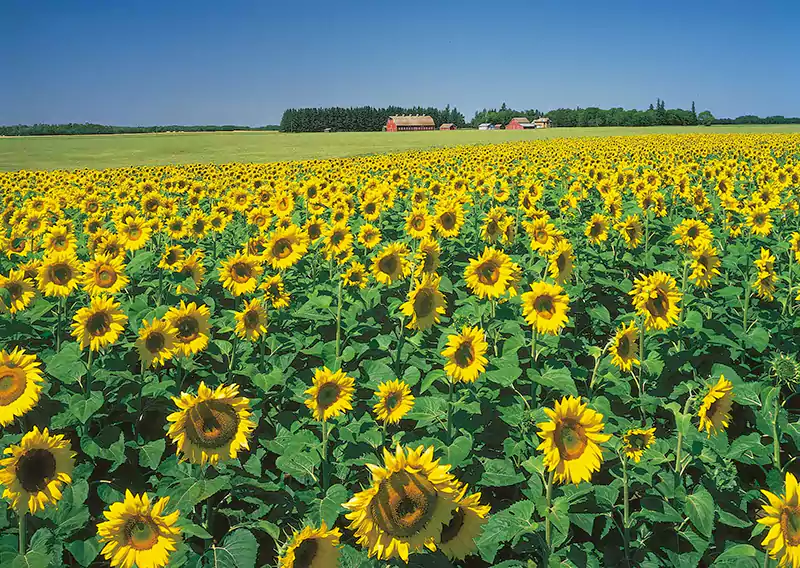
Belonging to the family of Asteraceae, the sunflower is the most popular yellow flower. Commonly grown as a symbol of hope and sunshine, the herbaceous plant tracks the sun and changes direction accordingly from east to west.
Sunflowers are also credited with the ability to remove toxins from the soil.
| Botanical name | Helianthus annuus |
| Native | North America |
| Height | 1-4 feet |
| Hardiness | USDA zones 2-11 |
| Light Requirements | 8 hours of direct sunlight |
| Growth Habit | Annual |
17. Narcissus

Also known as ‘Paperwhites’ or ‘Daffodils’, Narcissus belongs to the Amaryllidaceae family and this yellow flower meaning is associated with rebirth.
The national flower of Wales, this herbaceous plant is the birth month flower of March and December.
| Botanical name | Narcissus papyraceus |
| Native | Southern Europe, North Africa and the Mediterranean regions |
| Height | Up to 2 feet |
| Hardiness | USDA zones 3-9 |
| Light Requirements | 6 hours of direct sunlight |
| Growth Habit | Perennial |
18. Coreopsis

Commonly known as tickseed, the Coreopsis is a herbaceous plant from the Asteraceae family that produces yellow flowers with a maroon centre, similar to the Indian clock vine.
These perennial plants are really easy to grow and are drought-tolerant and deer-resistant.
| Botanical name | Coreopsis spp. |
| Native | North and South America |
| Height | Up to 4 feet |
| Hardiness | USDA zones 4-9 |
| Light Requirements | 6 hours of direct sunlight |
| Growth Habit | Perennial, but can be annual depending on the climate |
19. Coneflower

Belonging to the Asteraceae family, the coneflower is a cold-tolerant plant that produces flowers in a cone-like shape. Coneflower plant releases the biochemicals to halt the growth of the competing plants.
Additionally, November 15 is celebrated as World Echinacea Day to celebrate the purple coneflower.
| Botanical name | Echinacea pupurea |
| Native | North America |
| Height | 2-5 feet |
| Hardiness | USDA zones 3-9 |
| Light Requirements | 6 hours of direct sunlight |
| Growth Habit | Perennial |
20. Calla lilies

The Calla lilies are a part of the Araceae family and are famous for the funnel-shaped flowers and arrow-shaped, thick and glossy leaves. The yellow flower signifies gratitude, joy and friendship.
As per ASPCA, this plant is extremely toxic to plants and can cause discomfort upon ingestion.
| Botanical name | Zantedeschia |
| Native | Southern Africa |
| Height | 1-3 feet |
| Hardiness | USDA zones 7-10 |
| Light Requirements | 6 hours of direct sunlight |
| Growth Habit | Perennial |
21. Asiatic Lilies

Belonging to the Liliaceae family, the Asiatic lilies feature star-shaped flowers facing upwards. Apart from yellow, it also produces white, pink and red coloured blooms.
These unscented flowers are toxic to cats according to the ASPCA.
| Botanical name | Lilium auratum |
| Native | Asia |
| Height | 2-5 feet |
| Hardiness | USDA zones 3-9 |
| Light Requirements | 6 hours of direct sunlight |
| Growth Habit | Perennial |
22. Safflower

Safflower is named so due to its resemblance to saffron. This yellow herbaceous flower looks a bit like the marigold, but it grows thistle-like flowers.
These drought-tolerant flowers change colour from yellow to orange as they mature.
| Botanical name | Carthamus tinctorius |
| Native | Western Asia and the Middle East |
| Height | 2-4 feet |
| Hardiness | USDA zones 6a- 9b |
| Light Requirements | 8 hours of direct sunlight |
| Growth Habit | Annual |
23. Yellow Rattle
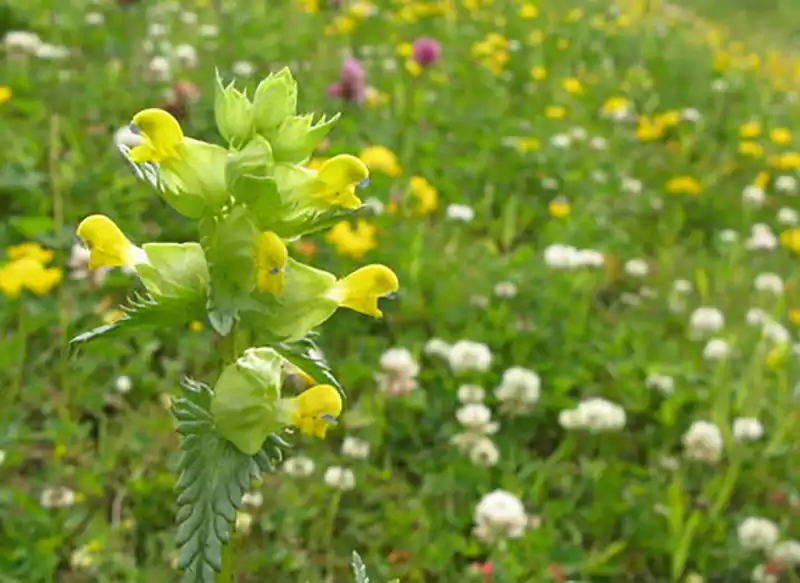
The yellow rattle flower is known for its inflated seed pods that the plant produces after flowering, which are shaped like a rattle, hence the name.
Additionally, a member of the broomrape family, this plant is semi-parasitic and drastically affects the growth of grass by taking up all the nutrients from the roots.
| Botanical name | Rhinanthus minor |
| Native | Europe, the UK and America |
| Height | Up to 1 foot tall |
| Hardiness | USDA 3a- 7b |
| Light Requirements | 6 hours of direct sunlight |
| Growth Habit | Annual |
24. Marigold

Popularly known as the October birth flower, Marigold is a common yellow flower that is used in auspicious festivities in many parts of India.
This yellow flower’s meaning is associated with warmth and love. Marigold is a pollinator-friendly flowers that are also used in making perfumes due to their distinct fragrance.
| Botanical name | Tagetes |
| Native | Central and South America |
| Height | 1-4 feet |
| Hardiness | USDA zones 2-11 |
| Light Requirements | 6 hours of direct sunlight |
| Growth Habit | Annual |
25. Evening Primrose

As the name suggests, this herbaceous plant blooms at night and closes in the morning. Mostly grown as a biennial, the plant flowers in the first year and dies back in the second.
The seeds of the flower have an oil that is used in skin-care products.
| Botanical name | Oenothera |
| Native | North America |
| Height | 3-5 feet |
| Hardiness | USDA zones 4-9 |
| Light Requirements | 6 hours of direct sunlight |
| Growth Habit | Biennial |
5 Yellow Flower Trees: Give Structure To Your Landscape
Yellow flower trees are a single, large-sized woody plant with a main trunk, which is primarily used to provide a structure to the gardening space and is also home to many birds.
26. Yellow Flame Trees

The yellow flame trees belong to the Fabaceae family and produce bright yellow and fragrant flowers. The fern-like foliage of the tree adds a pop of colour to the landscape, but the bark extracts are also used to treat muscle pain.
| Botanical name | Peltophorum pterocarpum |
| Native | Southeast Asia |
| Height | Up to 80 feet |
| Hardiness | USDA zones 10a -11 |
| Light Requirements | 8 hours of direct sunlight |
| Growth Habit | Perennial |
27. Golden Shower Tree

Perfect name for this sight to behold in summers when the Golden shower tree features the yellow flowers along with the long brown seed pods.
This tree, along with being a landscape treat, has various anti-inflammatory benefits as well.
| Botanical name | Cassia fistula |
| Native | India and Southeast Asia |
| Height | Up 50 feet |
| Hardiness | USDA zones 9b-11 |
| Light Requirements | 8 hours of direct sunlight |
| Growth Habit | Perennial |
28. Golden Trumpet Tree

As the name suggests, this perennial tree grows trumpet-shaped yellow flowers that bloom in spring. A member of the Fabaceae family, this tree can enhance the landscape and attract garden-friendly pollinators.
| Botanical name | Handroanthus chrysotrichus |
| Native | Brazil |
| Height | Up to 35 feet |
| Hardiness | USDA zones 8b-11 |
| Light Requirements | 8 hours of direct sunlight |
| Growth Habit | Perennial |
29. Yellow Magnolia

Part of the Magnoliaceae family, the yellow magnolia features tulip-like yellow flowers in late spring. Popular varieties include ‘Yellow Bird’ and ‘Butterflies’.
| Botanical name | Magnolia acuminata |
| Native | Eastern regions of America and Canada |
| Height | 20- 40 feet |
| Hardiness | USDA zones 5-9 |
| Light Requirements | 6 hours of direct sunlight |
| Growth Habit | Perennial |
30. Golden Rain Tree

Part of the Sapindaceae family, the Golden Rain tree produces clusters of yellow flowers that give a rain-shower-like effect, hence the name. Although it is a popular choice for an ornamental tree, it can be invasive for the neighbouring plants.
| Botanical name | Koelreuteria paniculata |
| Native | China and Korea |
| Height | Up to 50 feet |
| Hardiness | USDA zones 5-9 |
| Light Requirements | 6 hours of direct sunlight |
| Growth Habit | Perennial |
What is the Symbolism and Significance of Yellow Flowers?
Isn’t it fascinating that 21 September is celebrated as Yellow Flower Day in Latin countries? The yellow flowers bring immense radiance and optimism with them, whether planted or gifted.
In many cultures, the yellow flower meaning is associated with the idea of jealousy, and in some, it is linked to friendship. As diverse as the meaning is, the flowers are also extremely versatile in terms of shape, meaning and growth habit. From creeping vines to upright woody shrubs, all kinds of yellow flowers are here to make space in your garden, depending on personal preference.
Dive in and explore the list of 30 yellow flowers that will make your garden shine like never before:
Wrapping Up
The yellow flowers have been a symbol of sunshine, joy and happiness. Whether planting a shrub, tree or a vine, the yellow flowers are always a treat to watch.
More than them individually enhancing the gardening space, adding a hint of yellow flowers with different colours makes the garden look more lively. Every yellow flower’s meaning is linked to a unique emotion and history, but ultimately, it is a perfect way to add warmth to your garden.
FAQs
What does yellow flower signify?
Which yellow flower blooms at night?
Evening Primrose is a biennial flower that blooms at night and closes in the morning.
Is Honeysuckle a vine or a shrub?
Honeysuckle can be grown both as a vine and a shrub, depending on the species.
When is the yellow flower day celebrated?
The yellow flower day is celebrated on September 21 every year.
What are the most popular yellow perennial flowers?
Some popular yellow perennial varieties include the Coneflower, Yellow bell vine and Witch Hazel.
Sources:
Latest Blog