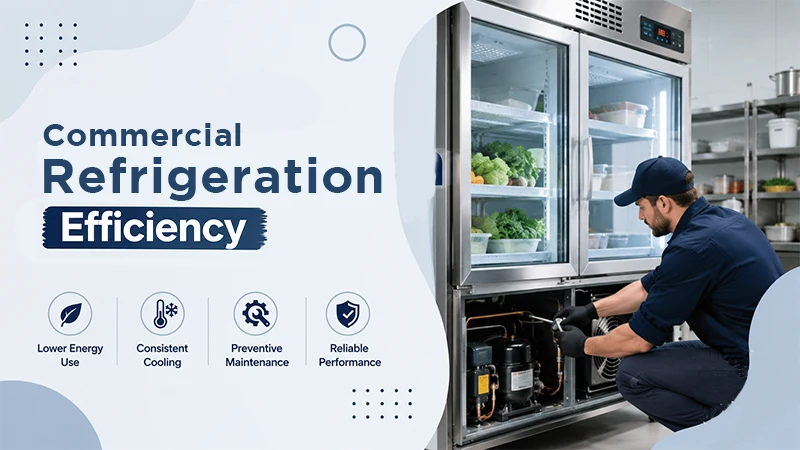
Use self-closing doors, door sweeps, strong gaskets, and reduce unnecessary door openings to reduce air loss from refrigeration units.
Keeping Commercial Refrigeration Systems Running Efficiently
Author
Swati MishraLast Update
September 25, 2026
In peak summers, coolers and freezers often fail due to dirty coils and poor gaskets. These breakdowns just increase your bills without increases but decreasing the amount of cooling, which makes you suffer twice.
Many homeowners face these kinds of problems, but there is actually something you can do about it.
At the end of this article, you will learn about simple steps for preventive maintenance and better temperature control for your summer partners.
Table of Contents:
Essential Maintenance Practices
Proper maintenance keeps your refrigeration system working well. Regular cleaning and checking parts can save you money and energy.
Clean Coils Regularly
Cleaning coils maintains good energy use. They boost evaporator performance and system life.
- Remove dust and debris from condenser coils at least every ninety days. This action improves energy efficiency and reduces compressor load.
- Check cooling coils during each preventive maintenance visit. A visual check reveals bent fins, oil stains, and blockages that hurt temperature control.
- Use a light brush, coil cleaner, and low-pressure water spray for routine cleaning. These tools protect fins and preserve refrigeration system integrity.
- Switch off power and tag the circuit before any coil work. This safety step protects staff and prevents HVAC system damage.
- Measure temperature split before and after cleaning to track performance. A smaller temperature differential indicates good air circulation and cooling.
- Record coil condition and cleaning dates in the equipment inspection log. Good records aid cost reduction and load optimization decisions.
- Call a licensed HVAC or refrigeration technician for heavy grime or corrosion. Trained pros handle refrigerant management and complex condenser maintenance.
- Watch for signs of poor coil condition like higher energy bills, longer run times, or inconsistent temps. Fixing coils quickly aids food safety and general system performance.
- Coordinate coil cleaning with other service tasks to maximize preventive maintenance value. Check and maintain door gaskets to reduce air loss.
Check and Maintain Door Gaskets
Check gaskets often. Faulty seals waste energy.
- Inspect gasket edges weekly for cracks, gaps, or hard spots that break the seal and harm temperature control.
- Press the door closed on a dollar bill at several spots to test the seal; if the bill slides out easily, plan gasket replacement.
- Wipe gasket surfaces with a mild detergent and warm water to remove food residue and grease that reduce gasket life.
- Lubricate gasket folds with a food-safe silicone product to keep them flexible and to aid in proper closing of doors.
- Replace torn or deformed gaskets immediately to protect food safety and to prevent extra load on the refrigeration system.
- Track gasket condition in your preventive maintenance log to support performance optimization and energy efficiency.
- Train staff to close doors firmly and to report seal problems fast so you limit warm air entry and maintain cooling coil function.
Next, monitor system performance with daily temperature logs and thermostat control.
Ensure Proper Airflow Around Vents
Keep vents clear for best cooling. Air movement cuts energy use.
- Remove debris and trash near vents. Doing so frees airflow and helps condenser coils work harder on less power.
- Clear shelf faces and product stacks that block vents. Proper spacing helps evaporator performance and supports food safety.
- Maintain open space around refrigeration units. Unrestricted air circulation boosts cooling coils and improves temperature control.
- Place fans to aid crossflow and reduce hot spots. Directed airflow can raise energy efficiency and cut running costs.
- Inspect vents during preventive maintenance rounds. Regular equipment inspection catches airflow problems before they harm system performance.
- Log airflow and temperatures after adjustments. Consistent records help track refrigeration system trends and guide service decisions.
Monitoring System Performance
Monitoring system performance is essential to keeping refrigeration running well. Log temperatures every day to spot issues early and prevent big problems later.
Avoid bothering the thermostat too much, as this can lead to erratic cooling and energy waste.
Log Temperatures Daily
Logging temperatures daily helps keep your refrigeration system in check. It ensures that temperatures stay within safe limits for food safety.
- Record the high and low temperatures of the refrigeration units each day. This information helps spot any unusual changes quickly.
- Use a simple log sheet or digital tool to track the data easily. Clear records make it simpler to notice patterns over time.
- Check the temperature at different times during the day. Fluctuations may indicate issues that need attention.
- Compare current temperatures with previous data regularly. Look for consistent trends or sudden changes that could affect performance.
- Alert staff if any temperature readings fall outside acceptable ranges. Quick action can prevent food spoilage and reduce waste.
- Evaluate logs monthly to find areas for improvement. Regular analysis can boost efficiency and performance optimization.
- Follow up on any irregularities by scheduling maintenance inspections. Professional servicing can fix problems before they become major issues.
Doing this daily helps maintain optimal air circulation and protects food quality in your commercial refrigeration system.
Avoid Overadjusting Thermostats
Changing the thermostat often can harm your refrigeration system. Each time you adjust it, the system has to work harder to keep things cool. This extra effort can lead to higher energy use and costly bills.
Set the temperature at a stable level and stick with it. Frequent changes may cause food safety issues too; items might not stay cold enough if adjustments are made poorly. Keeping a consistent setting helps maintain airflow and keeps everything running smoothly in your commercial refrigeration systems.
Professional Servicing Tips
Many businesses rely on professional refrigeration service in South Carolina to ensure their systems operate efficiently and effectively.
Regular service inspections keep your refrigeration system running well. Always work with licensed professionals for safe refrigerant handling.
Schedule Regular Service Inspections
Scheduling service inspections keeps your refrigeration system running well. These check-ups help spot problems before they get big. Trained professionals inspect key parts like the condenser coils and cooling coils during these visits.
They ensure everything works as it should.
Inspections also improve energy efficiency and temperature control. Regular checks can reduce repair costs in the long run. This practice plays a vital role in food safety by ensuring that your refrigeration units keep items at safe temperatures.
Keeping on top of these inspections helps avoid future issues and saves money over time
Handle Refrigerants Safely with Licensed Professionals
Refrigerants must be handled with care. Trained professionals know how to manage these substances safely. They follow strict guidelines to avoid leaks and accidents. Using licensed experts ensures compliance with safety regulations.
This practice protects both employees and the environment.
Improper handling can turn into serious issues, like equipment damage or health risks. Regular service inspections maintain system performance, keeping refrigeration units efficient.
Always depend on skilled technicians for refrigerant management and maintenance tasks related to commercial refrigeration systems. Next, find ways to improve efficiency in your operations with effective strategies.
Efficiency Improvement Strategies
Efficiency in refrigeration means saving energy and ensuring your products’ safety. Simple actions can help reduce air loss and improve cooling performance.
Optimize Door Management to Minimize Air Loss
Effective door management helps keep cold air inside. This reduces energy waste and helps maintain food safety.
- Use self-closing doors. These prevent cold air from escaping when the door is not in use.
- Install door sweeps. Sweeps cover gaps at the bottom of the door, preventing the cold air from escaping.
- Limit foot traffic near units. Too many visitors opening doors can lead to more air loss.
- Train staff on quick access methods. Quick actions decrease the time doors stay open, minimizing energy loss.
- Regularly check for strong seals on gaskets. Strong gaskets help keep doors airtight.
- Consider installing strip curtains. Strip curtains give easy access while reducing air loss during busy times.
- Monitor usage patterns of doors on a regular basis. Keeping track can show when changes are needed to improve efficiency.
Making these adjustments increases performance in refrigeration systems and ensures better temperature control for food safety measures.
Reduce Traffic Around Refrigeration Units
Optimizing door management reduces air loss. Keeping people and equipment away from refrigeration units also matters. Too much traffic can increase temperatures inside these systems. Higher temperatures impact energy efficiency and food safety.
Signage can help remind staff to map movement near these units. Create a clear pathway for easy access while doing deliveries or maintenance checks. Training employees about proper procedures will support these efforts too.
Each step reduces workload on the system, ensuring better performance and lower costs over time.
Conclusion
Keeping commercial refrigeration systems performing well is vital for any business. Regular maintenance keeps equipment efficient and safe. Common tasks like cleaning coils and checking gaskets make a huge difference.
Monitor temperatures daily to find issues early. Follow these tips to save energy and ensure food safety.
Frequently Asked Questions
How to reduce air loss from refrigeration units?
What is the importance of regular refrigeration service inspection?
Regular refrigeration service inspection helps to identify problems earlier; this improves energy efficiency and temperature control, and reduces the need for expensive repairs.
Who should handle refrigerants in commercial refrigeration systems?
Refrigerants should be handled by trained and licensed professionals who know safe handling processes and follow relevant safety requirements.
Latest Blog