This perennial takes around two years to get fully established. Once it is established, the stems can grow up to 2-3 feet tall, though its flowering heads can reach the height of 5 feet.
Little Bluestem (Schizachyrium scoparium): Care Tips, Propagation and Common Problems
Author
Annette Hird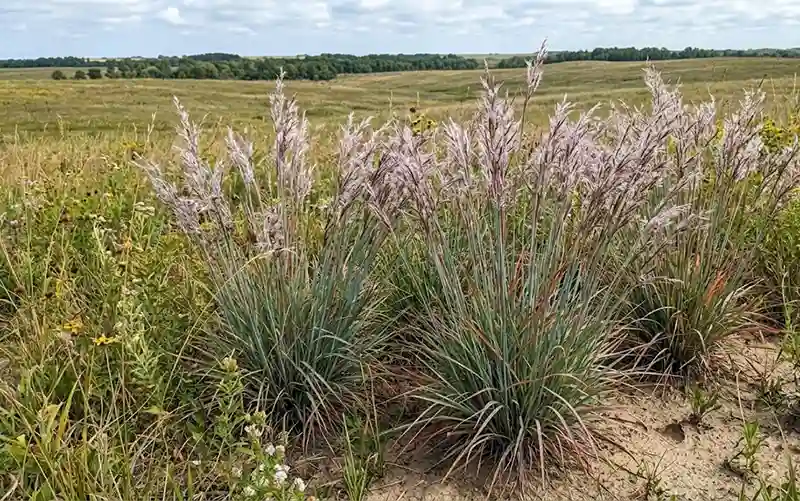
Little Bluestem is a warm-season prairie grass that is popular for its ornamental value. The hints of silver-blue on the green stems and foliage add to its attractive appearance. Due to its clumping habit, it is well suited in rockeries and meadow settings. With its deep roots, it also helps prevent soil erosion.
If you want to add this ornamental grass to your garden for winter interest, follow along with this article to learn about its care, propagation, and common problems.
Table of Contents:
- What is Little Bluestem? Quick Information Box
- Little Bluestem: Key Features and Benefits
- How to Care for Little Bluestem Grass
- How to Grow Little Bluestem Grass from Seeds
- Propagation of Little Bluestem Grass
- Types of Little Bluestem
- Common Problems with Little Bluestem
- Frequent User Queries and Solutions for Little Bluestem
- Final Words
- FAQs
What is Little Bluestem? Quick Information Box
Little bluestem, scientifically called Schizachyrium scoparium, belongs to the Poaceae family. Native to North America, this is an ornamental perennial grass that is considered non-poisonous to both humans and pets.
Here is the quick information about this grass:
| Botanical name | Schizachyrium scoparium |
| Common names | Little Bluestem, Small Blue Stem, Beard Grass, Broomsedge, Broom Beard Grass, and Prairie Beard Grass |
| Kingdom | Plantae |
| Order | Poales |
| Family | Poaceae (Grass family) |
| Genus | Schizachyrium |
| Plant type | Ornamental perennial grass |
| Mature size | 2-3 ft. tall |
| Hardiness zones | USDA zones 3-9 |
| Native area | North America |
| Toxicity | No known toxicity to humans, cats, dogs, and horses |
Did you know?
Perennial Plant Association named Little Bluestem (Schizachyrium scoparium) the 2022 Perennial Plant of the Year for its low maintenance and landscape appeal
Also Read: March Birth Flowers (Daffodil and Jonquil) : Meaning, Significance, and Care Tips
Little Bluestem: Key Features and Benefits
Schizachyrium scoparium little bluestem grass, has narrow and flat foliage and seasonal vibrant blooms. It is beneficial for wildlife as a nutritional source and overwintering shelter. Further, it is drought-tolerant and also helps in erosion control.
Key Features of Small Blue Stem
- Foliage: This perennial has narrow and flat blue-green and grey-green blades. They are about ¼ inch in width and 2 feet in length. These leaves transform to reddish bronze in the fall, adding visual appeal to the landscape.
- Flowers and Seeds: The grass displays purplish bronze flowers from July to October. These blooms are followed by the silver-white seed heads.
- Shape: It has an upright growth habit. The stems are slender and rigid, and the foliage grows on it in bunches, contributing to a columnar shape.
Benefits of Small Blue Stem
- Drought Tolerant: This perennial has a deep root system that makes it highly resistant to drought. In this way, this grass is great for xeriscaping or water-wise landscaping.
- Erosion Control: The fibrous and deep-reaching roots help stabilise the poor soil on banks and hillsides and lead to erosion control.
- Wildlife Support: It acts as a larval host to many of the skipper species. The seeds of this plant are consumed by songbirds and mammals. It also provides winter shelter for various insects and wildlife.
Did you know?
The scientific name of little Bluestem, Schizachyrium scoparium, is derived from the Greek words where “Schizachyrium” means “divided chaff” and “scoparium” refers to its broom-like look.
How to Care for Little Bluestem Grass
Little blue stem grass is a hardy perennial and relatively easy to cultivate. It can thrive in full sun and infertile soils. This is drought-tolerant and doesn’t require too much watering.
To grow it successfully and start a garden from scratch, follow the care tips below:
Sunlight Requirement
Little blue stem needs full sun to grow well and show proper colour intensity. The grass can tolerate partial shade, but the growth and the foliage colour will be affected.
Soil Needs
This perennial is great for poor, infertile landscapes, as it prefers dry soil or light moisture levels. The grass tolerates poor, clay soil but does not do well in fertile soil or moist conditions.
Watering
Once it is established, Schizachyrium scoparium little bluestem is drought tolerant. Additional watering may result in drooping stems. Further, overwatering can kill the plant. In the first growing season, water the perennial weekly in summer months to establish the root system, then reduce the frequency.
Temperature & Humidity
The small blue stem is well adapted to the southern climates and does well in most parts of the United States. The preferred temperature to grow this is between 65°F and 80°F. It can handle humidity levels between 25% and 70%. However, excessive humidity can cause rust disease.
Fertilizer
The grass usually doesn’t need any fertilizers because it prefers poor soils. Fertile soil causes the flopping stems at the base that are known as lodging. A drier, infertile soil is better, as it helps keep the stems shorter yet stronger.
Quick Tip
If the soil is extremely depleted, apply a light top dressing of compost or leaf mould in early spring instead of chemical fertilizers.
Pruning
Cut back old foliage in early spring or late winter to encourage healthier growth and promote better appearance.
Quick Tip
You may leave the little bluestem standing through the winter and cut it back in spring so that the seeds continue to be a food source for the local birds in winter.
Next Read: Hellebore: Planting, Care And Fun Facts About the Christmas Roses
How to Grow Little Bluestem Grass from Seeds
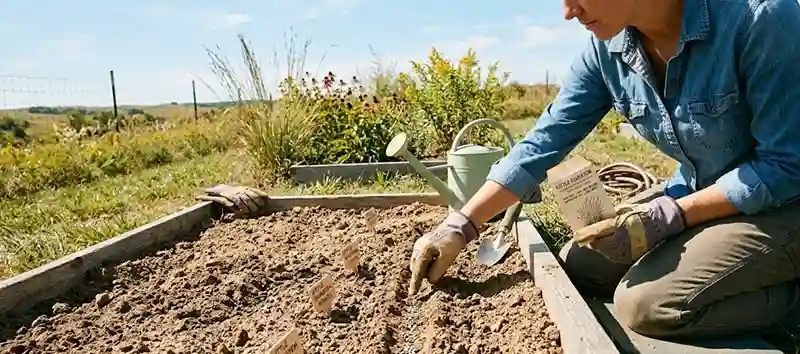
Grow the Schizachyrium grass from seeds in early spring or late fall for backyard design or pollinator gardens. Press the little bluestem seed into the soil and wait a few weeks for germination.
Here are the steps to follow to grow it from seeds:
- Pick a spot with full sun and dry to medium soil.
- Press the seeds lightly into the soil about ⅛ to ¼ inch deep.
- Keep the soil well moist until the seeds germinate in about 1-2 weeks.
- Avoid fertilizers, as excessive nutrients can cause floppy stems.
Quick Tip
Use 3 to 5 pounds of seeds per acre for the best results.
Propagation of Little Bluestem Grass
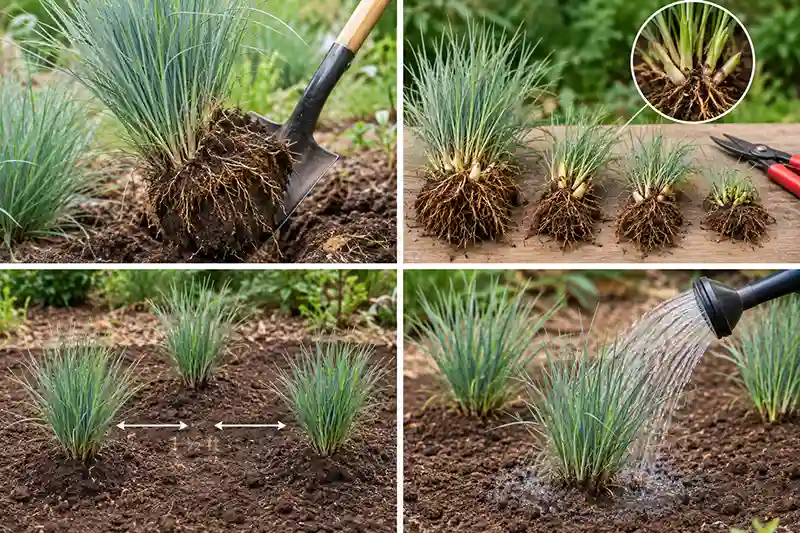
Schizachyrium scoparium is easy to propagate with the division of the clumps. It is best done in the spring as the new growth begins. For this, lift the plant and divide the roots. Replant them in the ground and let them settle.
Here are the steps to follow to propagate these plants:
- Lift the entire plant out of the ground with a sharp spade.
- Cut the root crown into smaller clumps, ensuring that each section has healthy roots and several growing points.
- Replant in the ground immediately at the same length they were growing before. Space them 1 ½ feet apart.
- Water well and keep the soil moist to settle the root system for 3-6 weeks.
Types of Little Bluestem
There is a wide variety of Blue Stem grass to choose from due to its popularity. Some of the most famous types are Blaze, Standing Ovation, and The Blues little bluestem.
Take a look below to learn about some of its types:
| Types | Key Points |
Blaze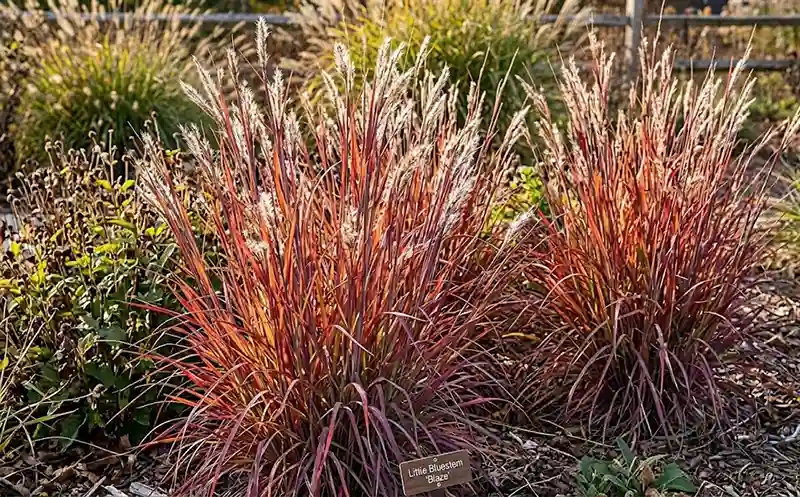 | This is the preferred variety for winter interest. It can do well in clay soils too, compared to the main species.
|
The Blues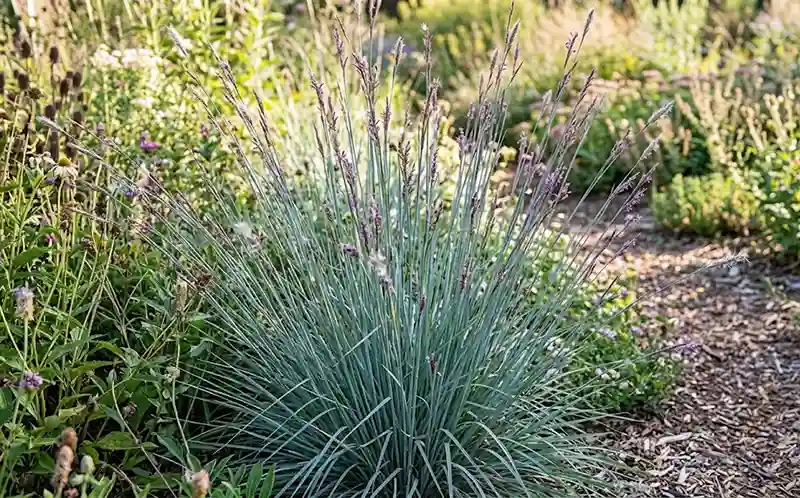 | This cultivar has eye-catching blue tones in summer that shift to purplish orange in the fall.
|
Standing Ovation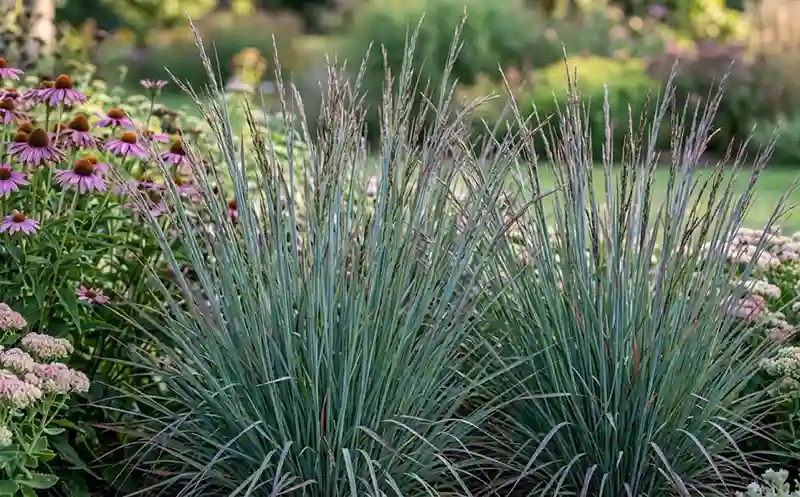 | The type has a strong upright habit, doing well in windy and dry environments.
|
Carousel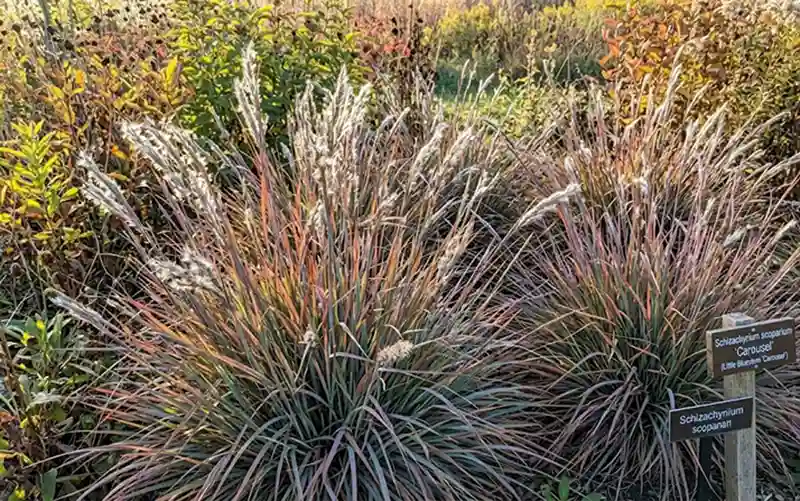 | A dense and compact variety that has blue-green leaves.
|
Blue Heaven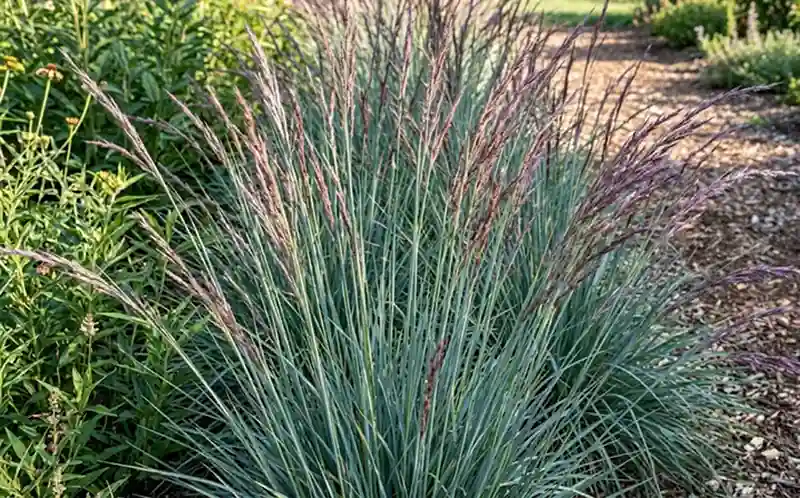 | This variety can grow 3-4 feet tall with blue-green summer foliage.
|
Also Explore: 50 Fall Flowers: African Daisy, Calibrachoa, Petunia, Nemesia, and More!
Common Problems with Little Bluestem
Bluestem grasses are usually forgiving if you keep them in the proper growing conditions. However, a few issues can still arise in these perennials, like flopping stems, rust disease, and dead centers.
| Problems | Signs and Solutions |
| Flopping stems |
|
| Rust disease |
|
| Dead center in the old clumps |
|
Frequent User Queries and Solutions for Little Bluestem
There are many queries about this grass that planters have raised on the Reddit platform. Some of them are about its floppy stems and sun exposure.
Let’s see these queries and their possible solutions below:
- u/peanutbuddy asks about Little Bluestem flopping over?
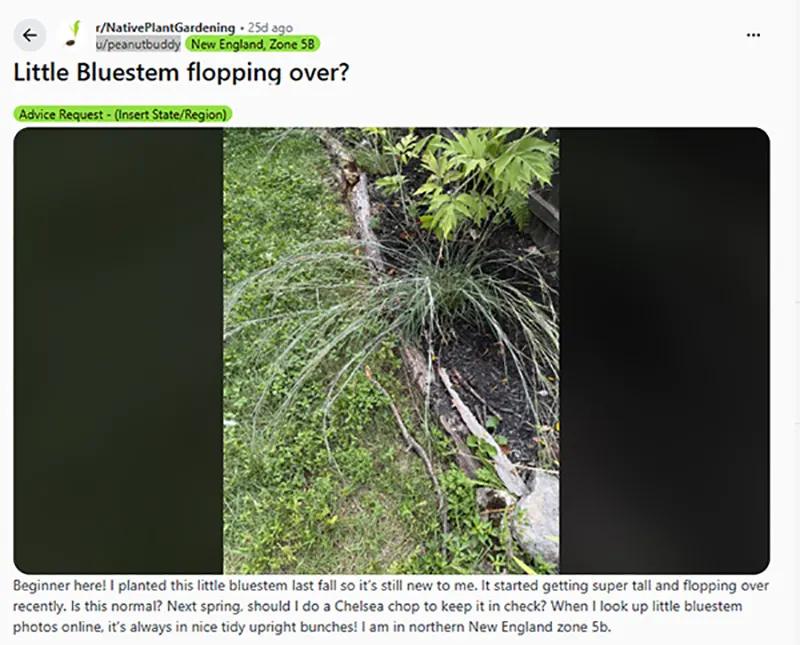
Solution: The common causes of flopping stems in this grass are overly rich soil, excess moisture, and no companion plants. To prevent this, ensure good drainage, grow it in a location with full sun, and avoid fertilizers.
u/IDooDoodAtTheMasters wants to know Should I relocate my Little Bluestem to get more sunlight?
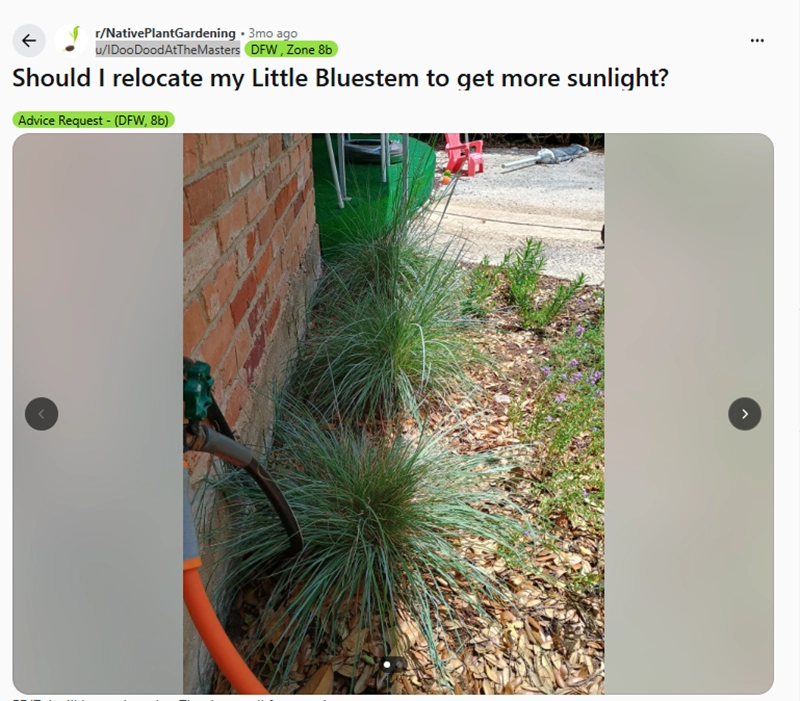
Solution: Yes! You should relocate the plants if they are not getting at least 6 to 8 hours of daily direct sunlight.
Final Words
Little Bluestem is attractive, adaptable, and easy to care for in its native range. It is drought-tolerant and great to enliven different spaces with its fall colours. The grass supports many moth and butterfly species as a larval host plant and winter shelter. You may pair it with purple coneflower or lanceleaf coreopsis as they complement each other’s visual texture.
FAQs
How fast does little blue stem grow?
Is little bluestem seedling beneficial to my local ecosystem?
Yes! The grass offers overwintering habitat and a prime nesting spot. The seeds also work as a nutrition source for the birds.
What are the famous varieties of little blue stem?
Some of the famous varieties are The Blues, Blue Heaven, Standing Ovation, and Blaze.
When does the small blue stem bloom?
This herbaceous perennial blooms from late summer to early autumn with small purplish bronze flowers.
How to fertilize the small blue stem grass?
It generally does not need any fertilizer, as it prefers nutrient-poor soils.
Sources:
Little Bluestem – United States Department of Agriculture
Little Bluestem – Missouri Department of Conservation
little bluestem – Britannica
Schizachyrium scoparium – ScienceDirect’
Latest Blog