The size of a fully grown night-blooming jasmine tree is around 6 to 18 ft tall and 4 to 12 ft wide.
How to Grow Night Blooming Jasmine, Its Care Tips, Ideal Growing Conditions, Taxonomy
Author
Cerina TriglavcaninReviewed By
Cody Allison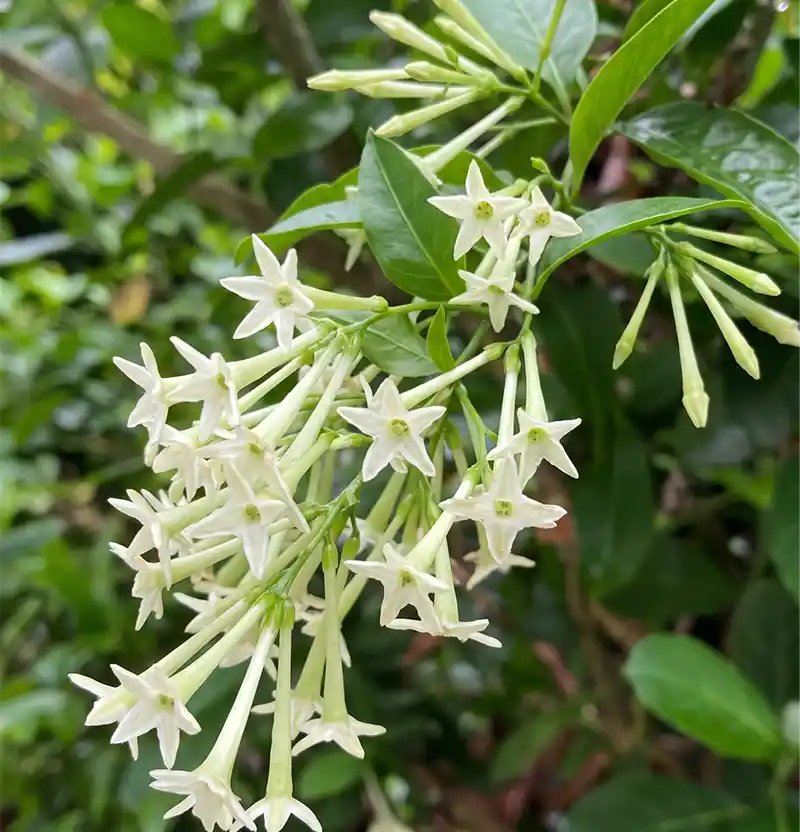
Night-blooming jasmine is a beautiful flower that is often cultivated for its ornamental and fragrant qualities. It is also one of the pollinator-friendly flowers, which helps attract pollinators like bees and butterflies. While other flowers generally bloom during the daytime, blooming jasmine blooms at night.
The plant blooms in clusters of flowers in shades of white with glossy, oblong green leaves. After flowering, the plant also produces small, white, ovoid to oblong berries that explain its invasive potential in warm regions.
Read the article to learn about night blooming jasmine taxonomy, ideal growing conditions, care tips, propagation methods, and pests and problems associated with the plant.
Table of Contents:
Night Blooming Jasmine Cestrum Nocturnum Taxonomy and Ideal Growing Conditions
Night-blooming jasmine is scientifically known as Cestrum Nocturnum. The plant belongs to the Solanaceae family and is native to South America and the West Indies. It thrives in direct sunlight and needs regular watering to keep the soil consistently moist. Although the plant is considered to be toxic to pets and humans, it is a great addition for attracting local pollinators like bees, hummingbirds, and butterflies.
Look at the table below for detailed taxonomy and ideal growing conditions:
| Botanical name | Cestrum nocturnum |
| Common name | The lady of the night, night-blooming jasmine, poisonberry |
| Kingdom | Plantae |
| Order | Solanales |
| Family | Solanaceae |
| Genus | Cestrum |
| Native area | West Indies, South America |
| Season of interest | Spring, summer |
| Hardiness | 8 to 11 USDA Zones |
| Light Requirements | Full sun with partial shade |
| Maintenance | Low |
| Type | Shrub, evergreen |
| Flower colour | White, green, yellow |
| Soil | Moist, well-drained soil with acidic to neutral pH levels |
| Water Requirements | Regular |
| Mature size | 6 to 15 ft. tall |
| Fertilizers | Once every month |
| Toxicity | Toxic to pets and humans |
| Tolerant | Once established, it is tolerant across different environmental conditions like drought and high heat. |
Did you know?
Night blooming jasmine is not the true jasmine flower. The plant belongs to the nightshade family and not the genus Jasminum.
Read more: 30 Yellow Flowers: Blooms That Bring Joy to Your Garden
Night Blooming Jasmine Plant Care
Night-blooming jasmine thrives in moist conditions and can spread heavily. It is considered to be one of Hawaii’s invasive plant species. Therefore, you need to look for a proper location that receives direct sunlight for at least 6 hours a day, keep the soil moist, and do more to help the plant thrive. Below are some of the essential care tips for a night-blooming jasmine plant:
- Choose a location that receives direct sunlight for at least 6 hours a day. Though the plant can survive in partial shade, prolonged shade can reduce the quantity of blooms.
- Plant night-blooming jasmine in spring when the last frost has passed.
- Make sure that you plant them at least 4 to 8 ft. apart because they tend to spread widely. Proper spacing helps the plant have proper air circulation and avoid pests from attacking it.
- Grow night-blooming jasmine in any fertile soil that is well-draining and nutrient-rich.
- Use fertiliser during the establishment period and try to fertilise the soil annually every early spring. I use organic manure, which is a good and trusted replacement for fertilisers.
- Night jasmine loves moist soil, so water the plant frequently for healthy and fragrant blooms.
- Try to prune the plant in fall after flowering has finished. This encourages thick and compact growth in the next season and also helps reduce invasive traits, like berry seeds not dispersing.
Did you know?
The sweet, musky fragrance of the lady of the night can travel remarkably far in warm, still air.
Read more: Best 25 Winter Plants to Maintain Your Garden Aesthetics in Cold
Propagating Night-Blooming Jasmine
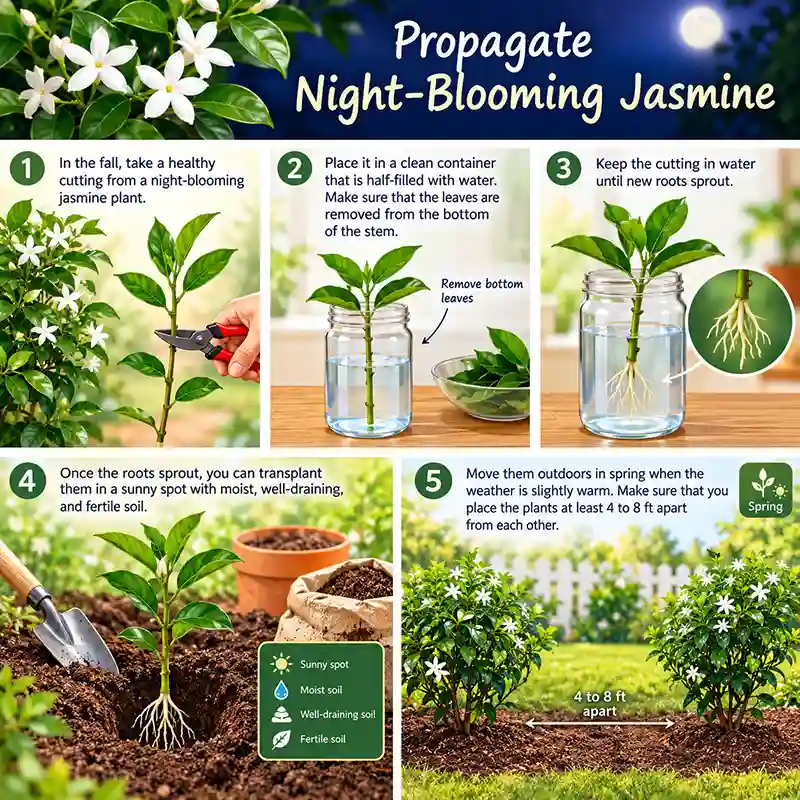
The best way to grow Night-Blooming Jasmine is by propagating it using cuttings. This is because it is a fast-growing shrub. Here are a few steps that I follow to propagate night-blooming jasmine:
- In the fall, take a healthy cutting from a night-blooming jasmine plant.
- Place it in a clean container that is half-filled with water. Make sure that the leaves are removed from the bottom of the stem.
- Keep the cutting in water until new roots sprout.
- Once the roots sprout, you can transplant them in a sunny spot with moist, well-draining, and fertile soil.
- Move them outdoors in spring when the weather is slightly warm. Make sure that you place the plants at least 4 to 8 ft apart from each other.
Tip
Avoid cultivating blooming jasmine from seeds because they remain dormant for years.
Read more: Best 15+ Small Evergreen Garden Plants Perfect for Compact Spaces
Pests and Problems Associated With Night-Blooming
Night-blooming jasmine is a deer-resistant plant that does not suffer from many problems and pests. The most prominent pests that can attack your plant are aphids and caterpillars. You can remove aphids using a strong spray of cold water and neem oil, if required.
Caterpillars can be easily removed by hand picking, but you can avoid doing so because they turn out to be beautiful pollinators.
The most common and only problem that my plant suffered from was that it was not blooming. This happened because the plant was not getting sufficient sunlight. So, to avoid such a situation, plant your blooming jasmine in a location that receives maximum sunlight.
Read more: Arborvitae: Taxonomy, Care Tips, Varieties, and the Mistakes You Can’t Undo
Takeaways
Night blooming jasmine might not belong to the true jasmine family, but the plant is often cultivated for its fragrant flowers that bloom white. The plant is also pollinator-friendly but can cause trouble for your pets if consumed. It is a low- to medium-maintenance plant that requires direct sunlight and moist, well-draining soil to bloom efficiently.
The best part about growing them is that they can be easily propagated and usually aren’t attacked by pests. If you are planning to add a blooming jasmine plant to your garden. Do it this fall and enjoy the natural musky fragrance with beautiful butterflies all around the garden in the following spring.
Happy planting!
FAQs
What is the size of a full grown night blooming jasmine tree?
What is the most preferable time to grow a night-blooming jasmine plant?
The most preferable time to grow a night-blooming jasmine plant is around fall indoors. Transplant it outdoors only when the frost has completely passed.
Source
Night Jessamine: iNaturalist
Latest Blog