Gomphrena is an annual plant that is planted as a perennial in some USDA Zones.
What is Gomphrena, Its Care Tips, Ideal Growing Conditions, and Growing Process
Author
Cerina TriglavcaninReviewed By
Cody Allison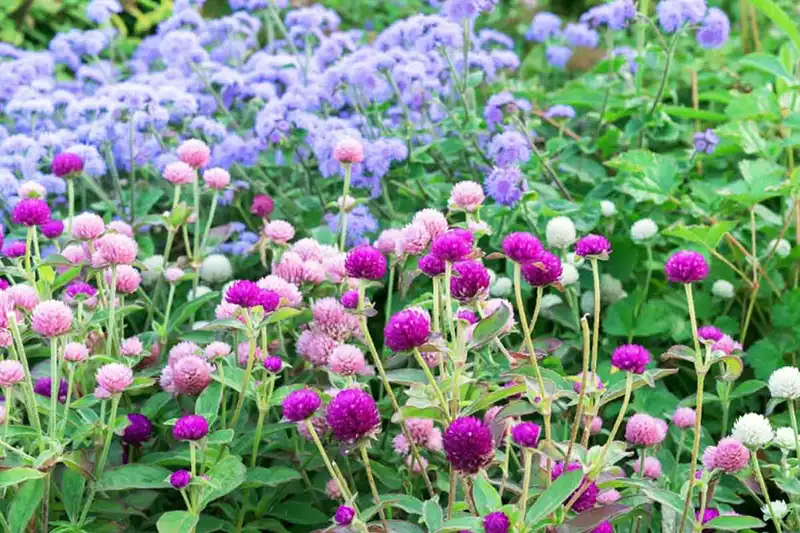
Gomphrena, or globe amaranth, is an ornamental flowering plant that is grown for its showy spherical flowers. This charming plant not only adds colour to your garden, but it is also pollinator-friendly and therefore attracts local pollinators like bees, butterflies, and hummingbirds.
It is an annual plant that is grown as a perennial in some weather conditions. This sun-loving plant is heat- and drought-tolerant and requires little care and maintenance once established. The more you remove bloomed flowers, the more they bloom, and when dried, flowers hold onto their color.
Read the article to learn more about Gomphrena taxonomy, care tips, growing process, and pests and problems associated with the plant.
Table of Contents:
Gomphrena Taxonomy and Ideal Growing Conditions
Gomphrena, also known as amaranth, is an annual plant that belongs ot the Amaranthaceae family. The plant blooms in beautiful hues of purple, pink, white, and yellow.
Globe flowers need full sunlight and well-draining clay, sandy, and loamy soil with acidic to neutral pH levels. This ornamental flowering plant is non-toxic to pets and humans and is also one of the best additions to attract local pollinators to your garden.
Look at the table below to learn about Gomphrena globosa taxonomy and ideal growing conditions:
| Botanical name | Gomphrena spp. |
| Common name | Amaranth, globe flower, bachelor’s button |
| Kingdom | Plantae |
| Order | Caryophyllales |
| Family | Amaranthaceae |
| Genus | Gomphrena |
| Native area | Central America, South America, North America |
| Season of interest | Summer and fall |
| Hardiness | 2 to 11 USDA Zones |
| Light Requirements | Full and direct sunlight for 6 hours a day |
| Maintenance | Low |
| Type | Annual, showy |
| Flower colour | Purple, lavender, pink, red, white, orange |
| Soil | Well-drained clay, loam, and sandy soil with acidic to neutral pH levels |
| Water Requirements | Average |
| Mature size | 6 inches to 8 inches tall and 6 inches to 10 inches wide |
| Fertilizers | Light feeder |
| Toxicity | Non-toxic to pets and humans |
| Tolerant | Drought- and humidity-tolerant |
Gomphrena Plant Care Tips
Globe amaranth is a long-blooming perennial plant that grows in tropical and subtropical regions around the world. This low-maintenance plant has a bushy habit, which makes it ideal for filling bare spots in the garden. Here are some important care tips that help the plant grow best:
- Plant gomphrena in a location that receives full sunlight for at least six to eight hours a day.
- Plant it in well-draining sandy, loamy, or clay soil with acidic to neutral pH levels.
- Water the plant regularly during the establishment period. Make sure to keep the soil moist but not soggy, as it can lead to root rot.
- Once established, the plant becomes drought-tolerant. You can leave it underwater for a short span.
- The best time to start from seed indoors is 6 to 8 weeks before the final frost.
- Plant seedlings around 14 to 20 inches apart from each other. This allows proper air circulation.
- Only fertilise the plant once or twice during the growing season. Avoid fertilising the plant frequently because gomphrena are not heavy feeders.
- Using compost instead of fertilisers is a better option because it helps provide the plant with sufficient nutrients.
- Apply a layer of mulch around the plant base. It helps to suppress weeds and maintain soil temperature.
Read more: Tradescantia Plant Guide: Taxonomic Overview, Ideal Growing Conditions, Care Tips, & Much More!
How to Grow Gomphrena Globe Amaranth?
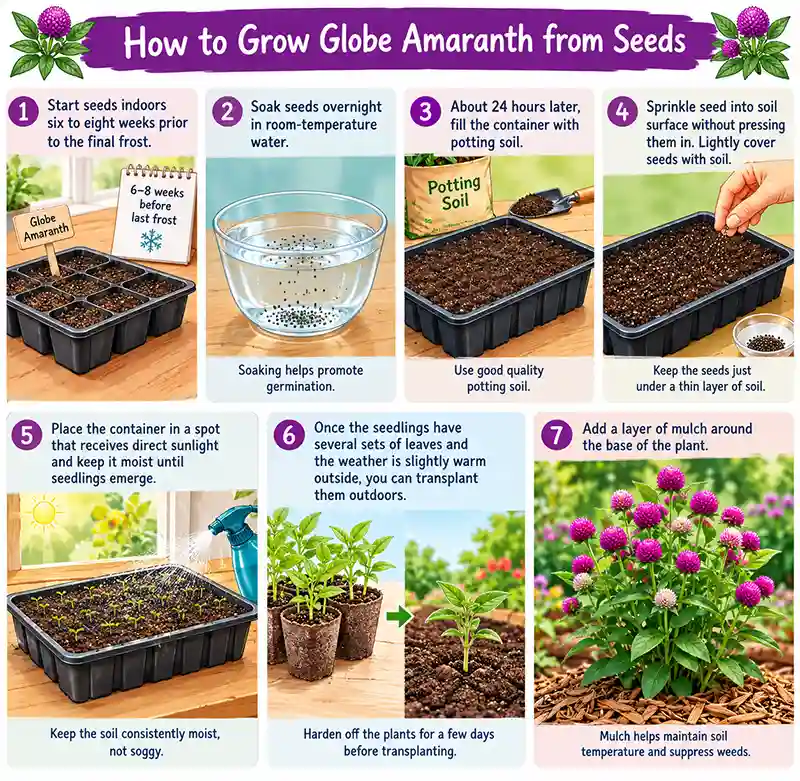
Gomphrena is an annual plant that can easily grow in most of the USDA Zones. It can be easily grown from seed and propagated from cuttings. Here are some steps involved in growing globe amaranth from seeds:
- Start seeds indoors six to eight weeks prior to the final frost.
- In a container or a tray, soak seeds overnight in room-temperature water to promote germination.
- Around 24 hours later, fill the container with potting soil.
- Sprinkle seeds onto the soil surface without pressing them in. Lightly cover seeds with soil.
- Place the container in a spot that receives direct sunlight and keep it moist until seedlings emerge.
- Once the seedlings have several sets of leaves and the weather is slightly warm outside, you can transplant them outdoors.
- Add a layer of mulch around the base of the plant. This helps maintain soil temperature and suppress weeds.
Propagating Gomphrena
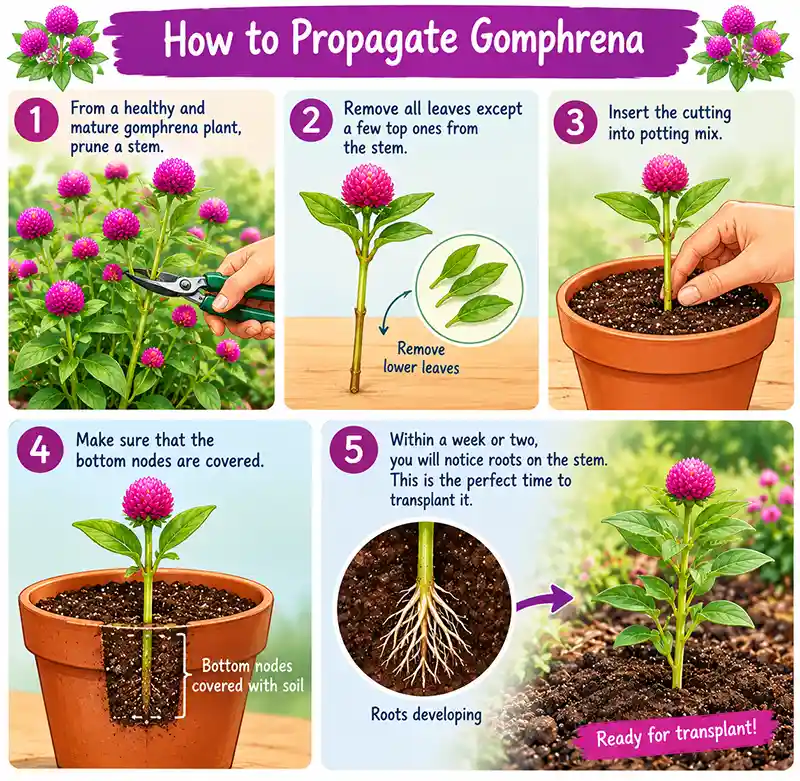
Gomphrena can be easily propagated from cuttings. This is not only effective but also an inexpensive way to grow the plant. Using mature plant cuttings helps grow roots quickly in about a week. Here are a few steps that I follow to propagate gomphrena:
- From a healthy and mature gomphrena plant, prune a stem.
- Remove all leaves except a few top ones from the stem.
- Insert the cutting into the potting mix.
- Make sure that the bottom nodes are covered.
- Within a week or two, you will notice roots on the stem. This is the perfect time to transplant it.
Read more: Dracaena Lemon Lime: Growing Conditions, Care Measures and Common Pests and Diseases
Popular Gomphrena Varieties
In the United States, the globe flower is cultivated for its ornamental properties and cut flowers. The plant is also highly attractive to pollinators, including bees and butterflies. Here are some of the gardeners’ favourite varieties of the plant along with their description and image:
| Variety and Image | Description |
Common globe amaranth (G. globosa)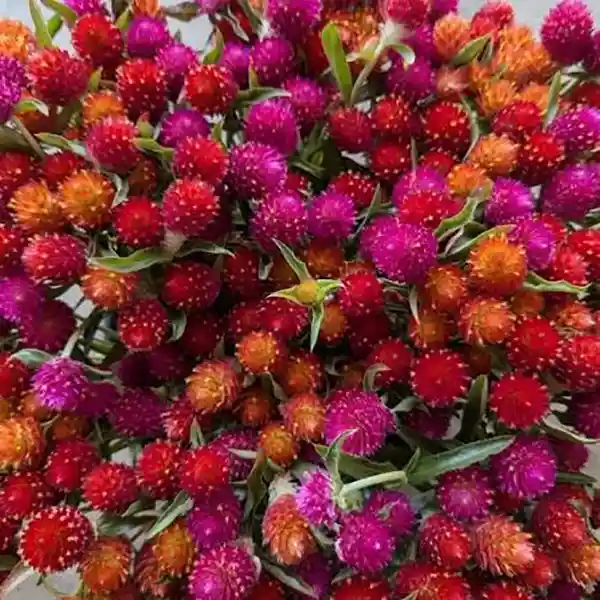 | This species includes a number of cultivars grown as a garden annual. The plant blooms with tiny globes in yellow or white, surrounded by pink, red, or purple. |
Strawberry globe amaranth (G. haageana)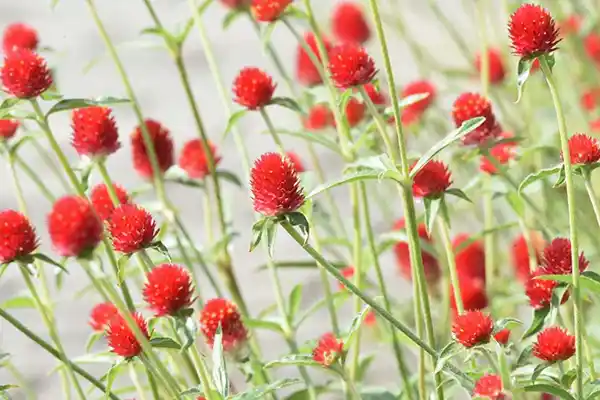 | It is a popular garden plant that has clover-like blooms, which appear like strawberries with small yellow centers. |
Pink globe amaranth (G. pulchella)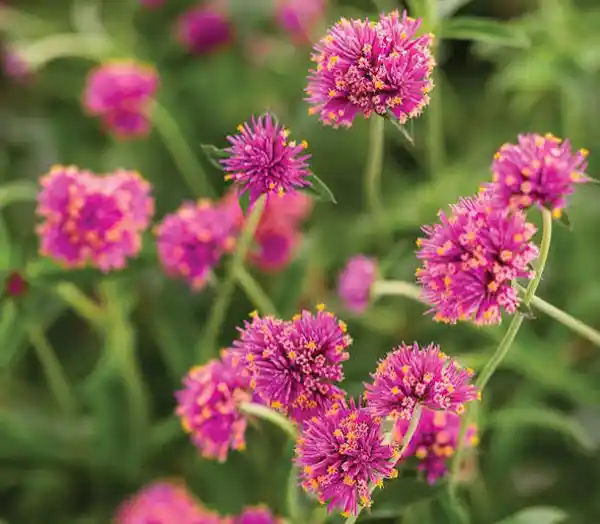 | This garden species blooms from spring until frost with a mounding growth habit and slightly arching flower spikes. |
Sonoran globe amaranth (G. somorea)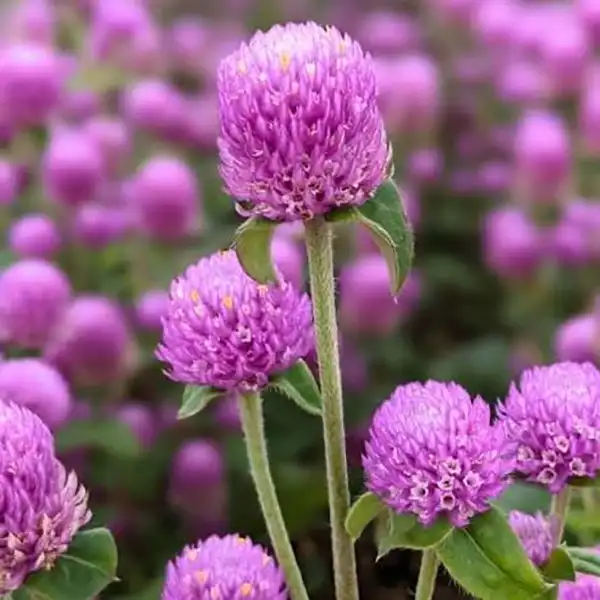 | Sonoran globes are desert species that grow in Mexico and Arizona. The blooms are white and pink colour from August till December. |
Read more: 50 Fall Flowers: African Daisy, Calibrachoa, Petunia, Nemesia, and More!
Pests And Problems Associated With Gomphrena Plant
The common pests that might attack the amaranth plant are aphids and flea beetles. They are generally attracted to new growth on the Gomphrena plant and can cause irreversible damage. You can deter them by using a strong spray of water or neem oil if required. This helps control large populations.
The common problems that might attack your amaranth plant are powdery mildew, leaf spot, and gray mold. These can be caused by improper spacing between plants, partial to no sunlight, and excessive watering, respectively. Ensure you plant this flowering plant in a sunny location, with proper spacing between plants, and do not water the plant in abundance.
Read more: Arborvitae: Taxonomy, Care Tips, Varieties, and the Mistakes You Can’t Undo
Takeaways
Gomphrena starts blooming in early summer and lasts till fall. These flowers do not only add vibrant hues to your landscape but also help attract pollinators like bees and butterflies. The plant is low-maintenance and does not require much attention. This makes it a good experience for first-time planters.
With little to no care, you can propagate it using stem cuttings from the healthy mature plant. If required, you can plant them from seeds. Just make sure that you do not heavily cover them with soil.
Doesn’t matter if you are a pro or first-time gardener; this winter is the best time to start early indoors with gomphrena seeds and wait until summer for your first bloom. Happy Planting!
FAQs
Is gomphrena a perennial?
What is the best time to sow globe amaranth seeds?
The best time to sow globe amaranth seeds indoors is in late winter or around 6 to 8 weeks before the frost ends.
How to get Gomphrena to bloom?
If you want your gomphrena to bloom at its peak, plant it in a location that receives direct sunlight for at least 6 to 8 hours a day.
Sources
Globe amaranth: Britannica
Genus Gomphrena: iNaturalist
Latest Blog