These plants are tender perennials, but they are commonly grown and treated as annuals in colder regions.
Straw Flower: Planting, Growing and Harvesting Explained
Author
Cerina Triglavcanin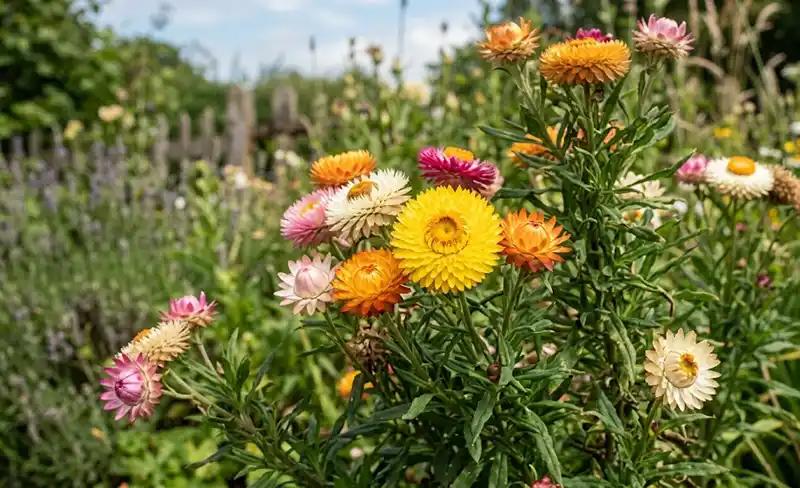
Straw flower is a short-lived plant that comes in soft, elegant tones and shades. This plant is grown as a perennial in optimal zones and as an annual in regions with hot summers. Its papery bright blooms are beautiful in both dried and fresh forms. Whether you are a home gardener, crafter, or florist, once you know the tricks, growing these flowers in the garden is a simple task.
In this article, learn all the important information about this plant, ranging from its planting and care to common problems.
Table of Contents:
Strawflower Plant at a Glance
Strawflower, belonging to the Asteraceae family, is a vibrant daisy-like plant. It is native to Australia and can grow up to 2-3 feet tall and 6-18 inches wide. The plant produces blossoms with stiff, papery petals from spring to fall.
| Botanical name | Xerochrysum bracteatum |
| Common names | Strawflower, golden everlasting |
| Order | Asterales |
| Family | Asteraceae |
| Genus | Xerochrysum |
| Species | Xerochrysum bracteatum |
| Plant type | Perennial or annual |
| Mature size | 2-3 feet tall and 6-18 inches wide |
| Bloom time | Spring, summer and fall |
| Flower colours | Orange, yellow, red, white and pink |
| Hardiness zones | USDA zones 8-11 |
| Native area | Australia |
Also Read: Everything You Need to Know About Cosmos Flower: From Ideal Growing Conditions to Pests & Problems
How to Grow Straw Flowers from Seeds
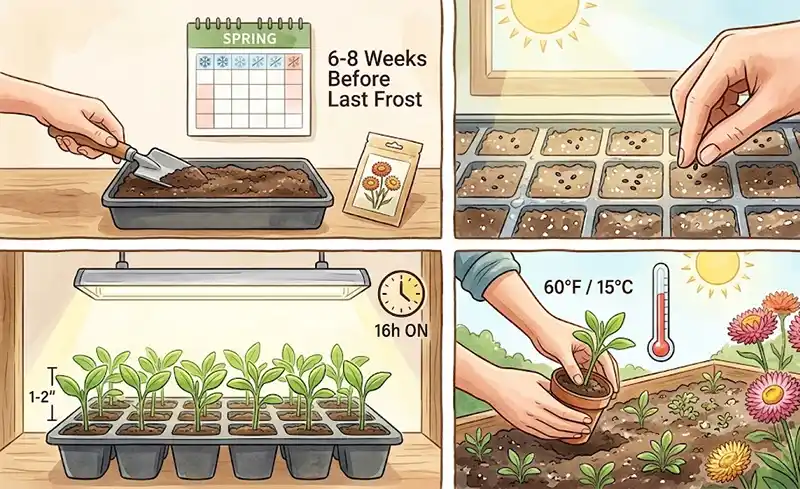
To grow the straw flower plant from seeds, you can start the seeds indoors some weeks before the last spring frost. You may also directly sow the seeds in climates that have a longer growing season. Buy the seeds from commercial stores or harvest them from the spent blooms in the winter.
Here are the steps for growing strawflowers from seed:
- Start the seeds indoors about six to eight weeks before the last frost at your location.
- Press the seeds on the well-draining seed starting mix lightly. Surface sow the seeds; do not bury them, as they need light to germinate.
- When the strawflower seedlings appear in 7-10 days, provide them with plenty of light. Place the pot near a window or use fluorescent grow lights and keep them on for 16 hours daily.
- Harden off the transplants for about two weeks. Transplant them to the garden when the night temperatures reach 60°F.
Suggested Read: Moonflowers: Planting, Care Measures and Propagation Explained
Strawflower Plant Care Measures
For care of straw flowers, keep the plant in a spot that receives full sun for at least 6-8 hours a day. Plant it in well-drained rocky or sandy soil and water it once a week. Also, apply balanced fertilizer once a month and repot when roots fill the current container.
Let’s see the care measures to follow for this plant:
Sunlight Requirements
Straw flowers plant prefers full sun to grow well, but they are tolerant of partial shade. However, in partial shade, they are not going to bloom their best. The full sun exposure also helps prevent weak and floppy stems.
Soil Preference
Strawflower plants prefer sandy and rocky soils with a mildly acidic to neutral pH. They can also grow in rich and heavy soils as long as they have excellent drainage. Add mulch to keep the soil temperature consistent and retain moisture in the soil.
Expert Tip
While planting in the garden, dig up the soil 10-12 inches deep and add three inches of compost. It strengthens the plant against environmental stress.
Watering Needs
Strawflower flowers are drought-tolerant and can bloom well even after a week of dry weather, though avoid letting them wither for an extended period of time. The plants do best with weekly watering. If there is no rain, give the plants about 1 inch of water every week during their active growing season, preventing soggy conditions.
Temperature and Humidity
Strawflowers thrive best in temperatures of 65-70°F during the day and 60°F at night. These plants are vulnerable to frost damage and grow best in warm weather. They prefer low humidity, and high humidity levels can cause fungal issues such as botrytis.
Fertilizer
In straw flower care, you don’t need to heavily feed the plants. Generally, the monthly application of balanced fertilizer is enough to keep the plant blooming steadily. The plants in pots need more feeding compared to the plants in the garden. If you are growing strawflowers in containers, feed them about every two weeks.
Pruning
Strawflowers care doesn’t involve much pruning. However, you can pinch the plants back when they reach about 1 foot tall to encourage branching out. This also promotes better blooming.
Repotting
The plants are great for container gardens, adding colour to porches and balconies. Repot the plant in its active growing season of spring or summer so that it can recover quickly. To repot it, choose a container that is a size bigger than the last container. Fill it with a potting mix and plant the root ball at a similar depth to what it was in the previous container.
Expert Tip
Avoid fertilizing the plant for 1-3 weeks after repotting to prevent the burning of sensitive roots.
Propagation of Strawflower
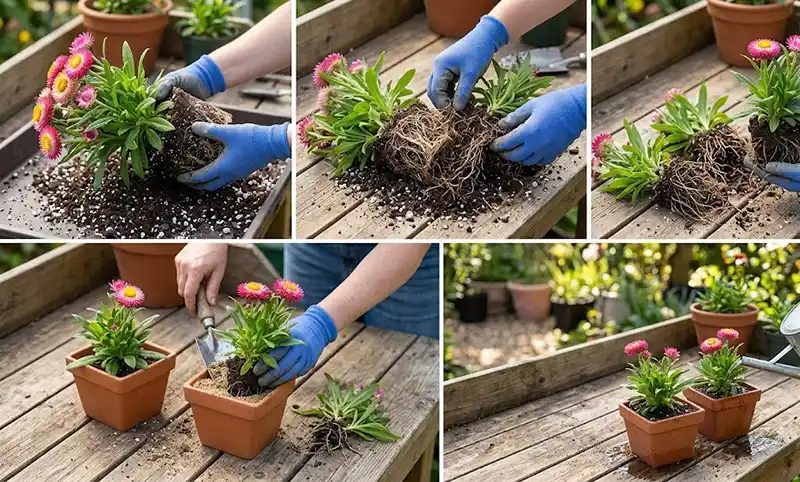
You can propagate the straw flower by dividing its roots. This process is done best during spring when the new growth begins to emerge. For this, remove the plant from the pot and shake off the soil. Divide the roots and repot the divisions in new containers.
Here are the steps for its propagation:
- Water the mother plant well a day before. Gently remove the plant from the pot and shake the soil off the roots.
- Look for the separate crowns and tease them apart by hand. If the roots are matted, use a clean knife.
- Make divisions of the roots, ensuring each has a good share of roots and growing points. The bigger divisions tend to recover faster.
- If there are any rotten roots, trim them. Pot the new divisions in separate containers using well-drained sandy or loamy soil.
- Water well and keep the pots moist for 3-6 weeks until the roots establish.
Harvesting Strawflowers as Cut Flowers
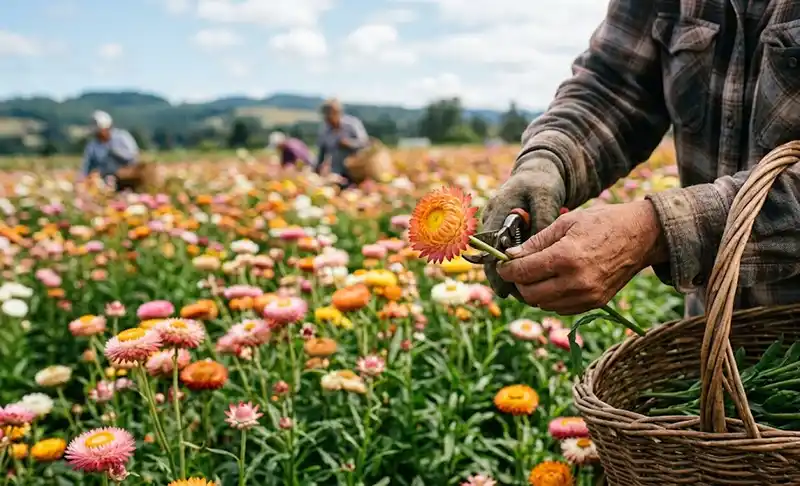
Strawflower germination and care is fairly easy, but when talking about them as cut flowers, the success is dependent on when you are cutting the flowers. Pick the flowers when they are partially open and cut them above the leaf node.
Here are some tips for harvesting the flowers:
- Harvest your strawflowers when they begin to harden or show their centers.
- The flowers’ first 2-3 bracts should be open. After being cut, the blooms will open more.
- If you harvest flowers when the center is fully open or has been pollinated, the flower will likely discolour or shatter.
- If you notice the papery bracts pointing downwards, it’s too late now to harvest them as cut flowers.
- Its stems generally have more than three flowers on them. You can harvest the stem when the main large flower is ready.
- The best time to harvest these flowers is in the early morning when the plant is most hydrated. As fresh flowers, they will have a vase life of 7-10 days.
- Cut the stems cleanly using sharp scissors just above the leaf node to promote the new growth of the plant.
Expert Tip
You can dry these flowers similar to how to dry roses. For this, remove all the strawflower leaves and hang all the stems in bunches upside down in a warm and dark place. After about three weeks, the stems will be brittle, and the flower heads will be dry and papery when touched.
Varieties of Strawflowers
Some of the famous strawflower varieties include ‘Helios Flame’, ‘Sundaze Golden Yellow’, ‘Monstrosum’ and ‘Paper Daisy Mixed’.
Take a look below to learn more about these varieties:
| Variety | Description |
‘Helios Flame’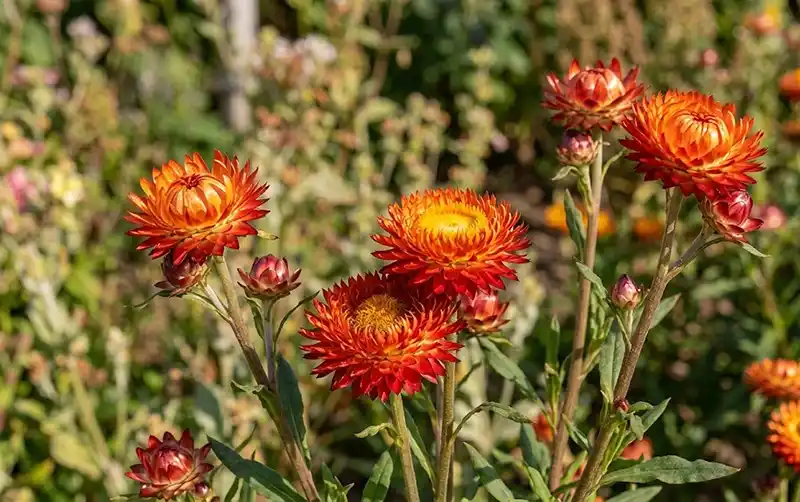 | It produces fiery red-orange flowers with golden centers. It is a vigorous grower that does well in containers and borders. |
‘Sundaze Golden Yellow’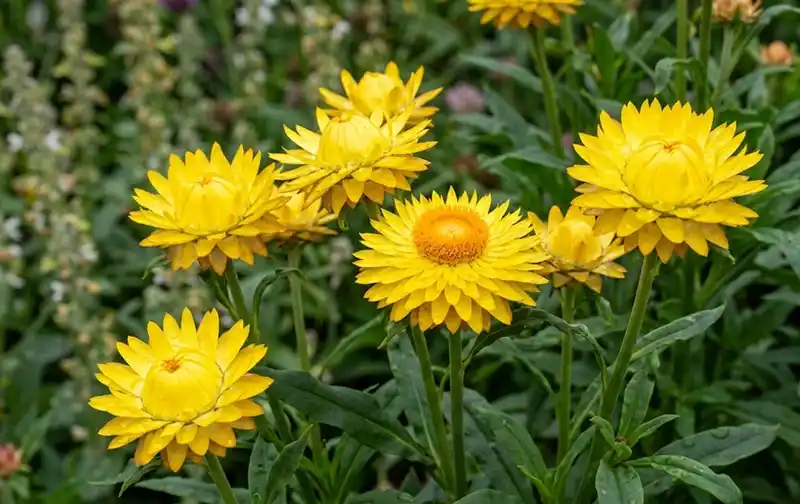 | This has long-lasting golden yellow flowers and a compact growth habit. |
‘Monstrosum’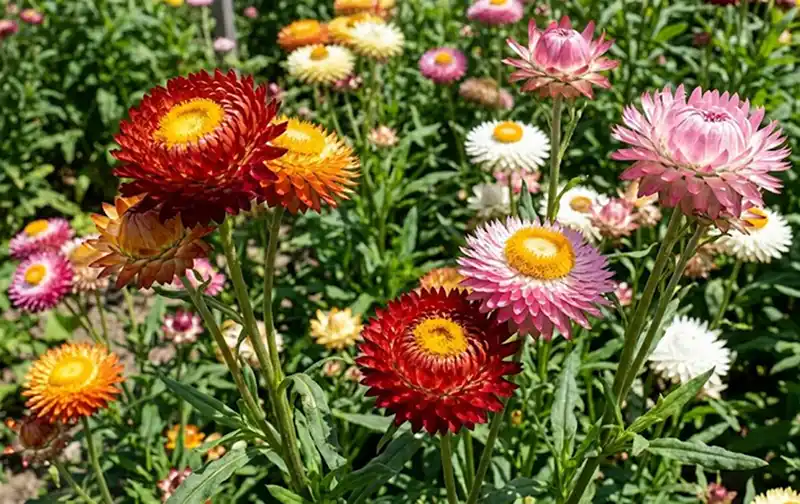 | It produces fully double red, orange, white, and pink flowers. This is specifically a favourite variety among crafters. |
‘Paper Daisy Mixed’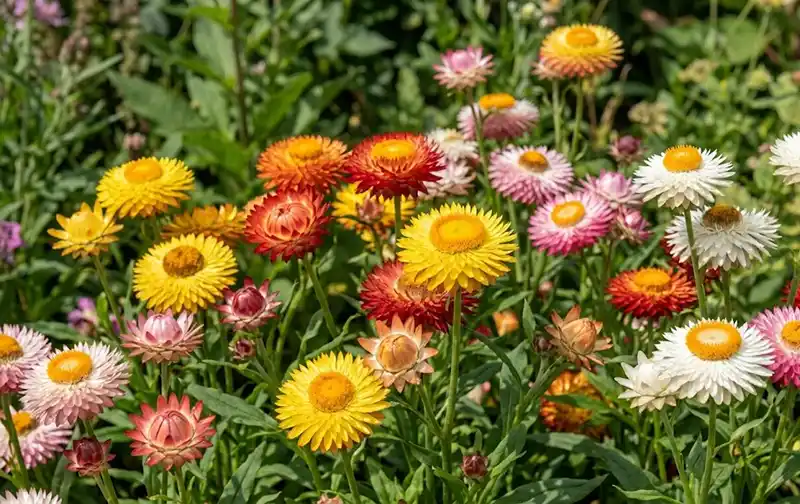 | These blooms are available in an array of colours from the soft pastels to vibrant hues. It is a famous variety for drying and using in crafts. |
‘Strawburst Mixed’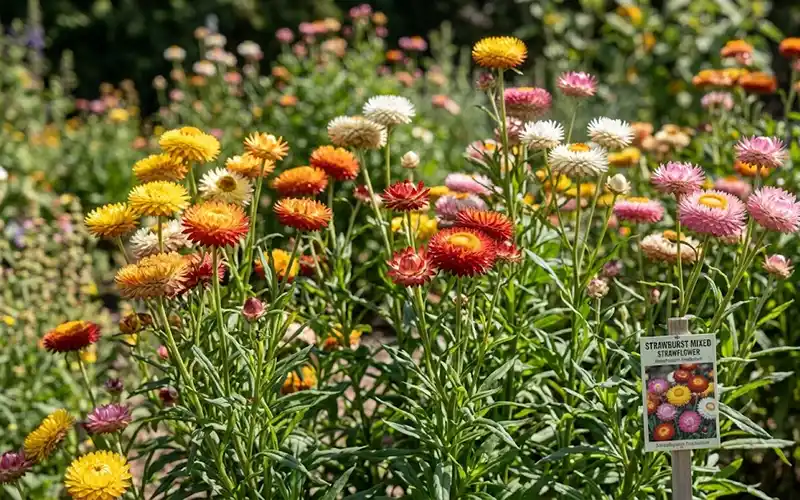 | It features large double flowers in the shades of pink, red, orange, and yellow. This is beginner-friendly and can survive in different growing conditions. |
‘Tom Thumb’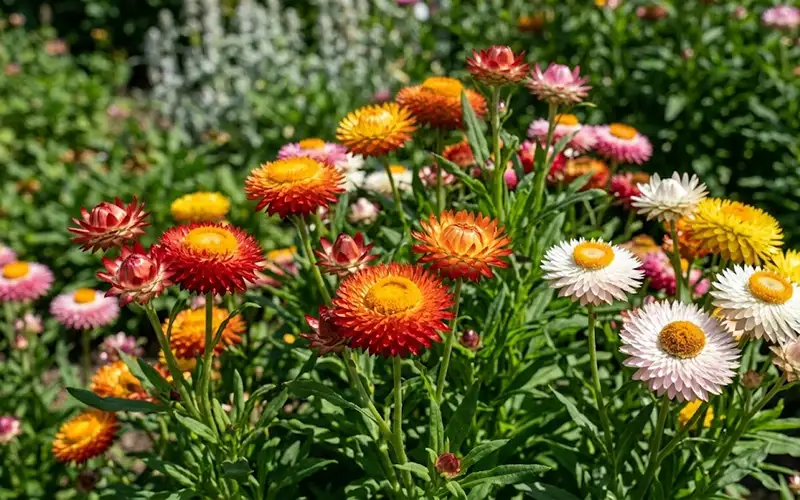 | This is a short variety that is good for window boxes and containers. |
Common Problems in Strawflowers
Straw flowers are generally pest- and disease-resistant, but they can still be affected by aster yellows virus, botrytis, aphids, and caterpillars.
Let’s find the signs and solutions for these pests and diseases below:
| Problems | Signs and Solutions |
| Aster yellows virus |
|
| Botrytis (grey mould) |
|
| Downy mildew |
|
| Slugs and snails |
|
| Aphids |
|
| Caterpillars |
|
Final Thoughts
Straw flowers are loved by planters and homeowners with their vibrant blooms. With their papery-textured blossoms, they are excellent as cut flowers for home natural decor. The plant can be grown easily in gardens or containers to enhance the beauty of different landscapes. By ensuring proper growing conditions like full sun and healthy soil, you can use the blooms to start a garden from scratch.
FAQs
Are straw flowers perennials?
When to plant strawflower seeds?
You can start the seeds indoors 4-8 weeks before the last spring frost for early transplanting. You can also sow them directly outdoors once the danger of frost has passed.
Are strawflowers cut and come again?
Yes! These are cut and come again to annuals plants. Harvesting or deadheading the flowers promotes branching out in the plant and produces a fresh flush of flowers.
Does strawflower need cold stratification?
No. These plants do not need cold stratification. The seeds need light and warm conditions to germinate.
Are strawflowers invasive?
These are not considered invasive, but in warm climates, the plants will reseed themselves if you leave the spent flowers on them.
Sources:
How to Grow and Care for Strawflower – BBC Gardeners World Magazine
Strawflower – Britannica Kids
Strawflower – Plants & Flowers Foundation Holland
Latest Blog