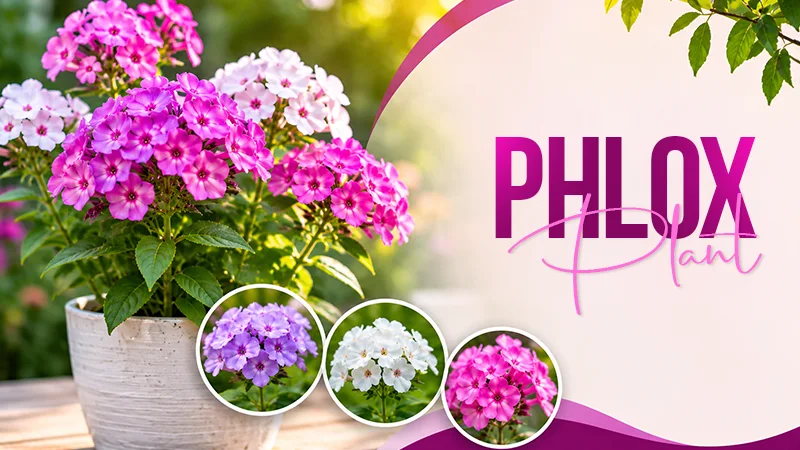
You can grow phlox from bare roots, young plants, or seeds. To grow them, ensure you keep them in moist, rich, well-draining soil and 6-8 hours of direct daily sunlight. Also, water the plant consistently, fertilize, and prune to support growth.
Phlox Plant: Planting, Care Measures, and Common Problems
Author
Rashika GuptaReviewed By
Cody AllisonPhlox plant is a flowering perennial that blooms in diverse colours and is famous for its fuss-free nature. It is one of the best plants that attract butterflies to the landscape. The plant is also deer-resistant and thrives in little shade or sun. Whether you want the tall blooms of garden phlox in summer or a vibrant carpet of creeping phlox in spring, the genus is undoubtedly versatile.
Read this article to understand everything about the showstopper, including its planting, care, and common problems.
Quick Answer
Phlox is the genus of more than 60 species of flowering plants. Most of them are perennials, though the large genus also contains annual species. Phlox plants can be grown from young plants, bare roots, and seeds. The plant needs full sun to partial shade, rich, well-draining soil, and consistent watering. It can be susceptible to pests like spider mites, thrips, and aphids, and diseases like root rot and powdery mildew.
Table of Contents:
What is Phlox Plant?: A Quick Overview
Phlox plant is a herbaceous perennial (or annual for species like Phlox drummondii) that belongs to the Polemoniaceae family. It can grow up to 3 inches to 6 feet tall based on the species. Native to North America, it can bloom in colors including pink, blue, white, and red.
Let’s see some basic information about phlox plants:
| Botanical name | Phlox |
| Kingdom | Plantae |
| Class | Magnoliopsida |
| Order | Solanales |
| Family | Polemoniaceae (Phlox family) |
| Genus | Phlox L. (Phlox) |
| Plant type | Herbaceous perennial or annual for species like Phlox drummondii |
| Mature size | 3 inches to 5 feet tall, depending on the species |
| Bloom time | Spring or summer to fall, depending on the species |
| Flower colours | Blue, white, pink, red, rose, magenta, purple, lilac, lavender, and salmon |
| Foliage | Most of the plants have green leaves, though some varieties may have variegated foliage with yellow and creamy white margins. |
| Hardiness zones | USDA zones 3-9 |
| Native range | North America |
How to Grow Phlox Plant
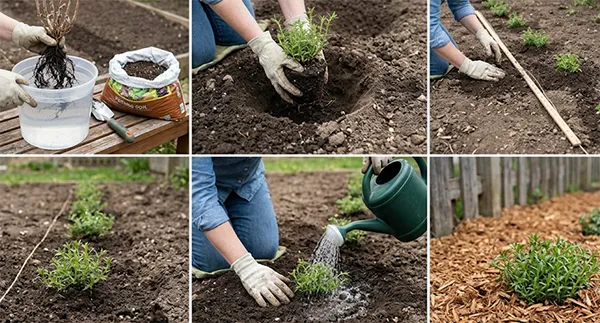
The best time for planting phlox is spring, after the threat of frost has passed, or in the fall. The sunlight requirements vary based on the type of plant. In general, they need nutrient-rich, slightly moist soil to grow optimally. To grow it, plant the bare root or potted plant in the ground, space it properly, and water thoroughly.
Here are the detailed steps of how to plant phlox:
- Step 1: If you have bare-root or potted plants, plant them in the ground in spring after the danger of frost has passed. Soak the bare roots in water for an hour before planting.
- Step 2: Set the plant in the ground so that the root ball is level with the soil surface.
- Step 3: Space the plants properly about 2-3 feet apart for garden phlox and 12-24 inches apart for creeping types to ensure good air circulation.
- Step 4: Fill the hole with soil, gently tap it to settle, and water well.
- Step 5: Apply a layer of mulch to keep the roots cool and moist. It also helps to suppress weeds.
You can also grow these plants from seeds. For this, start the seeds indoors in late winter.
Pro Tip
Prepare the garden before planting using a garden fork or tiller. Loosen the soil about 12-15 inches deep and mix in a 2-4 inch layer of compost to enhance the soil fertility.
Care Measures of Phlox Plant
In phlox plant care, ensure you keep the plant in a spot that receives full sun to light shade. Water it thoroughly and use fertile, well-drained soil to support the growth of the plant. Also, deadhead the spent blooms and apply compost or slow-release fertilizer.
Here are the care measures to grow a phlox plant:
Sunlight Requirements
For growing phlox, keep them in a location that receives full sun to light shade. Ensure that the spot receives at least 6-8 hours of bright direct light. This encourages blooming and prevents moisture-related issues.
Watering Needs
Phlox garden plants do not like drought and should be watered during dry spells. During the growing season, the plant needs at least an inch of water per week. Avoid overhead watering and water at the root zone in the morning to keep foliage healthy.
Soil Preference
For phlox planting and care, use the moist, fertile, and well-drained soil that is rich in organic matter. It prefers a pH of 6.0 to 8.0.
Fertilizers
The plant generally requires little to no fertilizer if you use well-drained soil amended with organic matter. You may use slow-release fertilizer, compost, or aged manure to support the growth of the plant.
Pruning and Deadheading
Phlox plants don’t need any pruning. However, if you want delayed blooming of phlox flowers and bushier growth with new flower heads, cut back the stems by one-third in the early summer. Also deadhead the spent phlox flowers to extend their blooming period and prevent unwanted seedlings.
Wintercare
In the winter care of the plants, cut back the stems just at the soil line, remove the foliage, and discard it. It is especially important if the plant is affected by powdery mildew. In the colder zones, apply a layer of mulch before the ground freezes.
Study Insights
A study by ResearchGate concluded that BA 200 ppm combined with pinching increased vegetative growth in the phlox plants. BA 150 ppm combined with pinching significantly influenced the flower yield in the plants.
Propagation of Phlox Plant
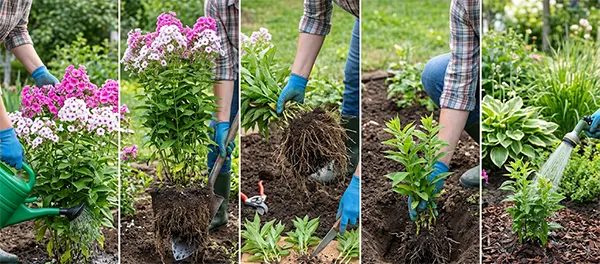
Divide the plant every 3-4 years to prevent overcrowding and improve the growth of the plant. To divide it, lift the entire root ball and split the clump into small sections. Replant the new sections and water thoroughly.
Let’s see the steps of propagating the plant through division:
- Step 1: Water the plant well a day before to keep the roots moist and prevent transplant shock.
- Step 2: Lift the entire root ball out of the ground using a garden shovel or spade.
- Step 3: Shake to remove the excess soil to see the roots clearly. Split the clump into smaller sections using a hand pruner and a sharp knife. Ensure that every section has at least 2-3 healthy shoots and a good portion of roots.
- Step 4: Dig new holes and place the new divisions into them. Avoid burying the crown too deep.
- Step 5: Water well and apply a layer of mulch to prevent soil freezing if dividing in fall.
Types of Phlox Plant
Native to North America, Phlox features more than 60 species. Whether you want colourful carpet in the early spring or tall midsummer hummingbird flowers, the genus has something to offer for everyone. The types include creeping phlox, hybrid phlox, and garden phlox.
Take a look below to understand its varieties:
| Type | Key Points |
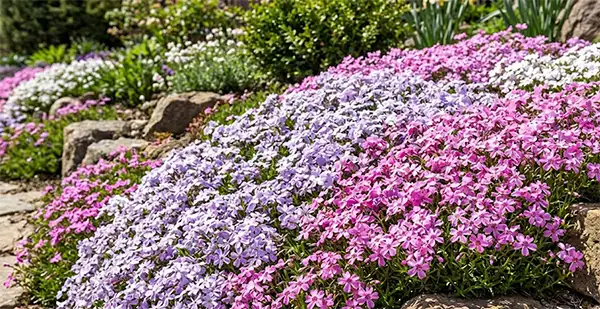
- Habit: Low-growing, mat-forming groundcover
- Bloom time: Early spring
- Colours: Vibrant red, blue, purple, white, and pink flowers
- Popular varieties: ‘Blue Emerald’, ‘Drummond’s Pink,’ ‘Spring Hot Pink,’ and ‘Scarlet Flame’
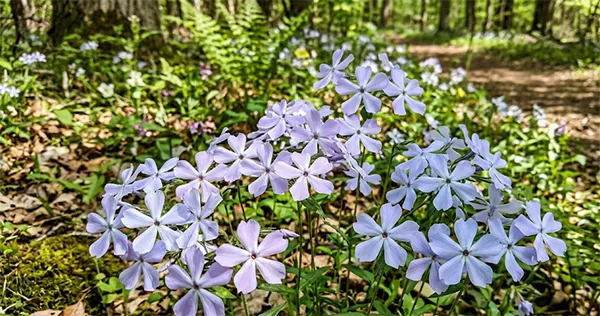
- Habit: Shade-tolerant perennial
- Bloom time: Mid to late spring
- Colours: Blue, lavender, light pink, and white
- Popular varieties: ‘Blue Moon’ and ‘Blue Ribbons’
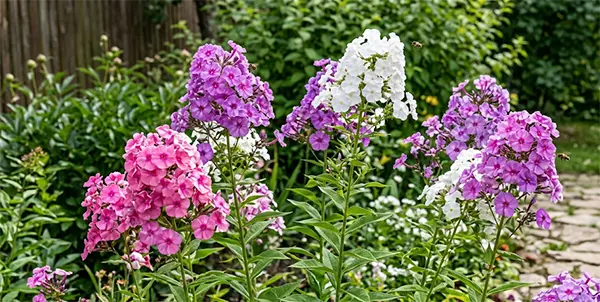
- Habit: Upright, clump-forming perennial
- Bloom time: Mid-summer to fall
- Colours: Pink, white, purple, deep red, and bi-colours
- Popular varieties: ‘David’, ‘Jeana’, and ‘Party Girl’
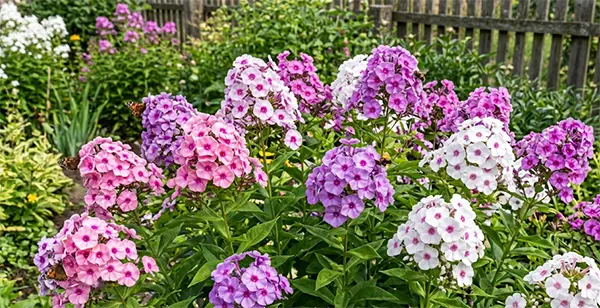
- Habit: Upright and compact perennial
- Bloom time: Early to late summer
- Colours: White, pink, and lavender
- Popular varieties: ‘Fashionably Early Crystal’ and ‘Wanda’
Pests and Diseases in Phlox Plants
Phlox plants can be affected by pests like spider mites, aphids, thrips, and leafhoppers. They are also susceptible to diseases, including root rot and powdery mildew.
Here are the possible pests and diseases in phlox plants and their signs and treatment:
Pests in Phlox Plants
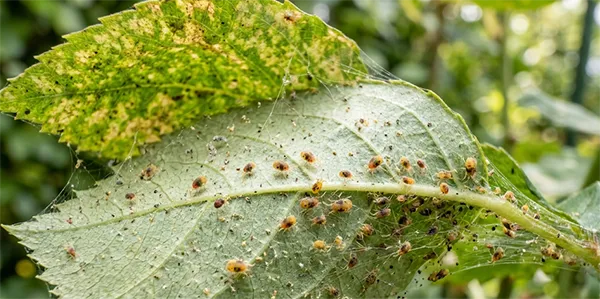
Signs: Tiny black, brown, red, and yellow insects that suck the plant fluids from the undersides of the leaves. They also cause webbing.
Treatment: Remove the affected foliage and discard it. Wipe the foliage with a damp cloth or spray it with water. Use neem oil or insecticidal soap if the infestation is severe.
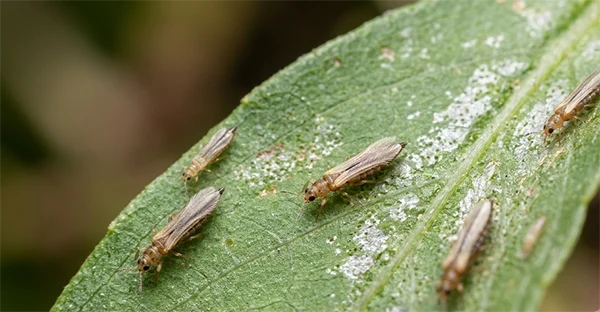
Signs: These are narrow-winged insects that feed on essential fluids from flowers and foliage.
Treatment: Spray the plant with a strong stream of water or apply insecticidal soap or neem oil.
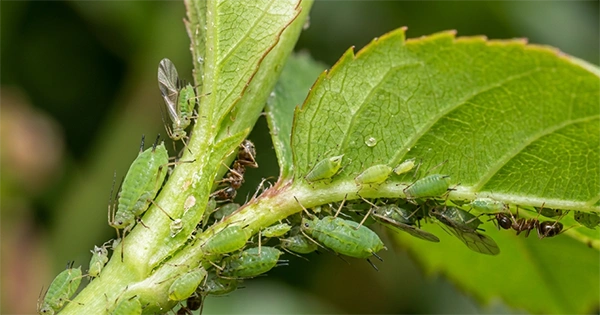
Signs: They are small, soft-bodied insects found on leaves, stems, and flower buds. They also produce honeydew that can cause sooty mold.
Treatment: Spray with water or use plant oil or insecticidal soap.
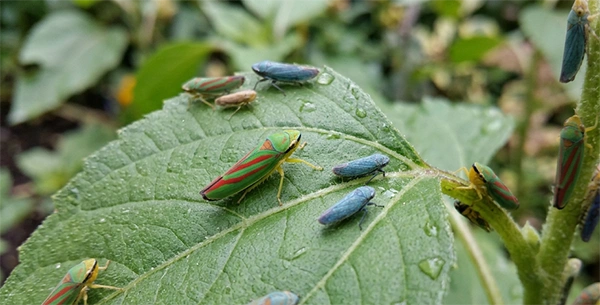
Signs: These are winged insects that cause stippling, yellowing, and dying leaves. They also lead to stunted growth and spread diseases to other plants.
Treatment: Remove the damaged foliage and discard it. Also, use insecticidal soap or neem oil.
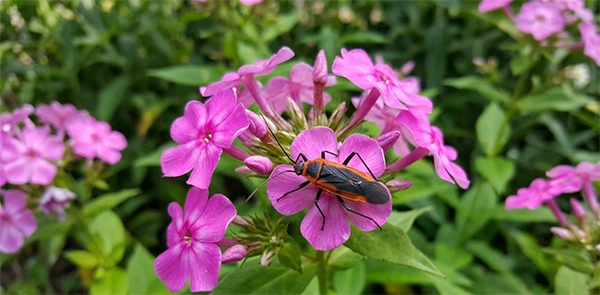
Signs: These are sap-sucking pests that feed on stems and leaves. They cause leaf browning, curling, and dropping.
Treatment: Spray with insecticidal soap or neem oil.
Diseases in Phlox Plants
| Disease | Signs and Treatment |
| Root Rot | Signs: Mushy, darkened plant base tissue with a foul smell that leads to plant collapse. Treatment: Dig up and discard the plant and disinfect the pruning tools. |
| Powdery Mildew | Signs: White powdery coating on leaves and stems. Affected leaves eventually turn yellow and drop off. Treatment: Avoid overhead watering and apply horticultural oil. |
| Anthracnose | Signs: Pale green, tan, straw coloured dying stems. Lower leaves and stems turn gray or black from the dark fungal structures. Treatment: Avoid overhead irrigation and use fungicides to treat the disease. |
Landscaping Usage of Phlox Plants
Phlox plants are highly versatile to be used in garden design. Distinct varieties have different growth habits and heights, and they can be used in pollinator gardens, groundcovers, shade gardens, and cottage gardens.
- Pollinator Gardens: Use garden phlox in landscaping to attract butterflies and hummingbirds. The best varieties for this include ‘Flame Coral’, ‘David’ and ‘Jeana’.
- Groundcovers: The low-growing varieties are ideal to cover the bare soil and stabilize the banks and slopes. Use varieties including ‘Candy Stripe’, ‘Snowflake’ and ‘Spring Lavender ’ to create cascading drifts of spring colours over borders, walls and slopes.
- Shade Gardens: You can use woodland phlox varieties like ‘Blue Moon’ to enliven the spaces under trees and partially shaded woodland edges.
- Cottage Gardens: For a natural layered effect, combine salvia, daylilies, rudbeckia, and echinacea.
- Mixed Borders: Add fragrance and vertical interest among other perennials with varieties like ‘Flame Pro Baby Doll’ and ‘Party Girl’.
Pros and Cons of Phlox Plant
The pros of growing phlox involve its fast blooming, long vase life, and sweet scent. On the other hand, the cons involve too-short stems and difficult harvesting.
Take a look below to understand the pros and cons in detail:
| Pros | Cons |
| Available in a wide range of colours, from muted tones to bright hues. | They bloom on stems that are too short for bouquets. For longer stems, they require pruning multiple times. |
| The flowers have a sweet scent, and they fill out bouquets beautifully. | The stems can get tangled and hence are difficult to harvest. |
| The flowers bloom relatively quickly, usually in 60-65 days. | |
| If harvested at the proper stage, they offer a good vase life of about 7 days. |
Concluding Remarks
Phlox plants produce bunches of vibrant flowers in different shades like blue, pink, purple, and white. Ensuring the right growing conditions encourages the ornamental to bloom repeatedly. Its ability to thrive in varied conditions makes it ideal to start a garden from scratch. Select the right phlox type today to adore your borders, cottage gardens, and shade gardens.
FAQs
How to grow phlox plants?
Is phlox poisonous to dogs?
No, phlox is non-toxic to dogs.
Is phlox a perennial?
Most types are perennial, but the large genus also includes annual varieties.
What is a phlox plant?
Phlox is a genus of more than 60 species of flowering plants in the Polemoniaceae family. They are famous for star-shaped flowers in a wide range of colours.
When to plant phlox?
The best time to plant phlox is either spring or fall.
Sources:
- Phlox and Powdery Mildew Management – University of Vermont
- Growing Phlox in Iowa – Iowa State University
- Phlox – Britannica
- Unleashing the potential of Phlox (Phlox drummondii): Evaluating the influence of growth regulators and growing media – ResearchGate
Latest Blog