It usually costs around $1,200 to $4,000 to replace a mains water pipe.
When Do You Repair a Water Main, and When Do You Replace It?
Author
Terri Sander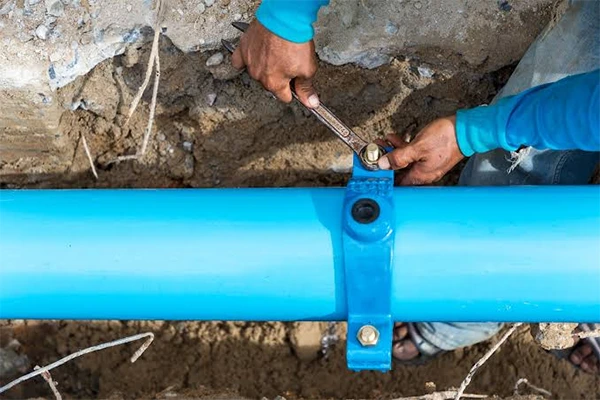
When you see a water main leak, you start wondering: can this be fixed, or does the entire line need to go? The answer actually lies in whether you’re dealing with an isolated break or systemic pipe failure, a distinction that dictates both the timeline and the final bill. Once a qualified water main repair service inspects the line, you’ll have a clear answer.
Read the full blog to learn more.
Table of Contents:
- Common Signs That Your Water Main Needs Attention
- When Is Water Main Repair the Better Option?
- When Should You Replace a Water Main Instead?
- Water Main Repair vs Replacement: What Factors Matter?
- Can Trenchless Methods Reduce Water Main Replacement Work?
- Why Professional Water Main Inspection Matters
- Conclusion: Choose the Right Solution for Your Water Main
- FAQs
Common Signs That Your Water Main Needs Attention
The signs of a damaged water main begin small. Underground leaks rarely announce themselves, so you have to pay attention to the side effects:
- Water pressure reduces at every tap, not just one
- A soggy patch on the lawn or driveway when it hasn’t rained
- Brown or cloudy water coming out of the faucet
- A water bill that climbs while your habits remain the same
- The sound of running water when everything is off
- Cracks in the foundation or sunken pavement near the line
One of these might be ignored. Three of them together? Call someone.
When Is Water Main Repair the Better Option?
Repair makes sense when the damage is contained. A single pinhole, a failed joint, or a break caused by one hard freeze can be fixed. You just have to replace only that section.
The key is the condition of everything around the issue. If a camera inspection shows solid pipe on both sides of the damage, a spot repair is a sensible, budget-friendly move. It actually helps keep excavation costs down and shortens the water supply disruption. It’s important if you have a household to run or tenants waiting on the taps.
Emergency repairs fall into this list too. A burst water main at 2 a.m. needs to be stopped first. The important question can wait until the pipe has been looked at properly.
When Should You Replace a Water Main Instead?
Understanding when to replace a water main comes down to patterns, not single events. Replacement is often the stronger choice when:
- Leaks keep happening, even after repairs
- Pipe corrosion has eaten through big stretches of the line
- The pipe material is old or known to fail, for example, galvanized steel
- Root intrusion has cracked joints in multiple places
- The line has crossed its expected lifespan
- Repairs are beginning to cost more together than a new line would
Water main replacement is a hectic job, no question. But paying for the same fix three times is a poor trade.
Water Main Repair vs Replacement: What Factors Matter?
Most homeowners ask about price first. It’s okay, though price alone misleads. Water line repair vs replacement is actually a question of how far the damage has spread and how long you plan to keep the property. Here’s how the two compare on the basics:
| Factor | Repair | Replacement |
| Pipe condition | Mostly healthy | Severely deteriorated |
| Damage | Localised | Widespread |
| Leak history | First or isolated leak | Recurring leaks |
| Cost | Usually lower upfront | Higher initial investment |
| Long-term solution | Suitable for limited damage | Better for extensive deterioration |
The table is a beginning point, not a verdict. There are many things that change the answer, like pipe material, water line lifespan, soil and underground conditions, and future maintenance requirements. A copper line in decent shape behaves very differently from a corroded galvanized one. And repair is not always the cheaper path over ten years, just as replacement is not automatically the smarter one. A healthy pipe with one bad joint doesn’t require a full dig.
Can Trenchless Methods Reduce Water Main Replacement Work?
Sometimes, yes. Trenchless repair avoids the long trench across your yard. It means less damage to landscaping, driveways, and walkways. Two common approaches:
- Pipe relining: A new lining is cured inside the existing pipe, which works when the pipe is still structurally good enough to hold it
- Pipe bursting: A new line is pulled through as the old one is broken apart underground
Neither option fits every property. Collapsed sections, severe pipe damage, or difficult access can force traditional excavation.
Trenchless methods usually cut surface disruption and labour time. The quote still depends on the condition of the line.
Why Professional Water Main Inspection Matters
Guessing is costly. A proper water main inspection, often a camera run plus leak detection, explains the true pipe condition, where the damage sits, and how far it extends. That information separates a $1,500 fix from a whole line job.
It also helps in preventive maintenance. Catching early pipe deterioration lets you plan infrastructure upgrades on your schedule. Ask for footage you can see yourself, and ask what the inspector would do if the line were theirs.
Conclusion: Choose the Right Solution for Your Water Main
Localised damage on a good line points to repair. Repeat failures on an aging pipe point to replacement. If you can’t tell which one you have, get the line checked before you spend anything else.
FAQs
How much does it cost to replace a mains water pipe?
What type of pipe is used for the main water line to the house?
Main water lines to the house use copper pipe.
What do plumbers use now instead of copper pipes?
Plumbers now use PEX (cross-linked polyethylene).
Latest Blog