The plant blooms healthily and more fully when planted in direct sunlight.
Dinner Plate Hibiscus: A Vibrant Addition to Your Garden
Author
Cerina TriglavcaninReviewed By
Cody Allison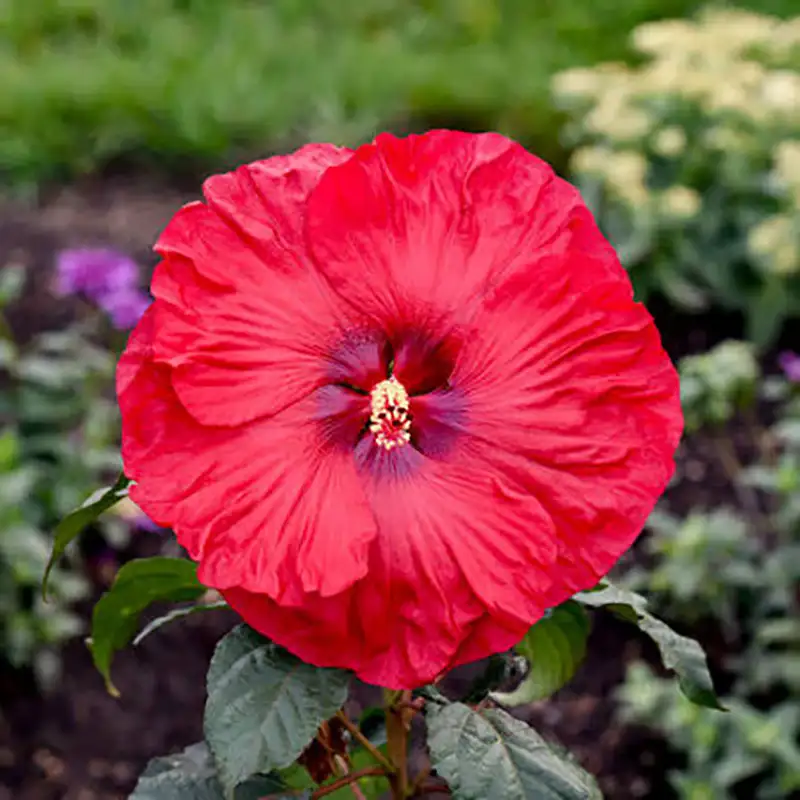
Dinner plate hibiscus are hardy plants that bloom in vibrant hues of pink, yellow, white, blue, and red. This perennial plant is grown in spring, after the frost is over, offering huge hibiscus flowers throughout summer. The plant got its name from its huge dinner plate-sized flowers.
These giant hibiscus flowers not only add visual pleasure but are also a great source of attracting pollinators like hummingbirds, dragonflies, bees, and butterflies. The plant is also cultivated for its ornamental values.
Read the article to learn about dinner plate hibiscus taxonomy, ideal growing conditions, growing process, care tips, and much more.
Table of Contents:
Essential Rose Mallow Care Tips
Rose mallow is an easy-to-care-for, low-maintenance plant. The plant thrives in full sunlight and needs well-drained, moist soil with regular watering. Here are some essential care tips that help the plant to grow fuller and healthier. These are:
- Plant the Hibiscus Dinner Plate in a location that receives full sunlight for at least 6 hours a day. If planted in partial shade all day, it may weaken over time and won’t bloom.
- However, in a hot, dry climate, try to protect the plant from harsh afternoon sun.
- If you have planted them indoors, make sure to place them near a window for direct exposure to sunlight.
- Plant in well-draining soil enriched with compost at an acidic pH level.
- Water the plant regularly, at least 1 to 2 inches deep, every week.
- Feed your hibiscus dinner plate with fast-release fertiliser weekly, or use slow-release fertiliser thrice a year. Avoid fertilising the plant in winter.
- In fall or before spring, cut the hardy hibiscus plant around 5 to 8 inches tall. This will ensure a healthy plant in the next season.
Dinner Plate Hibiscus Taxonomy and Ideal Growing Conditions
Dinner plate hibiscus, also commonly known as hardy hibiscus, is a herbaceous perennial that blooms in summer in various shades of pink, blue, and white. The plant is native to North America. It needs full sunlight with partial shade in the afternoon, well-draining soil, and regular watering.
The hibiscus dinner plate is non-toxic to pets and humans and also attracts pollinators like dragonflies, bees, and hummingbirds. Look at the table below to learn about the plant’s taxonomy and ideal growing conditions:
| Botanical name | Hibiscus moscheutos |
| Common name | Dinner plate hibiscus, hardy hibiscus, rose mallow |
| Kingdom | Plantae |
| Order | Malvales |
| Family | Malvaceae (Mallow family) |
| Genus | Hibiscus |
| Native area | Wetlands, marshes, floodplains, and moist woods in North America |
| Season of interest | Summer |
| Hardiness | 4 to 9 USDA Zones |
| Light Requirements | Full, direct sunlight |
| Maintenance | Low |
| Type | Herbaceous perennial, showy, pollinator-friendly |
| Flower colour | Pink, white, red, orange, yellow, blue |
| Soil | Well-draining soil with an acidic pH level |
| Water Requirements | Regular |
| Mature size | 3 to 9 ft. tall and 2 to 6 ft. wide |
| Fertilizers | Heavy feeders |
| Toxicity | Non-toxic to pets and humans |
| Tolerant | Highly tolerant to environmental conditions |
Read more: Rose of Sharon Care, Size, Bloom Time, Varieties And Growing Conditions
How to Plant a Hibiscus Dinner Plate?
Hibiscus dinner plate can be easily grown by sowing seeds or propagating the plant by the stem-cutting method. Both methods are easy to follow and give healthy blooms.
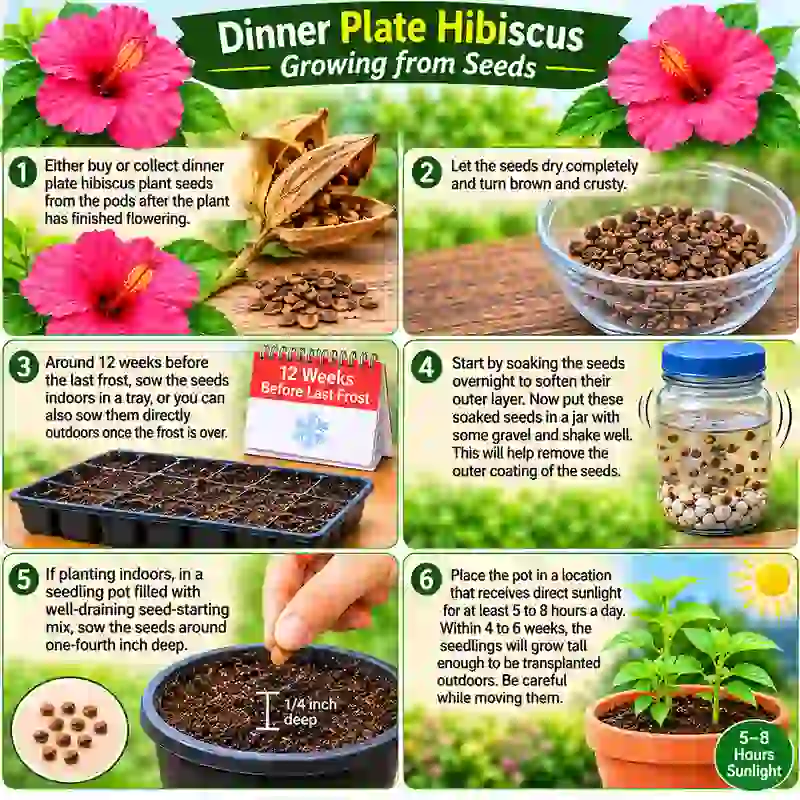
Here are the steps that I follow to plant perennial hibiscus using seeds:
- Either buy or collect dinner plate hibiscus plant seeds from the pods after the plant has finished flowering.
- Let the seeds dry completely and turn brown and crusty.
- Around 12 weeks before the last frost, sow the seeds indoors in a tray, or you can also sow them directly outdoors once the frost is over.
- Start by soaking the seeds overnight to soften their outer layer. Now put these soaked seeds in a jar with some gravel and shake well. This will help remove the outer coating of the seeds.
- If planting indoors, in a seedling pot filled with a well-draining seed-starting mix, sow the seeds around one-fourth inch deep.
- Place the pot in a location that receives direct sunlight for at least 5 to 8 hours a day. Within 4 to 6 weeks, the seedlings will grow tall enough to be transplanted outdoors. Be careful while moving them.
Propagating Perennial Hibiscus
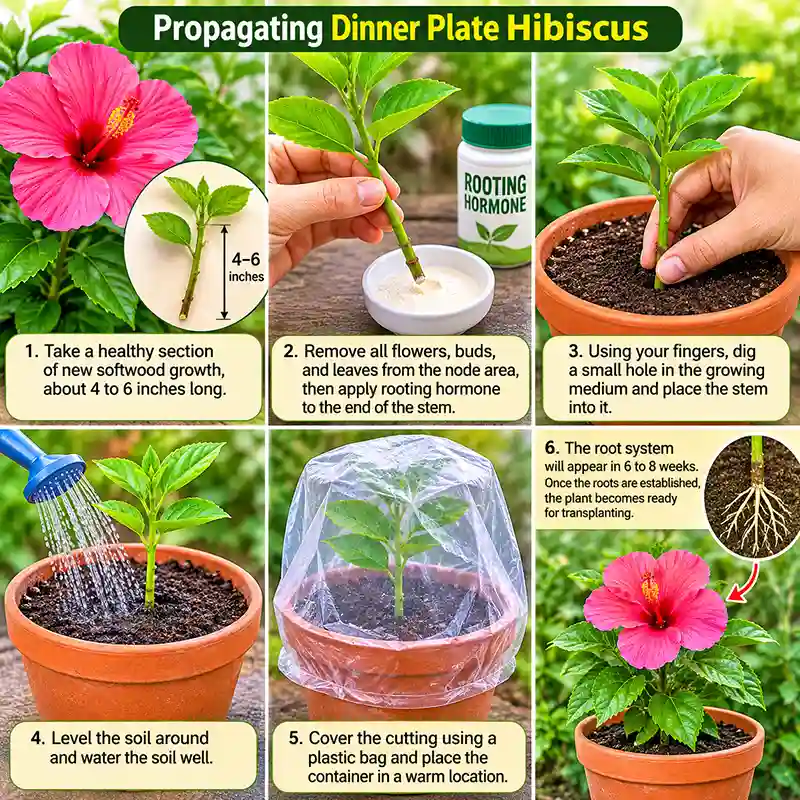
Propagating is the best way to replicate the parent hardy hibiscus plant. Here are some simple steps that you can follow in spring to propagate the dinner plate hibiscus:
- Take a healthy section of new softwood growth, about 4 to 6 inches long.
- Remove all flowers, buds, and leaves from the node area, then apply rooting hormone to the end of the stem.
- Using your fingers, dig a small hole in the growing medium and place the stem into it.
- Level the soil around and water the soil well.
- Cover the cutting using a plastic bag and place the container in a warm location.
- The root system will appear in 6 to 8 weeks. Once the roots are established, the plant becomes ready for transplanting.
Read more: Lobelia Plant Guide: Taxonomy, Ideal Growing Conditions, Process and Care Tips
Popular Varieties of Dinner Plate Hibiscus Plants
Hardy hibiscus plants bloom in various sizes and colours. Some of the most popular dinner plate hibiscus varieties include H. moscheutos ‘Lady Baltimore’, H. moscheutos ‘Robert Fleming’, H. moscheutos ‘Summerific Perfect Storm’, and more. Below is the list of popular varieties along with their image and description:
| Plant variety and Image | Description |
H. moscheutos ‘Lady Baltimore’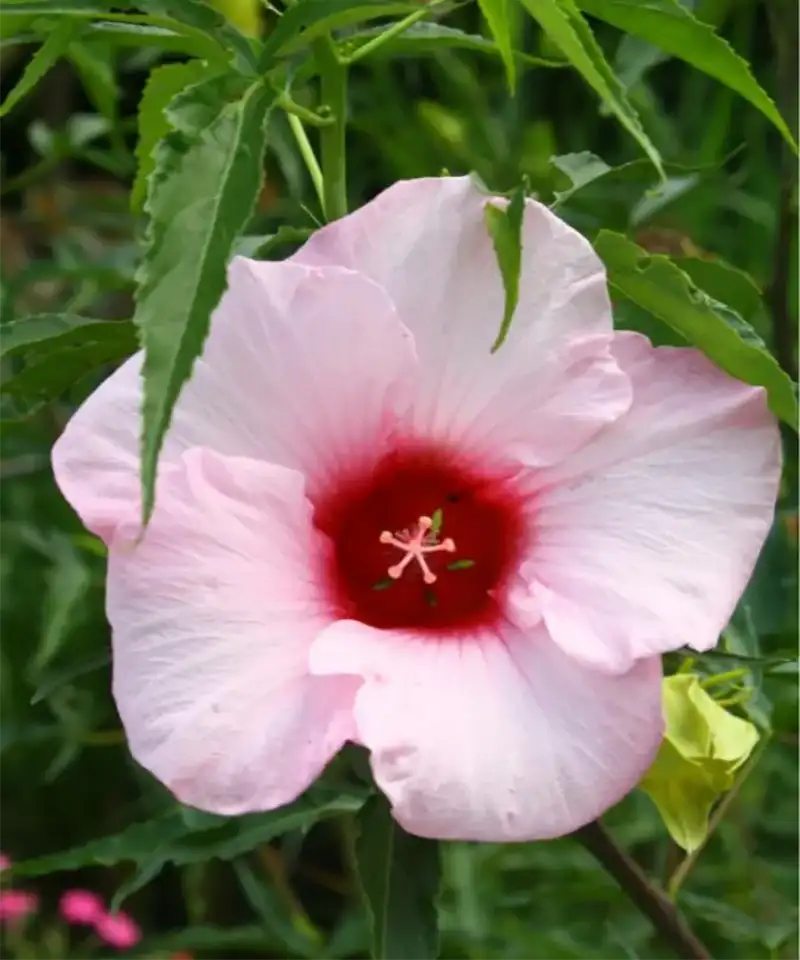 | Lady Baltimore is a popular houseplant that is also known as rose mallow. The plant is cultivated for its beautiful, big hibiscus flowers that bloom in hues of pink, crimson, and white. The plant grows around 5 ft tall and up to 4 ft wide. |
Summerific ‘Cookies and Cream’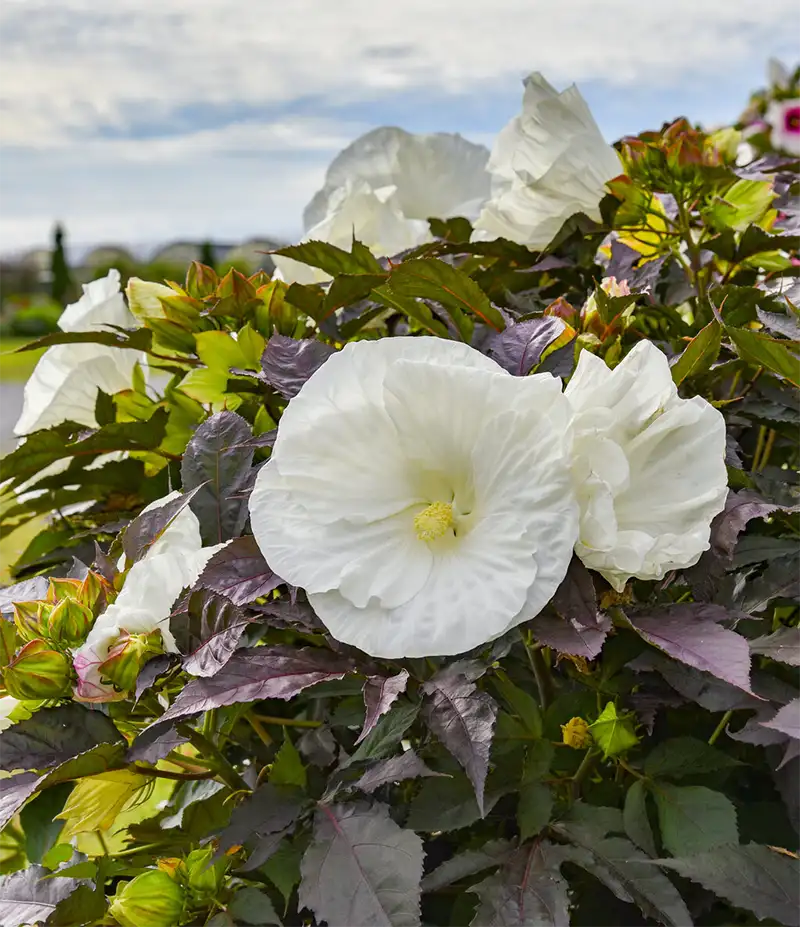 | Cookies and Cream is a perennial hibiscus shrub that blooms for a longer period till fall. The plant is native to North America and grows around 36 inches tall and up to 50 inches wide. The plant is also pollinator-friendly while resisting deer. |
H. moscheutos ‘Summerific Perfect Storm’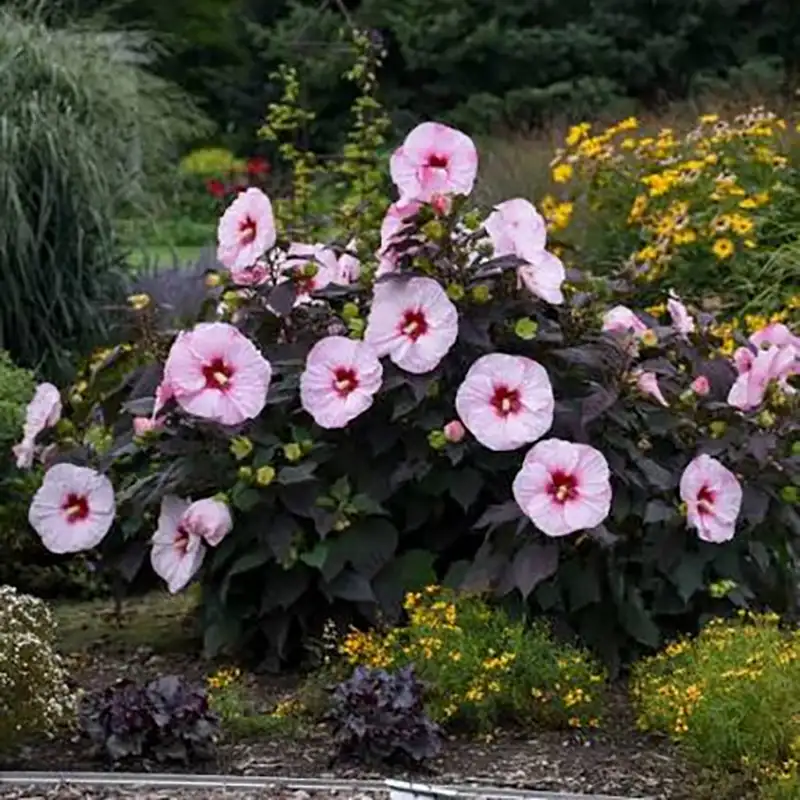 | Summerific Perfect Storm is a compact, cold-hardy herbaceous perennial that grows around 3 ft. tall and spreads around 5 ft. wide. The plant blooms massive, dinner plate-sized flowers with a diameter of 7 to 8 inches in white and soft pink colors from midsummer to early fall. |
Summerific ‘Holy Grail’ 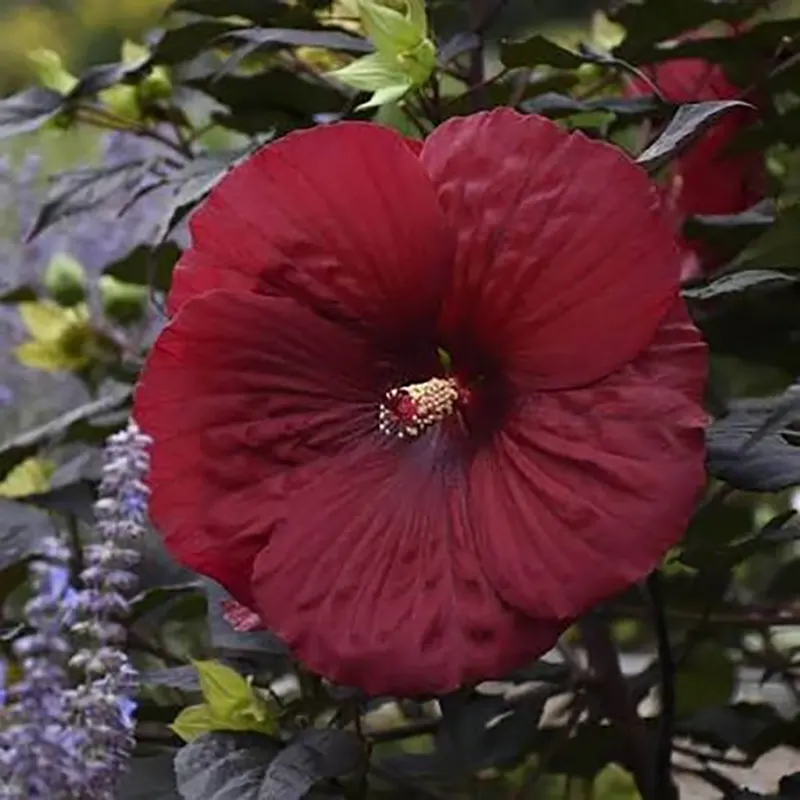 | Holy Grail is a patented cultivar of hibiscus dinner plate that was introduced by Walters Gardens. It is part of the Proven Winners collection. This compact, herbaceous perennial plant blooms in hues of red around 9 inches. |
H. moscheutos ‘Kopper King’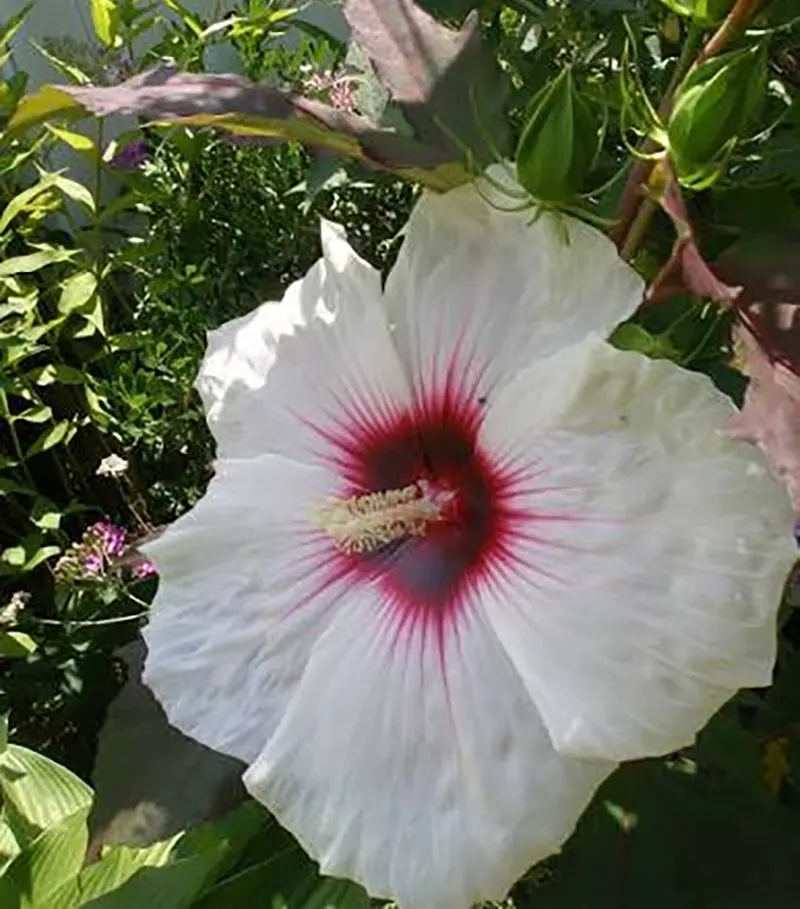 | Kopper King is a compact perennial shrub that grows around 3 to 4 ft tall and 2 to 4 ft wide. The plant offers coppery red to dark purple leaves and blooms in white, pink, and red colour from July till September. |
Read more: Hibiscus Care, Taxonomy, Ideal Growing Conditions, Growing Process, & Much More
Pests and Problems Associated With the Dinner Plate Hibiscus
The dinner plate hibiscus is prone to certain pests and diseases. Some of them include aphids, spider mites, Japanese beetles, leaf spot, rust, and blight.
The table below provides the details and solutions for various pests, diseases, and problems associated with the dinner plate hibiscus:
| Pests, Diseases, and Problems with Perennial Hibiscus | Solution |
| Aphids, whiteflies, and thrips | Aphids, whiteflies, and thrips are the most common pests that might attack your plant. Check under the leaves for any traces. If spotted, use a jet of strong water to get rid of them. You can also use organic pesticides like neem oil to get rid of these pests. |
| Japanese beetles | Japanese beetles appear as shiny, metallic green bodies with copper-brown wings. They can quickly defoliate the plant if many in number. To get rid of them, you can either handpick them or spray natural pesticides when they are feeding on the plant. |
| Mealybugs | Mealybugs appear as white powder on the plant leaves. To get rid of them, spray insecticidal soap or use isopropyl alcohol weekly by mixing it with water. |
| Yellowing leaves and dropping flowers or buds | Yellowing leaves and dropping flowers or buds can be caused by infertile, dry soil and inappropriate sunlight. Always plant dinner plates in a sunny location that receives direct sunlight for at least 6 hours a day with fertile, well-draining soil. |
| Leaf spot, blight, and rust | Leaf spot, blight, and rust are fungal diseases that are caused by excessive moisture or inadequate air circulation. To avoid these fungal diseases, avoid overwatering the plant and provide proper spacing between two hardy hibiscus plants. |
Read more: Lacecap Hydrangea: Taxonomy, Care Tips, and Growing Process
Takeaways
Dinner plate hibiscus is one of the gardeners’ favourite flowering plants. It is easy to plant and requires little to no attention. The plant is also pollinator-friendly, which helps attract local pollinators like dragonflies, butterflies, and hummingbirds.
This perennial thrives under direct sunlight and blooms in hues of pink, red, white, and orange. The plant is also grown into various hybrid varieties that offer you the choice of the most suitable one for your location.
The best time to grow dinner plate hibiscus using seeds is either indoors 12 weeks before the last frost or during spring if planting outdoors directly. The plant can also be easily propagated in spring using stem cuttings. Therefore, this is your sign to plant it because it is both easy to grow and affordable.
Happy and healthy planting!
FAQs
How to get dinner hibiscus to bloom?
Which is the largest hibiscus flower?
The largest hibiscus flower variety is the dinner plate hibiscus, often called hardy perennial rose mallow.
What is the best way to deadhead perennial hibiscus?
The best way to deadhead perennial hibiscus is by handpicking them.
Sources
Latest Blog