Some of the most popular Bacopa varieties include trailing ornamental cultivars like Snowstorm Giant Snowflake, Scopia Gulliver, MegaCopa, and Calypso Jambo White.
Bacopa Plant Care Tips, Growing Process, Taxonomy, Ideal Growing Conditions
Author
Rashika Gupta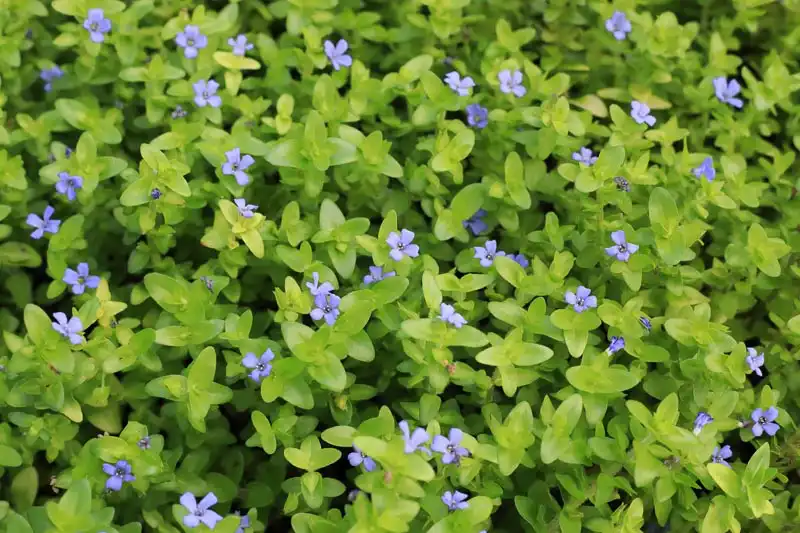
Bacopa is a beautiful flowering plant that blooms year-round. The plant is grown as an annual in most of the U.S. zones in various hues of pink, white, purple, and blue. Its flowers have five petals surrounding a disc-like button center.
Bacopa is also known as a self-cleaning, easy-to-grow perennial in some regions. It thrives best in mild, hot weather conditions and requires regular fertilisation.
Read the article to learn about Bacopa plant taxonomy, care tips, popular varieties, growing process, and much more.
Table of Contents:
How to Grow a Bacopa Plant?
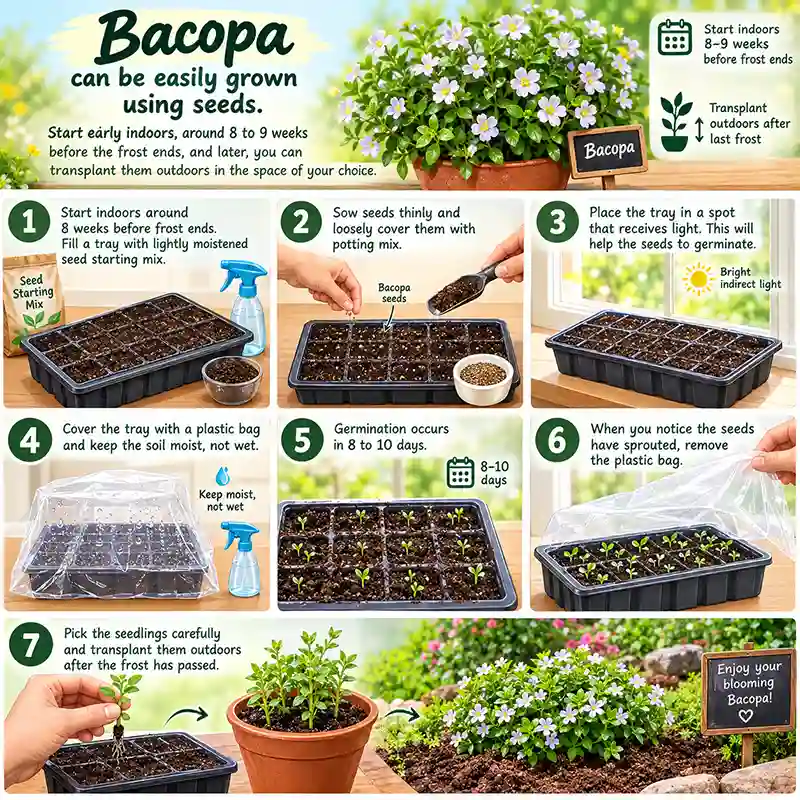
Bacopa plants can be easily grown from seeds. Start early indoors, around 8 to 9 weeks before the frost ends, and later, you can transplant them outdoors in the space of your choice. Here are some easy steps that I follow to grow a bacopa plant:
- Start indoors around 8 weeks before frost ends. Fill a tray with a lightly moistened seed starting mix.
- Sow seeds thinly and loosely cover them with potting mix.
- Place the tray in a spot that receives light. This will help the seeds to germinate.
- Cover the tray with a plastic bag and keep the soil moist, not wet.
- Germination occurs in 8 to 10 days.
- When you notice the seeds have sprouted, remove the plastic bag.
- Pick the seedlings carefully and transplant them outdoors after the frost has passed.
Propagating Bacopa Plant
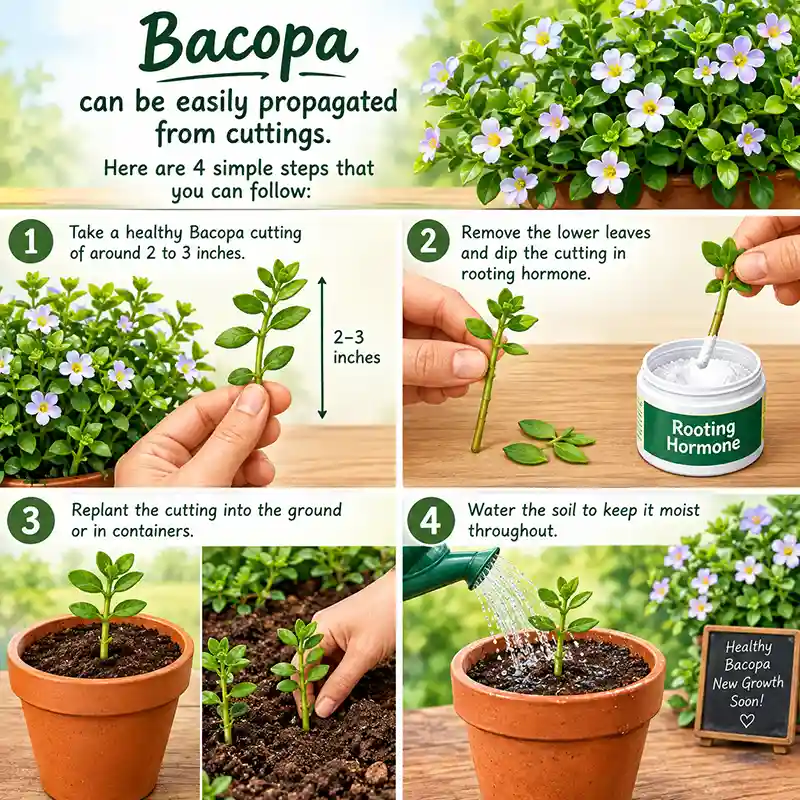
Bacopa can be easily propagated from cuttings. Here are 4 simple steps that you can follow:
- Take a healthy Bacopa cutting of around 2 to 3 inches.
- Remove the lower leaves and dip the cutting in rooting hormone.
- Replant the cutting into the ground or in containers.
- Water the soil to keep it moist throughout.
Did you know?
Bacopa monnieri, or Brahmi, is an ancient herbal remedy that might help improve inflammation, reduce ADHD symptoms, and prevent stress and anxiety.
Read more: Dahlia Flowers: How to Plant This Versatile Herbaceous Bloom?
Bacopa Plant Taxonomy & Ideal Growing Conditions
Bacopa is commonly known as water hyssop, brahmi, and herb of grace. It is native to South Africa and blooms from summer till autumn. This herbaceous perennial belongs to the Plantaginaceae family and requires direct sunlight with partial shade, good, rich, moist soil, and regular watering and fertilisation.
Have a glance at the table below to know more about Bacopa plant taxonomy and ideal growing conditions:
| Botanical name | Bacopa spp. |
| Common name | Bacopa, water hyssop, brahmi, herb of grace, Indian pennywort |
| Kingdom | Plantae |
| Order | Lamiales |
| Family | Plantaginaceae (Plantain family) |
| Genus | Bacopa Aubl. |
| Native area | South Africa |
| Season of interest | Summer till autumn |
| Hardiness | 9 to 11 USDA Zones |
| Light Requirements | Full sunlight with light shade |
| Maintenance | Low |
| Type | Showy, trailing herbaceous perennial |
| Flower color | Blue, pink, purple, and white |
| Soil | Well-drained, loose, moist, average soil with a pH level of 5.6 to 5.9. |
| Water Requirements | Regular |
| Mature size | 5 to 7 inches tall and 2 to 3 inches wide, depending on the variety |
| Fertilizers | Regular |
| Toxicity | Can cause mild side effects and occasional adverse reactions in the digestive system if consumed in excess or without consultation. |
Did you know?
Even though bacopa thrives in the sun, it is sensitive to extreme heat and may not bloom in places with the hottest temperatures.
Read more: 25 Best Hummingbird Flowers: Trumpet Vine, Beardtongue, Lantana and More
Essential Bacopa Care Tips
Though bacopa are low-maintenance, self-cleaning plants, here are some of the essential care tips, from choosing the right location to watering and fertiliser, that will help your plant bloom healthily.
- Choose a location that receives bright, direct sunlight with partial shade. Avoid planting bacopa in a location that is too hot, as this might hamper blooming.
- Use rich organic compost with well-drained, moist soil having a pH level of 5.6 to 5.9.
- Water the plant regularly to keep the soil moist. Avoid overwatering the plant because it leads to root rot and, in certain cases, the plant’s death.
- Do not let the soil dry out completely. You can keep track of this by placing other plants, like coleus or verbena, that will serve as an indicator to show that the soil is dry.
- If your bacopa is underwater, change the water every once in a while to keep it clean.
- Use balanced water-soluble fertilizer every 2 to 3 weeks for good plant growth. Prefer 10:10:10 NPK fertilizer.
- If you are planting your bacopa in a container, use a good quality potting mix.
- Trim the overgrown or crowded plants for a cleaner look.
Read more: Dracaena Lemon Lime: Growing Conditions, Care Measures and Common Pests and Diseases
Popular Bacopa Varieties
The Bacopa plant comes in several beautiful varieties that grow underwater and on land. Some of the most popular varieties, along with their descriptions, are
| Popular varieties and image | Description |
Gulliver’s White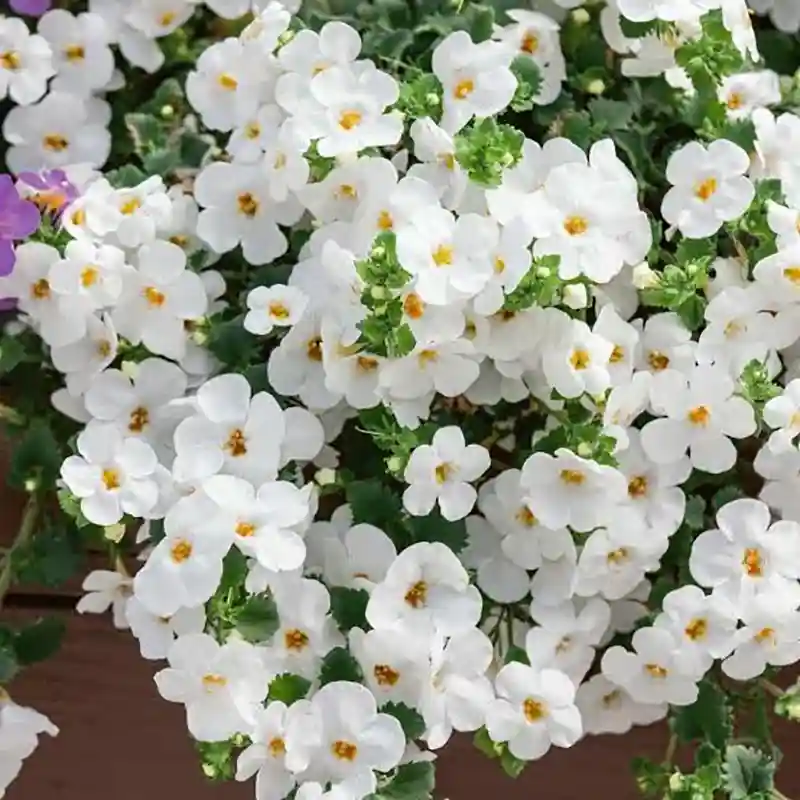 | This variety blooms in white colour with yellow throats on a 5- to 6-inch plant. It trails to 16 inches and performs best in hanging baskets. |
Snowstorm Giant Snowflake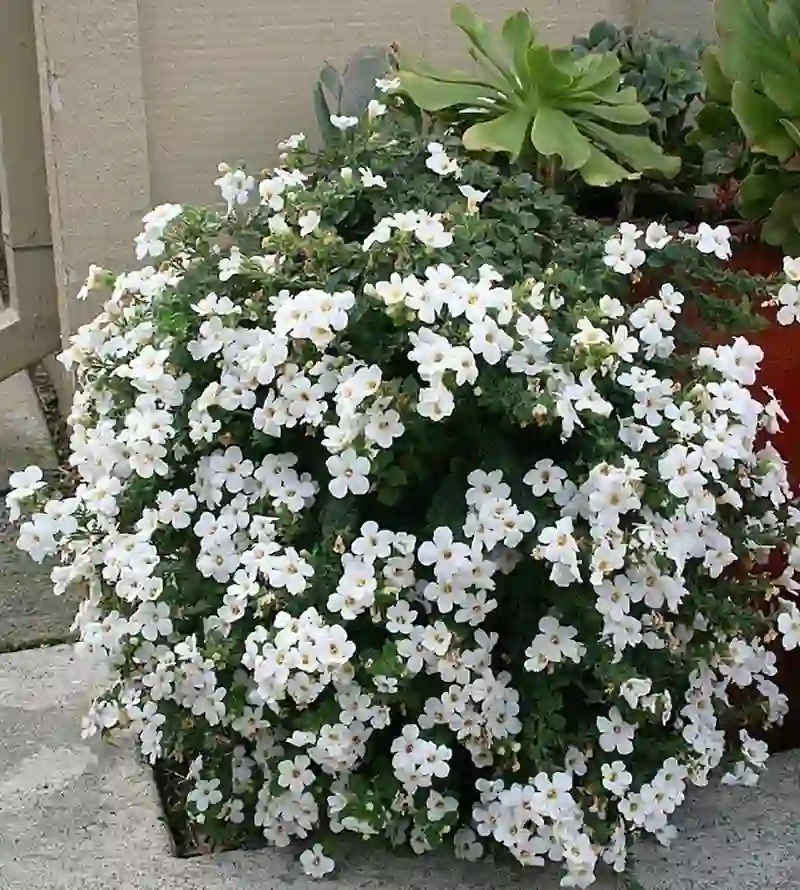 | It is among the best-selling and most popular varieties among gardeners. The plant grows up to 8 inches tall and trails to 3 feet. |
MegaCopa 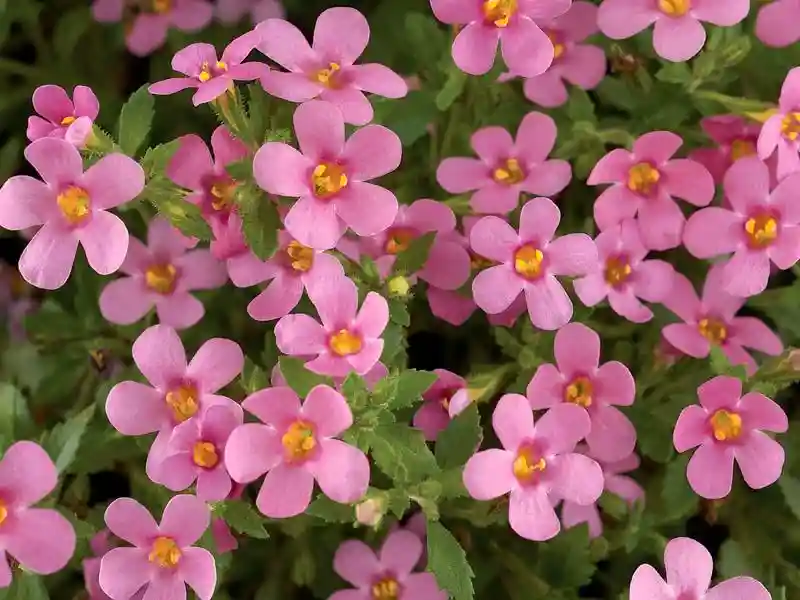 | MegaCopa blooms with large white flowers on plants that grow around 4 to 6 inches tall and up to 18 inches wide. This variety is also known for its heat tolerance. |
Lemon bacopa (Bacopa caroliniana)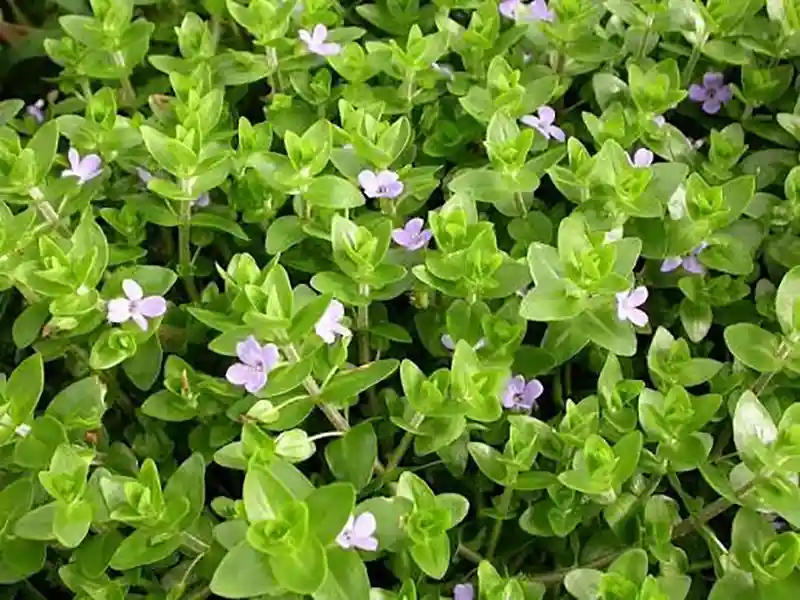 | It is a low-growing herbaceous wildflower plant that grows in very moist and aquatic habitats. The plant blooms in hues of purple and blue. This flowering plant got its name from the smell of crisp, fresh limes. |
Read more: Lucky Bamboo Plant: Growth, Care Tips, and Symbolism Explained
Common Pests, Diseases, and Problems Associated With Bacopa Plants
Generally, bacopa is a pest-free plant, but it is vulnerable to aphids. You can treat aphids by using a strong water spray or neem oil. This usually helps in getting rid of them.
High humidity can lead to fungal infections like powdery mildew. To prevent this, the best option is to grow your plant in an area with moist soil and heat and treat the plant with appropriate fungicides.
You might also witness a very common issue of spotty flowers; this is because of too much exposure to heat. Try to plant bacopa in a location with partial shade that will protect the plant from direct and harsh afternoon sunlight.
Read more: Goldfish Plant: Origin, Varieties, Caring & Growing Tips
Takeaways
Bacopa plants are low-maintenance perennials that thrive in sun with partial shade. It requires well-drained, rich, loose soil to grow. The plant can be easily grown from seeds and can also be propagated using the cutting method.
It is a self-cleaning plant, so therefore, it does not require much care and attention for removing deadheading and pruning. Though you can trim it from time to time to make the plant look cleaner and neater.
You can also grow some bacopa varieties in an aquarium; all you need to do is change its water every once in a while and make sure that it is kept in a spot that receives indirect sunlight.
Next time, if you are looking to grow something in an aquarium or in a garden, choose from bacopa varieties that will suit your weather conditions best.
Happy planting!
FAQs
What are some of the popular bacopa varieties?
When to grow bacopa?
The most suitable time to grow bacopa is in early spring after the frost is over.
How to grow bacopa?
Bacopa is usually grown in a sunny spot with light shade and well-drained, moist soil. The plant can be grown from seeds and can also be easily propagated from cuttings.
Which is a bacopa aquarium plant?
The most popular aquarium bacopa plants are Bacopa caroliniana (lemon bacopa), Bacopa monnieri (moneywort/water hyssop), Bacopa australis, and Bacopa salzmannii ‘purple’.
Is Bacopa fresh or saltwater plant?
Bacopa is a freshwater and marsh plant. Some species can tolerate slight salinity or brackish water, but it is not a saltwater plant.
Sources
Bacopa Monnieri: NCBI
Latest Blog