Yes! These plants are grown as indoor plants as they need high humidity and warm temperatures. Though in warm climates, they can be grown outdoors.
Dracaena Lemon Lime: Growing Conditions, Care Measures and Common Pests and Diseases
Author
Annette HirdLast Update
September 21, 2026
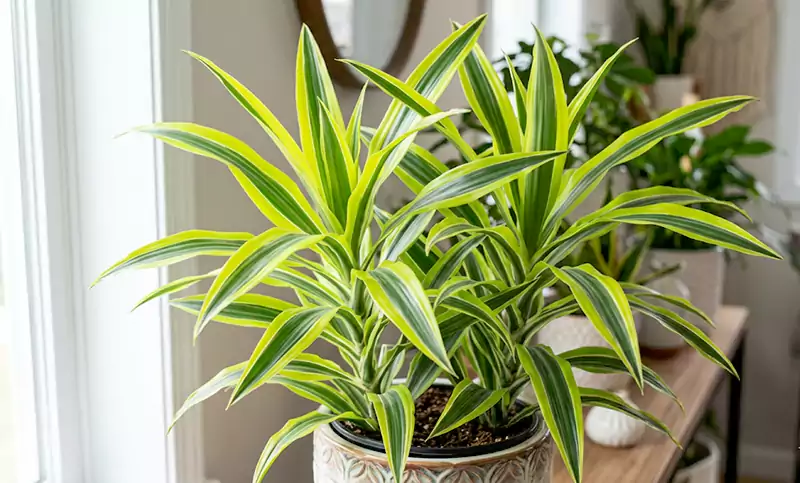
Dracaena lemon lime is an unfussy houseplant that features vibrant green, white, and neon yellow stripes. Native to various tropical regions of Asia and Africa, the plant is perfect for adding a splash of colour to indoor and outdoor spaces.
Whether you are a beginner or a seasoned collector, this plant is an excellent choice for its resilience and architectural beauty. If you also wish to add a tropical flair to your space, explore this guide that encompasses it all, its key characteristics, propagation methods, common problems, and care measures.
Table of Contents:
- Scientific Classification and Key Characteristics of the Dracaena Lemon Lime
- Growing Conditions of Dracaena Lemon Lime
- Dracaena Lemon Lime Plant Care Measures
- Propagation of Dracaena Lemon Lime
- Common Pest and Diseases in Dracaena Lemon Lime
- Frequent User Concerns with Dracaena Lemon Lime
- Final Thoughts
- FAQs
Scientific Classification and Key Characteristics of the Dracaena Lemon Lime
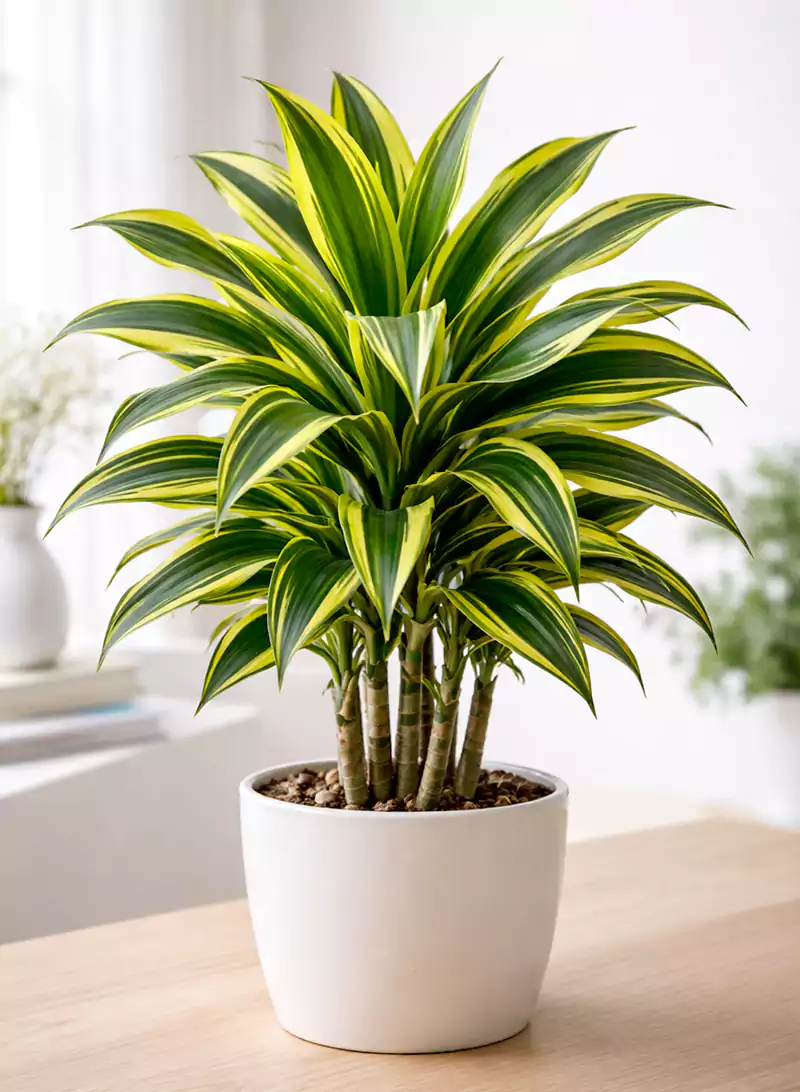
Dracena lemon lime plant, botanically referred to as Dracaena fragrans ‘Lemon Lime’, belongs to the same Asparagaceae family as asparagus fern. It is an air-purifying plant that features long, narrow sword-shaped leaves. Take a look at its scientific classification and key characteristics in detail:
Scientific Classification of Dracaena Lemon Lime
| Kingdom | Plantae |
| Order | Asparagales |
| Family | Asparagaceae |
| Genus | Dracaena |
| Species | Dracaena fragrans |
| Cultivar | ‘Lemon Lime’ |
Key Characteristics of the Dracaena Lemon Lime
Lemon lime dracena is loved by the planters for its chartreuse-and-green foliage and vertical growth habit. It is an air-purifying plant that is effective in reducing indoor air pollutants. Here are its key characteristics:
Striking Foliage
The striped lime green foliage is the main attraction of the houseplant. It features a detailed look with dark green centers, cream coloured bands, and bright lime green edges. The sword-shaped glossy leaves grow in rosette formation on the thick stems. Though rare indoors, the plant can bloom with white to yellow flowers in optimal conditions.
Growth Habit
It is a slow-to-moderate growing plant with an upright growth habit. This has a vertical, shrub-like appearance, which makes it ideal for narrow spaces. When kept indoors, the tree usually matures at 3-4 feet high and 2-3 feet wide, but it can reach up to 5-10 feet in an ideal environment.
Air Purifier
Dracena lemon lime is an air-purifying houseplant that can remove some common indoor toxins like formaldehyde, benzene, and trichloroethylene. Unlike many plants, it continues to release oxygen at night, as a result, improving air quality when you are asleep.
Toxicity
According to ASPCA, Dracaena plants are toxic to cats and dogs if ingested. It can lead to health issues like vomiting, depression, and hypersalivation. Therefore, if you are a pet owner, it is crucial to keep the plants away from their reach.
Did You Know?
Dracaena fragrans ‘Lemon Lime’ won the prestigious Award of Garden Merit (AGM) by the Royal Horticultural Society (RHS). It was awarded for its outstanding performance in both gardens and homes, striking foliage, and ease of care.
Also Explore: 10 Flowers That Bloom in Late Winter Nyt – Care Guide, Planting Tips and Common Challenges
Growing Conditions of Dracaena Lemon Lime
The lemon and lime plant is a houseplant that grows best in bright indirect light. In addition to that, it prefers well-draining potting soil and consistent watering. Take a look at its growing conditions if you want to start a garden from scratch:
| Hardiness Zone | USDA zones 10–12 |
| Soil Needs | Well-draining, aerated potting mix soil |
| Watering Intake | Allow the top 1-2 inches of the soil to dry out between waterings. It is sensitive to overwatering, which can cause root rot. |
| Sunlight Requirements | Thrives best in bright indirect light, though it can also grow in lower light spots. |
Quick Tip
Use filtered, distilled or rainwater to water the plants, as tap water fluoride and salts can cause brown tips.
Dracaena Lemon Lime Plant Care Measures
As per my experience, Dracaena lemon lime plant care is easy and ideal for beginners. You just need to mimic its native tropical habitat, with high humidity and a warm environment. Additionally, focus on feeding it with balanced liquid fertiliser and pruning it to encourage its bushy growth.
Fertiliser Needs
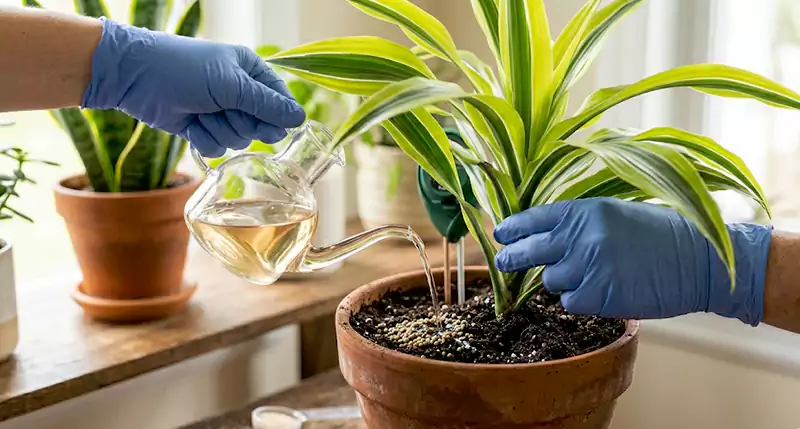
Lemon lime dracaena requires light feeding once a month in its active growing season from spring to summer. Fertilise it with a balanced water-soluble fertiliser to encourage its strong and healthy growth. Avoid feeding the plant in fall and winter when the temperature begins to drop.
Humidity and Temperature
Due to being adapted to the tropical climates of Africa and Asia, the lemon lime plant grows best in warm, humid environments. This is why they are ideal for indoor growth, where temperatures are optimal and severe dryness is uncommon. However, these plants can be easily grown outdoors in warm climates of USDA zones 10-12.
The houseplant grows best in to 18° C to 27° C, and a drop in temperature below 10° C can cause significant stress to it. Ensure to keep these plants away from air conditioning vents and cold drafts, as they can negatively impact their health. Additionally, it prefers 40-60% humidity to keep its leaves vibrant. In the dry air, its leaves are susceptible to browning.
Quick Tip
Rotate the plaant weekly or monthly to 90 to 180 degrees so that all sides receive light evenly. This keeps the plant balanced and prevents it from becoming top-heavy on one side.
Pruning and Cleaning
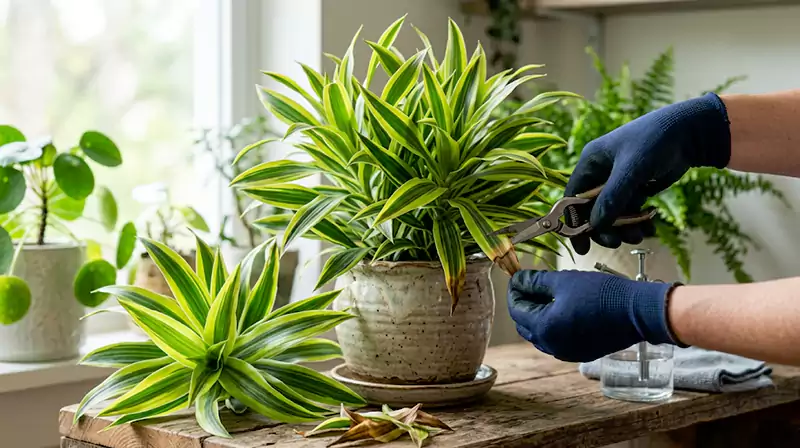
Generally, pruning is not required in Dracaena fragrans lemon lime, but it benefits if you wish to control its size. Prune the houseplant in early spring to manage its height and control its bushiness. Cut the stems near the leaf nodes with clean and sharp scissors. New growth will appear in weeks near the cut.
Cleaning the plant allows it to breathe and maximise photosynthesis for vibrant, fast growth. Wipe the leaves with clean microfiber clothes to remove dust buildup and improve absorption of light. Also, remove the debris from the soil surface to prevent pests.
Quick Tip
While cleaning the plant, inspect the undersides of the leaves and stem crevices to keep an eye out for pests. Check for sticky honeydew, white cottony masses, or tiny brown bumps.
Repotting
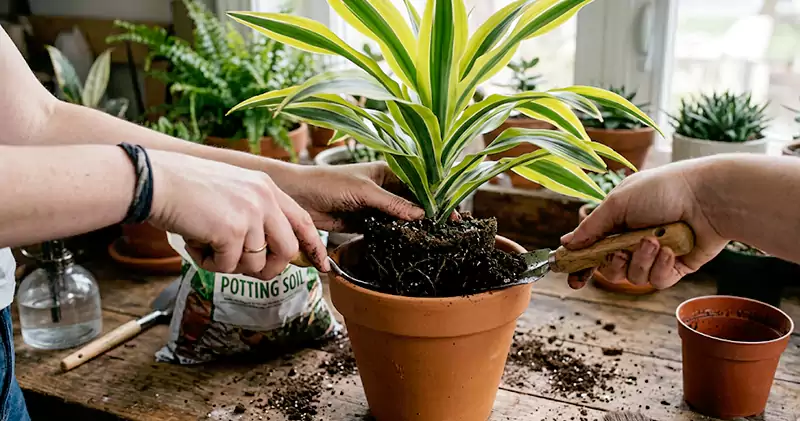
Repot the houseplant when it outgrows the container in which it was kept previously. Typically, this needs to be done every 2-3 years to prevent it from becoming pot-bound and provide space for its roots. Here are the steps that I follow:
- Choose a container that is 1-2 inches larger than the previous one with adequate drainage holes.
- Water the plant well a day before to reduce stress. The next day, gently pull the plant out, being careful not to damage its roots.
- Gently massage the roots to loosen them from the old soil. This will help them to expand well in the new soil later on.
- Add fresh potting mix at the bottom of the new pot and position the plant in the center. Ensure the same depth as it was before.
- Fill the space with new potting mix and water the plant well to settle the soil.
You may also read: When to Prune Fruit Trees? Best Pruning Tips With Common Queries and Solutions
Propagation of Dracaena Lemon Lime
I find the stem cutting method straightforward for the lemon lime dracaena propagation. It can be done easily with the stem cuttings left after pruning. Though many people who have large plants follow the air layering method. Here are the steps for both methods:
Stem or Cane Cuttings Method
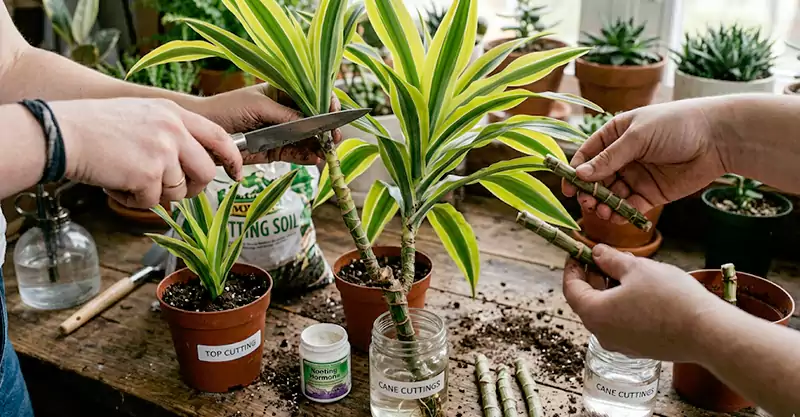
- Cut 6-8 inches of the stem tip (including the leafy top) or create 3-4 inch cane pieces from the middle of the stem, ensuring that the piece has at least one leaf node.
- Expose the lower leaves from the cuttings to clear the stem for rooting.
- Now, there are three rooting options: the water method, the soil method or the sphagnum moss method. Place your cutting in any of these: water, well-draining potting soil or damp sphagnum moss.
- Place the container in a warm spot that receives bright indirect light.
- If the cuttings were planted in moss or water, transfer them to well-draining soil once the roots are 1-2 inches long.
Air Layering Method
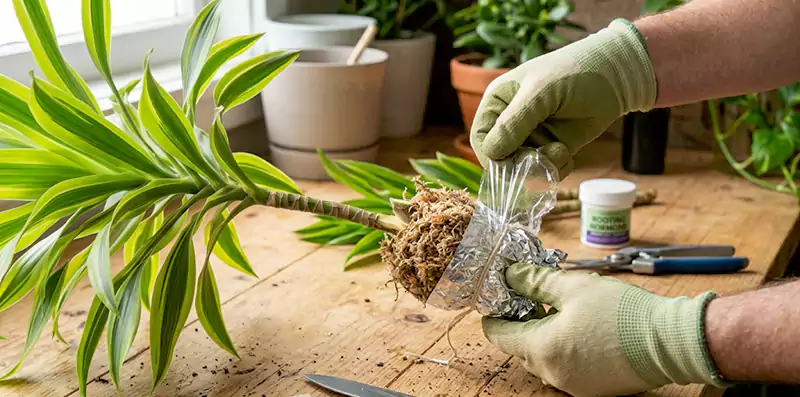
- Choose a healthy upright stem and remove leaves from the area where you are planning to layer, roughly 12-18 inches from the tip.
- Make an upward diagonal cut about ⅓ through into the stem.
- Apply rooting hormone to promote faster rooting and insert a toothpick to keep it open.
- Wrap the wound with moist sphagnum moss and seal it with a plastic bag.
- Once a thick ball of roots is visible through the plastic, usually in 1-3 months, cut the stem below the new root ball.
- Remove the plastic and plant the newly rooted top in a well-draining soil.
Common Pest and Diseases in Dracaena Lemon Lime
If you want to grow these houseplants indoors, keep an eye on pests like mealybugs, scale and spidermites. On the other hand, if you wish to grow them outdoors, they are susceptible to aphids. In addition to that, they are commonly affected by diseases like root rot, brown tips and leaf spot. Let’s understand the issues and their prevention:
Pest Infestations in Dracaena Lemon Lime
| Pests | Signs |
Spider Mites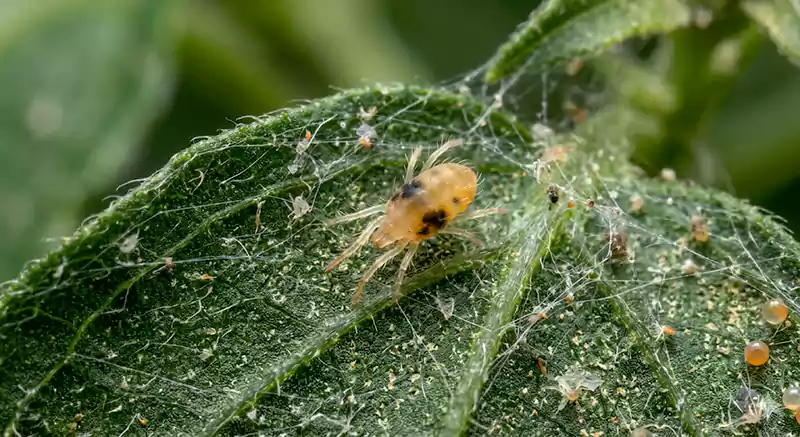 | Tiny spiders that cause yellowish and curled leaves and leave fine, silky webbing behind. |
Mealybugs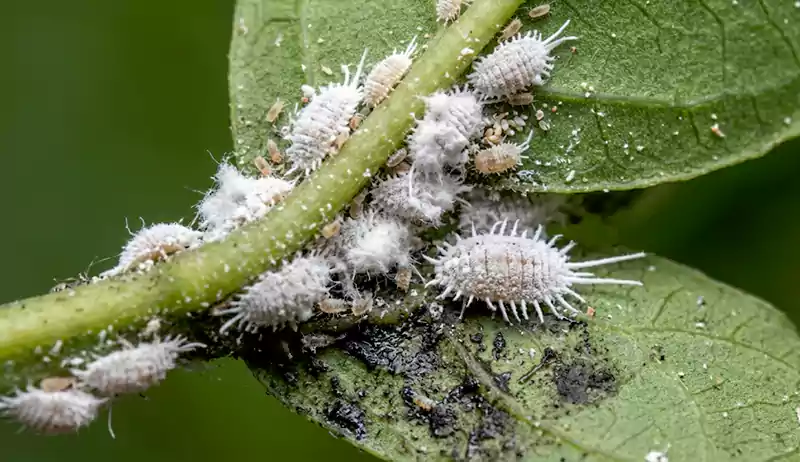 | White cotton-like insects that are usually visible under leaves and leaf joints, which leave sticky residue. |
Scale Insects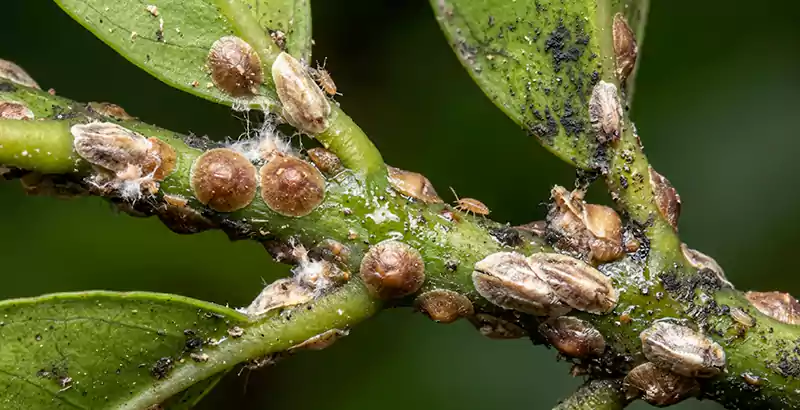 | Brown or white bumps on stems and leaves, and do not move. They cause yellowing and stunted growth in the plant. |
Aphids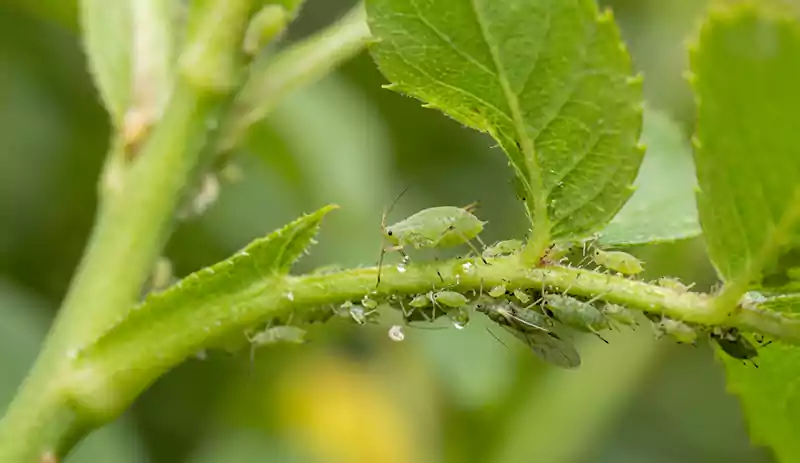 | Pear-shaped insects that cause leaf curling and sticky residue. |
Common Diseases in Dracaena Lemon Lime
| Diseases | Signs |
| Root Rot | It is caused by overwatering in the plants and leads to yellowing foliage and soft bark. |
| Leaf Spot | Fungal or bacterial infections cause brown or black spots on the leaves surrounded by a yellow halo. |
| Leaf Tip Browning | Crispy brown leaf tips commonly caused by low humidity or overwatering. |
Prevention of Pests and Diseases in Dracaena Lemon Lime
- In case of pests, wipe the leaves with soapy water or apply neem oil for treatment.
- Allow the soil to dry out between watering sessions to prevent root rot.
- Ensure high humidity and bright indirect light to support the overall health of the plant.
Also Read: Peperomia Plant: Care Tips For A Healthy Radiator Plant
Frequent User Concerns with Dracaena Lemon Lime
While reading about dracaena lemon lime plant care, I scrolled Reddit and got some frequent queries among the users. Mostly, people were concerned about black foliage, leaf spots and plants dying after its replanting. Take a look at the queries and solutions that worked for me:
- Dancing-Tiger721 asked Why is my lemon & lime Dracaena turning black? He also provided the image of the plant in which its foliage was turning black or brown.
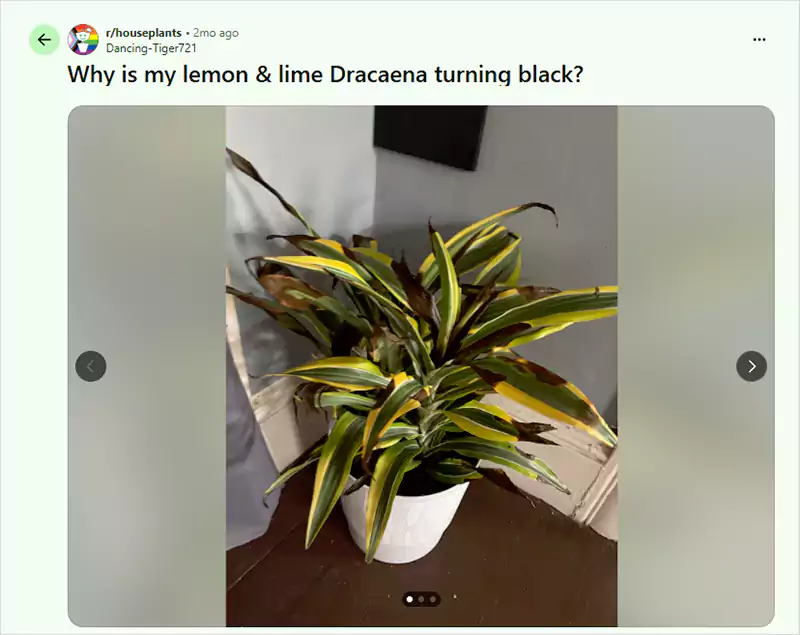
Solution worked for me: This can be caused by root rot from overwatering, fluoride toxicity from tap water and cold damage. First, focus on the proper watering, let the soil dry out completely and check if the pot has drainage holes.
Check water quality and only use filtered, distilled or rainwater. Remove the damaged leaves and place the plant in indirect light away from cold drafts.
- auddiemac showed her concern, Help with sick lemon lime. In the image, the leaves had brown spots with a yellow halo. She wanted to know if the plant can survive and if the infection is contagious to the other surrounding plants.
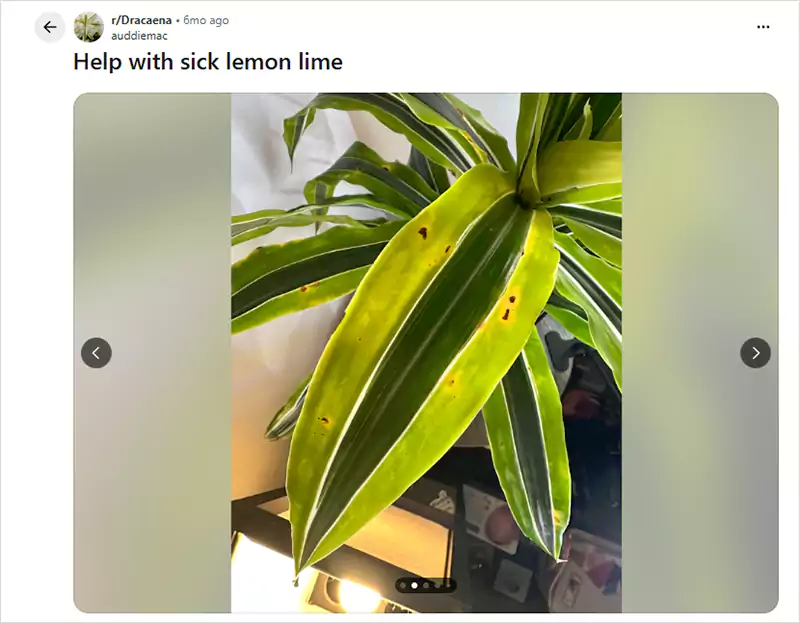
Solution worked for me: Yes! The plant can survive if it is treated immediately. Keep the houseplant at least 3-6 feet away from other plants, as it is likely that it has a fungal or bacterial infection that is indeed contagious.
Next, remove the affected leaves and sanitise tools. Reduce moisture in the plant and ensure it does not have soggy soil. Additionally, improve air flow and spray the plant with fungicide.
- Justalwaysawkward was worried about Dracaena lemon lime, brand new, freshly replanted and dying from the bottom?
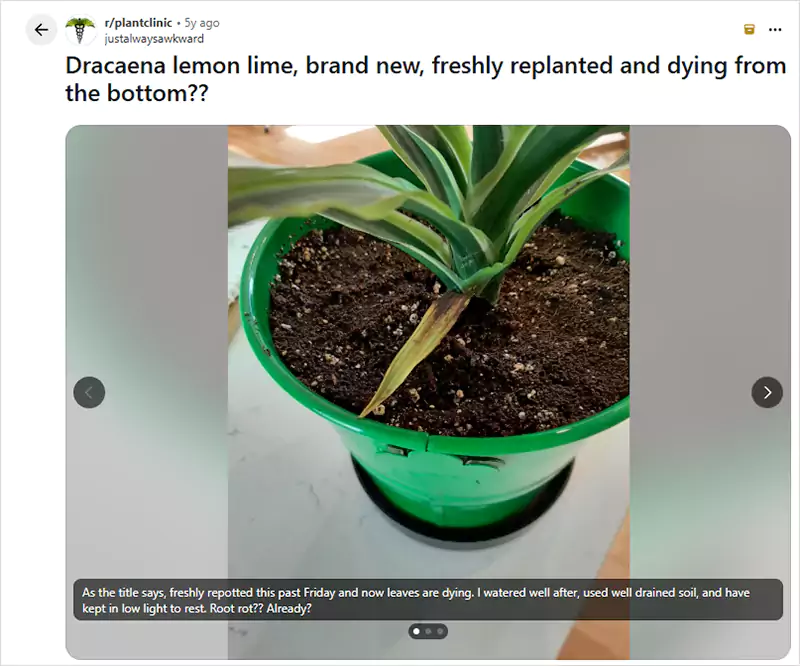
Solution Worked for Me: If the plant has been recently repotted, it’s most likely that it is suffering from transplant shock, overwatering or root rot. Limit watering and let the soil dry. If the problem does not resolve, remove the plant, check the mushy roots and ensure proper drainage of the pot.
Final Thoughts
Adding Dracaena lemon lime to your home will prove to be a good decision for both aesthetics and health. It is a wonderful air purifier plant that adds beauty to the indoor spaces. On top of that, it can be propagated to multiply your plant collection.
Keep in mind its tropical habitat and mimic it in your space to encourage its growth. Inspect the plant regularly for pest infestations and diseases, and treat them immediately to support its health and longevity.
FAQs
Is Dracaena lemon lime an indoor plant?
Is the lemon and lime plant toxic to pets?
Yes! It is toxic to cats and dogs if ingested. If you have pets its crucial to keep these houseplants away from them.
Why is my lemon and lime plant drooping?
It could be due to underwatering, or paradoxically, root rot caused by overwatering. Check the roots if they are mushy.
Why are the tips of my lemon lime leaves turning brown?
Brown leaf tips are typically caused by low humidity or tap water sensitivity. Increase humidity and use distilled, filtered or rainwater instead.
How to increase the growth or size of the lemon and lime plant?
Though slow-growing, the plant can grow faster if kept in optimal growing conditions. Keep them in bright indirect sunlight and warm temperatures to support their vibrant growth.
Sources:
Dracaena – Britannica
Dracaena fragrans ‘Lemon Lime’ – National Parks Board
Dracaena fragrans– BBC Gardeners’ World Magazine
Latest Blog