Yes, the bleeding heart flowers are perennial and come back every year after dying back in the winter.
Bleeding Heart Plant: How to Grow This Perennial Twining Vine?
Author
Annette HirdLast Update
February 15, 2026
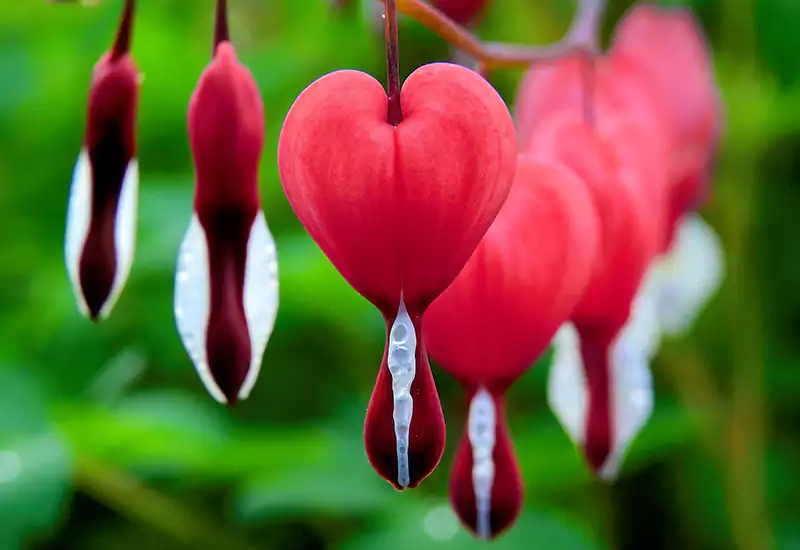
Heart-shaped flowers in a garden are a sight to behold! I was in awe the first time I saw these perennial flowers in my neighbour’s garden, and I knew these spring flowers would be my next gardening project.
This pollinator-friendly plant is an evergreen garden plant, similar to a wide variety of honeysuckle flowers, and is popularly grown as a garden fence and trellis.
Its vibrant pink and white bloom trailing across the garden is the perfect upgrade that your garden needs coming spring, and the cherry on top is that it comes back every year without the need to be replanted again and again.
If you are also fascinated by the Bleeding Heart plant, dive in and learn about this trailing vine.
Table of Contents:
- What is a Bleeding Heart Plant? A Tropical Evergreen Vine
- What Are the Different Types of Bleeding Heart Flowers?
- How Can I Grow the Bleeding Heart Plant at Home?
- How to Care for the Bleeding Heart Vine?
- How to Propagate the Bleeding Heart Flower
- Common User Concerns and Solutions About the Bleeding Heart Flowers
- Fun Facts About the Asian Bleeding Heart Plant
- Concluding Remarks
- FAQs
What is a Bleeding Heart Plant? A Tropical Evergreen Vine
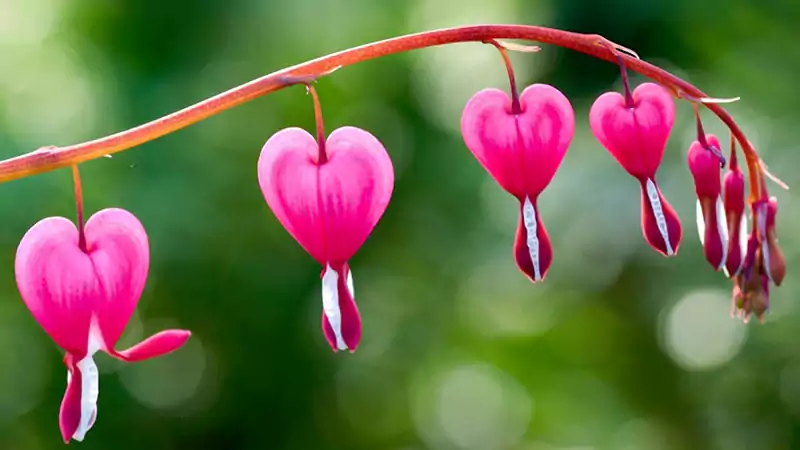
Part of the Fumitory family, this perennial trailing vine is a spring favourite that produces heart-shaped flowers in pink, red, and white colours.
Native to the region of East Asia, this pollinator-friendly plant is also called the ‘Asian Bleeding Heart’.
Much like the dianthus flower, the bleeding heart plant is also considered a hummingbird flower. This perennial plant grows up to 36 inches tall and is popularly used as a garden fence due to its bright-colored flowers.
Essentially symbolising the idea of love and romance, all three different colors represent something different. White means purity, pink symbolizes affection, and red represents deep, passionate love.
Associated with many cultural folklores about lost love and emotional surrender, the first step to understanding the inherent beauty of these flowers is to explore their taxonomy, given below:
 | |
| Botanical Name | Lamprocapnos spectabilis, |
| Kingdom | Plantae |
| Division | Magnoliophyta |
| Class | Magnoliopsida |
| Order | Papaverales |
| Family | Fumariaceae Marquis |
| Genus | Lamprocapnos Endl. |
| Species | Lamprocapnos spectabilis (L.) Fukuhara |
What Are the Different Types of Bleeding Heart Flowers?
The bleeding heart flowers grow in many different colors with different temperature tolerances, and they also do not bloom at the same time of the year.
Although I am a fan of the pink ones, here is a list of the most popular bleeding heart flowers that can be grown in your garden:
| Image | Name and Description |
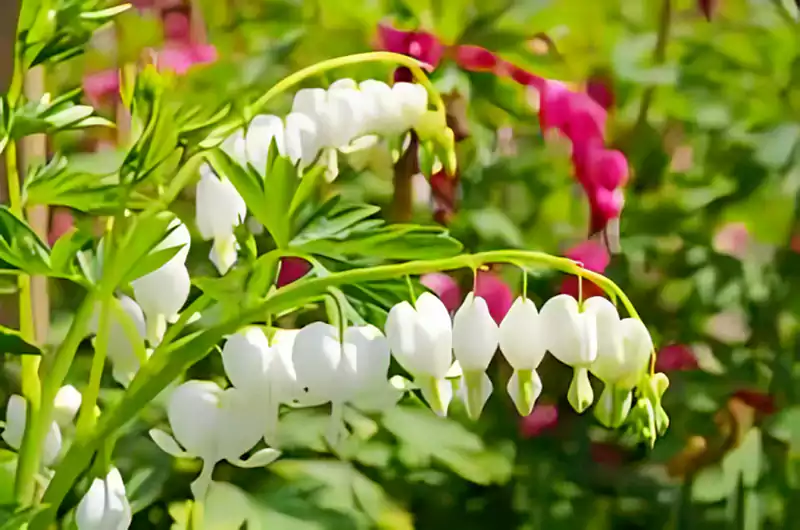 | Lamprocapnos spectabilis ‘Alba’ Common name: White Bleeding Heart Bloom time: April to June Hardiness Zone: USDA 3-9 Flower Colour: White Height: 2-3 feet |
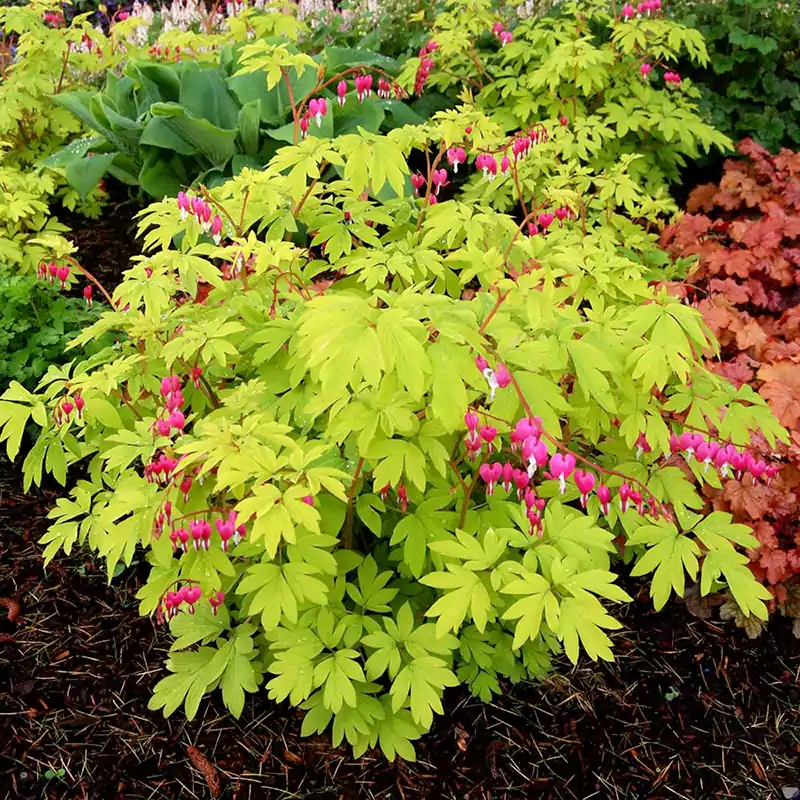 | Lamprocapnos spectabilis ‘Gold Heart’ Common name: Golden Heart Bleeding Heart Bloom time: April to June Hardiness Zone: USDA 3-9 Flower Colour: Pink Height: 1-3 feet |
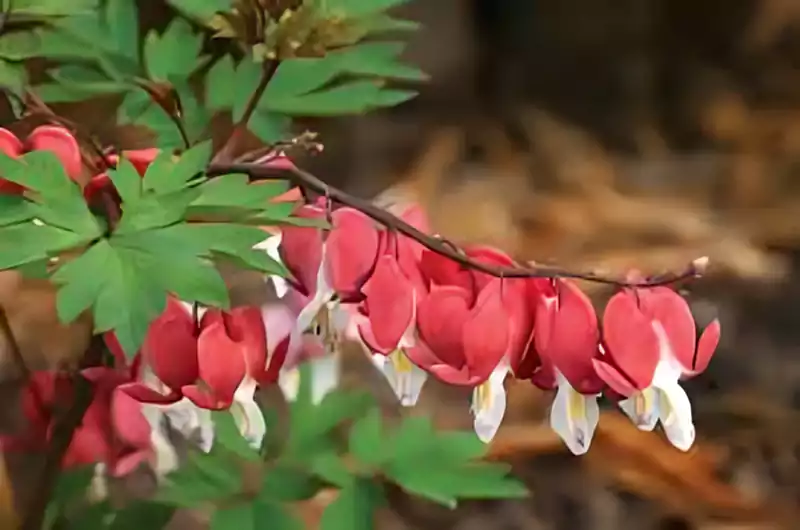 | Lamprocapnos spectabilis ‘Valentine’ Common name: Valentine Bleeding Heart Bloom time: May to June Hardiness Zone: USDA 3-9 Flower Colour: Red Height: 2-3 feet |
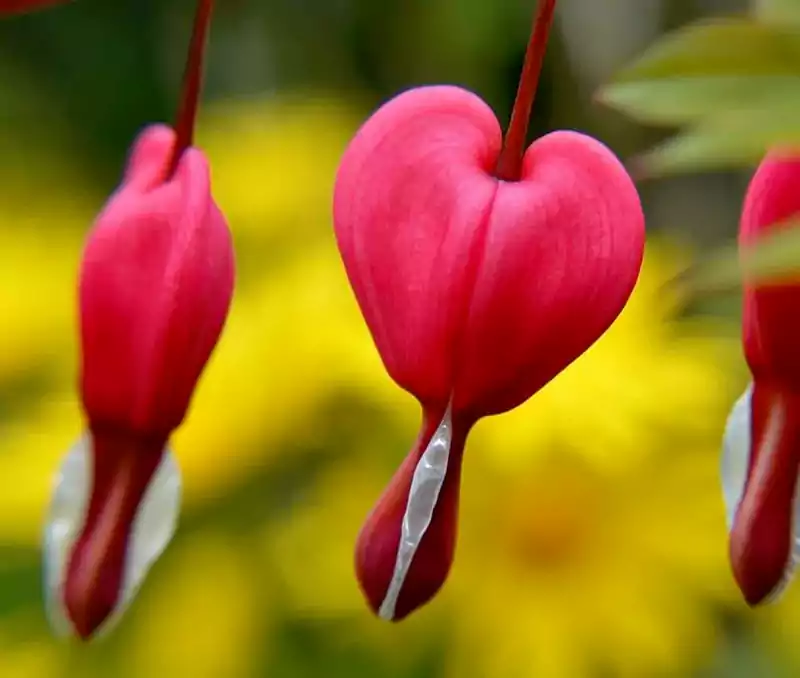 | Lamprocapnos spectabilis ‘Ruby Gold’ Common name: Ruby Gold Bleeding Heart Bloom time: May to June Hardiness Zone: USDA 4-8 Flower Colour: Pink Height: 1-3 feet |
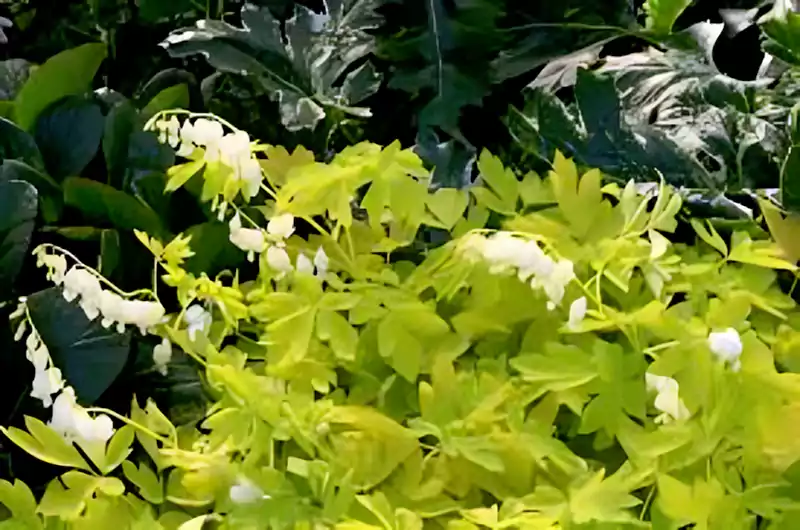 | Lamprocapnos spectabilis ‘White Gold’ Common name: White Gold Bleeding Heart Bloom time: April to June Hardiness Zone: USDA 3-9 Flower Colour: White Height: 2-3 feet |
Also Read: What are the Different Types of Lettuce? Uses, Cultivation, and More
How Can I Grow the Bleeding Heart Plant at Home?
The bleeding heart plants are shade-loving perennials and are easy to grow at home without hassle.
I have been growing this tall flower in my garden for a while now, and let me break down the easy growing guide into even simpler steps, starting with growth requirements for the plant:
| Soil Type | Loamy, clay or sandy( well- drained) pH- 6.0 – 7.0 |
| Water Requirements | 1-2 times per week |
| Sunlight | 4-6 hours of sun and afternoon shade |
| Fertiliser | All-purpose slow-release fertiliser |
| Hardiness | 3-9 USDA |
| Planting Time | Early spring |
Planting using the bleeding heart seeds is a time-consuming process. I use the transplants as the root establishment is much faster:
- Take a pot with sufficient drainage holes that is at least 12 inches deep and wide.
- Fill ⅓ of the pot with the soil mix for the bleeding heart plant.
- Place the transplant roots in the pot, cover the pot with soil, and pat it well.
- Make sure that the crown is not submerged under the soil.
- If planting directly in the ground, ensure the plants are placed at least 24 inches apart to avoid overcrowding.
- In the initial growing stage, water the plant 2 times per week, keeping the soil moist, not soggy. The bleeding heart plant is not drought-tolerant, so do not let the soil dry out.
- The plant thrives in partial to full sun, and direct sun exposure for a long time can cause yellowing of leaves before its time.
- Much like the Hyssop flower, the bleeding heart vine does not require fertiliser, but in case of dire need, feed it with an all-purpose fertiliser once during the growing stage.
Soil Mix*
|
How to Care for the Bleeding Heart Vine?
The bleeding heart plant care is not something one should worry about, as once established, these plants do not require constant attention, just regular watering and proper sunlight.
I have listed a few things that I take care of while maintaining the bleeding heart flowers:
Sunlight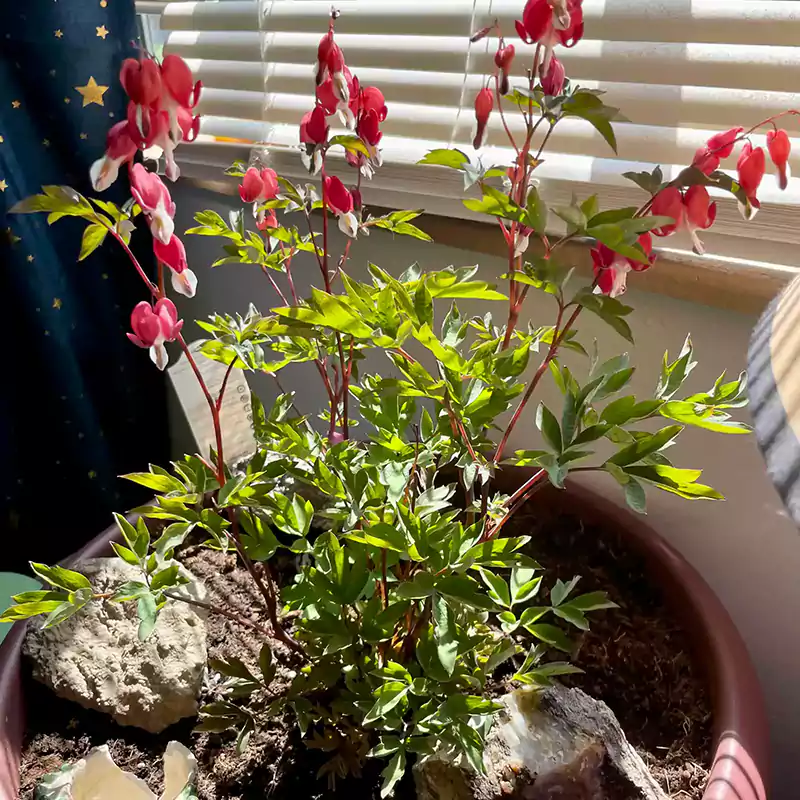 | Pruning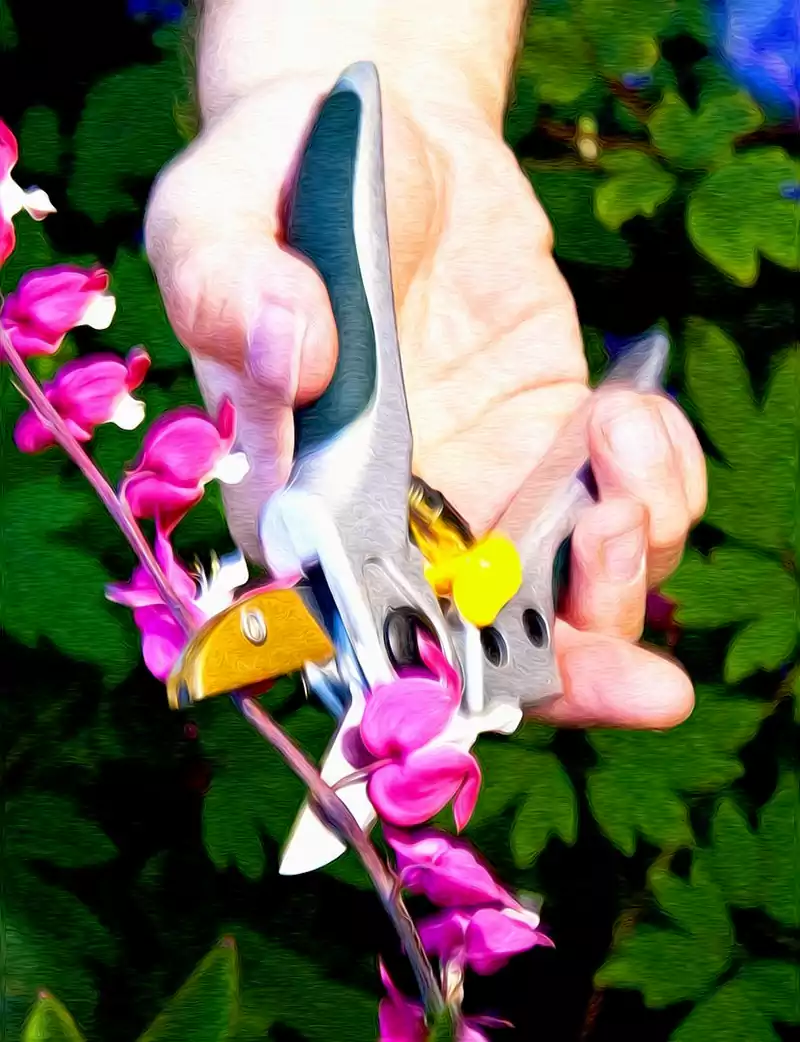 |
|
|
Water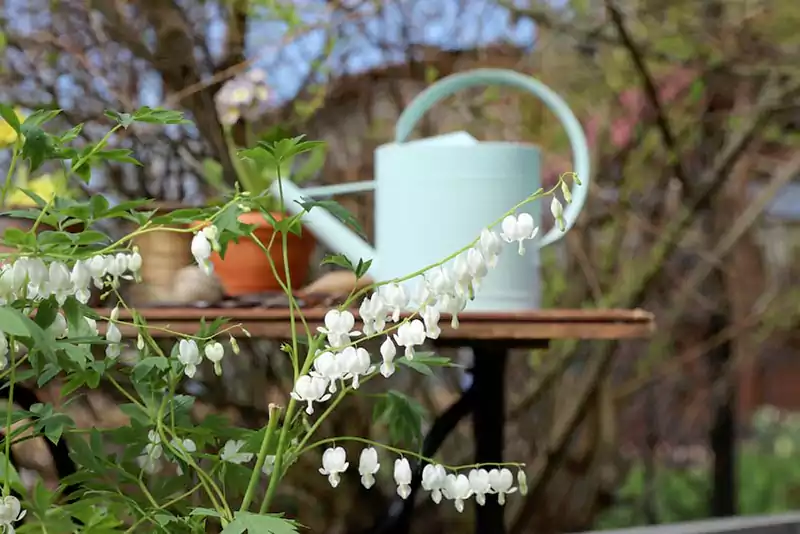 | Pest Infestation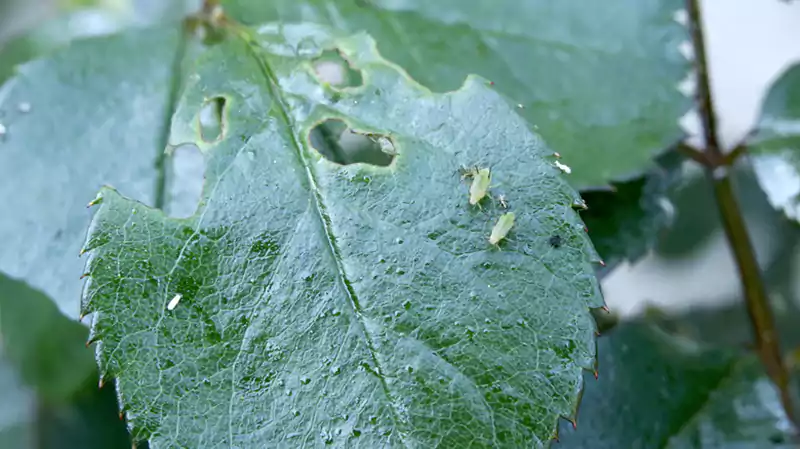 |
|
|
Gardening Care Tip
Always wear gloves while handling the bleeding heart flowers, as they have harmful toxins and can cause skin infections.
Also read: Verbena Plant Care: Propagation, Types, and Common Problems.
How to Propagate the Bleeding Heart Flower?
Propagating the bleeding heart plant can be done using 2 methods: seeds and root division, but I would advise root cuttings as the former will take a much longer time.
It is generally advised to propagate the bleeding heart every few years to manage the plant’s size and grow more of this spring beauty.
Here is a simplified version of propagating the bleeding heart flowers using the root division:
- The best time to propagate the bleeding heart plant is during late fall or early spring.
- Select a healthy plant that has reached maturity.
- Water the plant well the day before to make sure it is well-hydrated, and the roots do not stress much in the process.
- Now, carefully dig up the soil and remove the plant gently without damaging the roots.
- Using a garden shovel or any other tool, divide the roots into smaller sections. Each section should have an established root.
- Place these divisions in a well-draining soil in a partially shaded area.
- Water it weekly and keep the soil moist. The plant will start to grow in a few weeks.
Common User Concerns and Solutions About the Bleeding Heart Flowers
Growing bleeding hearts vine is easy and low-effort, but first-time gardeners often face issues, and I did too, which are often not concerning at all.
While scrolling through Reddit, I came across some common user concerns that everyone faces initially.
Take a look and avoid small mistakes:
1. My bleeding heart is dying!?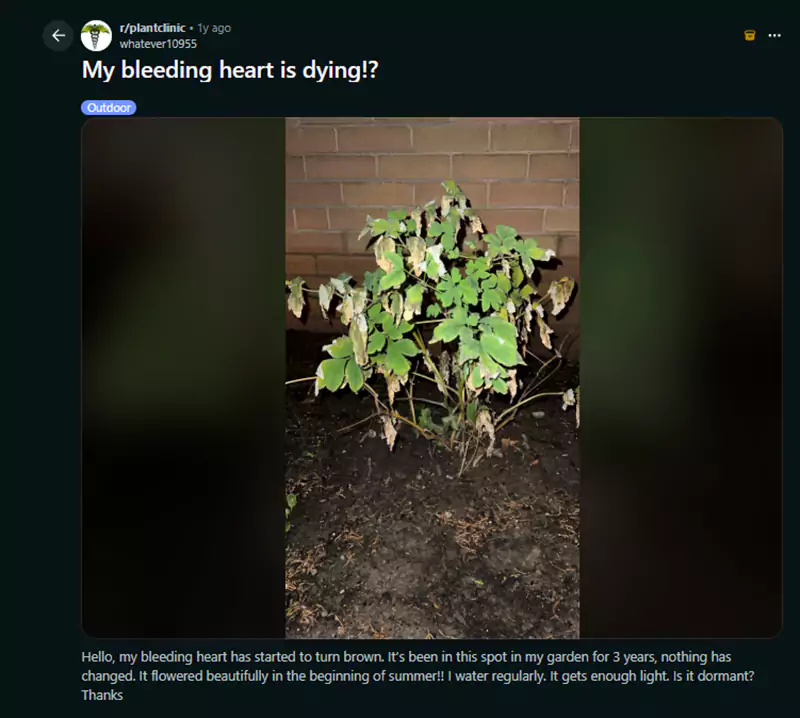
|
2. How big does a bleeding heart get?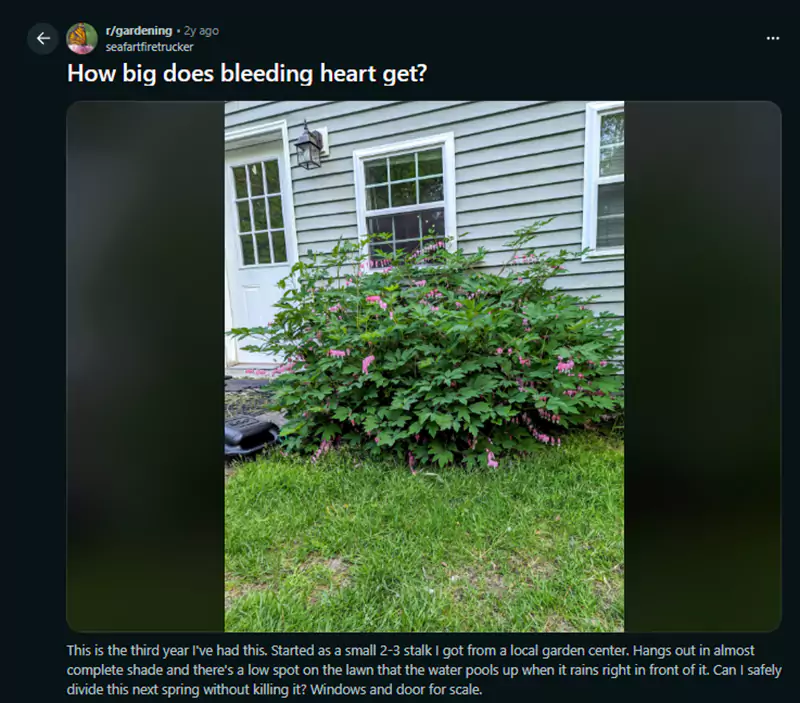
|
Fun Facts About the Asian Bleeding Heart Plant
The bleeding heart bush has been a part of myths and stories for centuries, which have not been a part of the discussion, but my curiosity and research led me to the following fun and important facts about these flowers that you will love!
- According to the Pet Poison Helpline, the bleeding heart plant is considered toxic to both pets and humans.
- There is a Japanese legend associated with the flower in which a prince takes his life after getting rejected by a maiden, who later realises her love for him. The first bleeding heart flower bloomed from the place he fell, making the flower a symbol of love and loss.
- A popular choice amongst the youngsters, the bleeding heart tattoo symbolises love and emotional vulnerability.
- There is a popular band named ‘Bleeding Heart’, but it is not associated with or inspired by this perennial plant.
Concluding Remarks
I believe the bleeding heart plant is a unique work of nature. With its unique design and low-maintenance demands, it can be grown by all the anthophiles so easily, whether you are an expert or a beginner.
Flowers, anyway, elevate the aesthetic appeal of the garden, and when it is in the shape of a heart, no plant comes closer. These perennial shrubs, which are also deer-resistant, come back year after year, welcoming spring in the best way possible.
FAQs
Do bleeding heart plants come back every year?
Is the bleeding heart plant poisonous?
Yes, the bleeding heart bush is poisonous, as it contains toxins like isoquinoline alkaloids, which can cause infections if ingested.
Should I not touch the bleeding heart plant?
Due to the presence of harmful toxins in the plant, it is not advised to touch the plant directly without gloves.
What is the best place to plant the bleeding heart vine?
The bleeding heart plants should be planted in well-draining soil in partial shade, protected from the harsh afternoon sun.
Where to buy bleeding heart plant from?
The bleeding heart plant is easily available at online stores and plant nurseries worldwide.
Sources:
Bleeding heart varieties to grow – BBC Gardeners
Latest Blog
Related Post

Abodelook has a large collection of furniture, art, accessories, garden products, and a lot that adore and furnish your home creating a pleasing and comfortable environment. Our curated home decor collections are not only of high-quality material but also sustainable and provide comfort in your daily life.
Copyright © 2026 Abodelook.