No, the Hyssop officinalis is not an invasive species, but it can self-seed if not maintained properly. So, active care and management are essential.
Hyssop Flower: How to Grow This Ancient Herbal Flower?
Author
Annette Hird
Let me be honest and admit that I initially confused Hyssop with Lavender, and anyone looking at it for the first time would likely feel the same because aren’t they identical?
However, the best part is how this confusion introduced me to such a fragrant and beautiful bloom that is enchanting to look at, with a scent that is just the cherry on top!
Now, if this similarity has excited you to know about this perennial flower, then dive in to learn about the hyssop flowers, starting from origin, planting, benefits, and more.
Table of Contents:
- What is a Hyssop Flower? Features, Symbolism and Taxonomy
- Are the Anise Hyssop and True Hyssop Plants Different?
- What are the Hyssop Plant Benefits?
- How to Grow the Hyssop Plants at Home?
- Pests, Diseases, and Common Issues
- How to Harvest and Store Hyssop Plants?
- Scientific Research About the Hyssop Plant Benefits
- Fun Facts About the Hyssop Flower
- Concluding Remarks
- FAQs
What is a Hyssop Flower? Features, Symbolism and Taxonomy
Botanically known as Hyssopus Officinalis, the Hyssop is a perennial flower that belongs to the Lamiaceae (mint) family. Similar to the Hyacinth flower, it is also known for its bright blue and fragrant flowers, and has various medicinal benefits and is known to be a pollinator magnet.
This flower is native to Southern Europe and the Middle East, and is hardy to zones 3-8. Additionally, it grows up to 2–4 feet high and 1-3 feet wide.
Historically, the Hyssop flower has been mentioned in the Bible several times in the Old and the New Testament and has been associated with the act of cleansing.
For instance, in:
Leviticus 14:4 — the priest shall order that two live clean birds and some cedar wood, scarlet yarn and hyssop be brought for the person to be cleansed.”
This implies that the hyssop should be used along with the cedar wood, scarlet yearn, to clean the body of the diseased person. Hence, the association of the Hyssopus officinalis with the idea of purification is so significant.
Before knowing more about the Hyssop plant, take a look at the scientific classification of the plant:
 | |
| Botanical name | Hyssopus officinalis L. |
| Kingdom | Plantae |
| Division | Magnoliophyta |
| Class | Magnoliopsida |
| Order | Lamiales |
| Family | Lamiaceae Martinov |
| Genus | Hyssopus L. |
| Species | Hyssopus officinalis L. |
Also read: What Is a Loofah? Uses, Benefits, Growing Guide, and Expert Opinions
Are the Anise Hyssop and True Hyssop Plants Different?
Yes, to clear the confusion, the Anise hyssop is not the same as the Hyssop officinalis. Both of these plants belong to the same mint family but have different genera: Agastache and Hyssopus, respectively.
Here is a table showcasing the key differences between the two plants:
Hyssop Officinalis  | Anise Hyssop 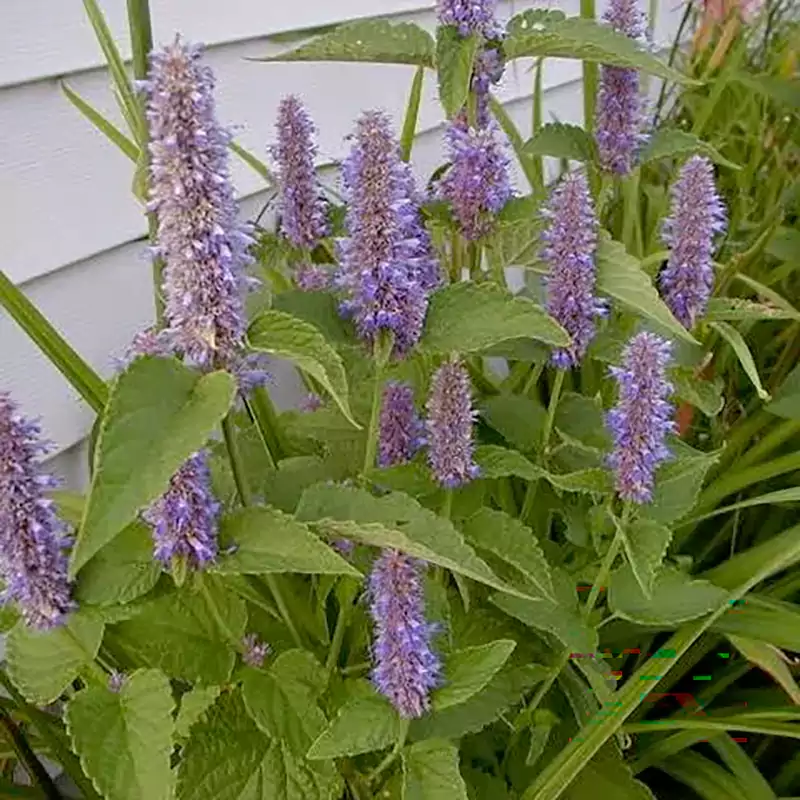 |
|
|
|
|
|
|
|
|
What are the Hyssop Plant Benefits?
Isn’t it fascinating that the hyssop has been used as a herbal medicine since ancient times?
So, apart from adding colour and fragrance to your garden, this herbal plant is also really useful and used for a variety of purposes. Discover the diverse uses of the plant:
| Medicinal Benefits of Hyssop |
|
Note:
The hyssop plant has been credited with various health benefits, but further human clinical trials might be necessary to be conclusive about the same.
| Culinary Uses of the Hyssop Plant |
|
| Ecological Benefits of Hyssop |
|
How to Grow the Hyssop Plants at Home?
Just like the Narcissus flower, Hyssop planting is easy and can be grown without any special help, but it requires a lot of patience because germination after sowing the seeds may take time. But the results are worth the wait!
But before diving into the planting guide, make sure the planting is done in adequate growing conditions:
| Soil type | Dry to loamy well-draining soil |
| Soil pH | 6.5 – 8.0 |
| Sunlight | Full sun |
| Water | Regularly during the growing stage, and only during the dry spells once established. |
| Fertiliser | Balanced, slow release (although it is not much needed) |
After making sure all the adequate growing requirements are met, I plant the hyssop seeds using the following steps:
- In a well-draining loamy soil, mix organic matter to improve soil quality.
- Sow the seeds 10 weeks before the last frost, at least 6-12 inches apart to give space to individual plants to bloom.
- The seeds should be sown around 0.6 cm deep into the soil.
- Make sure the plant receives full direct sunlight. The plant can survive in partial shade, too, but it can make the plant a little lanky.
- Water well during the growing stage, but once established, they are drought-tolerant and also do not need regular maintenance.
After the planting is done, it does not require much care and maintenance and can survive on its own. Just look for dry spells and water as needed, and prune in the spring for bushier growth.
Pests, Diseases, and Common Issues
The hyssop plant, in general, is resistant to pests and diseases. However, lack of care, especially during the growing stage, can lead to certain issues.
Here are the common issues faced with their solution:
- Scale, mealybugs and nematodes can trouble the growth of the plant.
They can be removed by either handpicking or using Neem oil.
Planting marigolds as a companion plant can also be helpful in repelling nematodes.
- Root rot is a common issue in plants caused by overwatering. While planting, add compost to maintain the soil health and prevent waterlogging.
Read next: How to Grow Crocosmia? Planting Tips, Care Advice, and Blooming Secrets
How to Harvest and Store Hyssop Plants?
Along with being a garden favourite, this perennial plant can be used for medicinal and culinary purposes, which require proper and timely harvesting and storing.
Depending on the use, the process of harvesting is divided into the following steps:
| Uses | Harvesting Time | Harvesting Method |
| 1. Culinary Uses | For fresh leaves: before the plant flowers Dried parts: Full bloom |
|
| 2. Medicinal Uses | Full bloom |
|
| 3. For extracting the oil | Flowering stage |
|
After the harvesting is done, preserving these leaves and flowers is equally important to ensure that they can be used to their full potential.
Here is how I store my harvested hyssop plants:
- Fresh Leaves: These can be stored in the refrigerator either by being wrapped in a paper towel or in a plastic bag.
- Dried Leaves and Flowers: Hang the dried branches in a well-ventilated room for 5 days only. Keeping them for too long can affect the taste of the leaves.
Scientific Research About the Hyssop Plant Benefits
The hyssop plant has been credited with its herbal and therapeutic benefits over the centuries, like helping in respiratory diseases like asthma and bronchitis and boosting the immune system.
However, I like claims to be validated by science before I trust them blindly, and my research led to studies that have acclaimed this plant to have medicinal benefits. Take a look at some of them:
| Study year: 2011 Sample type: The aerial parts of the Hyssopus officinalis. Aim: To analyse the antioxidant activity of Hyssopus officinalis Key findings: The results of the study showed a direct correlation between the phenolic content and the antioxidant activity of the hyssop plant. So, it was concluded that the hyssop flower extracts can be used as a potential antioxidant replacing the synthetic ones. Source: National Centre of Biotechnology Information |
| Study year: 2024 Sample type: 60 mild to moderate asthma patients and hyssop syrup Aim: To assess the effect of the hyssop syrup on mild to moderate asthma Key findings: It was concluded that the hyssop syrup was effective for people with a productive cough (cough with mucus) and higher BMI. However, it worsened the impact on people with a dry cough. Hence, different treatment for different asthma phenotypes is essential. Phenotype distinguishes the symptoms of different patients and helps the doctor assess the condition better. Source: National Centre of Biotechnology Information |
Fun Facts About the Hyssop Flower
Flowers are more than just a bouquet and decorative pieces. Hyssop growing might concern you about pest infestations, but did you know it was used as a pest control herb?
Yes, and similar fascinating facts will surprise you, as they did to me. Read more and explore:
- Hyssop was used by monks as an ingredient to make Chartreuse, a French herbal liquor, since 1737.
- In the Middle Ages, the scent of this flower was used to repel pests and insects from garden beds and homes. That makes the gardeners worry-free about pest infestations!
- The word hyssop is mentioned in the bible and is associated with the idea of cleansing and purification throughout.
- According to European folklore, the women there would rub this flower in the psalmbooks and sniff it to stay awake in church.
Concluding Remarks
The uses for hyssop plant are not just limited to ornamental purposes but have been a great source of medicine since ancient times. Whether it is being used for aromatherapy, managing respiratory issues or as a pollinator-attracting plant, the benefits of this plant are multifaceted.
Growing and caring for this herbal plant has taught me how such a useful plant can also be extremely low-maintenance. It was so easy to manage this once established, and being a perennial plant, it does not need replanting every year.
So plant and enjoy bright, fragrant blooms!
FAQs
Is the Hyssop invasive?
How is Hyssop connected to the Bible?
The hyssop plant is used as a symbol of purity and cleansing in the Bible. It appears in Exodus 12:22, where it was used to dip the lamb’s blood and mark the doorpost.
Is the Hyssop plant perennial?
Yes, the hyssop plant is a hardy perennial and returns every year without having to be replanted regularly.
Are Anise hyssop and True hyssop different?
Yes. Although it might look similar, the anise variety is different from the hyssop officinalis in taste, fragrance, and uses.
Sources:
How to grow hyssop – BBC Gardeners
Hyssop – BBC
Latest Blog