Yes, overflowing water from clogged gutters can erode soil, damage flower beds, and disrupt your landscaping.
Warning Signs of Blocked Gutters and How Timely Cleaning Helps Prevent Home Water Damage
Author
Kamron SandersNormally, when rain happens, the rainwater moves from the roof into the drainage channels and away from the house. But it is not abnormal for the drainage channels to become blocked. And that can lead to moisture buildup and harm to the building.
To solve and have measures to prevent it, it is necessary for homeowners to know how to identify the problems before it’s too late.
Things like timely professional maintenance and checks; read this blog to learn about the warning signs of blocked gutters.
Table of Contents:
- Recognizing Overflow During Heavy Rainfall
- Understanding Why Downspouts Become Blocked
- Identifying Water Stains Beneath Roof Edges
- Noticing Sagging or Misaligned Channels
- Checking for Moisture Around the Foundation
- Watching for Unusual Basement Dampness
- Recognizing Vegetation Growing Inside Channels
- Understanding Damage to Fascia and Exterior Trim
- Evaluating Problems Around Exterior Walkways
- Knowing When Cleaning Is Necessary
- Understanding What Cleaning Cannot Correct
- Protecting the Home Through Early Action
- Frequently Asked Questions
Recognizing Overflow During Heavy Rainfall
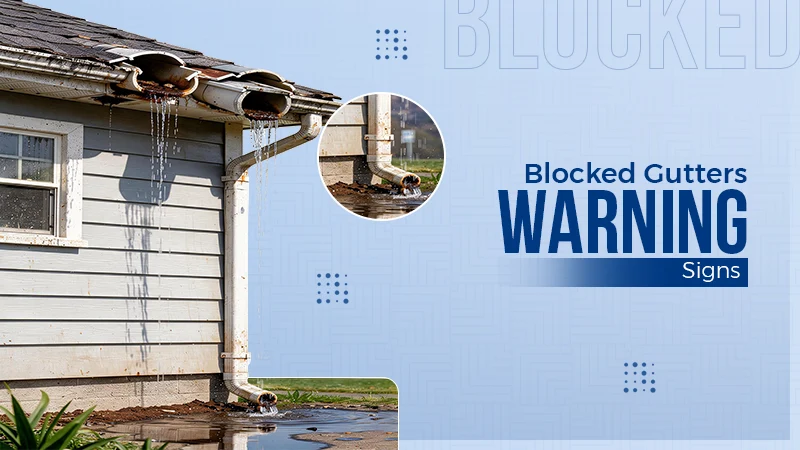
Water spilling over a roof edge is among the clearest indications of drainage trouble. Runoff reaching the downspout can be prevented by an obstruction, causing water to collect until it crosses the channel’s outer edge. This overflow can occur even when rainfall seems moderate.
However, debris is not responsible for overflow every time. Incorrect slope, insufficient capacity, or damaged components can produce similar symptoms. Professional evaluation helps establish the actual cause.
Understanding Why Downspouts Become Blocked
Water from elevated channels is carried by downspouts toward ground-level discharge points. Leaves, roofing granules, small twigs, and compacted sediment can restrict these narrow passages. Where material changes direction near them, blockages often develop.
A downspout that releases little water during substantial rainfall may deserve attention. Unusual differences can be revealed by comparing discharge between different outlets.
Watching for Hidden Drainage Restrictions
Inside vertical piping, some obstructions remain concealed. Water may back up even when the visible upper channel appears relatively clear. Proper inspection helps locate restrictions without unnecessary dismantling.
Identifying Water Stains Beneath Roof Edges
Repeated overflow can be indicated by Dark streaks or persistent discoloration beneath drainage channels. Water running across fascia boards, siding, or exterior trim can carry dirt and leave noticeable marks. These patterns deserve investigation.
An active drainage problem is not always an indicator. Previous weather exposure and ordinary material aging can produce similar appearances.
Whether discoloration changes after rainfall should be observed by the homeowners. Recurring wetness provides more useful information than appearance alone.
Noticing Sagging or Misaligned Channels
Drainage channels should maintain an appropriate slope toward their outlets and remain securely attached. Accumulated debris and standing water can add weight, placing additional strain on supporting hardware. Over time, sagging of sections may be allowed by weakened attachments.
Misalignment can create low points where water remains trapped. Additional sediment might get collected by these areas, and the existing drainage restrictions get worse.
Slon Exterior Care can help homeowners recognize conditions that warrant gutter cleaning or further component evaluation. Separate corrective work is required for the damaged attachments.
Checking for Moisture Around the Foundation
From vulnerable areas surrounding the foundation, Roof runoff should be directed away. When water repeatedly spills beside exterior walls, nearby soil can become excessively saturated. Moisture exposure around foundation surfaces may increase due to this.
Standing water, recurring muddy patches, or erosion beneath roof edges can signal inadequate drainage. These symptoms are not unavoidable rainfall effects.
Understanding Soil Movement and Erosion
Concentrated runoff can gradually displace loose soil and landscape materials. Where water repeatedly follows the same route is where Small channels may form. Correcting drainage problems helps reduce continued erosion.
Watching for Unusual Basement Dampness
Groundwater conditions, grading problems, and foundation defects can all be causes of basement moisture. Poor roof drainage may contribute by directing additional water toward the structure. Careful evaluation is needed to identify the source.
Homeowners may notice damp walls, musty odors, or moisture appearing after storms. Useful information about timing is provided by these observations.
Cleaning drainage components alone cannot resolve every basement moisture problem. Assessment is required for the complete water management system.
Recognizing Vegetation Growing Inside Channels
Small plants occasionally establish themselves in accumulated organic material along roof edges. Debris and moisture have remained long enough to support growth, as suggested by their presence. Roots may further trap surrounding sediment.
Visible vegetation indicates more than an ordinary cosmetic concern. Substantial material accumulation within the drainage pathway is signaled by it.
Homeowners should avoid climbing onto elevated roof edges to remove plants. A safer approach is offered by Professional access.
Understanding Damage to Fascia and Exterior Trim
Fascia boards support or border many residential drainage installations. can contribute to deterioration; this can happen due to repeated moisture exposure, especially where protective finishes are compromised. Wooden components may eventually soften or lose structural integrity.
Closer attention is needed for Peeling paint, swelling, and persistent dampness. These conditions can also result from other water entry sources.
Drainage problems from roofing or flashing defects are distinguished by a thorough assessment. Accurate diagnosis supports appropriate repairs.
Evaluating Problems Around Exterior Walkways
Concentrated water onto steps, paths, and entrance areas can be directed by overflow. During rainfall, these locations may become unnecessarily wet or collect sediment washed from surrounding surfaces. Adjacent landscaping can also be affected by repeated runoff.
Homeowners should notice where water lands during storms. Improper discharge may indicate unexpected streams crossing pedestrian routes.
Addressing the source can improve how rainwater moves around frequently used exterior spaces.
Knowing When Cleaning Is Necessary
When accumulated material interferes with normal water movement, that’s when Gutter cleaning becomes appropriate. Visible debris, repeated overflow, or suspected outlet restrictions can justify professional attention. The decision should be guided by the conditions of the system.
Routine observation is useful, but homeowners should avoid risky inspections from ladders or rooftops. Meaningful warning signs are often revealed by Safe ground-level observations.
Slon Exterior Care can assist with removing accumulated material from accessible drainage components using suitable professional methods. Additional evaluation is required for structural defects.
Understanding What Cleaning Cannot Correct
Removing debris restores flow only when obstruction is the underlying problem. Trouble may continue afterward due to incorrect installation slope, damaged joints, undersized outlets, and deterioration. These conditions require different solutions.
Visible limitations before recommending corrective measures should be identified by a professional assessment. Homeowners benefit from understanding whether cleaning or component repair is appropriate.
Repeated maintenance becoming a substitute for necessary repairs can be prevented by clear explanations.
Protecting the Home Through Early Action
Drainage problems often begin with small changes that are easy to overlook. Developing restrictions can be revealed by Overflow, staining, sagging, foundation moisture, and unusual downspout discharge. Recognizing these patterns supports earlier intervention.
Unobstructed rainwater movement when debris is responsible for the problem can be restored with the help of Timely gutter cleaning. Effective drainage also depends on secure components, appropriate slopes, and properly directed outlets.
Concerns without taking unnecessary risks can be identified by Homeowners who observe their property during rainfall. Prompt professional attention and accurate diagnosis help protect exterior materials and landscaping and prevent water exposure from surrounding foundation areas.
Frequently Asked Questions
Can landscaping be damaged from clogged gutters?
Is professional gutter cleaning safer than DIY?
Yes, Professionals have the right tools and experience. They can access hard-to-reach areas without risking injury or property damage, making it a convenient solution for homeowners.
How many times should the gutters be checked for blockages?
Twice a year is a reasonable minimum for most properties, spring and autumn, with more frequent checks if you’re near overhanging trees that shed heavily.
Latest Blog