To make this tree thrive well, keep it in a spot that receives bright indirect light. Water the plant well when the top inch of the soil feels dry. Also fertilize monthly in the active growing season and prune occasionally to support its growth.
Rubber Plant Care: How to Grow and Maintain a Healthy Plant
Author
Annette Hird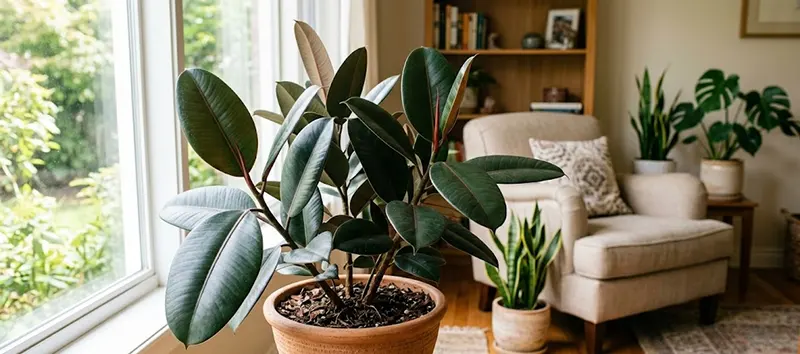
Rubber plants are great for elevating home decor with their glossy leaves and unfussy nature. Low-maintenance yet beautiful, the plant gets its name from the rubbery latex in its sap, though it is no longer the main commercial source of rubber. Native to the tropical regions of Southeast Asia, the plant has adapted well to indoor conditions and thrives on minimal care.
If you want to bring this plant to your home, read this article to learn about rubber plant care, planting, and common issues.
Table of Contents:
Rubber Plant at a Glance
The rubber plant, botanically known as Ficus elastica, belongs to the fig family. It is grown both indoors and outdoors. Native to South and Southeast Asia, this plant is considered invasive outside of its native range. If you are growing it indoors, it’s crucial to keep it out of the reach of children and pets, as its milky sap is toxic.
| Kingdom | Plantae (Plants) |
| Order | Rosales |
| Family | Moraceae (Mulberry/fig family) |
| Genus | Ficus (Fig trees) |
| Botanical name | Ficus elastica |
| Common names | Rubber plant, India rubber plant, rubber tree, rubber fig |
| Size | In tropical climates, it can reach 50 feet tall. As a houseplant, it grows up to 10 feet. |
| Hardiness zones | USDA zones 10-12 |
| Native Range | South and Southeast Asia |
| Toxicity | Leaves and stems secrete a milky sap that is toxic when ingested. Keep it out of the reach of children and pets. |
| Invasiveness | In some tropical areas outside its native range, it is considered invasive. |
Study Insights
According to ScienceDirect’ study, Ficus elastica is a versatile plant with strong potential high protein cattle feed (when the antinutritional factors are removed). It can also be used as bioenergy feedstock due to its high calorific value and hydrocarbon yield.
Also Read: 20 Beautiful Flowers That Starts With A: Add Aesthetics to Your Garden
How to Take Care of Rubber Plant
Rubber plant care involves placing it in bright indirect light with infrequent watering. It also needs occasional feeding, pruning, and cleaning. Let’s see the measures to care for rubber tree plant indoors and outdoors:
Rubber Tree Plant Care Indoors
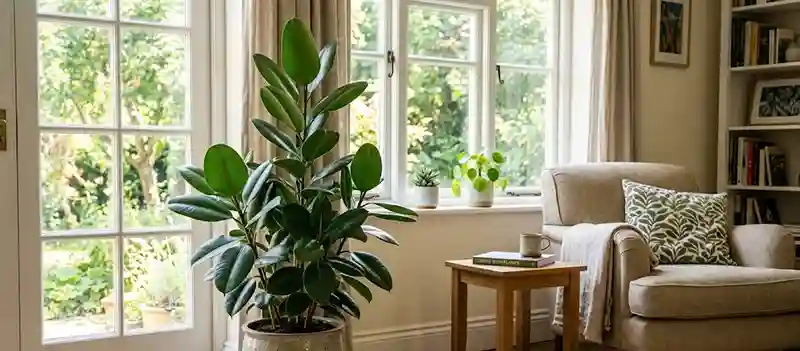
In rubber plant indoor care, keep the plant in bright, indirect light and water it when the top inch of the soil feels dry. Maintain the temperature between 60-75°F and fertilize and prune the plant occasionally.
- Lighting: Ficus elastica prefers bright, indirect light. Avoid placing it under too much direct light, which can scorch the leaves. Also, don’t keep it in the shade as that can cause leggy growth.
- Watering: Water it when the top inch of the soil feels dry. Avoid overwatering, which can lead to root rot. Ensure good drainage and reduce the watering frequency in winter when the growth slows down.
Expert Tip
Use lukewarm water to prevent shocking the roots. Cold soil conditions can result in a decline in overall plant health. - Temperature and Humidity: In rubber plant care indoor, maintain the temperature between 60-75°F (15-24°C). Avoid its placement near air conditioning vents and drafty areas. The plant thrives in average to high humidity. So if you live in a dry area, use a humidifier or place the pot on a pebble tray with water.
- Soil and Fertilisers: Use a well-draining potting mix that is specifically designed for houseplants. Feed the plant with high-nitrogen fertilizer monthly in its active growing season of spring and summer. Avoid fertilizing in fall and winter.
- Repotting and Pruning: Repot the plant every three years into a larger container to provide more space for growth of the plant. With clean and sharp scissors, prune it in spring to maintain its structure.
Expert Tip
Always wear gloves while handling the plant, as the sap can cause irritation in eyes and skin.
Rubber Tree Plant Care Outdoors

How to care for a rubber tree plant outdoors? Place the plant in a spot with bright indirect light and water when the top inch of the soil feels dry. Use well-draining soil and fertilize in spring. Prune the plant to remove dead branches and mulch to regulate the soil temperature.
- Lighting: When grown outdoors, keep the plant in a spot with bright, indirect light. Avoid direct sunlight that can scorch the leaves. Keep it in a place where it gets light from morning sun and afternoon shade.
- Watering: Water the plant well when the top inch of the soil feels dry. In hot and dry weather, these plants may require more frequent watering. Ensure that the site has good drainage to prevent waterlogging.
Extra Tip
Use non-tap water to prevent salt buildup and harsh minerals in the plants. - Temperature: The ideal temperature to grow this plant is between 60-85°F (15-29°C). It needs protection when the temperature drops below 50°F (10°C).
- Soil and Fertilizers: Use well-draining soil in ficus rubber tree care. Amend it with organic matter to support drainage and nutrient content. Also, feed with slow-release fertilizer in spring and summer. Reduce feeding in fall and winter.
- Pruning and Mulching: Prune the tree in spring to remove any dead or damaged branches. Apply a layer of mulch around the base of the plant to retain soil moisture and regulate temperature.
- Winter Protection: If you live in an area with mild winters, simply add more mulch to protect the roots. In colder regions, grow the plants in pots and move them indoors for winter protection.
Expert Tip
Wipe the dust off the leaves regularly with a damp cloth. This will keep the leaves glossy and also improve photosynthesis.
Next Read: Pink Paradise: 30 Beautiful Flowers to Embellish Every Garden
Propagation of Rubber Plant
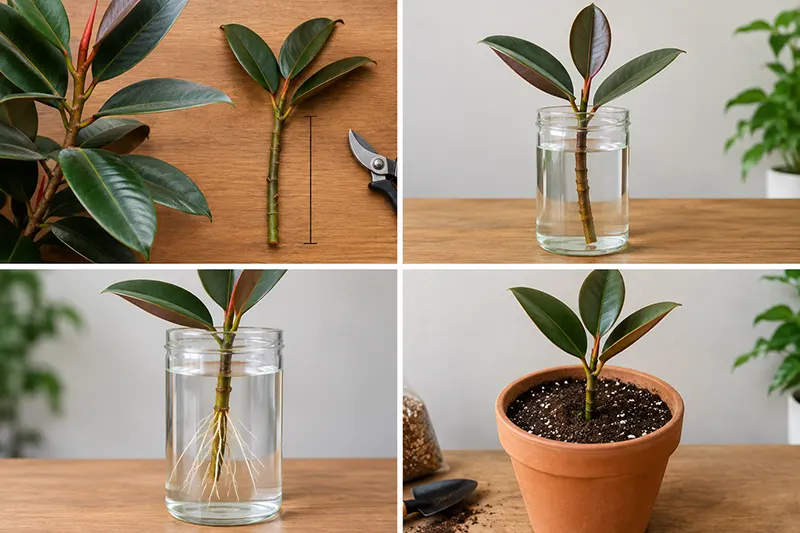
In rubber fig plant care, you can propagate the plant with stem cuttings. Choose cuttings in spring or early summer that are about 6 inches long with multiple nodes. Root them in water or a soilless mixture. Transfer to the larger pot as the roots emerge.
Here are the detailed steps that you can follow:
- Cut a stem cutting from the plant that is around 20 cm in length. Leave the 2-3 leaves on the top.
- Put the cuttings in a soilless mixture or a container of warm water. If propagating in water, ensure that no leaves are submerged in it. Always change the water every few days to maintain hygiene.
- In a soilless mix, keep it humid and moist to see root development within 2 months. In the water method, it will take around 10-12 weeks for roots to emerge.
- Once the roots are about 3 inches long, plant it in the pot with houseplant or “ficus” compost.
Varieties of Rubber Plant
Rubber plants are available in a wide array of colours and sizes. Ranging from Ficus elastica ‘Robusta’, Ficus elastica ‘Burgundy’ to Ficus elastica ‘Tineke’, all the varieties are great for transforming the space.
Let’s take a look at some of the famous rubber plant varieties backyard design or home natural decor:
| Variety | Description |
Ficus elastica ‘Robusta’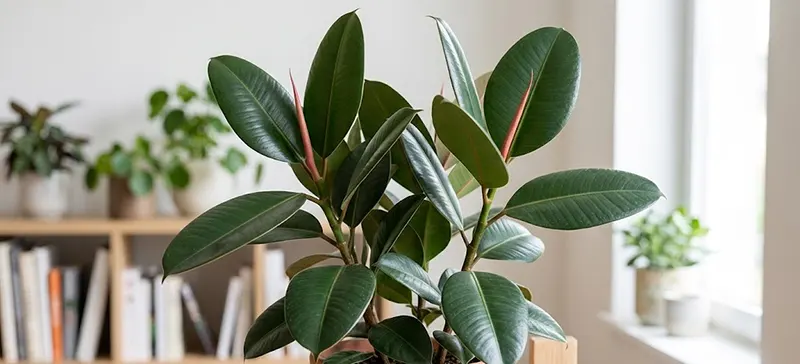 | It is one of the most common rubber plants that have emerald green leaves. This is wonderful for windows and corners.
|
Ficus elastica ‘Burgundy’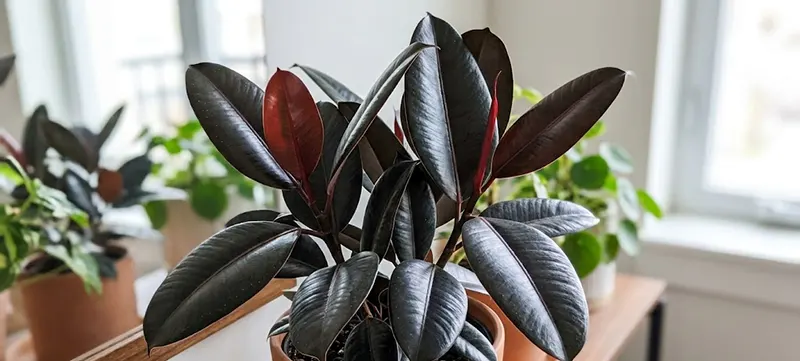 | It is a great addition if you like the deep coloured foliage. This variety is also referred to as black prince.
|
Ficus elastica ‘Red Ruby’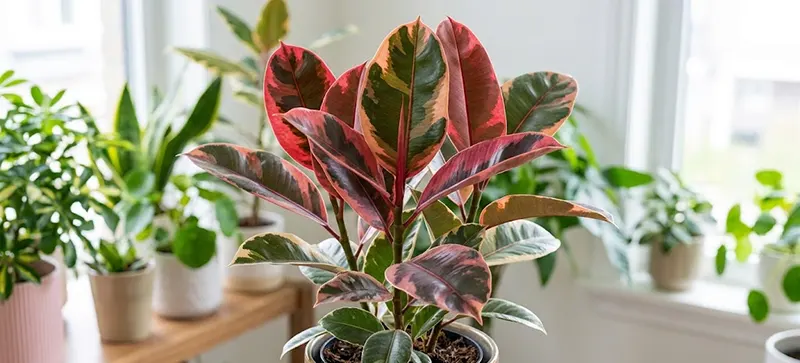 | This is one of the most vibrant versions of the rubber tree, with purple, red, and white hues.
|
Ficus elastica ‘Tineke’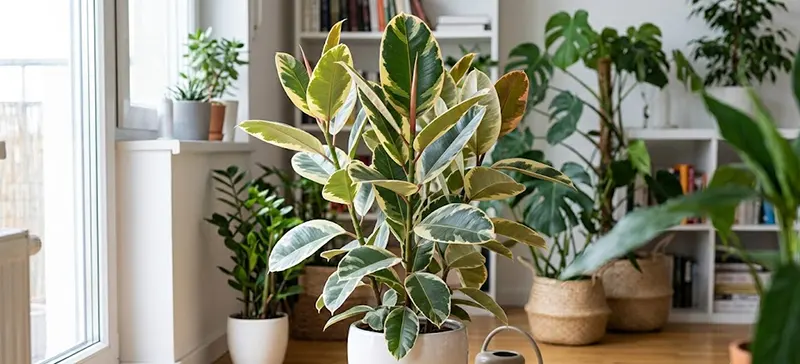 | It is one of the newer varieties that have variegated leaves in shades of green, cream, or yellow.
|
Ficus elastica ‘Decora’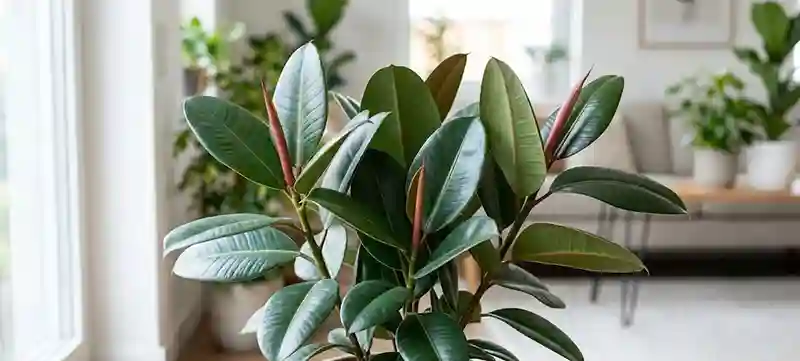 | This variety has very dark and thick leaves. Its leaves are also larger in size compared to other varieties.
|
Troubleshooting Common Problems in Rubber Plants
Even with the best Ficus rubber plant care, the plant can still show signs of distress like falling leaves, curling leaves, leggy growth, and white spots on the foliage.
Let’s understand the causes of these issues and the possible treatments:
- Falling leaves: A sudden loss of leaves may occur in the plant if you have just brought it from the nursery, as it is adjusting to the new environment. If your plant hasn’t been moved recently, ensure it gets enough sunlight and is not being exposed to drafts or temperatures under 55°F.
- Curling leaves: This is caused by low humidity or improper watering. If the air in your home is dry, mist the leaves or use a humidifier. Also, avoid keeping your plants near heat sources or drafts.
- Brown leaf edges: It could be due to humidity issues or underwatering. Trim the brown edges and water the plants when the top inch of the soil feels dry.
- Yellowing leaves: Yellow leaves are a sign of overwatering. Let the soil dry out between the watering sessions. If root rot has also set in, consider repotting the plant to support its health.
- White spots on the leaves: Tiny raised white dots on the leaves are harmless mineral deposits known as “lithocysts”. They are actually beneficial as they enhance photosynthesis in plants.
- Leggy appearance: Rubber plants start to become leggy and stretch towards light when they want more sun. Place under the spot where it gets six to eight of indirect bright light. Also, rotate the plant frequently to prevent one-sided growth.
Also Explore: 20 Stunning Flowers That Start With the Letter P (With Pictures & Facts)
Bottom Line
The rubber plant is perfect for novice gardeners who want to start a garden from scratch. It is equally suited for seasoned gardeners, coming in an array of colours from emerald green to burgundy. With simple rubber plant care, you can bring greenery to your home. When pruning it, use the stem cuttings to propagate it to expand the plant collection.
FAQs
How do you care for a rubber plant?
Why are the leaves of my rubber plant dropping?
The leaf drop is normal if the plant has just been brought from the nursery. However, improper sunlight and sudden temperature drops can also cause the leaves to drop. Ensure you place it in a spot where it receives plenty of sunlight and keep it away from drafts.
How do I clean the leaves in the rubber tree care indoor?
Dust can accumulate on the leaves. Gently wipe them with a damp cloth to clean them. This improves the appearance of the plant and enhances photosynthesis.
Can rubber plants be grown outdoors?
In warmer climates of USDA zones 10-12, the plants can be grown outdoors. In colder regions, they need winter protection, and gardeners will be able to move them outside in summers only.
How to do indoor rubber tree plant care?
If you are keeping these plants indoors, place them in bright indirect light ideally near the east-facing window. Water when the top inch of the soil feels dry. Fertilize monthly in the growing season and repot to a larger container every three years.
Sources:
How to grow a rubber plant – BBC Gardeners World Magazine
Indian rubber plant – Britannica
Latest Blog