Several species that can be planted indoors are Guzmania Lingulata, Aechmea Fasciata, Vriesea Splendens, Neoregelia bromeliad, and Cryptanthus Bivittatus.
Bromeliad Care Guide: Light, Watering & Maintenance Tips
Author
Rashika GuptaReviewed By
Cody Allison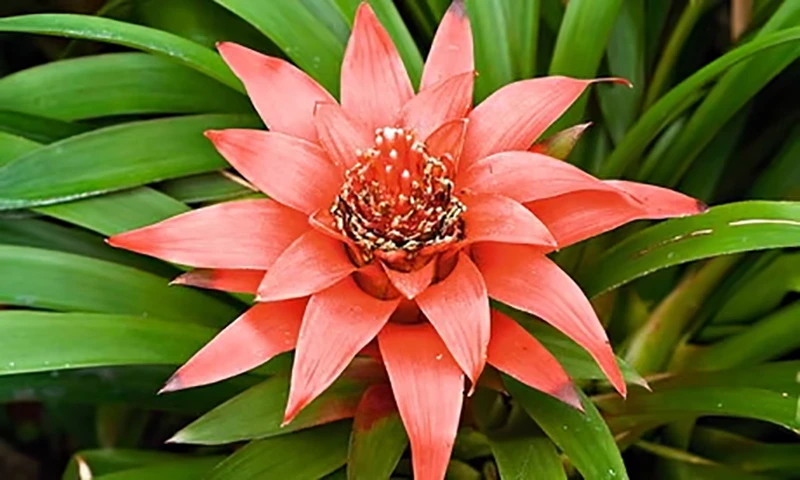
The bromeliad plant is a fuss-free, easy-to-care-for flowering plant with little roots just for balancing the plant. They store nutrients and water in the central cap, which supports the plant’s smooth growth.
Due to their adaptive nature and low care requirements, bromeliad plants are among gardeners’ favourite plants. If you want to grow a bromeliad plant indoors successfully, it’s important to know its types, common problems, ideal growing conditions, and bromeliad care tips that are elaborated on ahead in this guide.
Table of Contents:
Ideal Growing Conditions for Bromeliad Plant
Though indoor plants are considered to be finicky and high-maintenance plants, bromeliad plants are easy-to-care plants that require an appropriate atmosphere for growth and development.
Let’s see the ideal growing conditions they need in detail –
| Hardiness zones | USDA Zone 10-11 |
| Sunlight Requirements | Bright, indirect light |
| Soil |
|
| Water Requirement | Avoid overwatering the plant; let the soil dry out partially before watering. |
Read more: Hellebore: Planting, Care, and Fun Facts About the Christmas Roses
Essential Bromeliad Plant Care Requirements
Growing a bromeliad plant indoors is considered to be easy for both beginners and pro gardeners. Some of the essential bromeliad care tips that worked for me include keeping the plant in a humid space, less watering and avoiding the plant from being kept under direct sunlight.
Check out the care requirements mentioned in detail below:
1. Location
The major factor that influences the growth of the bromeliad plant is its location. Generally, different bromeliads, namely Guzmania, Tillandsia, Neoregelia, Vriesea, Ananas Comosus, etc., prefer different amounts of sunlight, but most of them prefer diffused bright light.
In case you notice foliage turns like bleached or burned, change the place to reduce direct sun interaction.
If the plant isn’t producing the colour it should have, try to increase the sun interaction and place it in a bright, indirect sunlight area.
The plant thrives indoors and outdoors during the summer, with a better understanding of the perfect brightness that it requires, one can add bromeliads to their garden or indoors.
2. Air Circulation
Since the plant doesn’t require much attention, one thing that it really needs is good air circulation to grow. If there is no proper air circulation, the plant can rot or even die. To avoid such a situation, if your plant is dying unusually, try to change its location to one that provides the required air passage.
3. Soil
Bromeliad plants have different varieties, and their requirements vary. For epiphytic varieties, also known as air plants, the best-suited way to plant them is in small pine bark as a soil base. These plants absorb their nutrients from their surroundings. This also provides aeration for the roots, which helps the plant to balance and support itself.
For small epiphytic tillandsias, placing them on a wooden log is a healthy way of displaying them. Terrestrial bromeliads prefer a loose and light organic soil mixture to support their growth.
4. Water
The bromeliads store water in their central funnels. Watering bromeliads requires appropriateness. Watering too much can rot the plant, and less water can lead to drying of the plant. In summer, water the plant once every 1-2 weeks and in winter, water the plant every 2-3 weeks. Avoid overwatering the plant and make sure you let the soil dry in-between two watering sessions.
5. Fertilizers
Avoid fertilising bromeliads regularly unless you are trying to increase pup production. Fertilisation often reduces the colouration in most bromeliads that are best known for their aesthetic and beautiful colour.
Read More: 10 Flowers That Bloom in Late Winter Nyt – Care Guide, Planting Tips and Common Challenges
How to Grow a Bromeliad Plant?
If you are planning to plant the bromeliad indoors, ever wondered how to grow it? Here are a few steps process-
- To grow a bromeliad from seed involves the germination of the seed. For germination, use a container and add potting medium like vermiculite and peat moss.
- Poke holes in the top of the container for air to pass.
- Place the seeds above the soil. Do not pour soil on the seeds.
- Cover the container and store it in a humid place with bright, indirect sunlight.
- The seeds will sprout within three weeks. As soon as the seedling has three to four leaves, they are ready to transplant.
- Make sure to first keep it outdoors for a minimum of 3-4 weeks. A sudden change of environment for a plant might be difficult, and it can lead to the browning of the plant that eventually causes the plant’s death.
- Since bromeliads have small roots, it is suitable to pot them in a small pot.
For Repotting
- While repotting, make sure to keep the soil loose and don’t set the plant too deep or shallow.
- Use wooden stakes to support the plant and secure its position.
- Don’t set the plant free to grow in any direction, as this can cause damage to root development.
- You can remove the stakes once the plant has a root system, which helps in supporting the plant and provides it with balance.
Taxonomy and Benefits of the Bromeliad Plant
The aesthetically pleasing bromeliad plant is a part of the Bromeliaceae family. It provides benefits like air purification and works as a natural humidifier.
For more general information, take a look at its taxonomic overview –
| Kingdom | Plantae |
| Order | Poales |
| Family | Bromeliaceae |
| Genus | Bromeliad plants have over 70 genera. Canistropsis and Tillandsias are included in it. |
| Species | indoor and outdoor bromeliads include- 1. Guzmania Lingulata (Scarlet Star) 2. Aechmea Fasciata (Urn plant / Silver Vase) 3. Vriesea Splendens (Flaming Sword) 4. Neoregelia Spp. (Blushing Bromeliads) 5. Cryptanthus Bivittatus (Earth Star) 6. Ananas Comosus (Pineapple) 7. Puya Raimondii (Queen of the Andes) 8. Tillandsia Ionantha 9. Tillandsia Usneoides (Spanish Moss) 10. Tillandsia Cyanea (Pink Quill) |
Benefits of the Bromeliad Plant
Planting a bromeliad plant brings you a number of benefits, including low maintenance, air purification, long-lasting blooms, tolerance towards dry conditions and is best suited for small spaces. Some of the benefits are discussed in detail –
- Bromeliads are low-maintenance plants requiring minimal watering.
- They are suitable for both indoor and outdoor environments.
- The bromeliad plant helps improve indoor air quality by removing toxins that are present in the air and releasing oxygen.
- If you are planning to get an indoor plant, a bromeliad can be the best addition to your place. Its beautiful colours add visual interest and vibrant hues.
- Many bromeliads are small and stay compact; therefore are perfect for indoor decor.
- Bromeliad plants can survive in lower-moisture environments and highly humid areas. Some varieties don’t even demand soil for growth as bromeliads can get their nutrients from the surrounding. Therefore, it is easy to care for bromeliads indoors.
Read more: How Do Pineapples Grow: Planting, Care, and More About this Tropical Treasure
Pests and Diseases of Bromeliad Plant: Signs and Solutions
When adding a new bromeliad plant to your home, keep it in quarantine for at least a month before keeping it indoors. It will help to identify any pests that may have come along with your plant.
Avoid using insecticides outdoors as they may cause more trouble and devastating infestation in the future.
Take a look at the common pests and their solutions to protect your bromeliad.
| Pests | Appearance | Sign and Solution |
| Aphids | They are small bugs with yellow, green or red colour.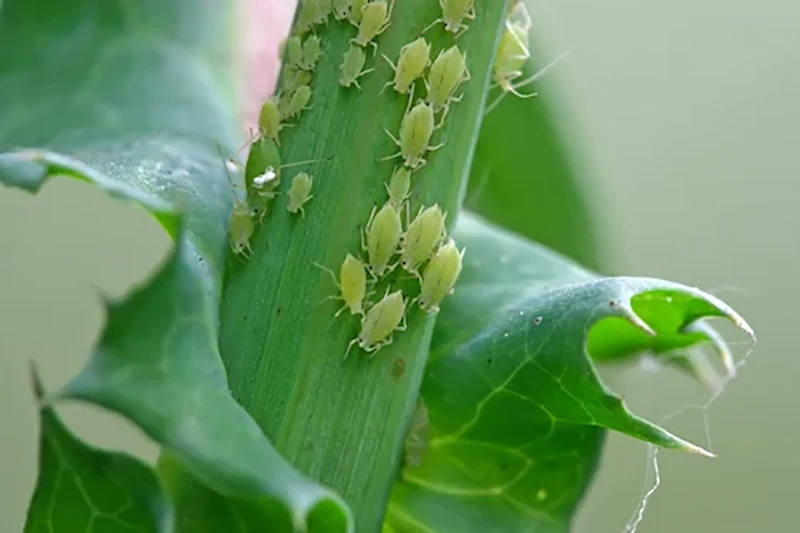 | Sign – Aphids leave behind a sticky residue that makes leaves shiny, or in moist conditions, a black fungus grows. Solution – Apply insecticidal soap or neem oil. Also, reduce the usage of nitrogen fertilisers. |
| Thrips | They are tiny bugs with narrow bodies and wings. Thrips reproduce quickly.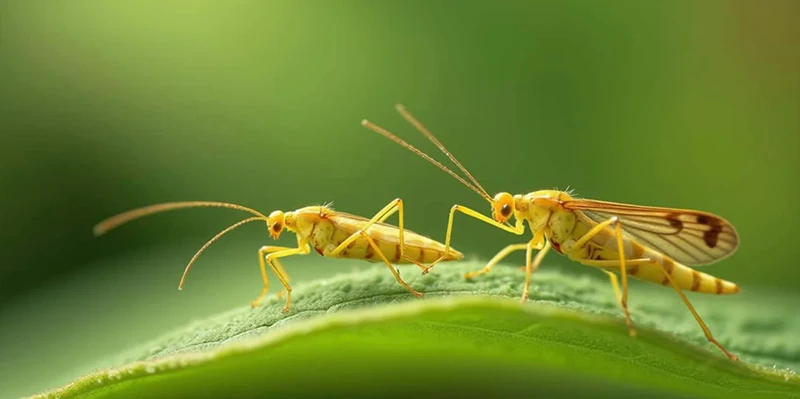 | Sign – Patches on leaves or distorted foliage. Solution – Use horticultural oil or insecticidal soaps on the underside of infested leaves. Repeat the process 3 to 7 times a month. |
| Mites | Mites are small bugs and can be spotted by fine webbing on the underside of leaves. 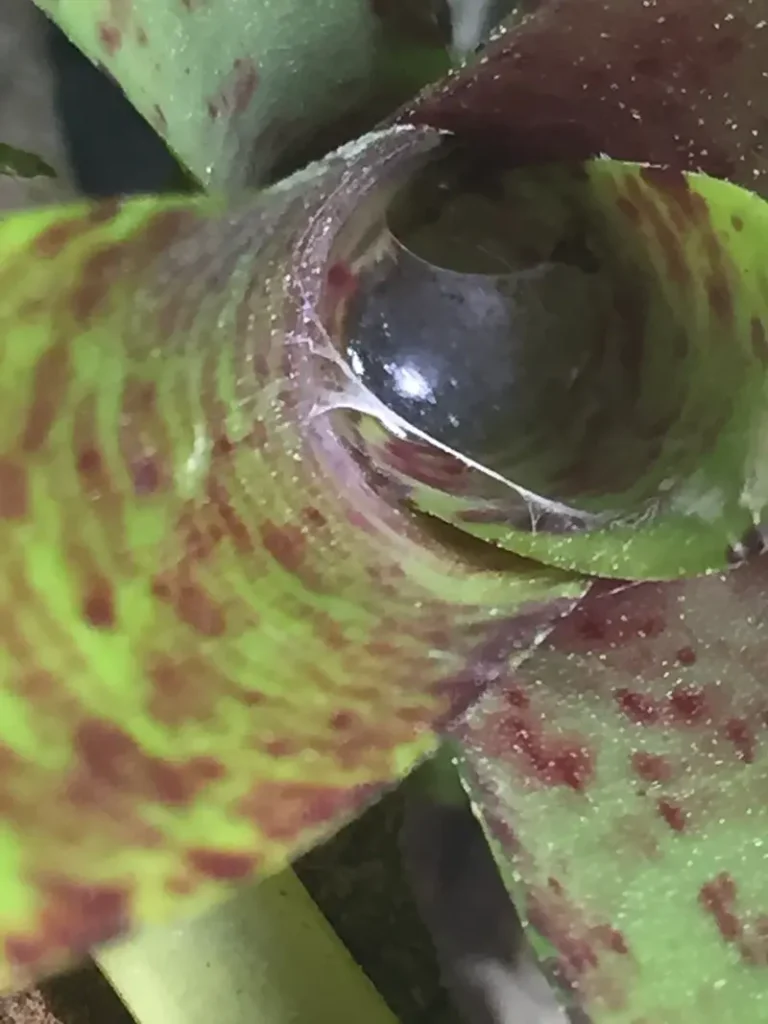 | Sign – They puncture the leaf surface to stick out the sugary juices of a bromeliad plant. Solution – To remove mites, use neem oil, insecticidal soap, or rub a mixture of alcohol and water in a ratio of 1:4. |
| Snails and Slugs | Snails and Slugs are mostly nocturnal, that scroll over the leaves. Slugs are underground dwellers that make their way by making tunnels. Snails are shelled pests. 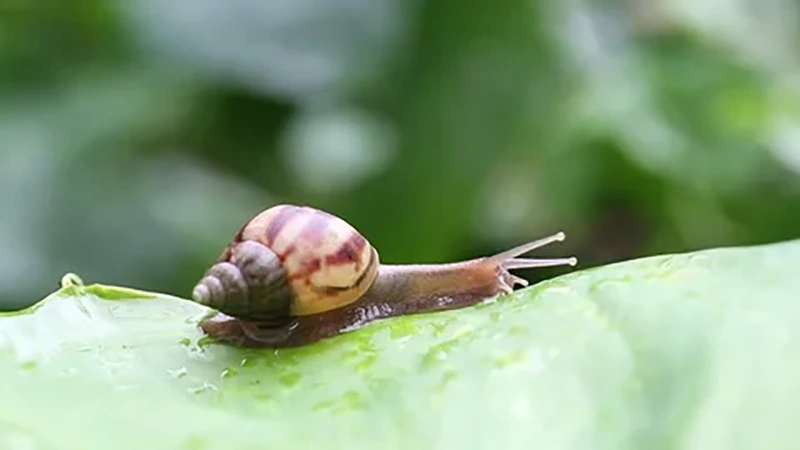 | Sign – They feed on leaves, leaving behind large holes or chew the edges of the plant. Solution – You can simply handpick snails and slugs or crush their eggshells. You can also sprinkle a little salt on the snails to kill them and coffee on the ground near the plant to keep slugs away. |
| Mealybugs | They can be identified by their soft bodies developed in masses with a waxy coating and an egg sac. Their infestations are cottony in appearance. Also, they are commonly found in Majesty Palms. 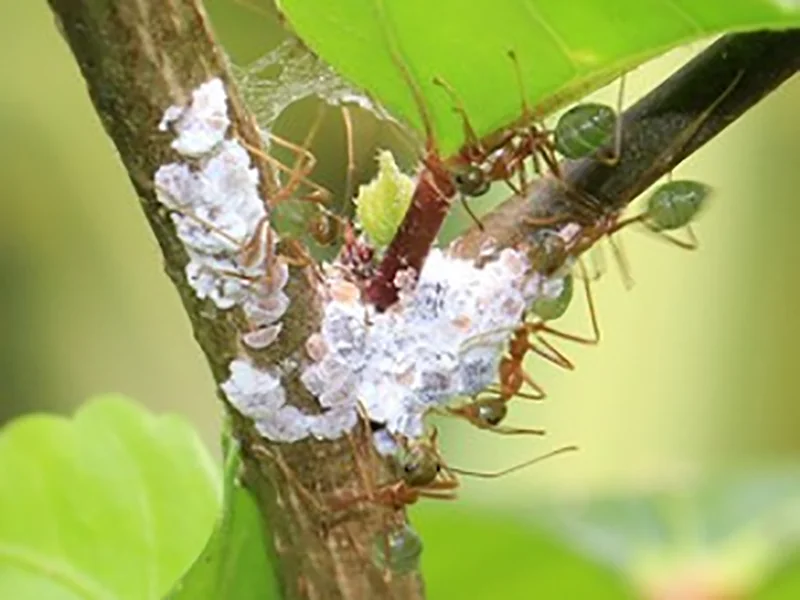 | Sign – If you see a sudden decline in your plant’s health, check for cottony masses in the roots. Solution – Mealybugs can be removed by rubbing isopropyl alcohol directly on them. Use a 1:1 ratio of water and alcohol. |
| Scale | They appear as small brown dots on the leaves.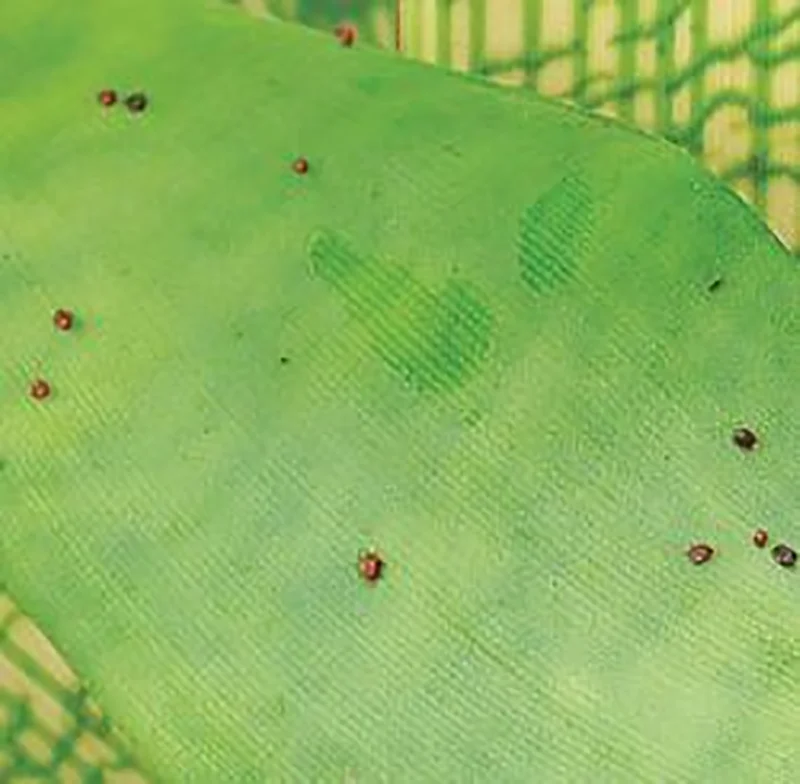 | Sign – The sticky residue covers the leaves. They also damage the leaves, leaving them yellow. Solution – The adult scales can be removed by hand, and make sure you also remove the eggs. Apply insecticidal soap several times every three to seven days. |
| Weevils | The devastating pest is typically black in colour with orange bands.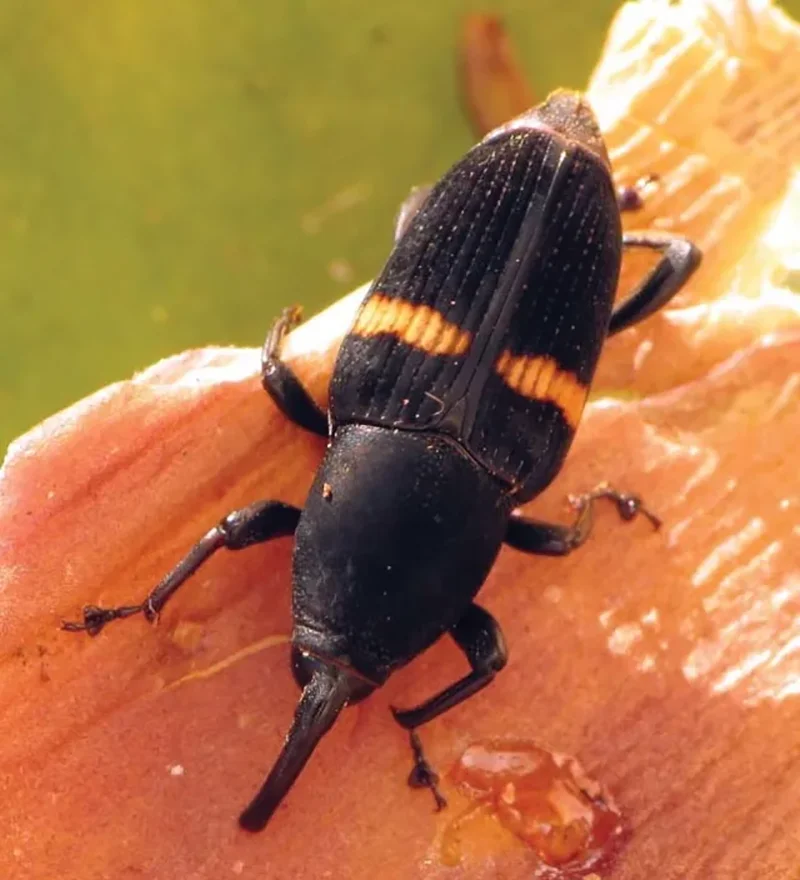 | Sign – Browning at the leaf base, holes on leaves. Solution – Weevils are difficult to control, but Sevin dust can help in reducing some weevils. To keep the rest of the plant safe, remove the damaged parts of the plant. |
Read more: How to Start a Garden From Scratch? Simple Steps for First-Time Gardeners
Common User Problems With Bromeliad Plant
While scrolling through different community platforms, I came across a common Reddit user’s query, which is elaborated below with the solutions that worked for me.
Query 1: My bromeliad plant is dying. Are these little things pups, and are they too small for repotting?
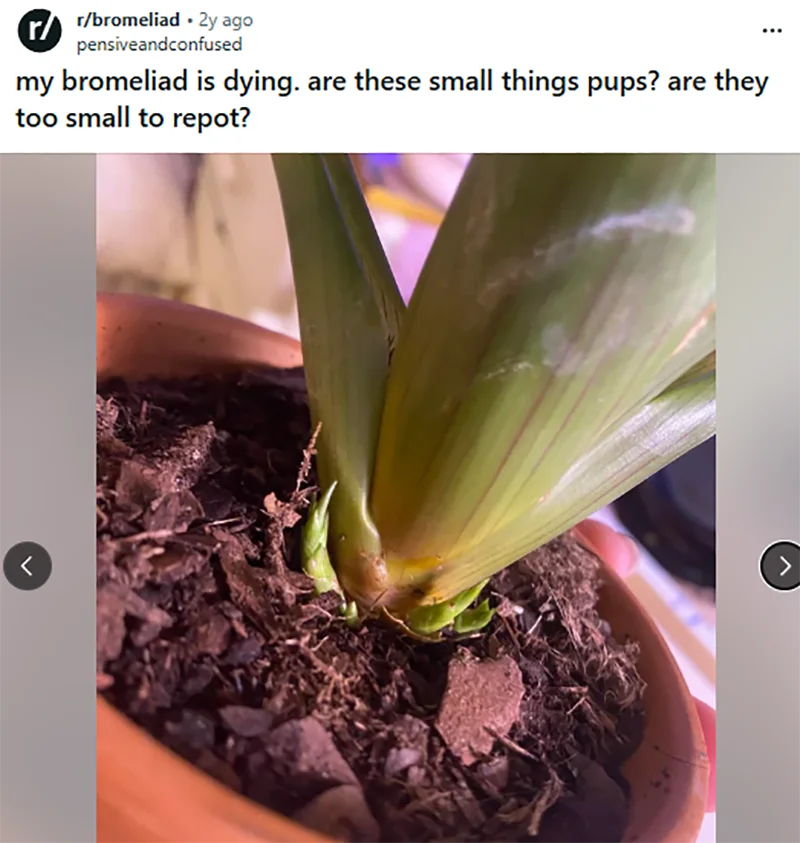
Answer: Yes, the little growing parts in plants are pups, which should be left with the main plant until they are at least two-thirds the size of the main plant. The plant is dying because of the process it follows in order for a new plant to come into life.
Quick Advice – Do not remove the pups from the plant, as it will stop producing more of them.
Query 2: The next interesting and repetitive question that I came across is: How to care for a Bromeliad?
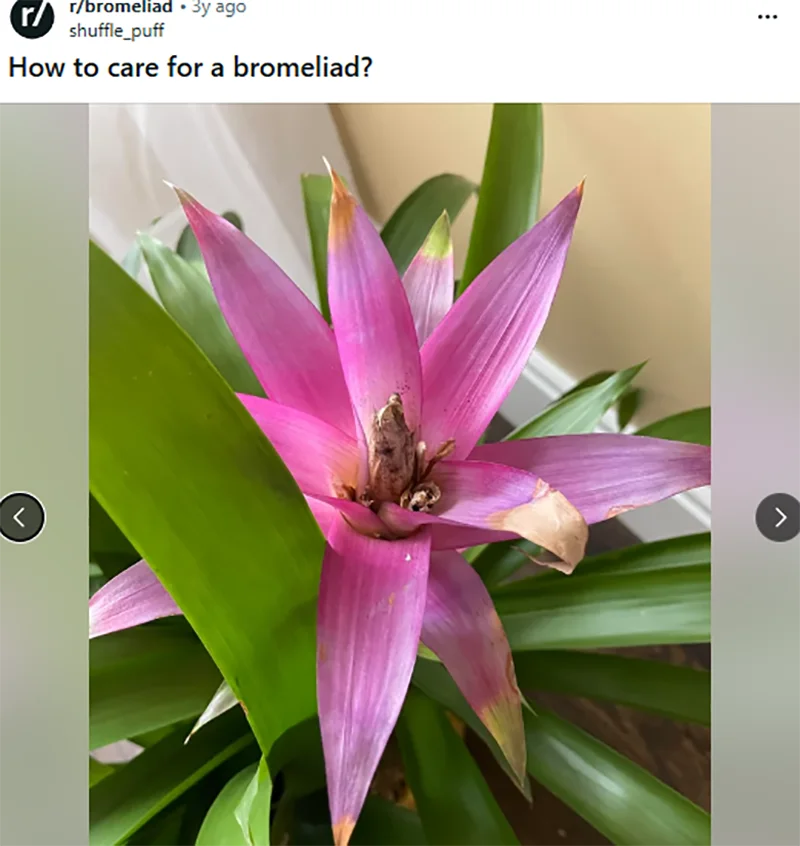
Solution that Worked for me: Two things of utmost importance when it comes to bromeliad plant care are lighting and watering. The plant loves indirect light, and overwatering can kill the plant. Keep these things in your mind and prevent the plant from rotting.
Query 3: Another interesting question that struck during my scrolling asks: How to make my bromeliad happier?
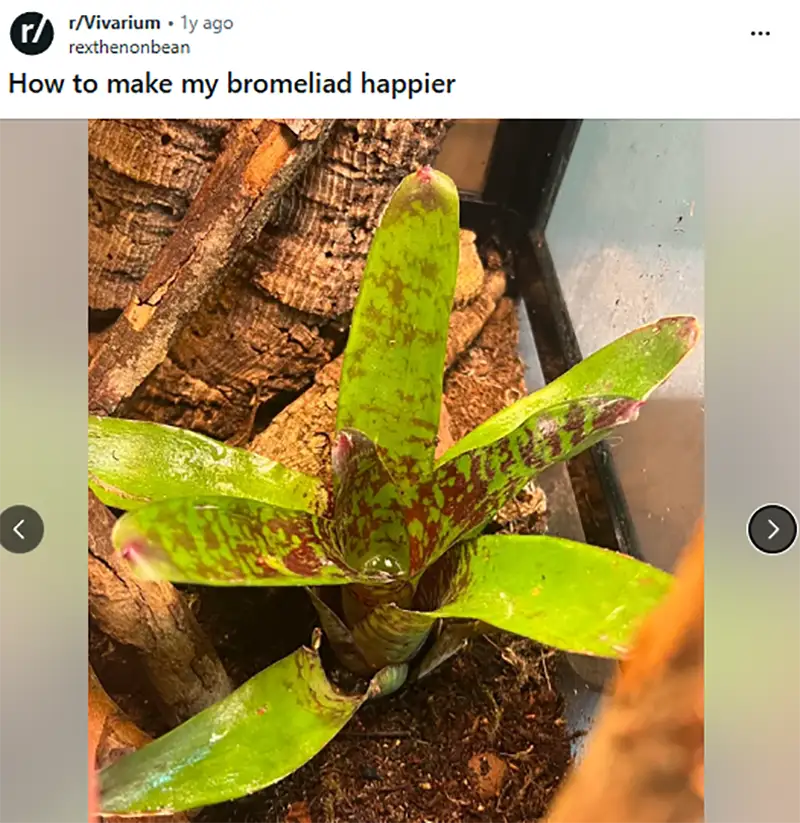
Things that work for me- Here is a planting tip for your bromeliad plant in soil: make sure that the soil isn’t too wet, as it can rot the plant, and there should be a gap between watering the soil in order to prevent it from rotting.
Also, bromeliad plants like bright environments, but don’t place them under direct sunlight. The suitable condition for the plant to grow is a high-humidity area.
Final Thoughts
The bromeliad plants are easy-to-care-for plants. They absorb the nutrients from their surroundings and don’t require a complex environment.
Shortly after they bloom, the main bromeliad plant starts dying, but they produce pups that further grow and bloom into the plant. It is the continuous cycle that keeps repeating itself.
While the plant needs little care, one must consider a few things for bromeliad plant care- the plant needs to dry between waterings, certain species like the water to stand between the leaves, but most of them don’t.
FAQs
What are the species of the bromeliad plant that can be grown indoors?
How long does a bromeliad plant survive?
Typically, a bromeliad plant’s life span is 2-5 years. Bromeliad plants bloom only once in their entire lifespan. Post-flowering, the main plant slowly dies over the period of the next 1-2 years, but it produces offsets at the base, which eventually bloom.
Can I grow bromeliads indoors? Are they easy to take care of?
Yes, several species of Bromeliad plants can be planted indoors. They are considered to be easy-to-care-for plants. Make sure you don’t allow the plant’s base to be very wet, as it can rot the plant.
How do I know if my Bromeliad plant is dying?
The leaves of the Bromeliad plant start turning brown. It is usually a sign that the life cycle of the bromeliad plant is ending.
How many times should the bromeliad plant be watered?
The bromeliad plant should be watered every 1-2 weeks in summer and every 2-3 weeks in winter.
What are the easy ways of taking care of bromeliad plant?
Place your bromeliad plant in indirect sunlight, do not overwater the plant, make sure there is proper air circulation, plant it in loose soil, and do not separate pups from the mother plant before they are two-thirds of the mother plant’s height.